



Two mixed martial artists compete inside an octagon cage during a professional MMA bout, showcasing striking, wrestling, and grappling under unified rules.

The Complete Fighter: A Guide to Mixed Martial Arts

What happens when striking, wrestling, and grappling collide? Welcome to Mixed Martial Arts, the pressure-tested combat sport built around adaptability, problem-solving, and finding what works against genuine resistance. This guide explores MMA, why it works, and what it takes to become a complete fighter.

Table of Contents

🔥 Introduction

Mixed Martial Arts (MMA) is a full-contact combat sport that combines striking, wrestling, and grappling into a single, integrated system. Rather than specialising in one style of fighting, practitioners develop the ability to strike, clinch, wrestle, and grapple as situations change, creating one of the most complete and demanding combat disciplines in the world.

What makes MMA unique is its emphasis on pressure-tested training. Techniques are not simply demonstrated or practised in isolation but are continually tested and refined against resisting opponents under realistic conditions. This develops adaptability, exposes weaknesses, and rewards techniques that consistently prove effective in practice.

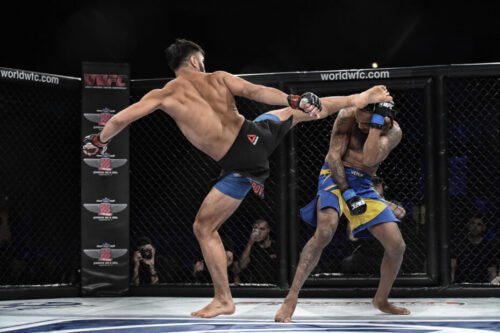
MMA fighter launching a high kick as his opponent attempts to evade and defend.

MMA combines striking, wrestling, and grappling into a fluid combat system, requiring fighters to attack, defend, and adapt as situations change.

Few combat sports have influenced the martial arts world as profoundly as Mixed Martial Arts. Its rise challenged long-held assumptions about fighting, accelerated the growth of cross-training, and reshaped how athletes prepare for competition. Today, MMA is practised worldwide for competition, fitness, self-defence, personal development, and recreation by millions of people from all walks of life.

Whether your goal is stepping into the cage, improving your fitness, developing practical combat skills, or simply understanding one of the world’s fastest-growing combat sports, Mixed Martial Arts offers a depth of study and challenge that continues to attract practitioners across the globe.

🥊 What Mixed Martial Arts Actually Is

Unlike most martial arts, Mixed Martial Arts combines striking, wrestling, and grappling into a single, unified combat system.

Unlike traditional martial arts that specialise in one area of combat, MMA allows practitioners to punch, kick, clinch, wrestle, throw, and fight on the ground under a common set of rules. Rather than mastering a single discipline, fighters learn to transition seamlessly between different phases of combat as situations change.

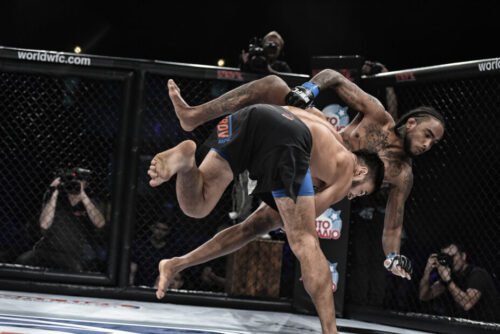
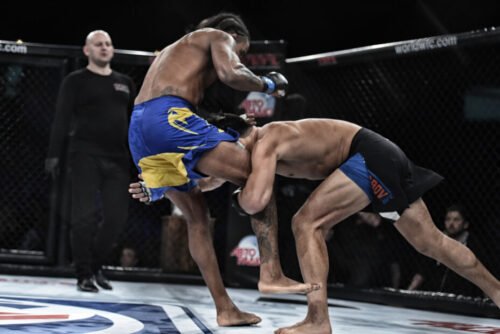
MMA fighter executing a takedown against an opponent during a cage fight.

MMA demands proficiency across every phase of combat, with fighters using wrestling and takedowns to transition seamlessly from striking on the feet to grappling on the ground.

A defining characteristic of MMA is its emphasis on live resistance. Techniques are regularly tested against fully resisting opponents through sparring and competitive training, developing timing, adaptability, decision-making, and the ability to perform under pressure. Success depends not only on technical skill, but also on knowing when and how to apply it against someone actively trying to stop you.

Although often associated with organisations such as the UFC, Mixed Martial Arts is far more than professional competition. Today, millions of people train MMA for fitness, self-defence, personal development, recreation, and competition, making it one of the world’s fastest-growing combat sports.

The tactics, strategies, and technical principles that underpin MMA are explored in greater detail in our dedicated Changing Levels – Understanding MMA guide.

🧬 The Core Idea

The central idea behind Mixed Martial Arts is simple:

Train what works against a skilled, resisting opponent.

Rather than remaining loyal to a single martial art or tradition, MMA takes a practical approach to combat. Techniques are judged by how they perform under pressure, not by their history, philosophy, or style of origin. If something consistently works, it is adopted. If it does not, it is refined, adapted, or abandoned.

This philosophy transformed the martial arts landscape. Instead of asking which single style was superior, practitioners began exploring how different disciplines could complement one another. Striking, wrestling, and grappling were no longer viewed as competing systems, but as interconnected skills that together created more complete martial artists.

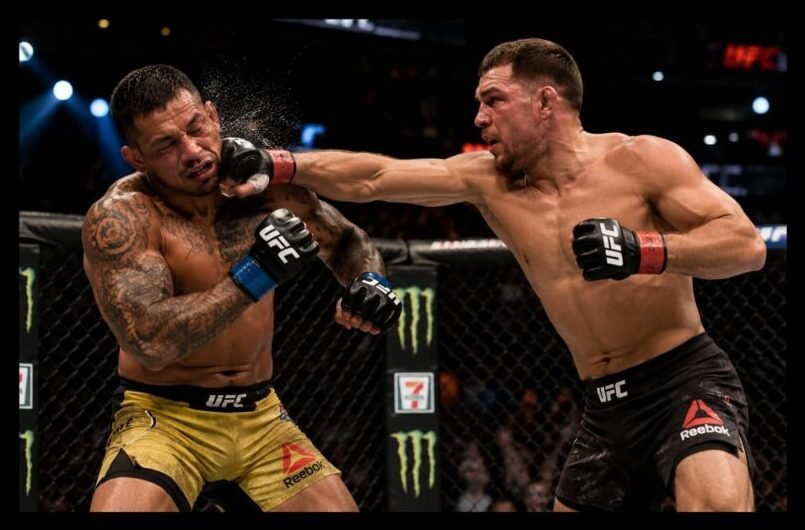
MMA fighter landing a powerful straight punch as his opponent is driven backwards.

At the heart of MMA is a simple principle: train what works. Techniques are tested against resisting opponents, rewarding effective striking, adaptability, and the ability to perform under pressure.

As the sport evolved, so too did its athletes. Early competitors often specialised in a single discipline, relying on their background to overcome opponents from other styles. Over time, however, success increasingly depended on versatility. Today’s elite mixed martial artists are expected to strike, wrestle, grapple, and transition fluently between every phase of combat rather than relying on one particular strength.

More than simply creating a new combat sport, MMA changed how martial artists think about training. It encouraged practitioners to look beyond style loyalty, embrace cross-training, and evaluate techniques through experience rather than assumption. That influence continues to shape martial arts around the world today.

📜 The Story So Far

Although Mixed Martial Arts is often viewed as a modern sport, the idea of combining different fighting styles is centuries old. Ancient combat sports such as Pankration blended striking and grappling long before the term “MMA” existed, while many cultures developed their own systems of integrated combat.

The modern story began in the twentieth century through Brazil’s Vale Tudo competitions and the Gracie Challenge, where practitioners from different martial arts tested their skills against one another. This philosophy reached a global audience with the launch of the Ultimate Fighting Championship (UFC) in 1993, introducing style-versus-style competition to millions of viewers.

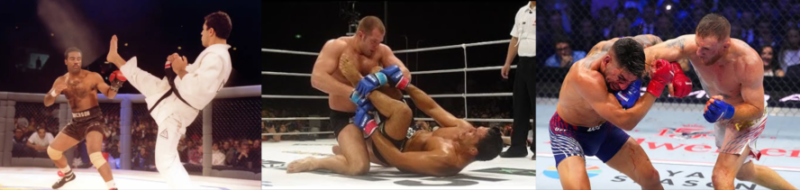
Montage showing the evolution of MMA from the early UFC and PRIDE Fighting Championships to modern mixed martial arts.

From the early style-versus-style contests of the UFC and the legendary battles of PRIDE to today’s highly evolved athletes, MMA has transformed into a global sport built around complete, well-rounded fighters.

As the sport matured, Unified Rules, improved safety standards, and organisations such as PRIDE Fighting Championships helped shape its rapid evolution and international growth. Specialist fighters gradually gave way to well-rounded mixed martial artists, transforming MMA from a niche spectacle into one of the world’s fastest-growing combat sports.

Want the full story?

➡️ Our posts  – The Road to MMA and The Rise of MMA explores the complete history of Mixed Martial Arts, from its ancient roots to the modern era.

🧭 Explore the MMA Series

Mixed Martial Arts is one of the most diverse and rapidly evolving combat sports in the world. Whether you’re interested in its history, tactical depth, training methods, or legendary fights, the following guides explore each aspect in greater detail.

Explore the tactics and principles that underpin Mixed Martial Arts. Learn how striking, wrestling, and grappling work together, and discover the importance of range management, transitions, positioning, and fight IQ.

Thinking about training? Learn what to expect from your first classes, how to choose the right gym, what equipment you’ll need, and how to begin your MMA journey with confidence.

Relive the fights that defined each era of Mixed Martial Arts. Discover the athletes, rivalries, and unforgettable contests that shaped the sport while learning what makes these bouts essential viewing for every MMA fan.

🎯 Why Learn Mixed Martial Arts?

Few combat sports combine the breadth, realism, and technical depth of Mixed Martial Arts. Whether your goal is competition, fitness, self-defence, or personal growth, MMA offers a unique combination of physical challenge, technical development, and lifelong learning that continues to attract practitioners around the world.

Tired MMA fighter sitting after training with his gloves removed and hand wraps still on.

MMA training demands more than technical skill. Conditioning, resilience, problem-solving, and the ability to keep learning under pressure are all part of the journey.

Click on links below to read more.

Unlike martial arts that focus primarily on a single aspect of fighting, MMA develops proficiency across striking, wrestling, and grappling. This broad skill set encourages practitioners to think beyond individual techniques, understanding how every phase of combat connects to the next and how to adapt as situations change.

MMA places a strong emphasis on applying techniques against resisting opponents rather than relying solely on cooperative practice. Regular sparring and live training develop timing, judgement, composure, and the ability to make effective decisions under pressure—qualities that are difficult to build through static drills alone.

Few sports demand as much from both body and mind. Every session requires concentration, problem-solving, and the ability to remain calm while managing fatigue and responding to an unpredictable opponent. The result is a style of training that is as intellectually engaging as it is physically demanding.

Training naturally improves strength, endurance, coordination, mobility, and overall athleticism. Just as importantly, it builds self-confidence through measurable progress and often introduces practitioners to supportive communities where respect, discipline, and shared learning are central to the gym culture.

One of MMA’s greatest attractions is its depth. As your skills develop, new techniques, tactical concepts, and training methods continually emerge, ensuring there is always another challenge to pursue. For many practitioners, this ongoing process of refinement is what makes the sport so rewarding over the long term.

👤 Who Is Mixed Martial Arts For?

Mixed Martial Arts attracts people of all ages, backgrounds, and fitness levels. While professional competition receives much of the public attention, most practitioners train for entirely different reasons. Some want a demanding way to stay fit, others are interested in practical combat skills, and many simply enjoy the challenge of mastering one of the world’s most complete combat sports.

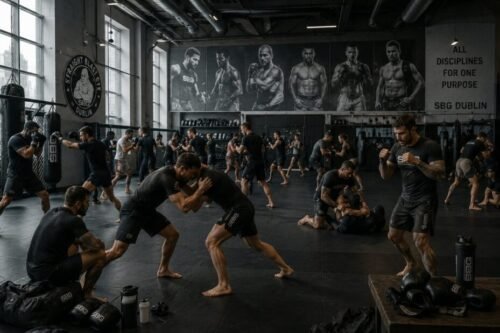
Mixed martial artists sparring inside a modern gym in Manchester, combining striking, wrestling, and grappling skills.

MMA gyms bring together people with different goals and experience levels, with training spanning striking, grappling, sparring, and conditioning in the same environment.

Click on links below to read more.

MMA is well suited to people who enjoy variety and continuous learning. Rather than specialising in a single discipline, practitioners develop striking, wrestling, and grappling together, creating a broad skill set that continues to evolve over time.

It also appeals to those who enjoy solving problems under pressure. Every training session presents new situations, requiring quick thinking, technical awareness, and the ability to adapt as exchanges unfold.

Mixed Martial Arts is physically demanding, technically complex, and mentally engaging. Progress comes through consistent practice, patience, and a willingness to embrace setbacks as part of the learning process. While the journey is rarely easy, many practitioners find that overcoming those challenges is one of the most rewarding aspects of training.

Because MMA combines multiple martial arts, beginners have a great deal to learn. Developing competence across striking, wrestling, and grappling takes time, and genuine proficiency is measured over years rather than weeks or months. For many people, however, that depth is precisely what keeps the sport engaging throughout a lifetime of training.

Those seeking a highly traditional martial art, a lower-impact activity, or a discipline focused exclusively on striking or grappling may find another style better suited to their goals. MMA also requires regular contact with training partners and a willingness to train in fast-paced, physically demanding environments.

For those prepared to embrace those demands, however, Mixed Martial Arts offers one of the most rewarding and comprehensive journeys in the martial arts world.

⚖️ Strengths & Limitations

Like every martial art and combat sport, Mixed Martial Arts has its strengths and its trade-offs. Understanding both provides a balanced picture of what MMA offers and helps you decide whether it aligns with your goals, interests, and preferred style of training.

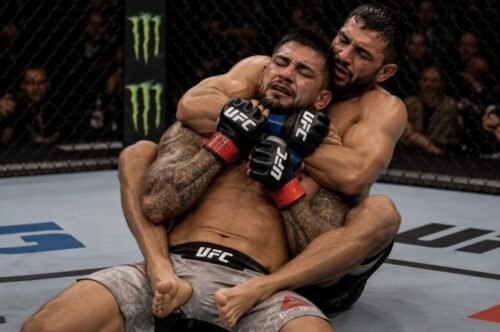
Two MMA fighters grappling on the ground as one controls the other's back while the defending fighter fights the hands and looks to escape.

MMA’s technical depth extends far beyond striking. Ground fighting demands control, composure, defensive awareness, and constant problem-solving against a resisting opponent.

✔ Strengths

  • Develops proficiency across striking, wrestling, and grappling, creating one of the most complete combat sports in the world.
  • Emphasises live resistance, allowing techniques to be tested and refined under realistic conditions.
  • Builds strength, endurance, coordination, mobility, and overall athleticism through varied and demanding training.
  • Develops timing, judgement, composure, and decision-making through regular sparring and technical practice.
  • Encourages adaptability and problem-solving rather than reliance on a single fighting style.
  • Offers exceptional technical depth, providing years of continual learning and progression.

✘ Limitations

  • One of the more demanding martial arts to learn, requiring competence across multiple disciplines.
  • Progress requires patience, consistency, and long-term commitment rather than quick results.
  • Regular contact training and sparring carry an inherent risk of injury, even in well-run gyms.
  • Can be physically and mentally demanding, particularly for beginners.
  • May not appeal to those seeking a highly traditional martial art or a discipline focused exclusively on striking or grappling.

🌍 The Bigger Picture

Perhaps Mixed Martial Arts’ greatest legacy extends beyond the cage. By encouraging practitioners to test ideas, question assumptions, and learn from multiple disciplines, it has reshaped how martial artists around the world approach training. Today, cross-training, pressure testing, and adaptability are no longer concepts associated primarily with MMA—they have become fundamental principles across much of the modern martial arts landscape.

🧠 Closing Perspective

Mixed Martial Arts has transformed the modern martial arts landscape by combining the most effective elements of striking, wrestling, and grappling into a single, pressure-tested system. More than simply a combat sport, it has encouraged generations of practitioners to look beyond style loyalty, embrace cross-training, and judge techniques by how they perform under realistic conditions.

Its greatest strength lies in its versatility. Whether your goal is competition, fitness, self-defence, or personal development, MMA offers an exceptionally broad and rewarding path of study. The combination of technical depth, physical challenge, and continual learning ensures there is always another skill to refine and another challenge to overcome.

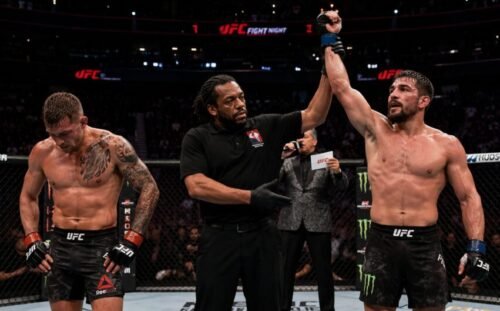
MMA fighter having his hand raised after a fight as his opponent looks down following the result.

Every fight produces a winner and a loser, but MMA is built on continual learning. Victory rewards preparation and execution; defeat exposes lessons that can shape what comes next.

That said, MMA is not the right choice for everyone. Its demanding nature, steep learning curve, and contact-based training require commitment, consistency, and patience. Those seeking a highly traditional martial art or a more specialised discipline may find another path better suited to their interests.

⭐ Best For

  • Those seeking one of the world’s most complete combat sports.
  • Practitioners who enjoy continuous learning and technical variety.
  • Individuals looking to develop striking, wrestling, and grappling together.
  • Anyone seeking a physically demanding and mentally stimulating form of training.

❌ Less Suitable For

  • Those looking for a low-contact or lower-impact activity.
  • Practitioners interested in preserving a single traditional martial art.
  • People seeking to specialise exclusively in striking or grappling.

Whether your ambition is to compete, improve your fitness, develop practical combat skills, or simply explore one of the world’s most influential combat sports, Mixed Martial Arts offers a lifetime of learning, challenge, and personal growth.

If you have enjoyed this post please share or feel free to comment below 🙂

Our Other Posts

Leave a Reply

Your email address will not be published. Required fields are marked *

This site uses Akismet to reduce spam. Learn how your comment data is processed.

error: Content is protected !!

Join the Super Soldier Project Mailing List Today!!