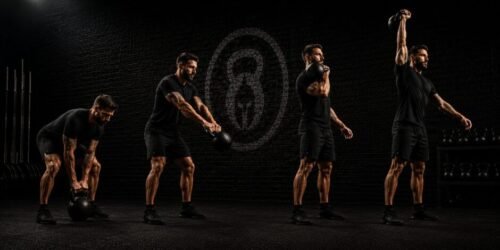
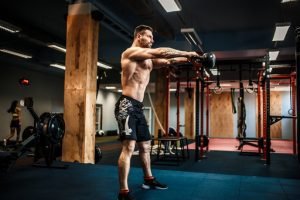
The kettlebell rewards precision and punishes laziness. In this workshop series, we break down the mechanics, principles, and foundational lifts behind one of the most brutally effective training tools ever created.
Table of Contents
🔥 Master the Foundations of Ballistic Strength
There are few training tools as brutally effective or as brutally honest as the kettlebell.
Simple in appearance yet savage in application, the kettlebell strips training back to its essentials: movement, force production, conditioning, and control. There are no machines to stabilise you, no cables to guide your path, and nowhere to hide poor mechanics once the bell starts moving.
Done correctly, kettlebell training develops explosive power, conditioning, grip strength, core stability, coordination, and movement under fatigue. More importantly, it develops strength that actually transfers outside the gym. Sprinting, fighting, grappling, carrying awkward loads, and generating force under pressure all rely upon the body working as one connected system.
This is why kettlebells became heavily associated with combat sports, tactical conditioning, military training, and old-school strength systems. Weak links are exposed quickly.
But kettlebells are also one of the easiest tools to misuse. Poor mechanics, rushed progressions, sloppy swings, and ego lifting rapidly turn powerful movements into dangerous ones.
A kettlebell rewards precision and punishes laziness.
Master the basics. Own the mechanics. Build real strength afterwards.
⚙️ The Foundations of Kettlebell Power
Explosive power begins with efficient movement. Master the foundations first and every advanced kettlebell skill becomes stronger and safer.
Kettlebell training is built around a handful of foundational movement patterns that develop strength, conditioning, coordination, and explosive force simultaneously.
At the centre of kettlebell training are several key exercises:
Swing.
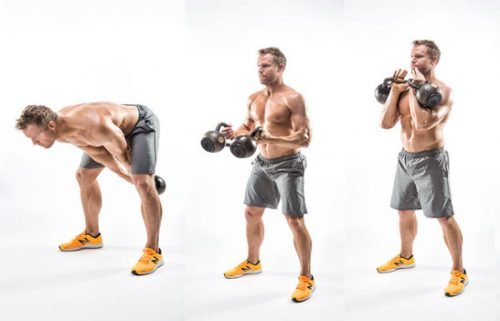
Clean.
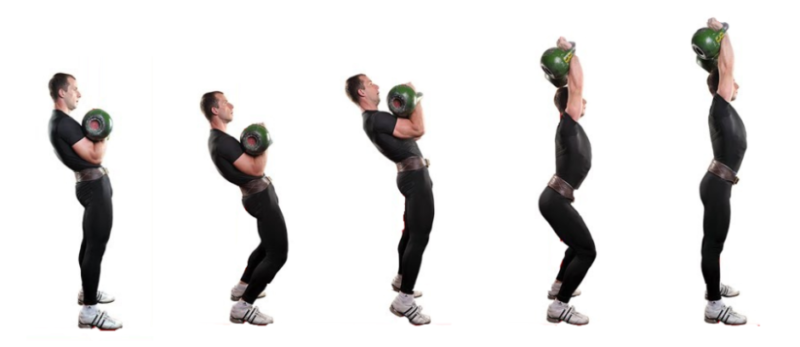
Snatch.
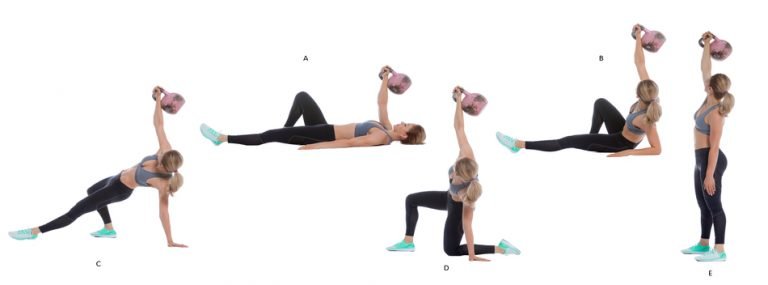
Turkish Get-Up.
Squat.
Press.
Deadlift.
Mastering these movements builds the foundation for more advanced kettlebell work later.
⚡ Ballistics & Grinds
Explosive Power vs Controlled Tension
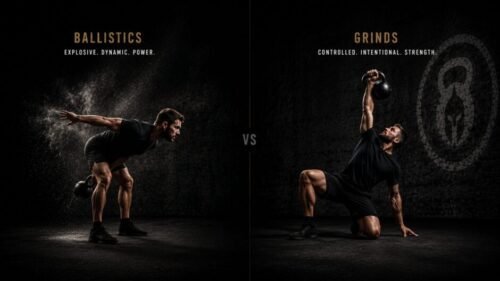
Most kettlebell training falls into two primary categories: Ballistics and Grinds.
Understanding Ballistics
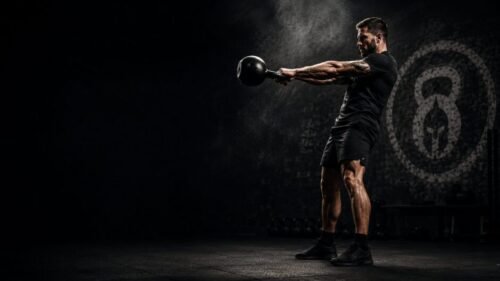
Ballistics are explosive movements powered primarily by the hips and posterior chain. The kettlebell is projected dynamically through space using hip drive, timing, and acceleration rather than slow muscular lifting. Swings, cleans, snatches, and high pulls all fall into the ballistic category.
Ballistics develop explosive power, conditioning, grip endurance, and the ability to repeatedly generate force under fatigue. The kettlebell swing in particular forms the foundation of almost all ballistic kettlebell training.
Understanding Grinds
Grinds, on the other hand, are slower tension-based movements performed with greater muscular control and structural stability. Rather than projecting the kettlebell dynamically, the athlete focuses on creating full-body tension and maintaining strong positioning throughout the lift. Exercises such as the Turkish Get-Up, goblet squat, overhead press, windmill, and deadlift are all considered grinds.
Ballistics develop explosive force and athletic movement. Grinds develop control, tension, and structural strength. Both are essential components of complete kettlebell training.
⚖️ Why Both Matter
Where ballistics teach the body to produce force explosively, grinds teach the body to stabilise and control force under tension. Both are essential for developing a complete kettlebell athlete.
🧱 The Hardstyle Approach
Hardstyle kettlebell training emphasises explosive force, full-body tension, and technical precision under load.
This workshop series primarily follows Hardstyle kettlebell principles inspired by systems such as RKC and StrongFirst.
Explosive Power & Full-Body Tension
Hardstyle training emphasises explosive power, sharp technique, and full-body tension. The objective is not simply to move the kettlebell, but to move it with power, precision, and control. Where some kettlebell systems prioritise very high-repetition endurance work, Hardstyle focuses more heavily on explosive hip drive, bracing, athletic carryover, and the ability to rapidly generate and absorb force. Every repetition should look sharp, deliberate, and technically sound.
Intentional Tension & Structural Control
One of the defining features of Hardstyle training is intentional tension. At key moments within a movement, particularly during lockout, the athlete creates powerful full-body contraction through the glutes, core, grip, and lats. This develops explosive force while teaching the body how to stabilise and absorb force safely. Hardstyle training also places major emphasis on neutral spinal alignment, efficient breathing mechanics, proper hinge movement, and maintaining structural positioning under fatigue.
Training With Intent
Quality always overrides quantity. Once posture, timing, or mechanics begin to deteriorate, the value of the set rapidly disappears.
Power without structure is chaos. Structure without power is useless.
For beginners, Hardstyle builds safer and more efficient movement patterns. For experienced athletes, it develops explosive strength and resilience that transfer extremely well into combat sports, sprinting, and athletic performance.
Above all else, Hardstyle teaches intent. The kettlebell is projected and controlled, never mindlessly lifted.
🔩 The Hip Hinge
The Engine of Kettlebell Training
Understanding The Hip Hinge
At the centre of almost all ballistic kettlebell training lies one foundational movement pattern: the hip hinge.
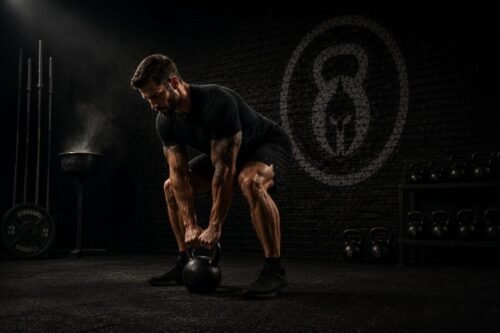
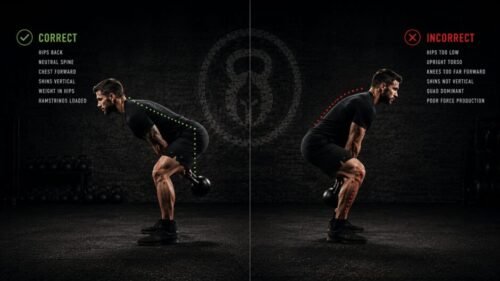
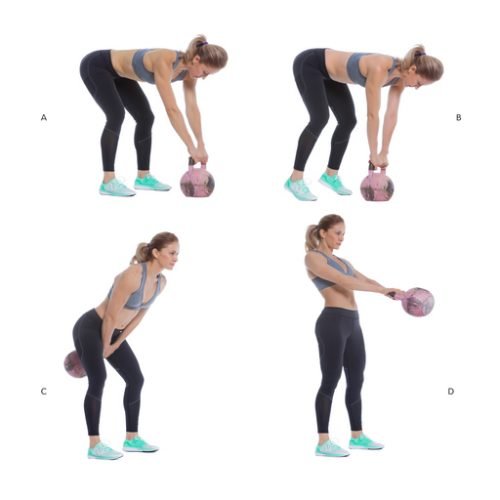
The hinge powers movements such as swings, cleans, snatches, high pulls, and long cycle work. Without a strong and technically sound hinge, kettlebell ballistics quickly become inefficient, weak, and potentially dangerous. The purpose of the hinge is to generate force through the posterior chain, primarily the glutes, hamstrings, hips, and core, rather than through the lower back or shoulders. When performed correctly, the hips load like a compressed spring during the backswing before explosively extending to project force into the kettlebell.
The hip hinge powers almost every ballistic kettlebell movement. Master the hinge and the entire system becomes more efficient.
Hinge vs Squat
The key difference between a hinge and a squat is where the movement occurs. In a squat, the knees and hips flex together as the body lowers vertically. In a hinge, the hips travel backwards while the torso inclines forward and the shins remain relatively vertical. This distinction is critical because one of the most common kettlebell mistakes is “squatting the swing”, turning what should be an explosive hip-driven movement into an inefficient front-loaded squat pattern.
Athletic Transfer & Real-World Movement
A proper hinge teaches the athlete how to generate force from the hips, load the hamstrings safely, stabilise the spine under movement, and decelerate force under control. Sprinting, jumping, striking, sprawling, and lifting awkward objects from the floor all rely heavily on efficient hip extension and posterior-chain power. This is one of the reasons the kettlebell swing transfers so effectively into combat sports, tactical conditioning, and athletic performance.
Spinal Protection & Injury Prevention
The hinge also plays a major role in spinal protection. When athletes fail to hinge correctly, they often compensate through the lumbar spine instead. Over time, repeated poor mechanics under ballistic load place enormous stress on the lower back. Mastering the hip hinge is arguably the single most important skill in kettlebell training.
Master the hinge first. Everything else becomes stronger, safer, and more explosive afterwards.
⚠️ Technique Before Load
Load should never dictate movement. Build crisp mechanics first and let strength develop afterwards.
Why Kettlebell Injuries Happen
One of the fastest ways to injure yourself with kettlebells is to increase weight before mastering movement.
This is particularly true with ballistic exercises such as swings, cleans, and snatches, where poor mechanics are repeated dynamically under fatigue. Small technical errors become magnified very quickly once heavier bells and explosive movement enter the equation.
Most kettlebell injuries do not occur because kettlebells are dangerous. They occur because athletes rush progressions, sacrifice posture for heavier weight, or allow ego to dictate load selection. The kettlebell is brutally honest. Weak mechanics are exposed quickly.
Mechanics Before Intensity
Technique must always come before intensity. A technically correct rep with a lighter kettlebell is infinitely more valuable than a sloppy rep with a heavier one. Good mechanics build efficient movement patterns and long-term durability. Bad mechanics simply reinforce dysfunction.
This becomes especially important when learning the hip hinge, bracing mechanics, breathing patterns, ballistic timing, and lockout positioning. These foundational skills take time to develop properly. One of the biggest mistakes beginners make is trying to imitate advanced kettlebell athletes too early. Heavy swings, high-repetition snatches, long cycle work, and complex kettlebell flows all look impressive, but they are built upon years of technical refinement.
Every workshop in this series prioritises movement quality, positional control, and structural alignment before heavier loading or advanced progression is introduced. Once technique goes, the set is over.
Every Rep Is Practice
Hardstyle kettlebell training treats every repetition as practice. Every rep either reinforces efficient movement or grooves bad habits deeper into the nervous system.
Start lighter than your ego wants. Build the mechanics first. Increase load gradually. Prioritise crisp explosive movement over sloppy fatigue work.
Strength built on bad mechanics eventually collapses. Strength built on efficient movement lasts.
🛡️ Respecting The Kettlebell
Safety & Preparation
Warm-up drills such as halos and around-the-worlds help prepare the shoulders, core, grip, and movement patterns before heavier training begins.
Kettlebell training places unique demands on the body, particularly during ballistic movements where force is generated rapidly under fatigue. While kettlebells are extremely effective tools for developing strength and conditioning, poor preparation and careless mechanics can quickly turn productive training into injury.
Before beginning any kettlebell session, the body should be prepared for dynamic movement, hip extension, bracing, and explosive effort. Athletes should never move directly from inactivity into heavy swings or ballistic work without first preparing the joints, muscles, and nervous system.
Preparing The Body Properly
A proper kettlebell warm-up does not need to be long or complicated, but it should prepare the body for the movement patterns that follow. Particular attention should be paid to hip mobility, hamstring activation, core engagement, shoulder positioning, and hinge mechanics before ballistic work begins. Exercises such as hip hinge drills, glute bridges, mobility work, deadstop swings, and light rehearsal sets can dramatically improve movement quality before the main session starts.
Fatigue management matters just as much as preparation. Many kettlebell injuries occur towards the end of sessions when posture, timing, and bracing begin to deteriorate. Once movement quality collapses, the risk-to-benefit ratio changes rapidly.
Intelligent Training Principles
Intelligent kettlebell training always prioritises quality over quantity, crisp movement over exhaustion, and technical consistency over ego.
Athletes should also be realistic about their current limitations. Existing back injuries, shoulder instability, mobility restrictions, or severe fatigue may all require temporary regression or modification until movement quality improves.
The kettlebell rewards discipline. Respect the movement, prepare properly, and the training becomes dramatically safer and more effective.
📏 Choosing Your Kettlebell
Selecting the correct kettlebell is critical for developing strength, technique, and long-term durability. The goal is not simply to lift heavier weight, but to move it with precision, control, and explosive efficiency.
Too Heavy vs Too Light
One of the most common beginner mistakes in kettlebell training is selecting the wrong weight.
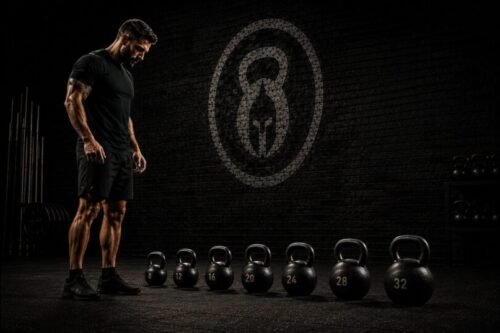
Too light, and the athlete struggles to develop proper ballistic mechanics because the kettlebell lacks enough momentum to load the hips correctly. Too heavy, and technique rapidly deteriorates as posture breaks down and the athlete begins compensating through the arms, shoulders, or lower back. The correct kettlebell should challenge the body while still allowing crisp, technically sound movement.
Choosing Appropriate Loads
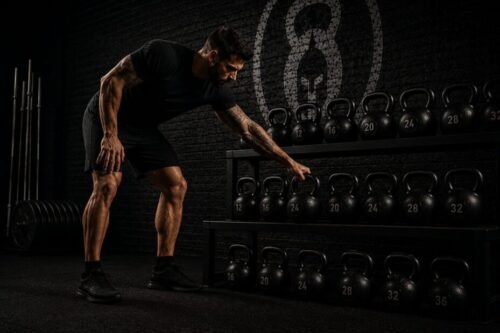
For beginners, it is usually far better to start lighter than expected and spend time developing hinge mechanics, timing, bracing, grip familiarity, and movement confidence before chasing heavier bells. As a rough guideline, beginners often start around 8–16kg, intermediate trainees commonly work within 16–24kg, while stronger or more experienced athletes may progress into 24–32kg and beyond.
However, kettlebell selection always depends upon the exercise being performed, the athlete’s technical ability, mobility, conditioning, and overall training background. A kettlebell suitable for swings may be completely inappropriate for Turkish Get-Ups or overhead work. Different exercises place very different demands on stability, coordination, mobility, and grip strength.
Ballistics Require Control
This becomes especially important with ballistic lifts. Swings, cleans, and snatches should feel explosive and sharp rather than slow and grinding. If the athlete cannot maintain posture, timing, or proper hip drive, the kettlebell is too heavy for their current ability level.
The goal is not simply to move heavier weight, but to move it efficiently, explosively, and under control.
As technique improves, the athlete gradually earns the right to progress into heavier bells and more advanced kettlebell work.
Load should never dictate movement. Movement quality should dictate load.
🎯 Building Your Kettlebell Skillset
Kettlebell training works best when approached progressively. Each movement builds upon the mechanics developed before it.
Kettlebell training works best when approached progressively. Foundational mechanics learned early carry directly into more advanced ballistic lifts later, making exercise sequencing extremely important.
The following workshops are designed to gradually develop hip hinge mechanics, bracing, timing, grip strength, ballistic control, and structural positioning under load. Each stage builds upon the previous one. Rush the fundamentals and technical problems almost always appear later.
The workshops below are labelled with either a (B) or (G) after the exercise name to indicate the primary training style of the movement:
(B) = Ballistic movement Explosive, dynamic exercises powered primarily through hip drive and acceleration.
(G) = Grind movement Slower tension-based exercises focused on control, stability, and structural strength.
1️⃣ Kettlebell Swing Workshop (B)
The swing forms the foundation of all ballistic kettlebell training.
The swing teaches hip hinge mechanics, posterior-chain power, bracing, timing, and force transfer while developing explosive conditioning and real-world athletic movement.
This workshop covers hip hinge mechanics, ballistic timing, breathing and bracing, common faults, skill drills, Hardstyle principles, and programming for power and conditioning.
Master the swing first. Everything else becomes easier afterwards.
2️⃣ Goblet Squat Workshop (G)
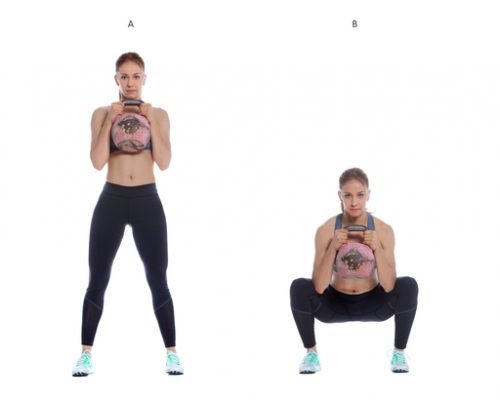
The goblet squat develops lower-body strength, posture, mobility, and core stability while reinforcing safe squat mechanics under load. It also acts as an excellent bridge into more advanced kettlebell squat variations later.
3️⃣ Kettlebell Deadlift Workshop (G)
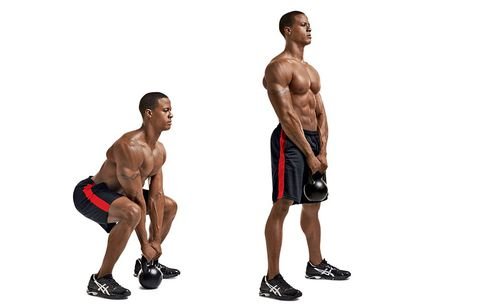
The deadlift strengthens the hinge pattern while teaching the athlete how to safely generate force from the floor.
This workshop focuses heavily on posterior-chain engagement, bracing, hip hinge mechanics, force production, and safe spinal positioning under load.
A strong deadlift builds the foundation for stronger swings, cleans, and snatches later.
4️⃣ Turkish Get-Up Workshop (G)
One of the most demanding grind exercises in kettlebell training.
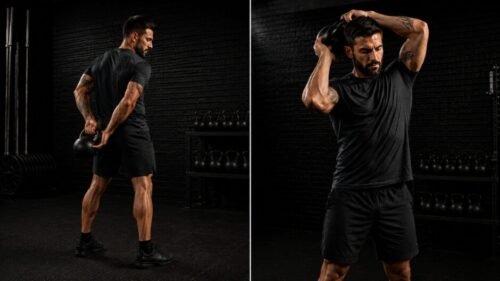
The Turkish Get-Up develops shoulder stability, core integration, mobility, coordination, and transitional strength while teaching the athlete how to stabilise load through multiple movement phases and body positions.
5️⃣ Kettlebell Clean Workshop (B)
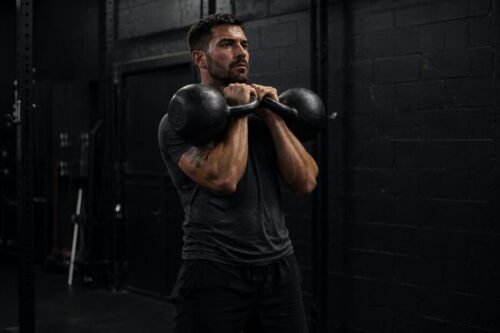
The clean develops hip power, timing, coordination, and efficient ballistic control while teaching the athlete how to safely receive the kettlebell in the rack position.
Particular focus is placed upon bell path, rack positioning, hand insertion, reducing forearm impact, and linking cleans into more advanced combinations.
6️⃣ Kettlebell Snatch Workshop (B)
The snatch is one of the most advanced ballistic kettlebell exercises and combines explosive hip drive with overhead stability and endurance.
This workshop explores snatch mechanics, overhead positioning, efficient hand transition, breathing patterns, and high-repetition conditioning strategies.
A technically sound snatch requires efficient movement from every stage learned beforehand.
7️⃣ Long Cycle Masterclass (B/G)
Long cycle training combines repeated cleans and jerks into one of the most physically demanding kettlebell disciplines available.
This style of training develops power endurance, conditioning, structural efficiency, and full-body work capacity under fatigue. The workshop explores pacing, breathing efficiency, rack endurance, and long-cycle sport applications.
Progress patiently. Master the fundamentals first. The more advanced lifts become dramatically more effective once the foundational mechanics are deeply ingrained.
The athlete who masters the basics will always outperform the athlete chasing complexity too early.
🧪 Additional Workshops Coming Soon
The workshops above form the core foundation of kettlebell training, but additional modules will continue to expand the system over time.
🚀 Begin Your Training
Whether your goal is strength, conditioning, combat performance, athletic development, or simply becoming harder to break, the kettlebell remains one of the most effective training tools available.
Master the basics properly and the kettlebell becomes one of the most brutally effective training tools you will ever use.
Strength first. Movement second. Ego last.
Strength is built one repetition at a time. Learn the mechanics, respect the process, and begin your training.