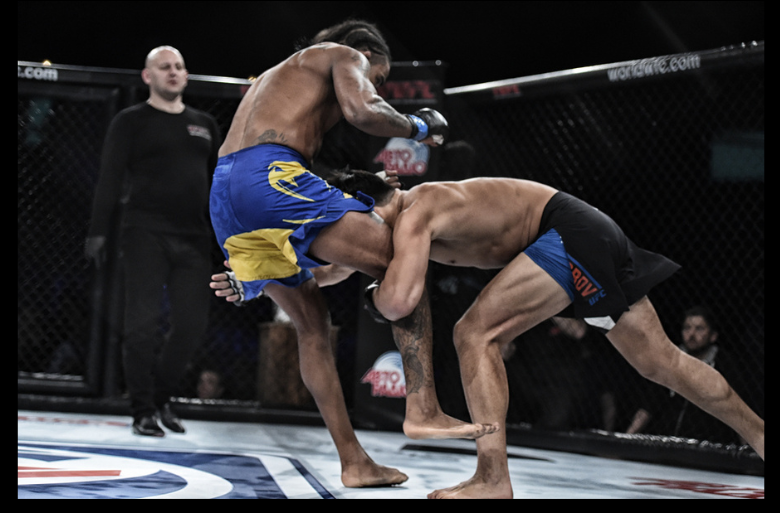
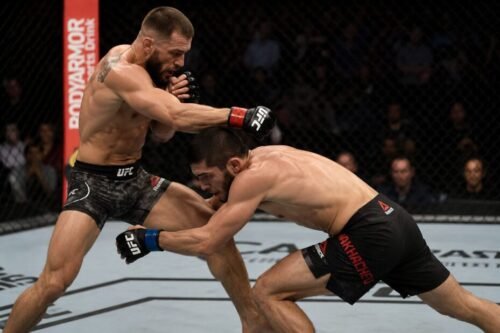
Fighters continually compete to place their arms inside those of their opponent, often using underhooks to gain leverage and restrict movement. This battle for arm position is commonly known as pummelling. Head position also helps a fighter apply pressure, disturb balance and prevent the opponent from moving freely.
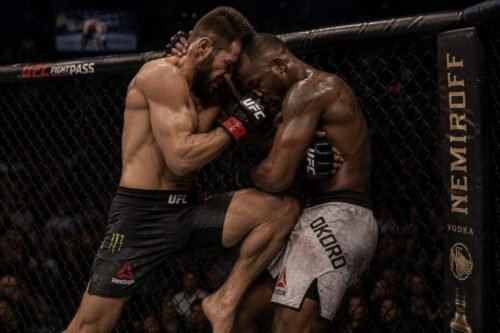
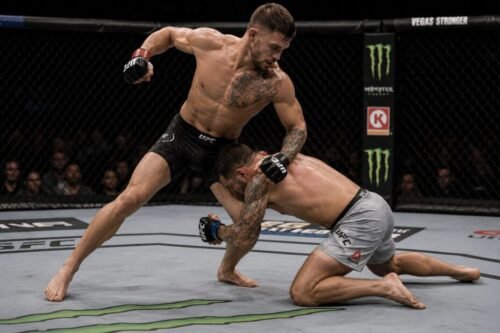
The clinch allows attacks that would be difficult to land from farther away. Short punches, elbows, shoulder strikes and knees can inflict damage without requiring much space. These strikes may also force reactions that weaken a grip, expose the body or create an opportunity to change position.
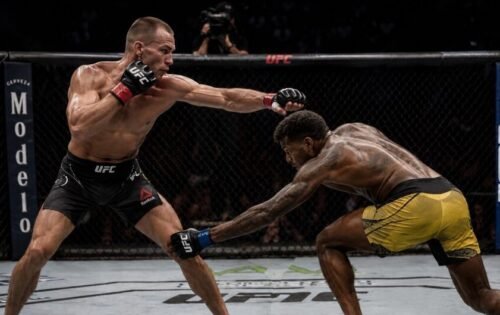
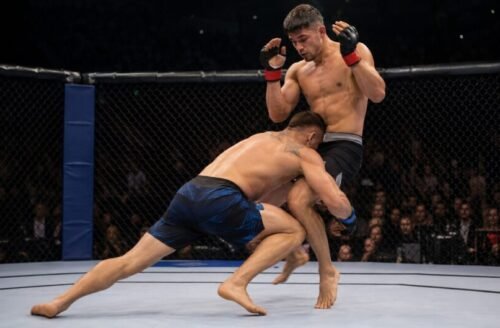
Wrestling, judo and other grappling arts contribute the trips, throws and body-lock takedowns used from this range. The takedown often begins before the viewer recognises it, emerging from the struggle over grips and posture rather than an obvious charge across open space.
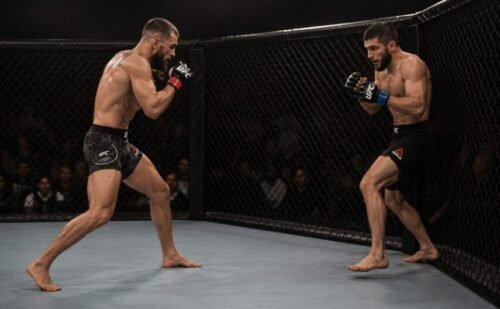
Against the cage, the fighter applying pressure can further restrict movement, while the defender attempts to reverse the position, separate or escape sideways. Turning an opponent onto the fence or freeing a trapped arm can completely change who controls the exchange.
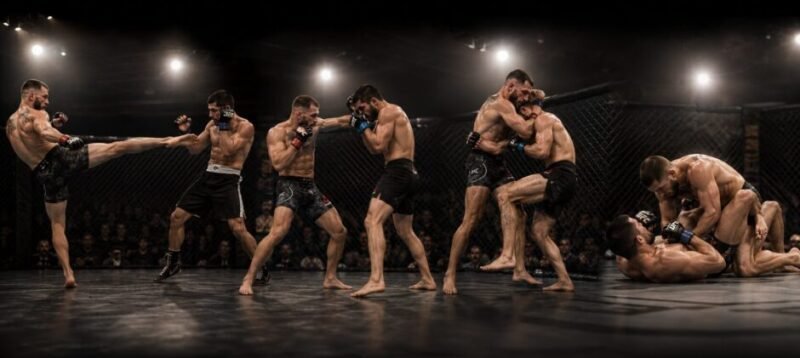
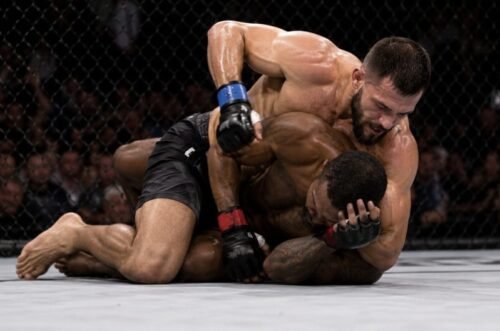
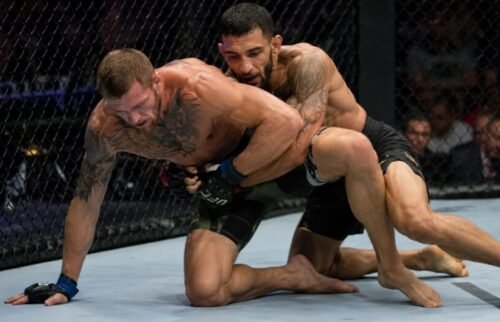
The clinch can lead in several directions. A fighter may break away and return to striking range, land damaging short-range attacks, secure a takedown or be reversed and forced to defend. It is more than a bridge between standing and ground fighting. It is a decisive phase where striking, wrestling and positional control operate simultaneously.