Welcome to our guide to Asian Martial Arts — a complete breakdown of the systems, styles, and traditions that have shaped combat across East and Southeast Asia. From the disciplined structure of Shaolin Kung Fu to the covert methods of the Shinobi, from Filipino blade systems to Mongolian wrestling, this guide cuts through the noise to show how these arts actually function, where they came from, and what they offer today.
Table of Contents
📖 Introduction
Asia is the birthplace of martial arts—but not as a single system. What exists instead is a network of disciplines shaped by war, survival, sport, and culture. From weapon-based battlefield arts to modern combat sports, each system reflects the environment and purpose it was developed for.
This guide breaks that landscape down into clear categories, allowing you to quickly understand how each art functions, where it fits, and what it’s best suited for. The aim is not to catalogue everything, but to provide practical context—so you can identify what aligns with your goals.
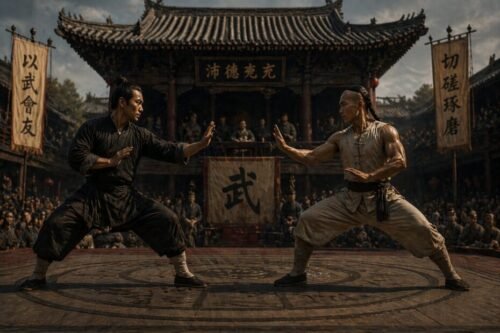
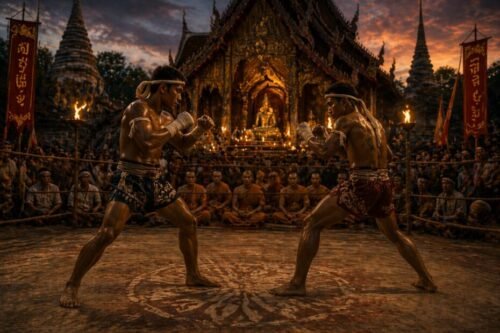
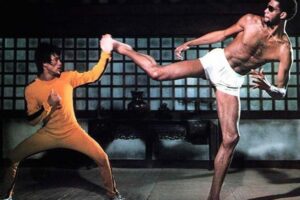
Lei Tai fighting shows how martial arts evolved into structured systems shaped by rules, environment, and purpose.
Each entry gives a focused overview first, with optional deeper detail where needed. Whether you’re looking for striking, grappling, weapons training, or applied self-defence, the systems below are presented in a way that highlights their strengths, training methods, and real-world relevance.
🧭 Understanding Asian Martial Arts
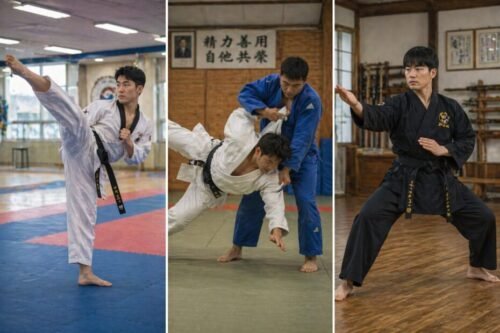
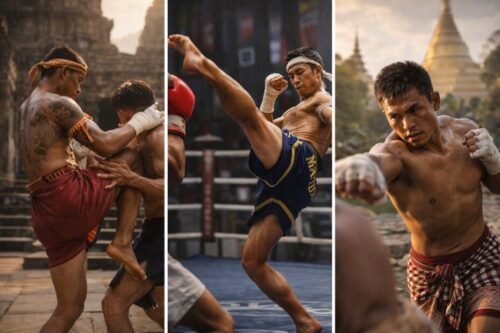
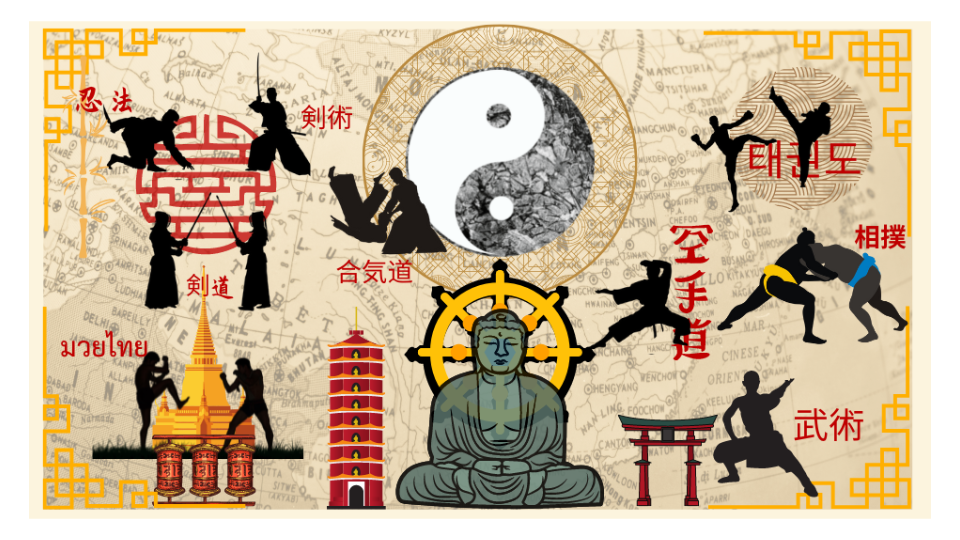
Asian martial arts are not a single unified system, but a network shaped by environment, purpose, and historical pressures. Some were developed for battlefield survival, others for civilian self-defence, and many evolved into modern sport systems. Weapons, striking, grappling, and internal practices all exist within this landscape—but not every system prioritises the same elements. As a result, these arts are best understood not as a list of styles, but as functional categories of combat. This guide breaks that landscape down into distinct regions and systems—allowing each to be examined in its proper context.
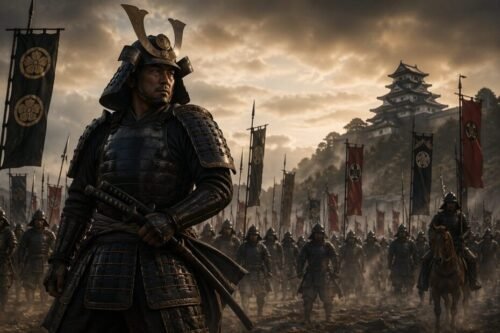
Many martial arts were born on the battlefield, Samurai systems are a clear example, built for survival, rather than sport.
📚 Explore the Full Guide
This guide is organised into regional sections, each covering systems that share common traits in structure, culture, and approach to combat.
Each section can be read independently, or as part of a wider picture—showing not just what these systems are, but how and why they developed across Asia.
Different cultures produced different solutions—but the underlying problem remains the same.
🗺️ Geography as a Teacher
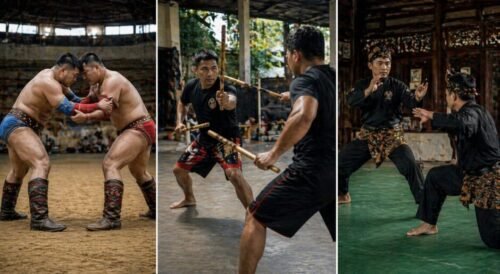
Across all these regions, geography is the ultimate martial instructor. The open steppe of Mongolia demanded long-range archery and high-stamina wrestling. The dense jungles and wet soil of Indonesia created the low-stance specialist. The narrow streets and boat-based life of Southeast Asian islands birthed the close-quarters blade expert. These arts are not just fighting styles—they are human solutions to violence shaped by the terrain they inhabit.
🎯 Final Thoughts
No guide can capture every system, lineage, or variation within Asian martial arts—and this one doesn’t try to. What it does aim to provide is a clear framework: a way to understand how these systems were built, what they prioritise, and how they function under pressure. Use it as a starting point. The deeper you go, the more variation you’ll find—but the underlying principles remain.
Across Asia, martial arts evolved from the same realities, conflict, survival, and discipline, expressed through different cultures and methods.
If you have enjoyed this post please share or feel free to comment below 🙂