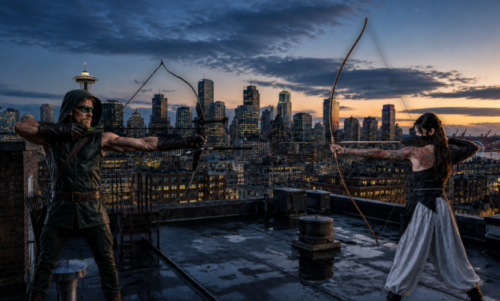
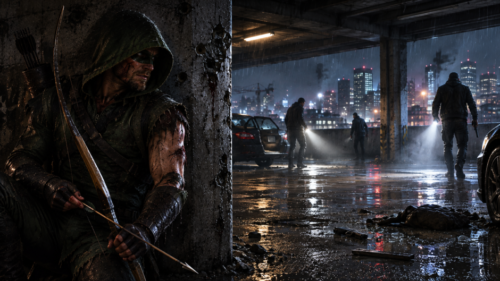
Green Arrow workout header featuring Oliver Queen aiming his bow in Seattle at night

๐Ÿน Anchor Point – The Green Arrow Workout

One hero. Four paths. Very different challenges. Inspired by the evolution of Green Arrow and the athletic preparation behind Stephen Amell’s Oliver Queen, this guide offers four seven-week programmes designed to build strength, conditioning and all-round athleticism, whether you’re starting out, rebuilding, performing or ready to truly test yourself.

Table of Contents

๐Ÿ“– Introduction

Few superheroes have evolved as dramatically as Green Arrow. Since his debut in 1941, Oliver Queen has been reimagined countless times, transforming from a wealthy adventurer with trick arrows into one of DC Comics’ most grounded and compelling heroes. Across the decades he has been portrayed as a castaway, vigilante, outlaw, mentor and veteran crime-fighter, with each era revealing a different side of the Emerald Archer. Despite those changes, one trait has remained constant: an ordinary man achieving extraordinary things through discipline, determination and relentless training.

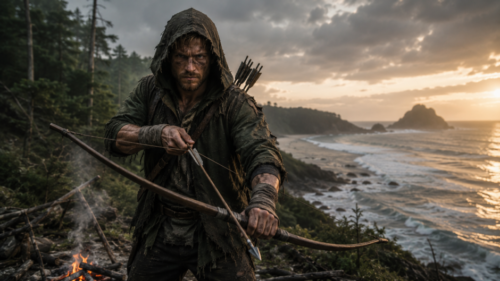
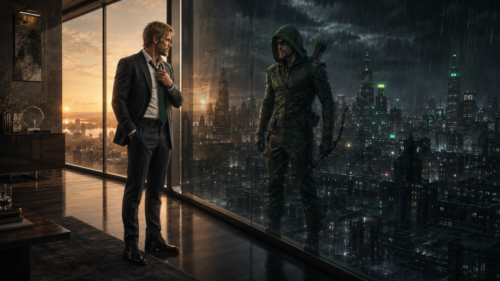
Oliver Queen looking over the city from a high-rise window as Green Arrow appears in his reflection

Behind Green Arrow has always been Oliver Queenโ€”an ordinary man who forged himself into something extraordinary through discipline, determination and relentless training.

๐Ÿน Four Paths. One Hero.

Rather than offering a single workout plan, this guide follows that evolution through four distinct seven-week programmes inspired by different stages of Oliver Queen’s journey. Each follows the same Anchor Point philosophy of precision before progression, but offers a very different training experience. Whether you’re building a foundation, rebuilding your strength, developing all-round athleticism or testing yourself through elite tactical conditioning, there’s a path designed to meet you where you are. Choose the version of Green Arrow that best reflects your current level and begin your own journey.

๐Ÿ’ช Train Like Green Arrow

There is no single Green Arrow workout. Oliver Queen’s abilities demand a combination of strength, endurance, agility, power and body control, and the training throughout this guide reflects that. Rather than building the programmes around archery-themed exercises, the focus is on developing the kind of all-round athleticism a character like Green Arrow would actually require.

The workouts draw heavily from the demanding physical preparation associated with Stephen Amell’s portrayal of Oliver Queen, combining compound strength training, calisthenics, kettlebells, loaded carries, explosive movements, running and conditioning. Elements of martial arts, parkour and functional training also appear throughout, creating programmes built around performance rather than simply looking the part.

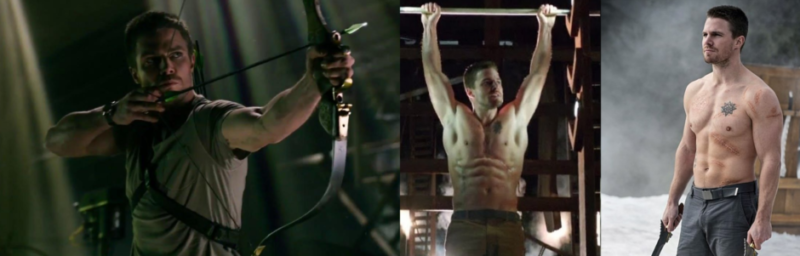
Stephen Amell training for his role as Oliver Queen in Arrow

Stephen Amell combined strength training, calisthenics and athletic conditioning to build the lean, capable physique required to play Oliver Queen in Arrow.

The balance changes depending on which version of Oliver you choose. Some programmes emphasise foundational movement, others strength, hybrid athleticism or high-intensity conditioning, but the objective remains the same: build a body that is strong, fit, mobile and capable.

๐Ÿน The Archer's Quest

Choose Your Oliver Queen

Green Arrow has worn many faces over the years, and these programmes are designed to reflect them. As outlined above, they all draw from the same broad mix of strength, calisthenics, conditioning and athletic training, but each takes its lead from a very different stage of Oliver Queen’s journey.

You don’t need to complete them in order. Simply find the version of Oliver Queen that best matches your current experience, fitness and goals, then follow that path. Think of the options below as a quick guide rather than a strict ranking. Choose where you are now, not where you think you should be. If you’re caught between two programmes, start with the more manageable option or use the full assessment later in this guide.

Stranded and inexperienced, Oliver is forced to build himself from the ground up. This programme takes the same approach.

This program is for those new to structured training, those returning after a very long break, or still developing the basics.

3 strength days + 1 light day

Foundation โ€ข Bodyweight โ€ข Strength โ€ข Conditioning

Oliver has returned, but returning isn’t the same as being ready. Strength, confidence and capability have to be reclaimed.

This program is for you’re returning to training, and have lost some strength, fitness or consistency and want it back.

3 strength days + 1 light day

Compound Lifts โ€ข Strength โ€ข Athleticism โ€ข Conditioning

Older, harder and more experienced, Oliver relies less on youthful recklessness and more on complete physical capability.

This program is forย  experienced, consistent trainees who want strength, conditioning and athletic performance in one programme.

5 training days

Heavy Strength โ€ข Complexes โ€ข Supersets โ€ข Hybrid Training

Battered, exhausted and operating under extreme pressure, Oliver’s challenge is no longer becoming capable. It’s remaining capable when everything is working against him.

This one is for highly trained, well conditioned individuals and actively looking for a serious physical challenge.

5 training days

Heavy Strength โ€ข AMRAPs โ€ข Chippers โ€ข Carries โ€ข Tactical Conditioning

๐Ÿค” Still Unsure?

The quick guide above will be enough for most trainees. If you’re between programmes, returning after a long layoff or simply want a more detailed recommendation, take the full Which Oliver Queen Are You? assessment later in this guide.

๐ŸŽฏ The Anchor Point

Every programme in this guide follows one rule: precision before progression.

Good technique is the standard, whether you’re learning the basics in Year One or fighting through fatigue in Where Angels Fear to Tread. The moment technique begins to break down, you’ve moved beyond your current limit.

Reduce the weight. Reduce the reps. Slow down. Reset.

Then continue.

Your Anchor Point is the standard you return to, no matter how difficult the training becomes.

๐Ÿน Final Words

There has never been just one Green Arrow. Oliver Queen has been a survivor, an outlaw, a veteran and a man forced to rebuild himself more than once. What makes the character endure isn’t that he always starts from the same place, but that he adapts to wherever he finds himself.

The same applies to training. You don’t need to be the strongest, fastest or fittest person in the room. You need to recognise where you are now, choose the right challenge and build from there.

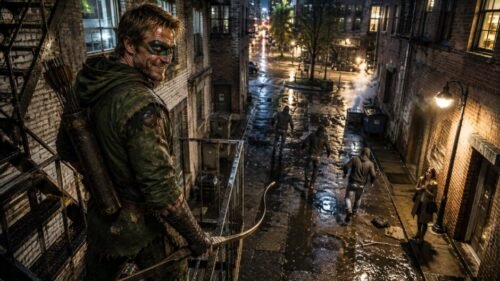
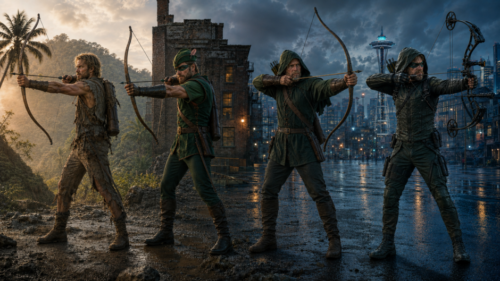
Four versions of Green Arrow representing different stages of Oliver Queen's journey and training

Survivor, returning hero, seasoned hunter or the man who keeps going. Whichever Green Arrow brought you here, youโ€™ve put yourself to the test and found your anchor point.ย 

Whether your path begins with Year One, Quiver, The Longbow Hunters or Where Angels Fear to Tread, the important thing is to choose the challenge that matches the athlete you are today, then earn the right to progress beyond it.

Choose your Oliver Queen. Take aim. Get to work.

๐Ÿ“š Appendices

๐Ÿงญ Appendix I: Which Oliver Queen Are You?

The full eight-question training assessment.

๐Ÿน Appendix II: The Evolution of Green Arrow

The deeper character history for anyone who wants the comic-book inspiration behind the circuits.

๐Ÿงญ Appendix I: Which Oliver Queen Are You?

๐Ÿ“‹ Full Training Assessment

The quick guide above should be enough for most readers, but choosing the right programme isn’t always straightforward. Previous experience, current fitness and recent training history all matter. A former athlete returning after a year away may need a very different programme from someone who has trained consistently for the last twelve months.

Answer the eight questions below based on where you are now, not where you used to be or where you’d like to be. Keep track of your A, B, C and D answers, then use the result at the end to find the version of Oliver Queen that best matches your current training level.

1. How would you describe your recent training?

A. I’m new to structured training or have very limited experience.
B. I’ve trained before, but my consistency has dropped significantly.
C. I’ve trained consistently for at least the last 6โ€“12 months.
D. I train consistently at an advanced level and tolerate high workloads well.

ย 

2. How comfortable are you with the major compound lifts?

A. I’m still learning exercises such as squats, presses and deadlifts.
B. I know them, but need to rebuild my strength and confidence.
C. I’m technically competent and regularly train them under load.
D. I’m highly experienced and comfortable performing demanding compound work alongside conditioning.

ย 

3. What can you currently do with strict pull-ups?

A. None yet, or I require assistance.
B. Around 1โ€“5.
C. Around 6โ€“10.
D. More than 10, or I regularly perform weighted pull-ups.

ย 

4. How do you cope with conditioning?

A. I’m still developing my basic cardiovascular fitness.
B. I can work hard, but my conditioning isn’t where it used to be.
C. I regularly run, row, cycle, perform intervals or similar conditioning.
D. I’m comfortable with prolonged high-intensity circuits, carries, intervals and endurance work.

ย 

5. How many training days can you realistically sustain each week?

A. 3โ€“4 days.
B. 3โ€“4 days while I rebuild consistency.
C. 5 days.
D. 5 days, including several demanding sessions.

ย 

6. Which statement best describes what you need right now?

A. I need a solid foundation.
B. I need to get back what I’ve lost.
C. I want to become a stronger, fitter all-round athlete.
D. I want to test the limits of my strength, conditioning and work capacity.

ย 

7. What happens when fatigue starts affecting your technique?

A. I’m still learning to recognise when my form is deteriorating.

B. I know what good technique feels like, but I’m rebuilding my ability to maintain it.

C. I can usually adjust my pace, load or repetitions and maintain good form.
D. I have considerable experience maintaining technical standards during demanding training.

ย 

8. Which workout sounds most appropriate to you?

A. Full-body strength, bodyweight training and manageable conditioning.
B. Compound lifting with progressive strength and athletic work.
C. Heavy strength, supersets, complexes, EMOMs and hybrid conditioning.
D. Heavy lifting, AMRAPs, chippers, sandbags, loaded carries and prolonged conditioning under fatigue.

ย 

๐ŸŽฏ Your Result

Mostly A โ€” ๐ŸŒฑ Year One
Build your foundation. Develop strength, fitness and movement quality before progressing to more demanding training.

Mostly B โ€” ๐Ÿน Quiver
You’ve trained before. Now it’s time to rebuild. Quiver puts greater emphasis on compound strength while progressively restoring athletic capacity.

Mostly C โ€” ๐ŸŽฏ Longbow Hunters
You already have the foundations. Longbow Hunters combines strength, power, conditioning and varied training methods to develop complete athletic capability.

Mostly D โ€” โ˜ ๏ธ Where Angels Fear to Tread
You’re an experienced, well-conditioned trainee looking for the hardest path. Expect heavy lifting, sustained conditioning, loaded carries and demanding work under fatigue.

ย 

โš ๏ธ Between Two Results?

Choose the more manageable programme. You can always progress later.

If you’re an experienced trainee returning after a substantial layoff, Quiver may be the better choice regardless of your previous level.

๐Ÿน Appendix II: The Evolution of Green Arrow

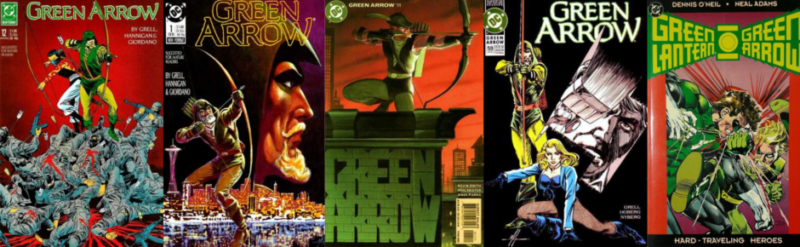
Green Arrow comic book covers showing the character across different eras

From his Golden Age beginnings to the modern era, Green Arrow has evolved dramatically across more than eight decades of comics, while remaining one of DC’s most distinctive heroes.

โ†’ Deep dive into the character of Green Arrow.

Green Arrow first appeared in More Fun Comics #73 in 1941, created by Mort Weisinger and George Papp. In his earliest form, Oliver Queen was very much a golden-age adventure hero: a wealthy playboy, master archer, and crimefighter with a sidekick, gadgets, an Arrow-Car, an Arrow-Plane, and an Arrow-Cave. The Batman influence was obvious, but the character also carried a strong Robin Hood flavour โ€” a bow-wielding champion using wealth and skill against corruption.ย ย 

For many years, Green Arrow remained a lighter adventure character. He was heroic, colourful, and useful, but not yet the sharper, angrier, socially conscious figure he would later become. That transformation came gradually, especially once writers began leaning into Oliverโ€™s politics, moral friction, and willingness to challenge authority.

The major turning point came in the 1970s, when Denny Oโ€™Neil and Neal Adams paired Green Arrow with Green Lantern in the famous Hard Traveling Heroes run. This version of Ollie became louder, angrier, and more politically engaged. He pushed Hal Jordan to look beyond cosmic threats and confront poverty, racism, exploitation, pollution, corruption, and inequality on Earth.ย ย 

This era helped define Oliver Queen as DCโ€™s awkward conscience: the guy in the room willing to call out hypocrisy, even when surrounded by heroes with more power and cleaner reputations. He was still an archer-adventurer, but now he had bite.

Green Arrow: Year One, written by Andy Diggle with art by Jock, modernised Oliverโ€™s origin in 2007. In this version, Queen begins as a reckless, wealthy thrill-seeker. After being betrayed by his trusted bodyguard Hackett, he is thrown overboard and washes up on a hostile island. There, he survives with a makeshift bow and discovers both his natural skill as an archer and a harder sense of purpose.ย ย 

The island is not just empty wilderness. Oliver discovers a criminal operation using the island for drug production and exploitation. That gives the origin its moral spine: he is not merely surviving; he is forced to choose whether he remains the selfish man he was or becomes someone willing to act. By the time he returns, the Green Arrow identity has begun to take shape.

The next major shift came with Mike Grellโ€™s The Longbow Hunters in 1987. This story moved Oliver and Dinah Lance / Black Canary to Seattle, stripped away much of the superhero gloss, and pushed Green Arrow into a darker, more grounded crime world. He abandons many of the traditional trick-arrow theatrics and becomes a more serious urban hunter.ย ย 

This is also where Shado becomes important. She is introduced as a deadly archer with her own history, motives, and moral code. Her presence gives the story a colder, more adult edge. The series deals with serial murder, drug crime, torture, revenge, and political corruption, making it one of the key works that redefined Green Arrow as a mature, street-level character.ย 

Oliverโ€™s death came in Green Arrow Vol. 2 #101 during the 1990s. He had infiltrated an eco-terrorist group called Eden Corps, who planned to attack Metropolis using a plane carrying a dangerous biological weapon. During the confrontation, Oliverโ€™s arm became trapped in the bomb mechanism.ย ย 

Superman arrived and tried to save him, but the situation left Oliver with a brutal choice: allow Superman to tear him free, losing the arm and risking the bombโ€™s release, or stay where he was and prevent the weapon from being deployed. Ollie chose to die. The plane exploded, killing him and ending his original run in a way that suited the character: stubborn, principled, and unwilling to let someone else pay the price for his survival.ย ย 

After his death, his son Connor Hawke took up the mantle of Green Arrow, giving the title a new lead while Oliver remained absent.

Oliver returned in Quiver, the opening arc of Green Arrow Vol. 3, written by Kevin Smith with art by Phil Hester. The story ran from 2001 to 2002 and focused on the strange resurrection of the original Green Arrow.ย ย 

The resurrection is not clean. Oliver comes back physically restored, but not fully whole. The version that returns is missing key memories and much of the life experience that shaped his later years. The story gradually reveals that Hal Jordan, during his time as Parallax, played a role in bringing Ollie back. What follows is part mystery, part reunion, and part identity crisis: is this truly Oliver Queen, or only a restored body carrying an incomplete version of the man?

Quiver works because it does not treat resurrection as a cheap reset. It uses the return to examine what makes Oliver himself: his memories, his relationships, his guilt, his politics, his loyalty, and his instinct to stand between danger and ordinary people.

Green Arrow has been tied to several major DC teams and characters. He is a long-standing member of the Justice League, often serving as the grounded human voice among gods, aliens, speedsters, and cosmic powerhouses. DCโ€™s own character profile frames him as the Justice Leagueโ€™s battling bowman, defined by wealth, archery, and membership among the larger heroic community.ย ย 

His most important personal relationships include Black Canary, his great romantic and heroic partner; Roy Harper, his original sidekick Speedy, later known as Arsenal and Red Arrow; Connor Hawke, his son and successor as Green Arrow; and Hal Jordan, whose friendship with Oliver remains one of DCโ€™s great ideological pairings.

Green Arrowโ€™s rogues gallery is more grounded than many DC heroes, but it has teeth. Merlyn is his most direct opposite: another master archer, but colder and more ruthless. Count Vertigo attacks his balance and perception, making him a natural enemy for a precision-based fighter. Brick brings criminal power and physical force. Komodo ties into later archer-rival territory.

He has also clashed with larger DC threats, including Deathstroke, who has often been written with a particular grudge against Green Arrow, and Prometheus, a dangerous strategist whose threat level goes far beyond street crime.ย 

Green Arrow is first and foremost a master archer โ€” often described as one of the finest archers in the DC Universe. His skill goes beyond target shooting. He can shoot under pressure, hit moving targets, use trick arrows, improvise with equipment, and operate in chaotic environments. DC officially describes him through his unmatched archery skills, while broader character references consistently frame him as a master marksman, highly skilled martial artist, expert acrobat, and peak-level human combatant.ย ย 

His hand-to-hand ability has varied by era, but later stories push him well beyond โ€œguy with a bow.โ€ After Infinite Crisis, Oliver is shown retraining with several expert instructors, including Natas, the same martial arts teacher associated with Deathstroke. This period upgrades him into a more formidable close-quarters fighter, with sword work and broader martial arts competence added to his existing archery and survival skills.ย ย 

That is the core of the character: not invulnerable, not superhuman, but dangerously trained. Archer, survivor, brawler, tactician, agitator, and stubborn bastard with a bow.

In modern DC continuity, Oliver Queen sits firmly as a street-level anchor in a universe that has only grown more cosmic and complex.

While timelines have shifted through events like reboots and relaunches, the core of the character has remained intact. He is still the outsider among giants โ€” operating without powers, without armour, and without the safety net most heroes rely on. Whether working solo in Star City or alongside the Justice League of America, he fills a specific role: the one who brings things back to ground level.

Recent interpretations lean into that identity even harder. Ollie is less concerned with spectacle and more focused on corruption, inequality, and the kind of problems that donโ€™t disappear when the world is saved. He operates closer to the consequences of hero work than most โ€” dealing with fallout, not just the fight.

Oliver Queen is defined as much by his personality as his skillset.

He is blunt, opinionated, and confrontational, often to the point of self-sabotage. Where other heroes hold back, Ollie pushes forward, calling out hypocrisy, questioning decisions, and refusing to stay quiet when something doesnโ€™t sit right.

This makes him difficult to work with, but also necessary.

He carries a strong moral centre, but it isnโ€™t clean or idealised. His views are shaped by experience, loss, and a deep frustration with systems that fail ordinary people. He is just as likely to challenge allies as he is enemies, and he rarely takes the easy route if it conflicts with what he believes is right.

Green Arrow made his screen debut in Super Friends in 1973, but animation later produced some of his most faithful adaptations. Justice League Unlimited, Batman: The Brave and the Bold, Young Justice, and the DC Showcase: Green Arrow short presented Ollie as the outspoken, quick-witted archer familiar from the comics.ย 

His first major live-action incarnation arrived when Justin Hartley played Oliver in Smallville, but it was Stephen Amellโ€™s performance in Arrow that transformed the character into a mainstream television icon. Running for eight seasons from 2012 to 2020, the series reinvented Ollie as a darker, highly trained vigilante shaped by survival, loss, and years of brutal preparation. Its combination of archery, martial arts, parkour, and functional athleticism directly inspired much of this workout guide. Arrow also launched the wider Arrowverse, with Oliver ultimately becoming the human foundation of a television universe filled with speedsters, aliens, and metahumans. Green Arrow has since remained prominent in animation and games such as Injustice, although he has yet to receive a standalone live-action film.

If you have enjoyed this post please share or feel free to comment below ๐Ÿ™‚

Our Other Posts

Leave a Reply

Your email address will not be published. Required fields are marked *

This site uses Akismet to reduce spam. Learn how your comment data is processed.

error: Content is protected !!

Join the Super Soldier Project Mailing List Today!!