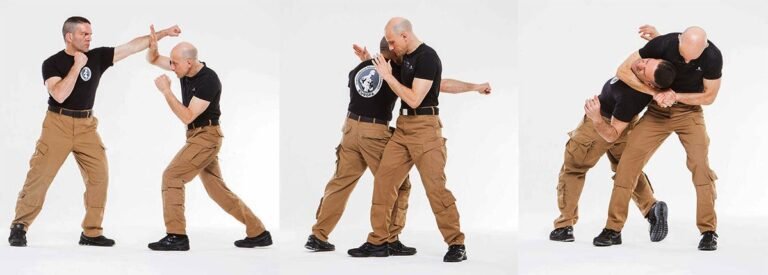
Southeast Asian Striking Systems

The striking systems of Southeast Asia are built on pressure, durability, and continuous contact. This section explores arts shaped through full-contact competition — where punches, kicks, elbows, knees, and clinch work are refined under real resistance.

Table of Contents

📖 Introduction

The striking systems of mainland Southeast Asia form one of the most direct and battle-tested approaches to stand-up combat. Developed across Thailand, Myanmar, Cambodia, and Laos, these arts share a common lineage built around efficiency, durability, and full-contact competition.

Characterised by the use of punches, kicks, elbows, knees, and clinch fighting, these systems prioritise pressure, conditioning, and adaptability under fire. Today, they remain among the most effective and widely practised striking arts in the world.

🌏 The Mekong Connection

Shared Roots, Divided Names

While these systems are now defined by national identity—Muay Thai, Lethwei, Kun Khmer, and Muay Lao—their development took place across a region where borders were historically fluid. For centuries, the Thai, Khmer, and Burmese empires overlapped, allowing fighters, techniques, and traditions to move freely.

Because of this, these arts are better understood as siblings rather than separate creations. Their similarities reflect a shared regional evolution shaped by warfare, migration, and continuous exchange.

That shared foundation has also produced modern rivalry. Cambodia and Thailand both lay claim to aspects of the art’s origins, with debates extending beyond technique into identity, heritage, and ownership. Disputes over names such as Muay Thai and Kun Khmer have led to boycotts, rule disputes, and political tension at events such as the SEA Games.

What exists today is not a set of isolated styles, but a family of closely related systems—each shaped by the same roots, but defined by how different nations have chosen to represent them.

🥊 Southeast Asian Boxing Systems


Striking systems such as Lethwei (Myanmar), Muay Thai (Thailand), Pradal Serey / Kun Khmer (Cambodia), and Muay Lao (Laos) share a common base—but the differences show up quickly under rules and competition.


⚙️ Techniques

  • Lethwei: Includes headbutts alongside punches, kicks, elbows, knees, and clinch work.
  • Muay Thai: Strong emphasis on kicks, knees, and structured clinch control.
  • Pradal Serey: Similar to Muay Thai, often more aggressive with heavy elbow use.

🥊 Protective Gear

  • Lethwei: Traditionally bare-knuckle with minimal protection.
  • Muay Thai / Pradal Serey: Use gloves; protective gear varies by level.

📊 Scoring & Victory

  • Lethwei: Prioritises knockouts; draws common without a finish.
  • Muay Thai / Pradal Serey: Scored on effective strikes, balance, and control.

📏 Rules & Clinch

  • Lethwei: Fewer restrictions, allowing prolonged clinch and rough exchanges.
  • Muay Thai: Clinch is central but controlled and actively refereed.
  • Pradal Serey: Similar structure with regulated clinch exchanges.

🎭 Culture & Tradition

  • Muay Thai: Deeply tied to Thai culture, with rituals such as the Wai Kru and traditional music.
  • Pradal Serey: Strong symbol of Cambodian identity and heritage.

⚖️ What This Means in Practice

Despite shared foundations, the differences come down to rules, intensity, and intent—from the raw, knockout-driven approach of Lethwei to the structured, scoring-based systems of Muay Thai and Pradal Serey.

🇹🇭 Thailand

🥊 Muay Thai

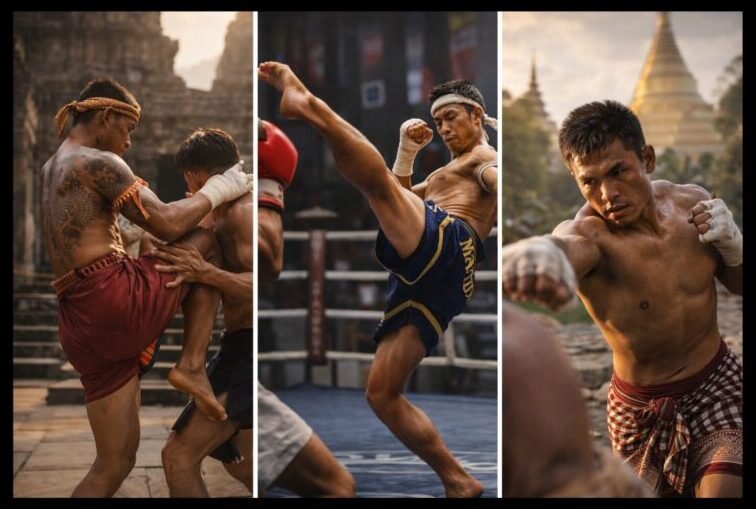
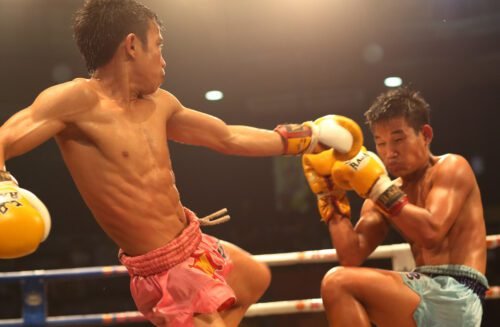
Muay Thai, known as the “Art of Eight Limbs,” is Thailand’s national combat sport, built around punches, kicks, elbows, and knees, supported by a highly developed clinch system. It evolved from older battlefield systems into a modern, rule-based sport while retaining its emphasis on durability and controlled aggression.

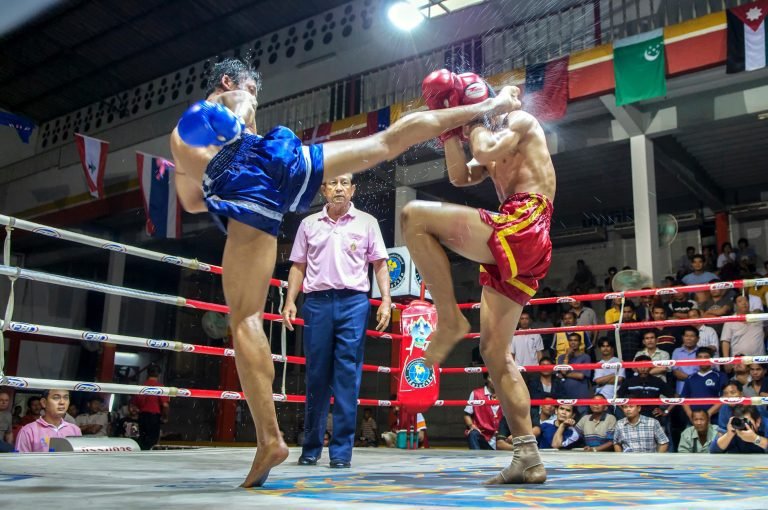
Muay Thai fighter. Flying Knee. Kickboxing. Martial Arts Training. Conditioning. Fight Club. Super Soldier Project.

In Muay Thai, powerful shin kicks are a defining weapon, delivered with precision and conditioning.

Unlike many striking arts, Muay Thai prioritises attrition and control, breaking opponents down through body kicks, clinch pressure, and cumulative damage rather than relying on single decisive strikes. It remains one of the most pressure-tested striking systems in the world, widely used in modern combat sports.

Training involves: 

  • Striking: Punches, kicks, elbows, and knees.
  • Clinch: Off-balancing, control, and knee strikes.
  • Conditioning: Durability, timing, and resilience.
  • Strategy: Cumulative damage and positional dominance.
  • Competition: Ring-based bouts judged on control and effectiveness.

Best for: Striking power, clinch dominance, and combat conditioning.

🏟️ The Stadium System

In Thailand, Muay Thai developed within a structured stadium system, with venues like Rajadamnern Stadium and Lumpinee Boxing Stadium shaping how fights are judged and fought.

This environment emphasises balance, control, and visible dominance, refining the art into a system built on timing, efficiency, and ring awareness.

That structure helped Muay Thai evolve into the region’s most standardised and widely exported striking art.

👊📜 Muay Boran

Muay Boran (“ancient boxing”) is the collective term for Thailand’s pre-modern striking systems, forming the foundation of modern Muay Thai. It developed for battlefield use and self-defence, favouring direct, often decisive techniques over prolonged exchanges.

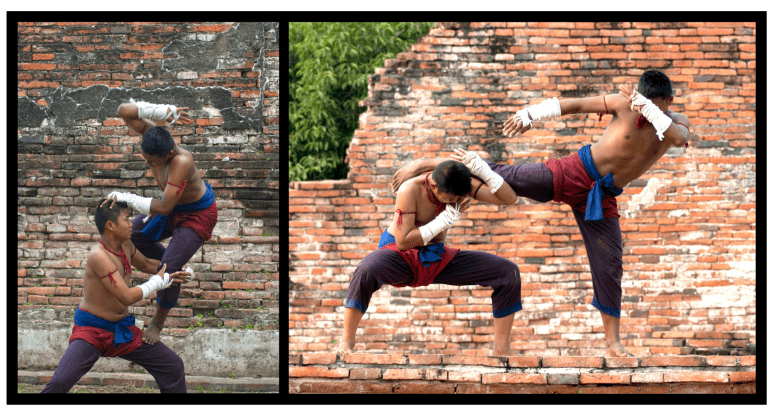
Muay Thai. Kickboxing. Martial Arts Training. Conditioning. Fight Club. Super Soldier Project.

Muay Boran, a traditional Thai martial art, has a rich history rooted in ancient warfare and has evolved over centuries as a highly effective and versatile fighting system.

Unlike modern Muay Thai, Muay Boran is not standardised, consisting of regional systems such as Muay Chaiya, Muay Korat, and Muay Lopburi, each with its own emphasis. Today, it is preserved primarily as a cultural and educational system rather than a competitive one.

Key themes include:

  • Striking: Punches, kicks, elbows, and knees.
  • Clinch: Control and off-balancing.
  • Application: Combat-focused rather than sport-based.
  • Variation: Multiple regional systems.
  • Role: Historical foundation of Muay Thai.

Best for: Traditional striking and the combat roots of Muay Thai.

⚔️ Krabi–Krabong

Krabi–Krabong is a traditional Thai weapons system developed during the Ayutthaya Kingdom, where it formed the foundation of Siamese military training. It focuses on bladed and impact weapons, including swords, staffs, and spears, often used in combination.

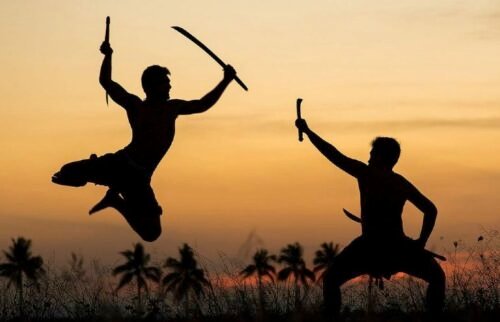
Krabi Krabong. Thai Martial Arts. Far East Asian Martial Arts. martial arts disciplines. Fighting arts of the world. best martial arts for self defence. Health and fitness. healthy lifestyle. Stress management. Benefits of exercise.

Krabi Krabong is a traditional Thai martial art that focuses on weapon-based combat, utilizing a combination of swords, staffs, and other weapons in a fluid and intricate fighting system.

The system is defined by fluid movement, with constant transitions between attack and defence. Rather than static exchanges, it emphasises timing, rhythm, and weapon control, allowing practitioners to adapt dynamically in combat.

Key themes include:

  • Weapons: Swords, staffs, spears, and paired weapons.
  • Movement: Flow-based transitions between offence and defence.
  • Timing: Positioning and rhythm over force.
  • Application: Battlefield-oriented training.
  • Role: Weapons counterpart to Thai striking systems.

Best for: Weapons combat, coordination, and battlefield skills.

🪖 Lerdrit

Lerdrit is a modern Thai military combat system derived from Muay Boran and elements of Krabi–Krabong, adapted for real-world application rather than traditional practice. It strips away ritual and structure in favour of direct, functional techniques.

Lerdrit. Thai Martial Arts. Far East Asian Martial Arts. martial arts disciplines. Fighting arts of the world. best martial arts for self defence. Health and fitness. healthy lifestyle. Stress management. Benefits of exercise.

Lerdrit is a traditional Thai martial art known for its practical and efficient techniques, emphasizing close-quarters combat and self-defense skills.

The system prioritises efficiency and rapid neutralisation, focusing on close-range striking, disruption, and aggressive counterattacks suited to confined or high-pressure environments.

Key themes include:

  • Striking: Elbows, knees, and low kicks.
  • Range: Close-quarters engagement.
  • Strategy: Forward pressure and rapid resolution.
  • Application: Military and law enforcement contexts.
  • Focus: Practical, no-frills combat.

Best for: Military combatives, close-quarters combat, and practical self-defence.

🌀🗡️ Silat Pattani

Silat Pattani is a regional system from southern Thailand, forming part of the wider Silat tradition of the Malay Archipelago. It is characterised by fluid movement, deceptive rhythm, and strong emphasis on close-range control.

The system blends striking, grappling, and weapon use into a single framework, prioritising evasion, timing, and disruption over direct confrontation. Its approach reflects both practical combat needs and regional cultural influences.

Key themes include:

  • Movement: Fluid, angular, and evasive.
  • Range: Close-quarters focus.
  • Techniques: Strikes, sweeps, throws, and joint locks.
  • Weapons: Integration of blades such as the kerambit.
  • Strategy: Deception and off-balancing.

Best for: Close-quarters combat, fluid movement, and weapon integration.

📌 Fight Culture

The Crowd and the Stakes

In mainland Southeast Asia, striking arts are not just sports—they are part of everyday culture. Fights take place in packed stadiums, temple festivals, and local arenas, where crowds gather not as passive spectators, but as active participants in the outcome.

Gambling is central to this environment. Bets are placed openly, and the crowd responds to every exchange—shifting perception in real time based on visible damage, control of the clinch, and momentum. A clean strike, a dominant position, or a loss of composure can change how a fight is read instantly.

This pressure shapes behaviour. Composure becomes as important as aggression. Fighters are expected to manage distance, control the pace, and respond intelligently rather than recklessly. The ability to read the fight—to know when to press, when to hold position, and when to conserve energy—is a defining skill.

The result is a fight culture built on intensity, resilience, and constant feedback—where technique is tested not in isolation, but in front of a live, invested audience.

🇲🇲 Myanmar

Martial arts from Myanmar (Burma) are defined by a direct, uncompromising approach to combat, built around striking, close-range engagement, and physical durability. Systems such as Lethwei and Bando prioritise effectiveness over refinement, reflecting a culture where fighting was shaped by survival, conflict, and minimal regulation.

Unlike more structured or sport-refined systems, Burmese martial arts emphasise resilience, aggression, and the ability to absorb and deliver damage, with training focused on conditioning and practical application. Today, they are practised for competition, self-defence, and cultural preservation.

👊 Lethwei

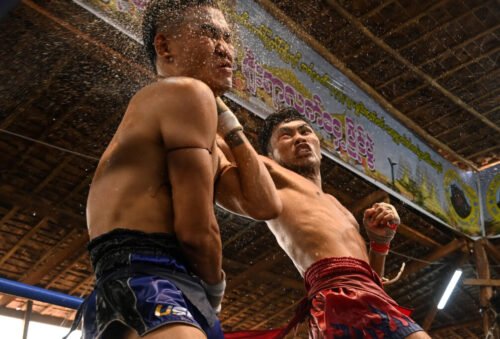
Lethwei is Myanmar’s most recognisable combat system, a bare-knuckle striking art allowing punches, kicks, elbows, knees, and headbutts. It is one of the most direct and aggressive striking formats, with minimal rules and a strong emphasis on decisive finishes.

Lethwei. Burmese Boxing. Far Eastern Martial Arts. Asian Martial Arts.

Lethwei (Burmese Boxing): Bare-knuckle with simple wraps, and headbutts are fully legal—earning its name as the Art of Nine Limbs.

Unlike point-based systems, Lethwei prioritises knockouts and endurance, demanding high levels of conditioning and the ability to continue under damage. It represents the rawest expression of Burmese striking culture.

Key themes include:

  • Striking: Full use of limbs, including headbutts.
  • Strategy: Forward pressure and aggressive engagement.
  • Conditioning: High durability and impact tolerance.
  • Objective: Knockout or inability to continue.
  • Role: National sport and combat system.

Best for: Aggressive striking, durability, and bare-knuckle combat.

⌛ The Two-Minute Recovery

Lethwei, the “Art of Nine Limbs,” includes a rule that defines its identity. If a fighter is knocked unconscious, their corner is allowed a one-time, two-minute recovery attempt. If the fighter can continue, the bout resumes.

In Lethwei, a knockout only counts if the fighter cannot return—making resilience as important as technique.

🥊 Bando

Bando is a traditional Burmese martial art developed as a complete combat system, combining striking, grappling, and weapons within a single framework. It emphasises adaptability, allowing practitioners to transition between ranges depending on the situation.

While rooted in older warrior traditions, Bando today is often practised in structured settings, preserving its techniques as part of Myanmar’s cultural heritage.

Key themes include:

  • Striking: Punches, kicks, elbows, and knees.
  • Grappling: Clinch work, control, and throws.
  • Weapons: Knives, sticks, and staffs.
  • Movement: Fluid transitions between ranges.
  • Role: Traditional system with broad technical scope.

Best for: Striking, grappling integration, and traditional Burmese combat.

⚔️ Banshay

Banshay is a traditional weapons system focused on bladed and impact weapons, forming a key part of Burmese martial culture. It is built around coordinated movement, timing, and continuous transitions between offence and defence.

Banshay. Far East Asian Martial Arts. martial arts disciplines. Fighting arts of the world. best martial arts for self defence. Health and fitness. healthy lifestyle. Stress management. Benefits of exercise.

The weapons styles and techniques of ancient Burma are kept alive in the art of Banshay.

The system reflects both combat application and cultural expression, with elements of performance and demonstration alongside practical weapon use.

Key themes include:

  • Weapons: Dha (sword), staff, and traditional tools.
  • Movement: Circular, flowing transitions.
  • Timing: Positioning and rhythm in weapon exchange.
  • Application: Combat and demonstration.
  • Role: Core weapons system within Burmese arts.

Best for: Weapons training, flow, and traditional Burmese combat.

🤼 Naban

Naban is a traditional Burmese grappling system focused on control, balance disruption, and close-range engagement. It complements the striking-heavy systems of Myanmar by developing positional dominance and manipulation.

The system emphasises efficient movement and body control, using leverage and timing to neutralise opponents rather than relying on strength alone.

Key themes include:

  • Clinch: Control and off-balancing.
  • Techniques: Throws, joint locks, and submissions.
  • Movement: Fluid positional control.
  • Focus: Close-range grappling.
  • Role: Traditional wrestling system.

Best for: Grappling, control, and traditional wrestling.

🛕🦯 Pongyi Thaing

Pongyi Thaing is a traditional Burmese staff-based system, historically associated with Buddhist monasteries, where the staff was used for self-defence. It focuses on reach, leverage, and controlled striking.

The system emphasises range management and continuous movement, using the staff as both a defensive barrier and offensive tool.

Key themes include:

  • Weapon: Staff (and sometimes spear).
  • Range: Distance control and reach advantage.
  • Movement: Circular, continuous transitions.
  • Application: Defence and multi-opponent awareness.
  • Role: Traditional weapons system with cultural roots.

Best for: Staff work, range control, and traditional weapons training.

🪖 Lethwei and Myanmar’s Political Landscape

In recent years, Lethwei has been affected by the political instability in Myanmar, particularly following the 2021 military coup. Ongoing conflict and economic disruption have impacted training, events, and the ability to host consistent competitions.

Fighters and promotions have had to adapt, with some events reduced, relocated, or moved internationally. At the same time, Lethwei continues to serve as a symbol of national identity and resilience, maintaining its presence despite difficult conditions.

🇰🇭 Cambodia

Cambodian martial arts are rooted in a long-standing combat tradition shaped by the Angkor period, blending striking, grappling, and cultural expression. While some systems declined historically, modern efforts have led to a strong revival, reconnecting these arts with national identity.

Today, Cambodian systems balance combat sport and heritage preservation, with striking arts like Pradal Serey alongside more comprehensive traditional systems such as Bokator.

🪖 Survival and Revival

During the Khmer Rouge regime in the 1970s, Cambodia’s martial arts were nearly erased, with many practitioners and teachers executed. Their survival is owed to a small number of masters who preserved the knowledge in secret and later rebuilt the systems.

Today, Kun Khmer and Lbokator are experiencing a cultural revival, promoted as symbols of national identity and resilience.

🗿 🥋 Bokator (Kun Lbokator)

Bokator (formally known as Kun Lbokator) is Cambodia’s traditional battlefield system, predating modern ring-based striking arts. It combines striking, grappling, ground work, and weapons training into a broad, integrated system.

Bokator. Cambodian Martial arts. Far East Asian Martial Arts. martial arts disciplines. Fighting arts of the world. best martial arts for self defence. Health and fitness. healthy lifestyle. Stress management. Benefits of exercise.

Bokator is an ancient Khmer battlefield art, one of Cambodia’s oldest fighting systems. It incorporates animal-inspired techniques, drawing from creatures like snakes, tigers, and monkeys.

Bokator is designed as a complete combat system, blending the “eight limbs” with throws, joint locks, and close-range finishing techniques.

Key themes include:

  • Diversity: Striking, grappling, and locking integrated into one system.
  • Animal influence: Movements inspired by animals such as lions, elephants, and monkeys.
  • Attire: Traditional krama (scarf) and sangvar (arm cords).
  • Role: Cultural preservation and post-conflict revival in Cambodia.

Best for: Historical systems, total combat training, and varied technical exposure.

Weapons training is closely tied to Bokator, reflecting its battlefield origins and emphasis on adaptability between armed and unarmed combat.

Training includes:

  • Weapons: Staffs, short sticks, swords, and tools such as the phkak (axe-like club).
  • Integration: Seamless transition between weapon strikes and empty-hand techniques.
  • Forms (Kbach): Structured sequences linking movement, timing, and application.
  • Footwork: Grounded, stable, and power-driven.

Best for: Traditional weapon systems and historical combat methods.

🥊 Pradal Serey (Kun Khmer)

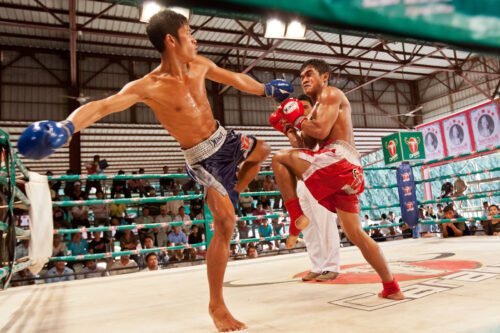
Pradal Serey is Cambodia’s primary striking sport, built around punches, kicks, elbows, and knees, with strong emphasis on clinch work and close-range exchanges. It shares technical similarities with other Southeast Asian systems but retains its own stylistic identity.

Pradal Serey. Far East Asian Martial Arts.Asian Martial Arts.

Pradal Serey is considered the national sport of Cambodia and is often associated with Cambodian nationalism.

It is widely practised as a national sport, combining full-contact competition with traditional elements, including ritual movement and cultural influence drawn from Cambodia’s historical arts.

Key themes include:

  • Striking: Punches, kicks, elbows, and knees.
  • Clinch: Control and short-range engagement.
  • Style: Fluid combinations and aggressive exchanges.
  • Competition: National sport with structured bouts.
  • Culture: Rituals and movement influenced by classical traditions.

Best for: Striking, clinch work, and traditional Cambodian kickboxing.

🗿 The Stone Legacy

On the walls of Angkor Wat and Bayon, 12th-century carvings depict warriors using clinch positions, elbows, and knees that closely resemble modern Kun Khmer. For Cambodia, these bas-reliefs are more than decoration—they are historical “receipts,” linking modern practice to the Khmer Empire’s martial past.

🇱🇦 Laos

Laotian martial arts sit within the wider Southeast Asian striking tradition, sharing common roots with systems such as Muay Thai and Pradal Serey, but maintaining a quieter, more locally preserved identity.

Rather than large-scale sport development, systems like Muay Lao are closely tied to festival culture, ritual practice, and regional tradition, blending combat function with cultural expression.

🥊 Muay Lao

Muay Lao is a traditional striking system built around punches, kicks, elbows, and knees, closely related to neighbouring Southeast Asian arts. While sharing a similar technical base, it reflects local variation in rhythm, training, and cultural practice.

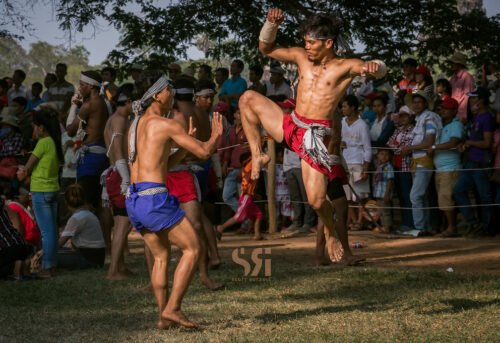
Muay Lao. Far East Asian Martial Arts. martial arts disciplines. Fighting arts of the world. best martial arts for self defence. Health and fitness. healthy lifestyle. Stress management. Benefits of exercise.

Muay Lao is another part of the Southeast Asian striking family—same roots, different rhythm.

Unlike more globally standardised systems, Muay Lao remains more closely tied to regional events and traditional settings, where combat is integrated with ceremony and community identity.

Key themes include:

  • Striking: Punches, kicks, elbows, and knees.
  • Clinch: Close-range control and positioning.
  • Weapons: Some traditions include sticks and blades.
  • Context: Festival-based competition and local events.
  • Culture: Pre-fight ritual dances and spiritual elements.

Best for: Striking, clinch work, and traditional Southeast Asian combat.

🛕🌙  The Temple Ring

In Laos, martial arts are often rooted in community rather than professional sport. Major bouts take place at Boun (temple festivals), fought on grass or makeshift rings under the moonlight.  Here, the art remains a cultural rite, where reputation is local and tied to community rather than global recognition.

🎭 Ritual and Rhythm

The Tempo of the Fight

Across mainland Southeast Asia, ritual and music are not decorative—they are part of the fighting environment.

In Thailand, bouts begin with the Wai Kru, a ceremonial dance paying respect to teachers and lineage, grounding the fight in tradition. As the contest unfolds, live music accompanies the action, subtly shaping tempo. Fights build gradually, with pacing influenced by scoring, control, and crowd response.

In Cambodia, similar ceremonial elements accompany Kun Khmer, often paired with music that drives a more direct, aggressive rhythm. In Myanmar, Lethwei retains a rawer atmosphere, where ritual signals and crowd energy generate intensity rather than structured pacing. In Laos, fights at temple festivals are less formal, but still tied to ceremony and community, with rhythm emerging from the environment rather than being tightly controlled.

These differences matter. The tempo of a fight—when it builds, when it explodes, and how it is managed—is shaped not only by the fighters, but by the cultural framework around them.

What emerges is a system where rhythm, timing, and composure are not just technical attributes, but responses to a living environment.

If you have enjoyed this post please share or feel free to comment below 🙂

Leave a Reply

Your email address will not be published. Required fields are marked *

This site uses Akismet to reduce spam. Learn how your comment data is processed.

error: Content is protected !!

Join the Super Soldier Project Mailing List Today!!