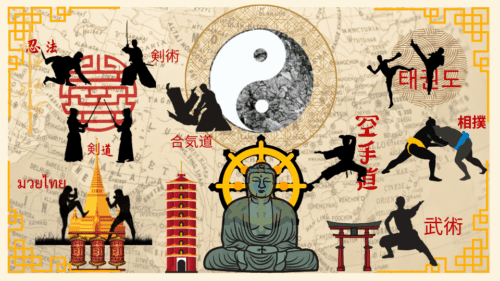
Japanese Martial Arts: The Way of the Warrior

Japanese martial arts span battlefield systems, modern sport, and disciplined training frameworks. This section breaks down that spectrum — from traditional schools to modern budō — showing how each approach is structured and applied.

Table of Contents

🇯🇵 Japan

Japanese martial arts cover a wide range of combat systems, from striking and throws to grappling and weapons training. Some were shaped by battlefield needs, others evolved into modern sports, but most share the same foundations: discipline, technical precision, and a strong training culture built around respect and consistency.

Many are influenced by Bushidō (the warrior code), with an emphasis on control, composure, and long-term self-mastery. Today, Japanese martial arts are commonly trained for self-defence, fitness, personal development, and competition.

⏳ The 1868 Divide

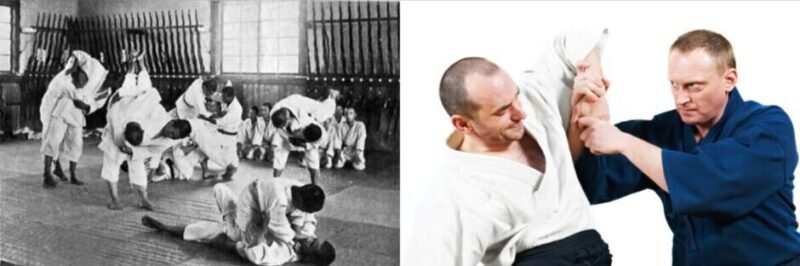
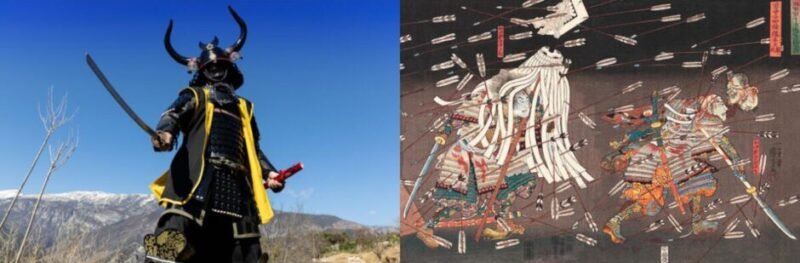
Japanese martial arts are traditionally split into two categories: Koryū and Gendai Budō.

  • Koryū (Old Schools): Systems founded before the Meiji Restoration (1868). These were created for the battlefield and often kept secret within specific lineages.
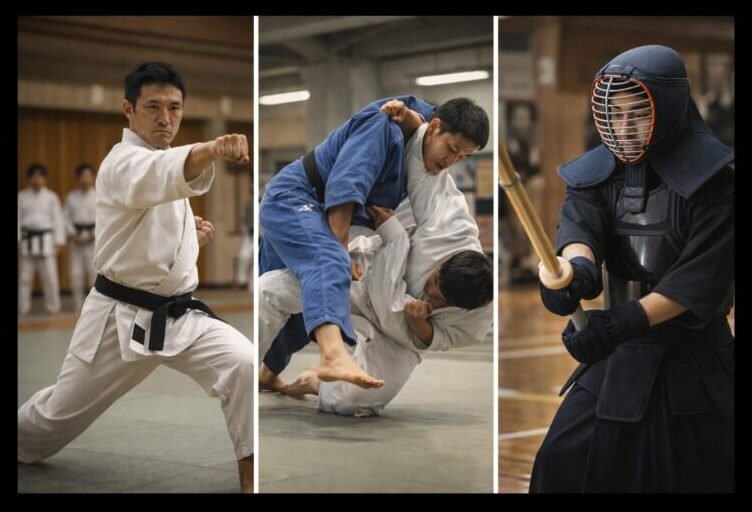
  • Gendai Budō (Modern Arts): Systems formalised after 1868, such as Judo, Kendo, and Aikido. These were designed for character development, physical education, and sport, making them more accessible to the public.

🥋 Unarmed Systems (Striking & Grappling)

👊🏻 Karate

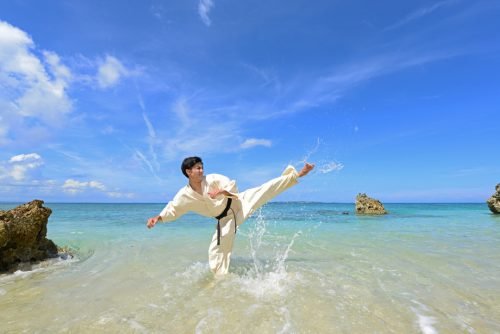
Karate is a striking martial art originating in Okinawa, built around punches, kicks, knees, elbows, and open-hand techniques. It is defined by strong fundamentals, structured training, and efficient power generation.

It developed under unique historical conditions, including weapon restrictions in Okinawa and cultural exchange with Chinese martial arts, which shaped its technical evolution.

Training involves:

  • Kihon: Core techniques, stances, and mechanics.
  • Kata: Pre-arranged forms developing structure and movement quality.
  • Kumite: Sparring (ranging from point-based to full-contact depending on style).
  • Conditioning: Strength, posture, endurance, and impact tolerance.

Major styles include:

  • Shotokan (linear, long stances, powerful basics and point-style sparring).
  • Goju-ryu (hard–soft system, close-range strikes, breathing and body conditioning).
  • Shito-ryu (large kata syllabus, blend of hard and soft elements).
  • Wado-ryu (emphasis on evasion, timing, and jujutsu-influenced movement).
  • Kyokushin (full-contact, heavy conditioning, low kicks and knockdown fighting).

Karate exists on a spectrum—from sport-focused systems to practical self-defence schools—with quality heavily dependent on instruction and training methodology.

Best for: Striking fundamentals, discipline, and structured progression.

Okinawan Karate. Martial Arts. Fighting Arts. Unarmed combat.Far East Asian Martial Arts.Asian Martial Arts.

Karate developed in Okinawa under weapon restrictions and strong Chinese martial influence. As trade with China grew, indigenous Okinawan fighting methods merged with imported techniques to form what became Karate — literally “empty hand” (kara = empty, te = hand).

🥋 Judo

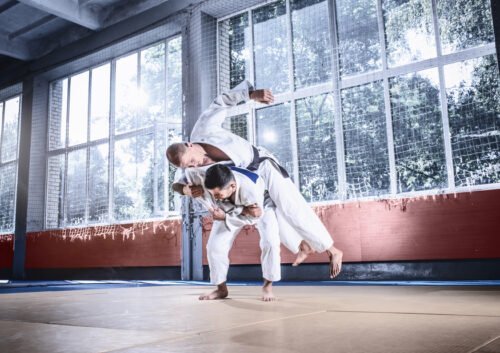
Judo is Japan’s best-known grappling art and an Olympic sport, built around throws, pins, and submissions. Its core principle is simple: use timing, leverage, and balance-breaking rather than brute strength.

Developed in the late 19th century by Jigoro Kano, it evolved from older Jujutsu systems, while also being designed as a method of physical education and character development.

Training involves:

  • Throws (nage-waza): Off-balancing and projecting an opponent cleanly.
  • Pins (osaekomi): Controlling position through pressure and stability.
  • Submissions (shime-waza / kansetsu-waza): Chokes and joint locks under rules.
  • Grip fighting: Control through the judogi.

Competitive Judo is fast and tactical, with matches often decided in seconds through a clean throw (ippon) or dominant control.

Best for: Throws, clinch control, and high-percentage takedowns under pressure.

Judo.Far East Asian Martial Arts. Far East Asian Martial Arts.

Judo, despite being widely known as a martial art and Olympic sport, was originally developed by Jigoro Kano in Japan as a physical education system focused on self-improvement and moral development.

🌀 Aikido

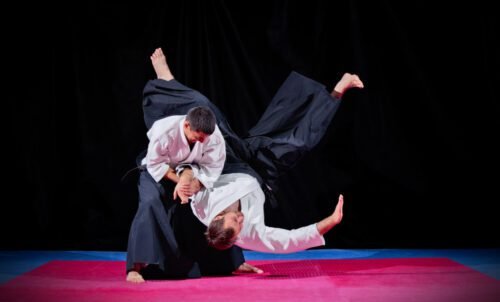
Aikido is a non-competitive Japanese martial art focused on blending with force, redirection, and control through throws, pins, and joint locks. Its aim is neutralisation rather than direct domination.

Created in the early 20th century by Morihei Ueshiba, it emphasises coordination, timing, and composure under pressure.

Training involves:

  • Redirection: Using the attacker’s movement rather than resisting it.
  • Joint locks and pins: Controlling structure and balance.
  • Throws: Off-balancing through angle and timing.
  • Awareness: Maintaining composure and positioning.

Aikido is often trained for personal development and movement principles, though its practical effectiveness depends heavily on resistance and pressure-testing within the school.

Best for: Control, redirection, and non-competitive technical practice.

Aikido. Japanese Martial arts. Far East Asian Martial Arts. martial arts disciplines. Fighting arts of the world. best martial arts for self defence. Health and fitness. healthy lifestyle. Stress management. Benefits of exercise.

Aikido focuses on blending with an opponent’s movement and redirecting their energy, using joint locks, throws, and pins to neutralize attacks with minimal harm.

🤼 Jujutsu (Ju-jitsu)

Jujutsu is the traditional Japanese close-combat system family, built around joint locks, throws, and grappling control. It was originally designed to allow an unarmed fighter to survive against armed or armoured opponents.

Training involves:

  • Leverage over strength: Structure and timing over force.
  • Joint manipulation: Locks, breaks, and pain compliance.
  • Throws and takedowns: Balance disruption rather than collision.
  • Clinch control: Dominance at close range.

Jujutsu has influenced a wide range of modern systems, including:

  • Judo.
  • Aikido.
  • Brazilian Jiu-Jitsu (via Mitsuyo Maeda and the Gracie lineage).
  • Sambo.
  • Modern MMA grappling and military combatives.

Best for: Joint locks, throws, and close-range control with traditional roots.

Japanese Jujutsu influenced modern Brazilian Jiu-Jitsu via Mitsuyo Maeda and later Carlos Gracie, and also shaped arts like Judo, Aikido, Sambo, and MMA. It further informed Western military combatives, including programs used by the U.S. Marines and British forces.

💥 Sumo

Sumo is Japan’s traditional full-contact wrestling sport, with roots stretching back over 2,000 years and strong ties to Shinto ritual and cultural identity. Victory is achieved by forcing an opponent out of the ring or making them touch the ground.

Involves:

  • Explosive starts: Immediate collision and dominance.
  • Balance and leverage: Control of centre of gravity under pressure.
  • Ringcraft: Positioning, footwork, and boundary awareness.
  • Training drills: Including shiko (stomping) for strength and stability.

Professional tournaments (basho) are held six times per year. Yokozuna is the highest rank, awarded based on sustained dominance and consistency—not a single tournament win.

Best for: Explosive power, balance, and short-range grappling dominance.

Sumo. Japanese Martial arts. Far East Asian Martial Arts. martial arts disciplines. Fighting arts of the world. best martial arts for self defence. Health and fitness. healthy lifestyle. Stress management. Benefits of exercise.

Sumo showdown. Only one will get to be the Yokozuna (Grand Champion).

🏯 Samurai-Era Systems

(Traditional Budō and Weapon Arts)

Feudal Japan’s Samurai trained for a world where violence was immediate, decisive, and often lethal. Their systems were built around weapons, discipline, and a strict code of conduct, shaping both combat and behaviour.

Across different weapons, these arts share common fundamentals: distance, timing, composure, and decisive action.

🗡️ Kenjutsu

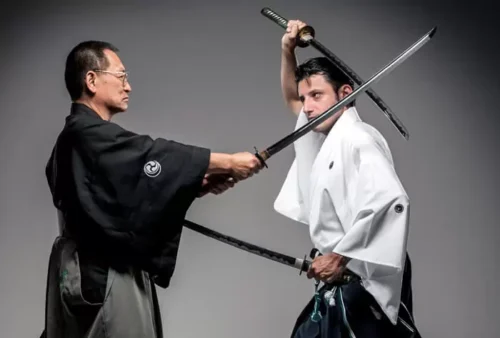
Kenjutsu is classical Japanese swordsmanship, developed for Samurai combat using the katana and related blades. It evolved through distinct schools (Ryū) with strict lineages, refining battlefield and duelling methods into structured systems.

Training Involves:

  • Cutting mechanics: Power generation through structure and alignment.
  • Distance and timing: Striking at the decisive moment.
  • Footwork: Entering safely while denying counters.
  • Mental discipline: Calm, deliberate execution under threat.

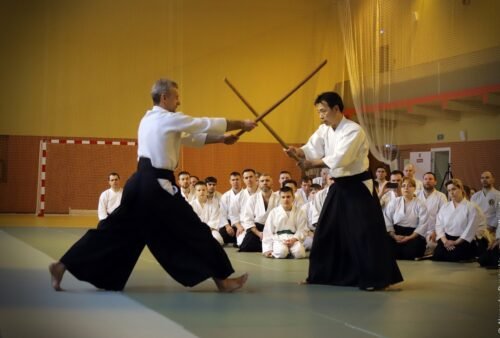
Training is often conducted with a bokken (wooden sword), preserving technique without live-blade risk. Kenjutsu is closely tied to Mushin (“no-mind”)—a state of immediate, unforced action.

Best for: Sword fundamentals, timing, and traditional duelling mechanics.

Kenjutsu.Far East Asian Martial Arts.Asian Martial Arts.

Kenjutsu developed from duelling Samurai schools (Ryu).  Today practitioners use the wooden sword (bokken) for practice as opposed to the naked blade of the Samurai Katana.  

⚔️ Kendo

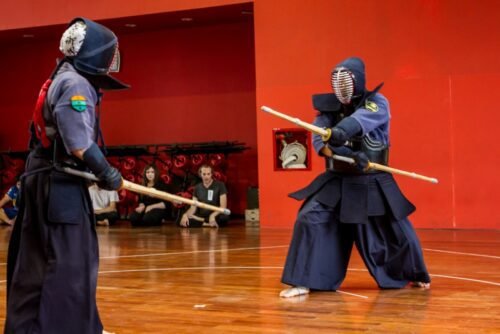
Kendo is modern Japanese sport swordsmanship, derived from Kenjutsu traditions and adapted for safe, competitive practice. It uses protective armour (bogu) and a bamboo sword (shinai) to train speed, precision, and control.

Training Involves:

  • Footwork and posture: Clean, efficient movement.
  • Timing and distance: Entering correctly rather than chasing strikes.
  • Discipline: Formal etiquette and composure.
  • Sparring: Competitive exchanges for clean scoring hits.

Kendo is widely practised internationally, sitting between sport and cultural discipline.

Best for: Timing, distance control, and weapon-based discipline.

Kendo.Far East Asian Martial Arts.Asian Martial Arts.

Kendo evolved from the practice of kenjutsu, the traditional Japanese swordsmanship, into a modern sport emphasizing discipline, respect, and the development of one’s character.

⚡ Iaido (Iaijutsu)

Iaido focuses on drawing and cutting in a single motion, reflecting the need to respond instantly to sudden threats. It is trained primarily through precise, controlled forms.

Training Involves:

  • Immediate response: Acting at the first moment.
  • Kata practice: Structured scenarios building timing and control.
  • Composure: Calm awareness under pressure.

Iaido is generally non-competitive, emphasising precision, awareness, and decisive execution.

Best for: Fast draw mechanics, presence, and decisive first action.

Iaido. Iaijutsu. Japanese Martial arts. Far East Asian Martial Arts. martial arts disciplines. Fighting arts of the world. best martial arts for self defence. Health and fitness. healthy lifestyle. Stress management. Benefits of exercise.

Iaido (aka Iaijutsu) was used in feudal duelling to win decisively with a single drawing of the sword and killing stroke.

🪵 Sōjutsu (Yari-jutsu)

Sōjutsu is Japanese spear fighting using the yari, a primary battlefield weapon valued for reach, penetration, and formation use.

Training Involves:

  • Thrusting mechanics: Direct, efficient attacks.
  • Weapon control: Managing line and distance.
  • Parries and redirection: Deflecting incoming force.
  • Close-range use: Using the shaft for control and disruption.

Today, it is primarily preserved for traditional study and weapons understanding.

Best for: Spear control, thrusting dominance, and battlefield reach.

🌙 Naginatajutsu

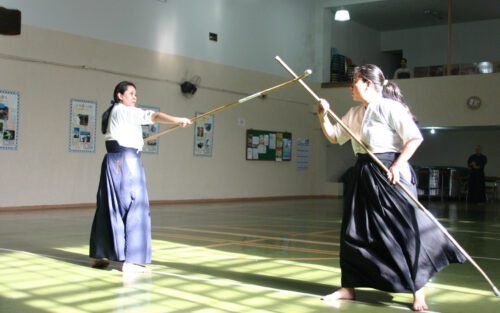
Naginatajutsu uses the naginata, combining the reach of a polearm with curved blade cutting mechanics. It allows control of distance through sweeping and angular movement.

Training Involves:

  • Sweeps and cuts: Controlling space and movement.
  • Thrusts and parries: Keeping opponents outside range.
  • Footwork: Fluid transitions and positioning.

Historically used by Onna-bugeisha and warrior classes, it is now practised largely for cultural preservation and structured training.

Best for: Reach weapons, sweeping attacks, and fluid weapon movement.

Naginatajutsu.Far East Asian Martial Arts.Asian Martial Arts.

The naginata was associated with female warriors (onna-musha) and also used by warrior monks (Sōhei), highlighting its effectiveness and prominence on the battlefield.

🛡️ The Protector’s Reach

Historically, the Naginata was the primary weapon of the Onna-musha (women of the warrior class). While the sword was the “soul of the samurai,” the Naginata was the guardian of the home. Its significant reach allowed a defender to keep larger, stronger opponents at a distance, making it the ideal tool for protecting a household and family during times of war.

🦯 Bōjutsu

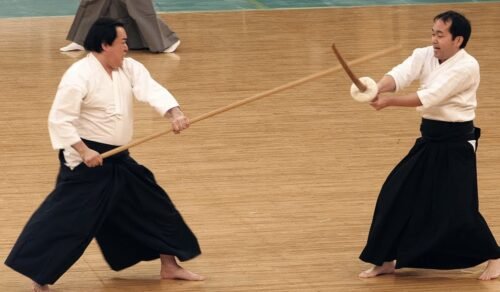
Bōjutsu is the art of the bō (long staff), one of the simplest and most adaptable traditional weapons. It develops core mechanics applicable across multiple weapon systems.

Training Involves:

  • Range management: Keeping bladed weapons at distance.
  • Two-ended striking: Continuous offensive potential.
  • Deflection: Strong defensive structure without a blade.

Its principles translate well to improvised weapons, making it one of the most functionally transferable traditional arts.

Best for: Staff fundamentals, range control, and weapon versatility.

Bojutsu. Japanese Martial arts. Far East Asian Martial Arts. martial arts disciplines. Fighting arts of the world. best martial arts for self defence. Health and fitness. healthy lifestyle. Stress management. Benefits of exercise.

The Bo (longstaff), here used to keep a sword opponent at bay.

🎯 Kyūdō

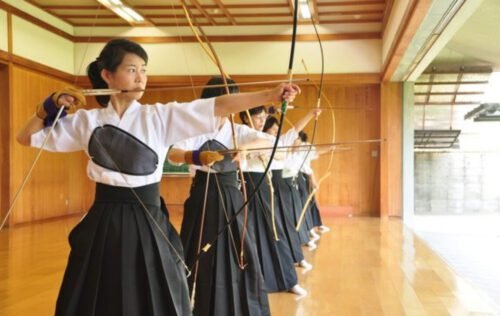
Kyūdō is Japanese archery, focused on form, control, and mental discipline as much as technical accuracy.

Training Involves:

  • Form: Deliberate, structured shooting mechanics.
  • Ritual: Discipline expressed through posture and behaviour.
  • Mental state: Stillness and focus during execution.

While competition exists, Kyūdō is primarily practised as a discipline of control and self-mastery.

Best for: Precision, composure, and disciplined execution.

Kyudo.Far East Asian Martial Arts.Asian Martial Arts.

Kyudo embodies discipline, precision, and spiritual focus, emphasizing the harmonious connection between the archer, bow, and target.

🐎 Bajutsu

Bajutsu is the Samurai art of horsemanship, focused on controlling and maneuvering a horse under combat conditions. It enabled mobility, positioning, and effectiveness in mounted warfare.

Training Involves:

  • Riding control: Stability and command at speed.
  • Combat integration: Using weapons while mounted.
  • Mobility: Controlling distance and positioning.
  • Archery link: Applied in mounted disciplines such as Yabusame.

Bajutsu required coordination between rider and horse under pressure, making it one of the most demanding battlefield skills. Today, it is preserved mainly through demonstration and tradition.

Best for: Mounted mobility, coordination, and battlefield movement.

🥷 Specialist & Auxiliary Systems

Not all martial systems were built for direct confrontation. Some developed to support covert operations, intelligence gathering, and unconventional warfare, where avoidance, deception, and survival were more important than dominance.

🥷 Shinobi-jutsu (Ninjutsu)

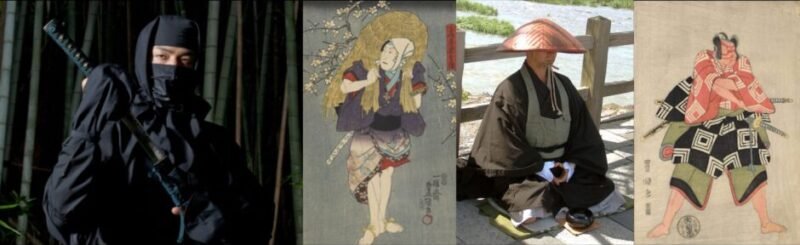
Shinobi-jutsu (commonly referred to as Ninjutsu) was not a single fighting style, but a functional skill set used by covert operatives (Shinobi) in feudal Japan. Its purpose was not to win fights, but to complete missions without detection.

Rather than a structured combat system, it functioned as a toolbox of practical capabilities, centred on movement, awareness, and adaptability in hostile environments.

Skills Included:

  • Espionage: Gathering intelligence without detection.
  • Disguise: Operating in plain sight across social roles.
  • Sabotage: Disruption, misdirection, and psychological pressure.
  • Escape and evasion: Avoiding capture rather than engaging.
  • Survival skills: Movement, concealment, and endurance in hostile terrain.
  • Weapon familiarity: Practical use of tools and mission-specific weapons.

Shinobi were not separate from the wider martial ecosystem—they often trained in existing disciplines such as:

  • Taijutsu.
  • Kenjutsu.
  • Shurikenjutsu.
  • Sōjutsu.
  • Bōjutsu.
  • Kusarigamajutsu.

These were applied selectively, depending on the task, rather than followed as a fixed system.

Best for: Stealth mindset, deception, and unconventional warfare concepts.

🧰 The Shinobi Toolbox

For the Shinobi, a weapon was simply a tool to ensure mission success. Their equipment can be broken down into three functional categories:

🎯 Disruption & Distance (Projectiles)

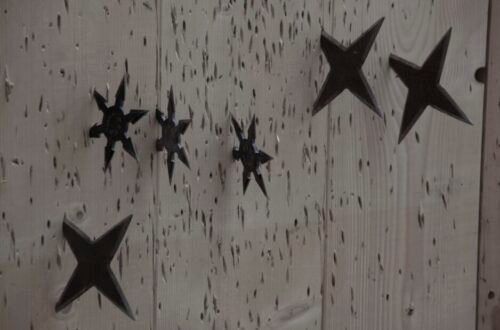
  • Shuriken: Both star-shaped (hira) and needle-shaped (bo) variants, used to distract or create openings during escape.
  • Fukiya (blowgun): A silent delivery system for toxins or irritants.
  • Metsubushi: Eggshells filled with powders (pepper, ash, glass) thrown to blind and disorient pursuers.

🧗 Infiltration & Utility (Tools)

  • Kunai: A heavy-duty tool for prying, digging, or climbing—not primarily a throwing weapon.
  • Kaginawa: Grappling hook for scaling walls and navigating structures.
  • Makibishi: Spiked caltrops used to slow pursuit, especially effective against light footwear.

⚔️ Close-Quarter Survival (Specialist Arms)

  • Kusarigama / Kyoketsu-shoge: Chain-based weapons used to entangle and control armed opponents.
  • Shuko (hand claws): Metal spikes worn on the palms. Primarily used for climbing, they were also devastating in a grappling exchange.
  • Shinobigatana: A shorter, straighter sword; often paired with a multi-use scabbard that could act as a hidden compartment or a snorkel.

On the Ninja...

Shinobi-jutsu (忍術)—often referred to as Ninjutsu—was the discipline associated with covert operatives rather than frontline warriors. While “Ninjutsu” is the more widely used modern term, Shinobi-jutsu more accurately reflects its original meaning: the art of stealth and covert action.

Shinobi served feudal lords as intelligence agents, specialising in espionage, infiltration, and misdirection. Their skillset centred on unconventional warfare and survival, with combat used only when necessary.

Many were associated with regions such as Iga and Kōga, where families developed reputations for covert skills before serving various warlords, including Tokugawa Ieyasu.

The popular image of the ninja as a black-clad night assassin is largely a modern romanticisation. In reality, Shinobi relied on blending in, often disguised as farmers, monks, merchants, or labourers.

Modern claims of continuous Ninjutsu lineages are widely debated. Some organisations—such as those linked to Togakure-ryū—claim historical continuity, but these assertions require careful scrutiny.

The popular image of the ninja as a stealthy night assassin is largely myth. In reality, shinobi were covert operatives—akin to early intelligence agents—who gathered information in disguise, often posing as farmers, monks, merchants, or performers.

🎭 The Kunoichi – Weaponising Perception

While films portray female “ninjas” as black-clad assassins, historical kunoichi operated through disguise and social invisibility. By posing as maids, shrine attendants, or entertainers, they gained access to spaces no male shinobi could reach.

Their primary skill was not direct combat, but the manipulation of perception—using concealment, deception, and social norms to gather intelligence or create opportunity. Weapons such as kanzashi (hairpins) or kakute (spiked rings) were tools of last resort.

⭐ Shurikenjutsu

Shurikenjutsu is the art of throwing shuriken and other small concealed blades. It was used as a supporting weapon system, designed to disrupt, distract, and create openings rather than deliver decisive kills.

Training Involves:

  • Disruption: Forcing a flinch, hesitation, or break in rhythm.
  • Distance harassment: Attacking without entering blade range.
  • Escape utility: Creating space to reposition or disengage.
  • Close-range use: Some schools include stabbing or slashing application.

Shuriken existed in multiple forms—not limited to the well-known star shape—and were often used as part of a broader tactical approach rather than a primary weapon.

Best for: Disruption tactics and historical projectile weapon study.

Shuriken were primarily used by shinobi as distraction tools to create openings or aid escape. Some accounts suggest they were occasionally treated with toxins or contaminants to increase their effectiveness.

⛓️ Kusarigamajutsu

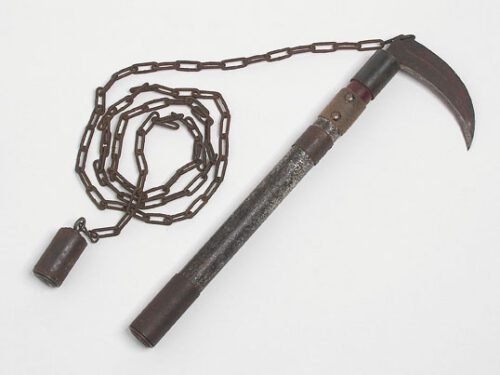
Kusarigamajutsu centres on the kusarigama—a sickle combined with a chain and weighted end—designed to control distance and disrupt an opponent before closing in.

Training Involves:

  • Chain control: Entangling limbs or weapon hands.
  • Disruption: Using the weighted end to unbalance or distract.
  • Range manipulation: Controlling distance before engagement.
  • Finishing phase: Closing in with the sickle once control is established.

Its strength lies in forcing the opponent into a reactive state, where control precedes attack.

Best for: Entanglement, range disruption, and unconventional weapon control.

Kusarigama. Kusarigamajutsu. Japanese Martial arts. Far East Asian Martial Arts. martial arts disciplines. Fighting arts of the world. best martial arts for self defence. Health and fitness. healthy lifestyle. Stress management. Benefits of exercise.

The kusarigama evolved from a farming tool into a weapon, using a weighted chain to entangle or disrupt an opponent before closing in with the sickle.

🪭 Tessenjutsu

Tessenjutsu is the use of the tessen (iron fan) as a concealed weapon for striking, parrying, and control at close range. It was particularly relevant in environments where swords were restricted.

Training Involves:

  • Short-range striking: Targeting vulnerable areas with speed.
  • Deflection: Redirecting attacks rather than clashing directly.
  • Control: Managing space and timing in tight environments.
  • Concealment: Maintaining the appearance of a non-threatening object.

Today, it is primarily preserved for historical study and specialist practice.

Best for: Concealed weapon use and close-range defensive tactics.

🪭 Sidebar: The Iron Fan — Weapon of the Court

There is a common misconception that the Tessen (iron fan) was a weapon of Geisha or female operatives. In reality, it was a high-status tool of the male Samurai.

Palace etiquette often required Samurai to leave their swords at the entrance of a lord’s castle. The Tessen—viewed as a harmless fashion accessory—was allowed to remain in the belt. This gave the Samurai a concealed iron club that could parry a surprise knife attack or strike pressure points while remaining “polite” within the strict social codes of the Japanese court.

👮 Jutte-jutsu

The Jutte is a short iron truncheon with a specialized hook (kage) near the handle. It was the primary weapon of the Machi-bugyō (feudal police), designed for non-lethal subdual in environments where drawn swords were a last resort.

Because it was illegal for many low-ranking officials to use a sword against a higher-ranking Samurai, the Jutte became the ultimate “equalizer.” It was used to parry, trap, and even snap a katana’s blade by catching it in the hook and applying a sharp lever action.

Key Themes:

  • Weapon Trapping: Catching and locking blades.
  • Subdual: Pain compliance and joint manipulation.
  • Non-lethal: Neutralizing a threat without shedding blood.

Best for: Defensive parrying and historical law enforcement tactics.

🌊 Okinawan Systems

(Parallel Development)

Okinawan martial arts developed separately from mainland Japanese Samurai traditions, shaped by a different set of pressures. As a trade hub between China, Japan, and Southeast Asia, Okinawa absorbed external influences—particularly from Chinese martial arts—while also dealing with periods of weapon restriction. This combination pushed practitioners toward adaptable, efficient systems built around what was available.

Unlike Samurai arts, which were designed for battlefield use with formalised weapons, Okinawan systems evolved from civilian self-protection and necessity. Techniques prioritise direct application, economy of movement, and adaptability under constraint rather than duelling ritual or battlefield formation.

👊🏻 Karate

Karate originated in Okinawa as a practical striking system influenced by Chinese quanfa and local methods (see Unarmed Systems), with an early emphasis on close-range application and conditioning before later being formalised in mainland Japan.

See above unarmed section – for more on Karate.

🕊️ The White Crane’s Flight

Many Southern Chinese systems—particularly White Crane—directly influenced the development of Okinawan Karate. Through trade and cultural exchange with Fujian Province, Okinawan practitioners brought these “Chinese Hand” methods back with them, where they evolved into what would become modern Karate.

🔱 Okinawan Kobudō

Okinawan Kobudō is a weapons system built around tools repurposed from everyday life—staffs, farming implements, and handheld tools adapted for combat use. It is often trained alongside Karate, sharing core movement principles and body mechanics.

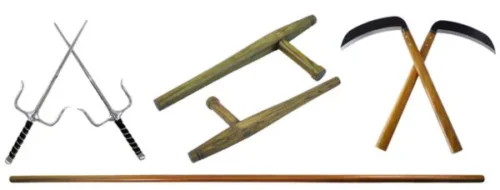
Kobudō weapons include:

  • (staff).
  • Sai (a pronged Okinawan weapon used for striking, blocking, and weapon control.).
  • Tonfa (handled baton).
  • Nunchaku (a rice flail adapted into a weapon of two sticks linked by a cord or chain, used for striking and control.).
  • Kama (sickle).

Training emphasises:

  • Weapons as body extension rather than separate tools.
  • Circular motion and redirection.
  • Fast transitions between attack and defence.
  • Close-range control and continuous movement.

Unlike Samurai weapons systems, Kobudō reflects a mindset of adaptation—using what is available rather than relying on specialised battlefield equipment.

Best for: Weapons training, coordination, and practical “improvised weapon” logic.

Okinawa Kobudo. Japanese Martial arts. Far East Asian Martial Arts. martial arts disciplines. Fighting arts of the world. best martial arts for self defence. Health and fitness. healthy lifestyle. Stress management. Benefits of exercise.

From left to right (and below): the sai, tonfa, kama, and bo. Other Okinawan weapons include the nunchaku.

🔧 Tools of the Trade

Many Okinawan Kobudo weapons were originally just farm tools. The Tonfa was a handle for a millstone; the Nunchaku was likely a rice flail; and the Kama was a simple sickle. This “peasant’s arsenal” was a direct response to weapon bans—proving that a master doesn’t need a sword to be dangerous.

🧭 Warrior Culture & Philosophy

🗡️ Bushidō (Side Note) — The Code Behind the Blade

Bushidō (“the way of the warrior”) is the moral code associated with Samurai conduct, emphasising loyalty, honour, courage, self-control, and duty. It shaped how warriors trained, fought, and carried themselves — and in many ways it encapsulates the mentality behind every system listed above.

A useful Western comparison is Chivalry, which also emphasised duty, honour, loyalty, and martial virtue — though both were ideals more than perfect realities.

🧠 Mushin – “No-Mind”

Mushin (“no-mind”) is a mental state pursued in arts like kenjutsu, defined by a clear, focused mind free from conscious thought and distraction. In this state, action becomes instinctive and effortless, guided by intuition and heightened awareness.

It is developed through years of training and meditation, allowing the practitioner to perceive and respond with optimal timing and precision. At its core, Mushin represents the unity of mind, body, and technique — a state sought across many Japanese martial arts.

🚶‍♂️ The Musha Shugyō – The Warrior’s Quest

Musha Shugyō is the warrior’s pilgrimage — a traditional journey of self-improvement in Japanese martial culture. Rather than staying in one place, a fighter would travel between dōjō and schools, training under different masters to broaden skill, perspective, and understanding.

But the purpose went beyond technique. Musha Shugyō was also a test of character. The journey demanded discipline, humility, and endurance, often requiring an austere lifestyle, physical hardship, and constant exposure to unfamiliar training environments. Those challenges forced reflection and sharpened the warrior spirit as much as the body.

The experiences gained were valued not only for improved martial ability, but for the refinement of resilience, wisdom, and self-knowledge — a deeper understanding of the art, the self, and one’s place in the world. While the traditional practice has diminished in modern times, its core ideal remains: mastery is a lifelong pursuit, not a fixed destination.

If you have enjoyed this post please share or feel free to comment below 🙂

Leave a Reply

Your email address will not be published. Required fields are marked *

This site uses Akismet to reduce spam. Learn how your comment data is processed.

error: Content is protected !!

Join the Super Soldier Project Mailing List Today!!