

Knowing what nutrients your body needs is one thing. Knowing which foods provide them is another. Explore the everyday foods that supply protein, carbohydrates, fats, fibre, vitamins and minerals, and discover how to turn sound nutrition advice into practical food choices.
π Table of Contents
π½οΈ Introduction
Understanding nutrition becomes much easier once the theory can be translated into actual food. Knowing that you need enough protein, carbohydrate, fats, fibre, vitamins and minerals is useful, but sooner or later that has to become a shopping list, a meal and something you can realistically eat week after week.
This guide looks at the foods that can help cover those nutritional roles. Some are particularly useful for protein, others for carbohydrate, fibre, fats or micronutrients, while many contribute to several at once. βGreen lightβ simply means foods that make a strong everyday diet easier to build. It does not mean unlimited portions, compulsory foods or a rigid division between foods you should and should not eat.
π§ Variety Without the Complication
A strong diet does not depend on eating the same handful of supposedly perfect foods every day. Different foods provide different combinations of nutrients, so variety across the week makes it easier to cover your needs while keeping meals enjoyable and practical.
Cost, availability, preparation time and personal preference all matter if a diet is expected to work outside an idealised meal plan. The most useful food choices are those that help you meet your nutritional needs consistently while fitting your training, appetite, budget and lifestyle.
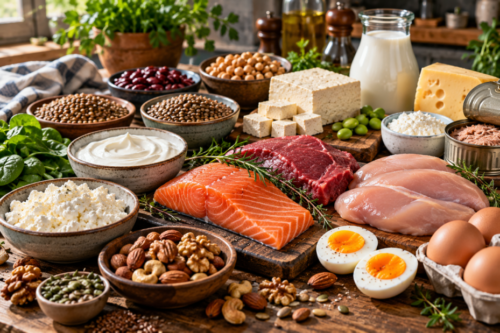
Protein supplies the amino acids needed to build and repair tissue, maintain muscle mass and support numerous functions throughout the body. For anyone training regularly, it helps to have reliable protein sources available across the day rather than depending on one large serving in the evening.
Protein quality differs between foods because the amino-acid profile and digestibility vary. Animal proteins generally provide all essential amino acids in useful amounts, while individual plant proteins may be lower in one or more. A varied plant-based diet can still provide everything required, although total intake and food variety deserve greater attention.
π Animal-Based Sources
Useful options include:
Chicken and turkey.
Lean or minimally processed beef, pork and lamb.
Fish and shellfish.
Eggs.
Milk and yoghurt.
Greek yoghurt and cottage cheese.
Different foods bring different extras. Oily fish such as salmon, sardines and mackerel provide long-chain omega-3 fats, while dairy foods can contribute calcium, iodine and vitamin B12 alongside protein.
There is no need to choose the leanest possible version of every food. Whole eggs, moderate-fat meat and full-fat dairy can all fit within a balanced diet when portions suit overall energy needs. Processed meats such as bacon, sausages, salami and many deli meats are better kept as occasional choices rather than used as the foundation of daily protein intake.
π± Plant-Based Sources
Useful plant sources include:
Beans, lentils and chickpeas.
Tofu, tempeh and edamame.
Soy milk and higher-protein plant products.
Seitan.
Peas.
Nuts and seeds.
Nut butters.
Whole grains such as oats and quinoa.
Lentils, tofu, tempeh and seitan can form the main protein component of a meal, while nuts, seeds and grains usually contribute alongside other foods. Using a mixture of legumes, grains, soy foods, nuts and seeds across the day provides a broad amino-acid profile without requiring carefully matched protein combinations at every meal.
Convenience matters here as much as nutritional quality. Tinned tuna, canned beans, cooked lentils, frozen fish, Greek yoghurt, cottage cheese and pre-cooked chicken can all make adequate protein intake easier during a busy week.
π Carbohydrate & Starch Sources
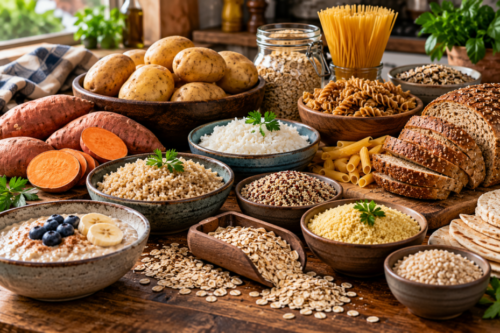
Carbohydrate provides an important source of fuel for moderate- to high-intensity exercise, making carbohydrate-rich foods particularly useful when training volume or intensity increases. Requirements vary considerably, so the amount on the plate should reflect the work being done rather than a fixed rule.
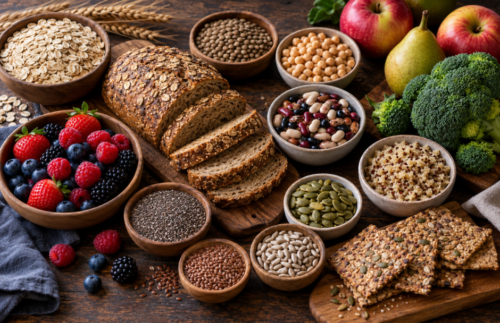
Useful staples include rice, potatoes, oats, pasta, bread, wraps, couscous, quinoa, barley, buckwheat, beans and lentils. Wholegrain versions usually provide more fibre and some additional micronutrients, but refined options are not nutritionally useless. White rice, ordinary bread and lower-fibre cereals can be particularly useful around demanding training when easier digestion is desirable.
ποΈ Match Intake to the Workload
Someone completing a moderate strength session may need little change to their normal diet. Someone combining strength training, conditioning and endurance work may require considerably more carbohydrate, particularly around harder sessions.
Foods such as rice, bread, oats, bananas, potatoes, pasta and cereal provide straightforward ways to increase carbohydrate intake without making meals unnecessarily complicated. Higher-fibre options remain valuable across the wider diet, while lower-fibre choices may sit more comfortably before long runs, intense conditioning or competition.
π₯¦ Vegetables & Fruit
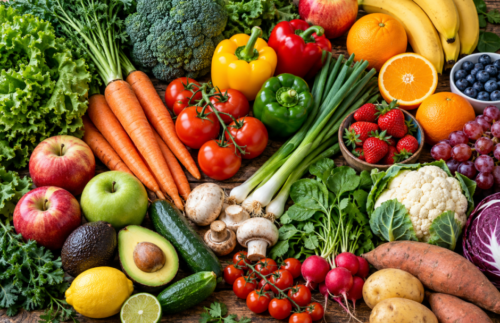
Vegetables and fruit provide a broad mixture of vitamins, minerals, fibre and plant compounds, which makes variety more useful than searching for individual βsuperfoodsβ. Different colours and types tend to provide different nutrient profiles, so rotating choices across the week broadens the nutritional range.
Useful vegetables include leafy greens such as spinach and kale, cruciferous vegetables such as broccoli and cabbage, root vegetables such as carrots and beetroot, and staples such as peppers, tomatoes, onions, mushrooms, peas and green beans.
Fruit offers the same opportunity for variety. Berries, apples, bananas, citrus fruit, kiwi, grapes, melons, mango, pineapple, peaches and plums can all contribute useful nutrients while also providing carbohydrate and fibre.
π§ Fresh, Frozen, Canned or Dried?
Fresh produce is useful, but it does not hold exclusive rights to nutritional quality. Frozen fruit and vegetables can be highly practical and nutritionally valuable, while canned produce can also contribute when chosen sensibly. Dried fruit provides a more concentrated source of carbohydrate and nutrients in a smaller volume, which can be useful in snacks or around endurance training. In everyday terms, frozen vegetables that get eaten regularly are far more useful than fresh vegetables that repeatedly end up in the bin.
πΏ Herbs, Spices & Flavour
Herbs and spices are easy to overlook because they contribute relatively little protein, carbohydrate or energy, but they can still improve the quality and variety of an everyday diet. Garlic, ginger, chilli, turmeric, cumin, paprika, cinnamon, rosemary, basil, oregano, coriander and similar ingredients add flavour while contributing small amounts of plant compounds and micronutrients.
Their biggest advantage is practical. Herbs, spices, citrus, vinegar and other simple seasonings can make basic foods such as vegetables, rice, potatoes, beans, eggs, fish and lean meats considerably more enjoyable without relying on large amounts of sugar, salt or calorie-dense sauces.
There is no need to treat individual spices as medicines or chase exaggerated claims about βsuperfoodsβ. Use them primarily because they make nutritious food taste better and help keep meals varied enough to enjoy regularly.
π₯ Dietary Fat Sources
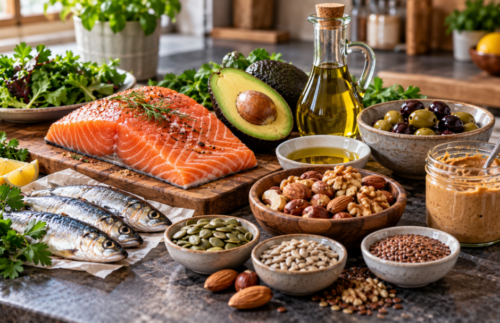
Dietary fat provides energy, supports cell structure and helps with the absorption of vitamins A, D, E and K. It also supplies essential fatty acids that the body cannot produce in sufficient quantities.
Useful everyday sources include olive oil, rapeseed oil, nuts, seeds, nut butters, avocado, oily fish, eggs, dairy foods and meat. Foods such as nuts, seeds and oily fish provide additional benefits through protein, fibre, vitamins, minerals and omega-3 fats.
π Omega-3 & Omega-6
Both omega-3 and omega-6 fatty acids are essential. Long-chain omega-3s are found mainly in oily fish, while flaxseed, chia seeds and walnuts provide the shorter-chain form alpha-linolenic acid. Omega-6 fats are widely available in nuts, seeds and many plant oils.
Common plant and seed oils do not need to be treated as inherently inflammatory or toxic. Olive, rapeseed, sunflower, soybean and similar oils can all fit within a balanced diet. Current evidence supports making unsaturated fats the main everyday choice, particularly when they replace foods higher in saturated fat.
Butter, cheese, coconut products, full-fat dairy and fattier cuts of meat can still be included. Their presence in the diet matters less than the overall balance of fat sources and total energy intake.
π Portions Still Matter
Fat contains more energy per gram than either protein or carbohydrate, so portions can influence total calorie intake quickly. Oils, nuts, nut butters, cheese and avocado are nutritious foods, but they are also energy-dense.
That can be useful for someone trying to increase energy intake and more relevant to monitor when reducing it. The food itself has not changed; the portion simply needs to suit the goal.
π₯ Dairy & Alternatives
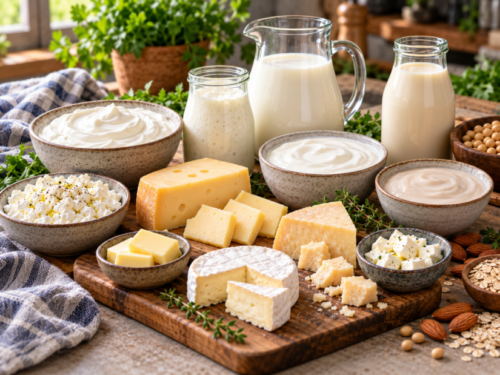
Dairy foods can provide protein, calcium, vitamin B12 and iodine in a convenient form. Milk, yoghurt, Greek yoghurt, kefir, cottage cheese and cheese can therefore contribute to several nutritional needs at once.
Higher-protein options such as Greek yoghurt and cottage cheese can be useful snacks or additions to meals, while milk can provide both protein and carbohydrate. Full-fat and lower-fat versions both have a place, with the choice depending on appetite, overall energy intake and preference.
π± Plant-Based Alternatives
Plant drinks and yoghurts can vary considerably in their nutritional composition. Soy milk generally provides more protein than almond, oat, rice or coconut drinks, while fortification determines whether a product contributes meaningful calcium, vitamin B12, vitamin D or iodine.
Anyone regularly replacing dairy should therefore check the label rather than assuming every plant-based product provides the same nutritional package. Fortified alternatives can work extremely well, but they need to be chosen for the nutrients they actually contain.
πΎ Fibre-Rich Foods
Fibre supports normal bowel function, satiety, blood glucose regulation and cholesterol management, while some types also provide fuel for bacteria in the large intestine.
Good everyday sources include:
Whole grains.
Beans, lentils and chickpeas.
Fruit and vegetables.
Nuts and seeds.
Potatoes with the skin.
Popcorn.
Higher-fibre cereals.
For most adults, UK guidance recommends aiming for around 30 g of fibre per day. This is easier to achieve through several different foods across the day than by relying on supplements or a single extremely high-fibre product.
π Fibre Around Training
High-fibre meals can cause bloating, cramping or gastrointestinal discomfort in some people when eaten close to demanding exercise. Running and endurance training make this particularly relevant.
A diet can therefore be high in fibre overall while still using lower-fibre carbohydrate sources around harder sessions. White rice, bread or peeled potatoes may be more comfortable before training than large servings of beans, bran or raw vegetables.
Anyone increasing fibre substantially should do so gradually and maintain adequate fluid intake. Sudden jumps are more likely to produce digestive discomfort than gradual changes.
π₯« Convenience Foods That Still Count
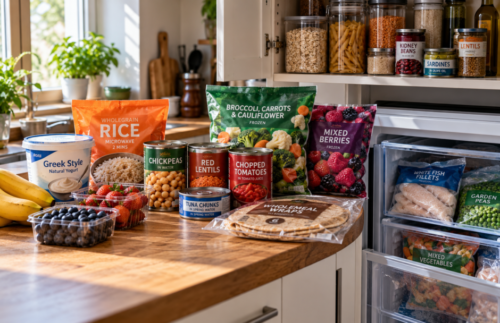
Eating well becomes considerably easier when the kitchen contains foods that are quick to prepare and difficult to waste. Processing and packaging do not automatically make a food nutritionally poor.
Useful staples include:
Frozen fruit and vegetables.
Frozen fish and meat.
Canned beans and lentils.
Tinned tuna, salmon, sardines and mackerel.
Canned tomatoes.
Microwave rice and pre-cooked grains.
Bread and wraps.
Ready-cooked pulses.
Fortified cereals.
Fortified plant drinks.
Greek yoghurt, cottage cheese and eggs.
These foods reduce preparation time without requiring a major nutritional compromise. Packaging and processing alone tell us very little about nutritional quality. More useful questions are what the food provides, how energy-dense it is, how easy it is to overconsume, and how it fits into the wider diet. These questions are explored in more detail in π΄ Red Light Foods β Foods to Keep in Check.
π Building a Useful Shopping Basket
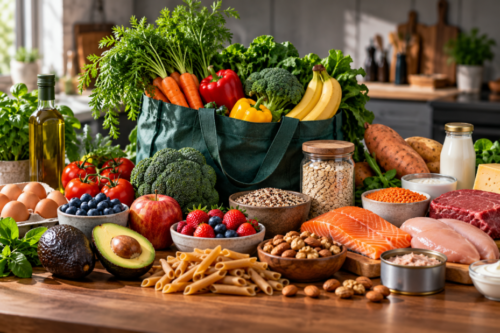
A practical shopping basket should make balanced meals easy to assemble without requiring a rigid meal plan. Keeping a few dependable choices from each major group provides enough flexibility to improvise meals throughout the week.
The specific foods matter less than the roles they fulfil. Once those basics are available, a wide range of meals can be built without needing a completely different shopping list every week.
π Useful Snacks
Snacks can be useful when they help bridge the gap between meals, support training or make it easier to meet overall nutritional needs. They do not need to be elaborate, and there is nothing inherently superior about eating frequently if your main meals already provide everything you need.
Useful options include fruit, yoghurt, cottage cheese, boiled eggs, nuts and seeds, oats, wholegrain toast, hummus, milk, fortified plant drinks, tinned fish, or combinations such as yoghurt and fruit or fruit and nuts. Around harder training, simpler carbohydrate-rich choices such as bananas, bread, cereal or dried fruit may also be useful when quick energy and easier digestion are the priority.
The best snack depends on what is missing from the rest of the day. Someone struggling to reach their protein intake may benefit from yoghurt, eggs or cottage cheese, while an endurance athlete might need additional carbohydrate. Treat snacks as another opportunity to support the wider diet rather than as a nutritional category with its own special rules.
π° Budget & Practicality
Good nutrition does not require premium ingredients. Eggs, oats, potatoes, rice, frozen vegetables, canned beans, lentils, seasonal fruit and tinned fish can provide substantial nutritional value without relying on specialist products. Buying useful staples in larger quantities can also reduce costs, while organic meat, exotic berries, speciality oils and branded superfoods remain optional rather than necessary.
Shopping should reflect the meals you genuinely eat. Buying ingredients simply because they appear on a healthy-food list achieves very little if they remain untouched in the fridge. A smaller collection of affordable, dependable staples that gets eaten consistently is usually the better investment.
π¦ Keep a Backup Layer
Busy days are easier to manage when a few dependable foods require almost no preparation. Tinned fish, canned beans, frozen vegetables, microwave grains, eggs and yoghurt can turn into a substantial meal within minutes rather than leaving nutrition dependent on whatever is easiest to grab.
This backup layer is particularly useful during heavy training periods, shift work, travel or weeks when cooking time is limited. Keeping a handful of reliable options available makes consistency easier without requiring rigid meal prep or a perfectly organised week.
π Practical Takeaways
A useful diet is built from foods that make the fundamentals easier to cover consistently. Reliable sources of protein, carbohydrate, fats, fibre, vitamins and minerals provide the framework, while variety helps broaden nutrient intake and prevents the diet becoming unnecessarily repetitive.
A few principles cover most situations:
Keep several dependable protein sources available and rotate between them.
Match carbohydrate intake to training demand rather than avoiding it by default.
Use vegetables and fruit for variety rather than chasing individual superfoods.
Make unsaturated fats the main everyday fat sources while allowing other foods to fit within the wider diet.
Choose dairy or fortified alternatives according to the nutrients you need them to provide.
Include fibre-rich foods regularly and adjust timing around training when necessary.
Use frozen, canned and pre-cooked foods when they improve consistency, affordability or convenience.
Build your shopping around meals you genuinely eat rather than an idealised version of healthy eating.
βGreen lightβ foods are the dependable options that make good nutrition easier: useful sources of protein, carbohydrate, fats, fibre, vitamins and minerals that can form the backbone of everyday eating. Build enough of them into your kitchen and the rest of the diet becomes much easier to manage without turning every meal into a nutritional calculation.
This guide has focused on the foods we ideally want to include regularly: reliable sources of protein, carbohydrate, fats, fibre, vitamins and minerals that can form the backbone of a strong everyday diet.
Its companion piece looks at the other side of the equation. π΄ Red Light Foods β Foods to Keep in Check examines the foods and dietary patterns that deserve a little more caution, particularly when it comes to portion size, frequency and how easily they can displace more useful choices.
If you have enjoyed this post please share or feel free to comment below π