




Slightly overweight man relaxing in front of the television with half-eaten pizza, a plate of chips and several beers on the table.

Red Light Food Sources

Eating well doesn’t mean completely banning your favourite foods. This guide explains why some everyday choices deserve closer attention, from added sugar and saturated fat to portion sizes and highly processed snacks, helping you make informed decisions without absolute food rules.

๐Ÿ“‘ Table of Contents

๐Ÿฝ๏ธ Introduction

Food quality matters, but the subject becomes unhelpful when every food is divided into โ€œgoodโ€ and โ€œbadโ€. Some foods provide more protein, fibre, vitamins or minerals than others, while some are easier to overconsume because they combine high energy density, large portions, low fibre and strong palatability.

Here, โ€œred lightโ€ means foods and dietary patterns that deserve a little more attention to portion size, frequency and context. It does not mean forbidden foods. A burger, biscuit, takeaway or soft drink does not determine the quality of someoneโ€™s diet on its own; what matters is how often those foods appear, how much is eaten, what they replace, and whether the wider diet still covers nutritional needs.

โš™๏ธ Looking Beyond the Label

Foods rarely deserve caution because of one characteristic alone. Processing, energy density, fibre, protein, added sugar, sodium, saturated fat, portion size and the wider food environment can all influence how a food fits into the diet.

This guide looks at those factors together, with the aim of understanding why certain foods are easier to overconsume or less useful as everyday staples without turning normal eating into a list of forbidden foods.

๐Ÿšฆ What Makes a Food Worth Keeping in Check?

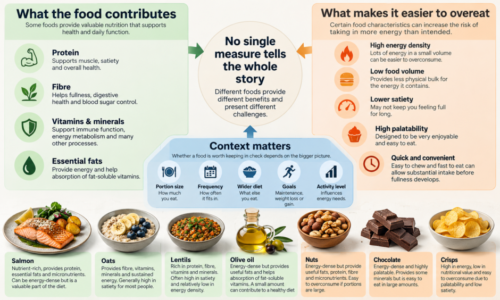
Whether a food deserves closer attention depends on what it contributes and how it fits into the wider diet. No single measure captures this perfectly because different foods perform different roles. Salmon, oats, bananas, lentils and olive oil are all useful, yet their nutritional profiles are completely different.

Nutrition infographic comparing protein, fibre, vitamins, minerals and essential fats with factors that can encourage overeating, including energy density, low satiety and high palatability. Food examples illustrate how nutritional value varies.

Food quality is about the bigger picture. What a food provides, how satisfying it is and how easily it can be overconsumed all matter. Portion size, frequency and your wider diet determine where it fits.

Several characteristics are particularly helpful in practice. Foods providing meaningful amounts of protein, fibre, vitamins, minerals or essential fats tend to make a stronger contribution to nutritional adequacy. Energy density also matters because foods packing large amounts of energy into a relatively small volume can be easier to overconsume, particularly when appetite is high or weight loss is the goal.

๐Ÿงฉ Nutrient Density

Nutrient density describes how much useful nutrition a food provides relative to its energy content. Vegetables, fruit, legumes, whole grains, dairy foods, eggs, fish, meat, nuts and seeds can all provide substantial nutritional value despite large differences in calorie content.

A nutrient-dense food does not have to be low in calories. Nuts, seeds and olive oil are energy-dense but provide useful fats and micronutrients. Equally, a low-calorie product is not automatically nutritious simply because it contains little energy. Calories tell us how much energy a food provides; they do not tell us everything about what accompanies that energy.

๐Ÿฝ๏ธ Satiety & Appetite

Food quality also influences how easily appetite can be managed. Protein, fibre, food volume and water content generally help increase fullness, while foods that are easy to chew, quick to eat and highly palatable can allow substantial energy intake before satiety develops.

Meals based around protein, vegetables, fruit, potatoes, pulses and whole grains often make energy control easier for this reason. Individual appetite still varies, and higher-energy foods can be extremely useful for people deliberately trying to gain weight, but the properties of the food influence how easy or difficult intake becomes to regulate.

Food quality therefore makes most sense across the whole diet. A nutritious pattern can comfortably include chocolate, desserts or takeaway meals, while a diet consisting entirely of foods marketed as โ€œhealthyโ€ can still fall short if it lacks sufficient energy, protein, variety or important micronutrients.

๐Ÿฅซ Processed vs Ultra-Processed Foods

The word processed is often used as shorthand for unhealthy, even though almost all food is processed to some degree. Cooking, freezing, drying, fermenting, grinding, canning and pasteurising all alter food from its original state, often improving safety, shelf life or convenience.

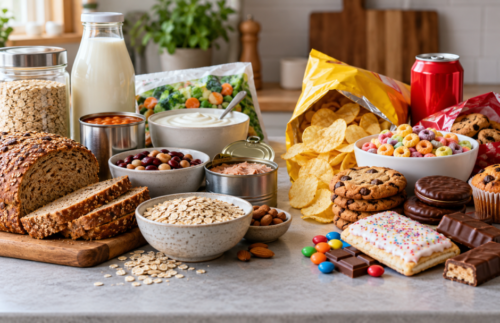
Side-by-side selection of processed foods including wholegrain bread, oats, milk, yoghurt, canned beans, tuna and frozen vegetables, alongside crisps, sugary cereals, biscuits, confectionery and soft drinks.

Processing alone doesnโ€™t determine nutritional quality. Canned beans, frozen vegetables and yoghurt can be useful staples, while many packaged snacks and sweets are easier to overeat and provide little protein or fibre.

Foods such as frozen vegetables, canned beans, yoghurt, cheese, bread and tinned fish have all undergone processing and can still contribute substantially to a healthy diet. The presence of processing alone tells us very little about the nutritional value of a food.

๐Ÿญ What Counts as Ultra-Processed?

The term ultra-processed food, most commonly associated with the NOVA classification system, refers to industrial formulations that often contain combinations of refined ingredients, flavourings, emulsifiers, sweeteners or other additives rarely used in ordinary home cooking.

Common examples include many soft drinks, confectionery products, packaged cakes, biscuits, crisps, instant meals and reconstituted meat products. Higher intakes of ultra-processed foods are consistently associated in observational research with poorer health outcomes, including higher rates of obesity, type 2 diabetes and cardiovascular disease.

The classification is useful because many ultra-processed foods share characteristics that can encourage higher intake: high energy density, strong palatability, low fibre, large portions and rapid consumption. In practice, these features often matter more than the classification itself when deciding how a food is likely to affect appetite and overall energy intake.

๐Ÿงฉ A Useful but Imperfect Category

Ultra-processing is still an imperfect way to judge individual foods. Two products may fall into the same category while having very different nutritional profiles. A fortified wholegrain cereal and a packet of sweets can both undergo substantial industrial processing without playing anything like the same nutritional role.

Processing is therefore one part of the picture. Protein, fibre, energy density, portion size, micronutrient content and eating frequency remain important when judging how a food fits into the diet.

Some forms of processing actively improve usefulness. Fortification can provide nutrients such as calcium, vitamin D and vitamin B12, while freezing and canning make fruit, vegetables, beans and fish easier to store and use. Fermentation produces foods including yoghurt, kefir and some cheeses. The practical distinction lies in what the final food contributes and how easily it fits into the overall pattern.

๐ŸŸ Why Some Foods Are Easier to Overeat

Some foods make appetite and energy intake easier to regulate than others. The main factors include energy density, protein, fibre, portion size, texture, palatability and eating speed.

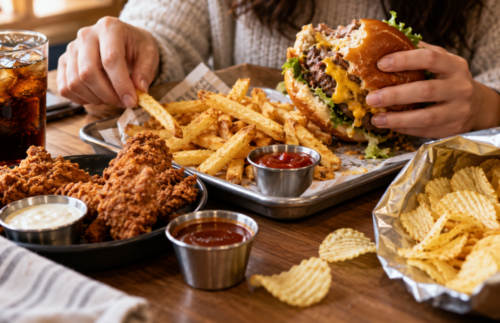
Burger, fries and a soft drink on a restaurant table, illustrating a calorie-dense, highly palatable meal that is easy to overconsume.

A burger and fries can fit the diet. The red light comes when large portions and frequent repeats turn an occasional meal into the default.

Biscuits, confectionery, crisps, pastries, fried foods and many takeaway meals often combine several of these features. They can provide a large amount of energy within a relatively small portion, require little chewing and deliver strong combinations of fat, refined carbohydrate, sugar or salt.

๐Ÿ”ฅ Energy Density

Energy density describes how much energy a food provides relative to its weight or volume. Foods containing plenty of water and fibre, such as vegetables, fruit, potatoes and many soups, tend to provide more physical volume for a given amount of energy.

Foods high in fat and relatively low in water are generally more energy-dense because fat provides more than twice as much energy per gram as either protein or carbohydrate. This applies to nutritious foods such as nuts and olive oil as well as pastries, fried snacks and desserts.

The importance of energy density depends heavily on the goal. Higher-density foods can make gaining weight easier for someone with high energy requirements, while lower-density foods can help make fat loss more comfortable by providing greater food volume.

๐Ÿฅฉ Protein, Fibre & Fullness

Protein and fibre both contribute to satiety. Meals containing a meaningful protein source alongside vegetables, fruit, pulses, potatoes or whole grains tend to provide more sustained fullness than foods dominated by refined carbohydrate, fat and sugar.

Many snack foods provide relatively little protein or fibre, allowing substantial amounts to be eaten without producing much lasting satiety. This is one reason energy intake can climb quickly when meals are repeatedly replaced by grazing on snacks.

๐Ÿ• Palatability & Eating Rate

Highly rewarding combinations of fat, refined carbohydrate, salt, sweetness and appealing textures can encourage greater intake simply because the food is enjoyable and easy to eat. Eating speed contributes as well, since foods requiring very little chewing can be consumed rapidly before the physiological signals associated with fullness have fully developed.

Larger portions magnify the effect. People tend to consume more when more food is served or when they eat directly from larger packages. Portion size therefore interacts with the food itself and the environment in which it is eaten.

๐Ÿฌ Added Sugar โ€” Where It Matters

Added sugar can make foods and drinks more palatable and increase energy intake without contributing much additional nutritional value. This becomes most relevant when heavily sweetened products appear frequently or displace foods that would otherwise provide more fibre, protein or micronutrients.

Assorted pastries and sweet baked treats displayed together, including iced doughnuts, pastries, and other sugar-rich desserts.

Sweet treats such as doughnuts and pastries are easy to overconsume and are best kept as occasional extras rather than everyday staples.

๐Ÿฏ Added, Free & Naturally Occurring Sugars

Naturally occurring sugars deserve different context. Fruit contains sugars alongside water, fibre, vitamins and minerals, while milk and yoghurt contain lactose alongside protein, calcium and iodine. Looking only at the grams of sugar listed on a label can therefore give a distorted impression of the wider food.

Honey, maple syrup, agave and similar sweeteners remain sources of free sugar despite being marketed as more natural alternatives. They may differ in flavour and contain small amounts of other compounds, but their nutritional role remains broadly similar when used as sweeteners.

Reducing added sugar is usually most productive when attention is directed towards frequent, substantial sources rather than trying to remove every small amount from the diet. Sugary drinks and heavily sweetened snacks are often the obvious places to look because they can contribute significant energy without adding much nutritional value.

๐Ÿง‚ Sodium โ€” Necessary, but Easy to Overdo

Sodium is essential for fluid balance, nerve signalling and muscle contraction. It also helps maintain blood volume, which explains why sodium replacement can become important during prolonged exercise and heavy sweating.

Habitual excessive intake presents a different issue. Higher sodium intakes can raise blood pressure, although the size of the response varies between individuals. In the UK, adults are generally advised to consume no more than around 6 g of salt per day, equivalent to approximately 2.4 g of sodium.

Much of this intake comes from food rather than deliberate use of the salt shaker. Bread, processed meats, ready meals, savoury snacks, cheese, sauces, takeaway foods and restaurant meals can all make substantial contributions.

๐Ÿ‹๏ธ The Training Context

Athletes with high sweat losses may require considerably more sodium around long training sessions, competition or exercise in hot conditions. Public-health guidance and sports-hydration advice are addressing different situations: one concerns habitual intake across everyday life, while the other concerns acute replacement of meaningful losses.

Most ordinary training does not require deliberate sodium loading. Greater attention becomes useful when sweat losses are high enough for sodium replacement to affect hydration and recovery.

๐Ÿฅฉ Saturated Fat & Processed Meat

Saturated fat and processed meat are frequently discussed together, although they represent separate nutritional issues.

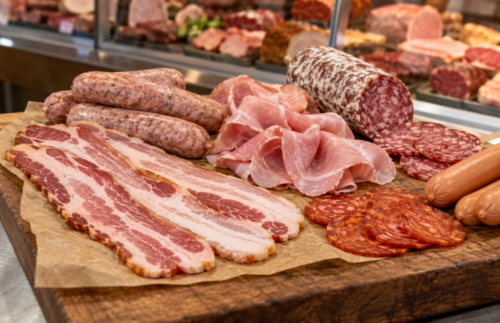
Rustic deli board displaying processed meats including salami, ham, sliced deli meats, sausages and cured cuts arranged on a wooden surface.

Processed meats are convenient, but heavy use can quickly stack up sodium and preservatives while offering less nutritionally than fresher protein choices.

๐Ÿงˆ Saturated Fat

Saturated fat occurs in foods such as butter, cheese, full-fat dairy, fatty meat, coconut products and many manufactured foods. Foods containing saturated fat can still provide useful nutrients, so the more relevant issue is the overall balance of fats in the diet.

Replacing some saturated fat with unsaturated fats from olive oil, rapeseed oil, nuts, seeds and oily fish is associated with a more favourable cardiovascular profile. This does not require removing butter, cheese or full-fat yoghurt. It simply means allowing unsaturated sources to form a larger part of everyday fat intake.

๐ŸŒญ Processed Meat

Processed meats include bacon, sausages, salami, hot dogs, ham and many deli meats. These products are often relatively high in sodium and saturated fat, and frequent high intake is associated with an increased risk of colorectal cancer.

They can still be eaten, but fresh meat, fish, eggs, dairy foods, legumes and other protein sources provide greater variety when used as the foundation of the diet. Processed meat works better as part of that rotation than as the default protein choice at several meals every day.

๐Ÿฅค Drinks That Add Up Quickly

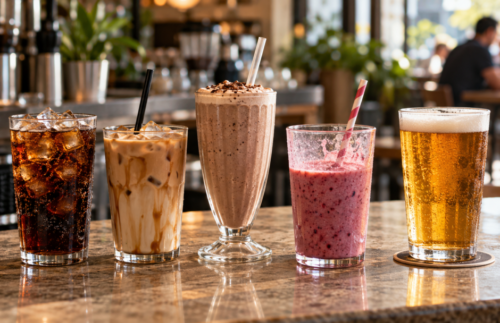
Energy-containing drinks can make a noticeable contribution to overall intake because they are often consumed alongside meals or snacks rather than replacing them. Soft drinks, flavoured coffees, milkshakes, smoothies and alcohol can therefore add substantial energy across the day without always producing the same fullness as an equivalent amount of solid food.

Five drinks arranged on a cafรฉ counter: iced cola, flavoured iced coffee, chocolate milkshake, berry smoothie and a pint of beer.

Liquid calories add up fast. Soft drinks, flavoured coffees, smoothies and alcohol all count, so consider portion size, frequency and what the drink actually provides.

Large coffees can contain syrups, cream and significant amounts of milk, while smoothies can combine fruit, juice, yoghurt, nut butter and other ingredients into something approaching the energy content of a complete meal. That may be useful when appetite is low or energy needs are high, but it deserves to be recognised as food rather than treated as nutritionally invisible.

โš–๏ธ Context Changes the Equation

Alcohol adds another layer because it contributes energy while also affecting sleep, recovery and food choices. Larger amounts can make structured eating less likely and interfere with recovery after demanding training.

Sports drinks sit at the opposite end of the context spectrum. During long exercise they can provide fuel, fluid and sodium efficiently, while short gym sessions rarely require the same support.

๐Ÿง  Food Environment & Appetite

The characteristics of the food itself are only part of the picture. Food decisions are also influenced by availability, convenience, portion size, pricing, marketing and habit, all of which can shape what people eat and how much they consume.

Athletic Black man in a blue training jacket hesitates while reaching for a chocolate bar at a supermarket checkout, holding a shopping basket filled with vegetables, fruit and other nutritious groceries.

Good intentions meet the chocolate aisle. Displays, convenience and habit can all shape what lands in your basket, even with a sensible shopping list.

An environment filled with easily available snacks, sugary drinks and large takeaway portions makes frequent eating easier. Keeping more useful meals and snacks equally accessible can shift that same convenience advantage in a better direction.

๐ŸŸ Convenience & Portion Size

Many foods associated with overeating combine strong palatability with immediate availability and large portions. This does not force anyone to overeat, but it reduces the effort required to consume a large amount of energy.

Portion size also provides an informal cue for how much to eat. Restaurant meals, family-size packaging and eating directly from large bags or containers can therefore increase intake without any conscious decision to eat more.

๐Ÿ“บ Habit & Marketing

Food routines often become connected to specific situations. A snack during the commute, takeaway every Friday or eating while watching television can become automatic behaviours regardless of physical hunger.

Marketing reinforces some of these patterns by linking foods with reward, convenience, sport or indulgence. Recognising those influences makes it easier to decide whether a routine is genuinely enjoyable and worthwhile or simply something that happens by default.

A useful food environment reduces the number of decisions required. Keeping dependable meals and snacks available, portioning foods before eating them and avoiding unnecessary bulk purchases of foods that are difficult to moderate can make the everyday pattern easier to manage.

โš–๏ธ Frequency, Portion & Context

A red light is best understood as a prompt to pay attention rather than a command to avoid a food altogether. A takeaway, dessert or packet of crisps has little nutritional significance on its own. Frequency and portion size determine whether foods like these remain a small part of the diet or gradually begin to dominate it.

Energy-dense foods such as cheese, nuts, chocolate, takeaway meals and desserts can all fit comfortably within a balanced diet, but larger portions add energy quickly. Condiments, sauces and spreads work similarly: modest amounts may contribute very little, while heavy use can substantially change the energy, sodium or sugar content of a meal.

Frequency is equally important. Several fast-food meals, sugary drinks and snack foods every day create a very different dietary pattern from enjoying the same foods occasionally within an otherwise varied diet.

๐Ÿ‹๏ธ Training Changes the Role of Food

Training can change how useful particular foods become. White bread, lower-fibre cereal or a carbohydrate drink may provide little advantage during a sedentary afternoon but become useful around prolonged or intense exercise where rapid carbohydrate delivery and easy digestion are priorities.

Nutritional value therefore depends partly on the role the food is playing. The same food can be helpful, neutral or unnecessary depending on activity, goals and the rest of the diet.

๐Ÿ”„ Practical Upgrades

Improving food quality rarely requires a complete overhaul. Small changes to frequently eaten meals can increase protein, fibre and micronutrient intake while making appetite easier to manage.

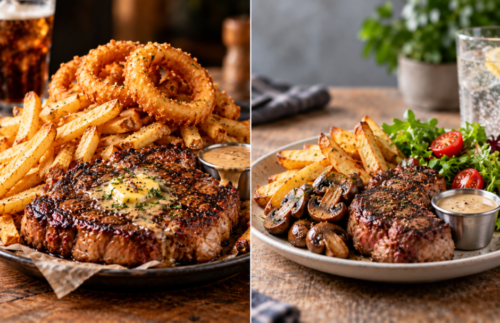
Side-by-side comparison of two steak dinners, showing an indulgent version with a large steak, piled chips and onion rings beside a more balanced plate with a smaller steak, moderate chips, mushrooms, salad and sauce served on the side.

A steak dinner does not need to be perfect to be improved. Smaller portions, fewer extras and a better balance of sides can make a familiar meal easier to fit into an overall healthy diet.

Useful adjustments include:

  • Add a reliable protein source to meals dominated by carbohydrate or fat.
  • Increase fibre through vegetables, fruit, pulses, whole grains or higher-fibre versions where appropriate.
  • Use fruit, yoghurt or similar options more often when they provide a useful alternative to frequent confectionery or pastries.
  • Reduce high-volume sugary drinks when they contribute substantially to daily energy intake.
  • Use unsaturated fats more often for everyday cooking and dressings.
  • Rotate processed meats with fresh meat, fish, eggs, dairy and plant proteins.
  • Adjust portions of energy-dense foods when total energy intake is difficult to manage.
  • Keep convenient staples available so that lack of time does not automatically mean takeaway or snack-based meals.

๐Ÿฝ๏ธ Improve the Meal

Single-food substitutions can be useful, but meals often improve more when the whole plate is considered. A bowl of cereal becomes more substantial with milk or yoghurt, fruit and nuts. Pasta can gain protein and fibre through fish, lean meat, tofu, beans or vegetables. A takeaway meal can be balanced more effectively by considering portion size, sides and drinks.

This approach keeps enjoyment intact while improving the nutritional contribution of meals eaten regularly.

๐Ÿฅซ Use Convenience Intelligently

A ready meal containing useful protein, vegetables and an appropriate amount of energy may be entirely suitable, while a day built around snacks can be nutritionally poor even when every product carries health-focused marketing.

Checking a few useful features such as protein, fibre, portion size, energy and sodium usually provides enough information. Most people gain little from treating every ingredient list as a chemistry examination.

๐Ÿ“Œ Practical Takeaways

Food quality is most useful as a description of the overall dietary pattern. Foods providing useful amounts of protein, fibre, vitamins, minerals and appropriate energy make a strong foundation, while foods that are highly energy-dense, easy to eat quickly and relatively low in nutritional value become more relevant when they dominate intake.

A few principles cover most situations:

  • Judge foods by what they contribute rather than processing alone.
  • Build most meals around useful sources of protein, carbohydrate and fats, with fruit, vegetables and other fibre-rich foods included regularly.
  • Pay attention to sugary drinks, large portions and foods that are particularly easy to overeat.
  • Keep added sugar, sodium and saturated fat proportionate within the wider diet.
  • Use processed meat less frequently than fresher protein sources.
  • Allow takeaways, desserts and snacks to fit without letting them displace the nutritional foundation of the diet.
  • Improve the foods and meals eaten most often before worrying about occasional indulgences.
A hand holds a smartphone displaying an Instagram post of a smiling male athlete in a burger restaurant giving a thumbs-up beside a large burger, fries and a soft drink, illustrating the idea of enjoying an indulgent meal within a balanced diet.

One burger won’t derail your diet. It’s the portions, frequency and everyday habits that count. Enjoy the occasional indulgence, then get on with life. No guilt required.

A strong diet leaves room for normal eating. Regular meals built from useful staples can coexist comfortably with desserts, takeaway food, snacks and convenience products when those choices remain proportionate to the wider pattern.

Balance, frequency, portion size and context provide a much more useful framework than blacklists or fear-based labels.

This guide has focused on the foods and dietary patterns that deserve a little more attention to portion size, frequency and context. None need to be automatically excluded, but they are generally better kept in proportion to the wider diet.

Its companion piece, ๐ŸŸข Green Light Foods โ€” Foods to Build Your Diet Around, looks at the other side of the equation: the foods we ideally want to include regularly to provide protein, carbohydrate, fats, fibre, vitamins and minerals and form the backbone of everyday eating.

If you have enjoyed this post please share or feel free to comment below ๐Ÿ™‚

๐Ÿ”— Our Other Posts

Leave a Reply

Your email address will not be published. Required fields are marked *

This site uses Akismet to reduce spam. Learn how your comment data is processed.

error: Content is protected !!

Join the Super Soldier Project Mailing List Today!!