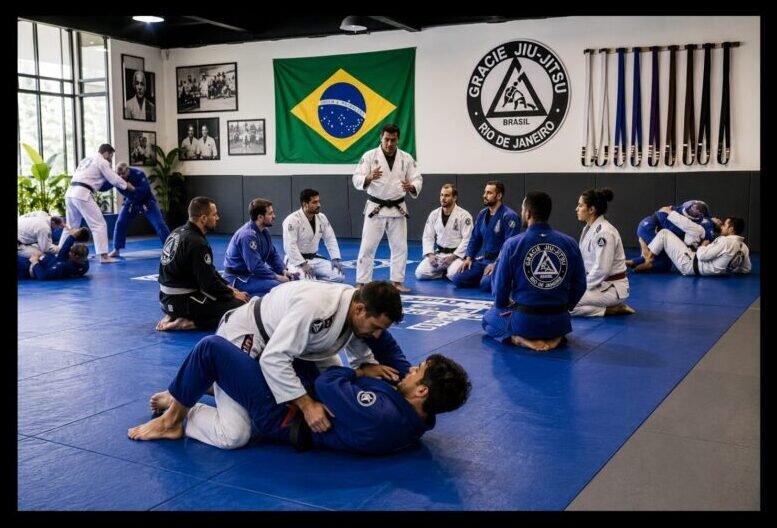
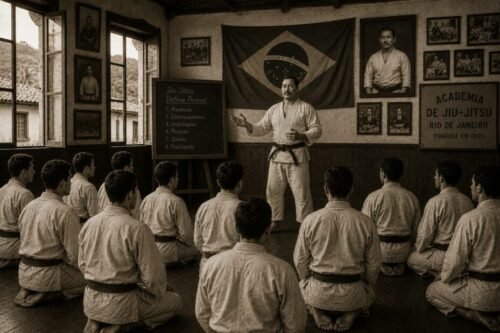
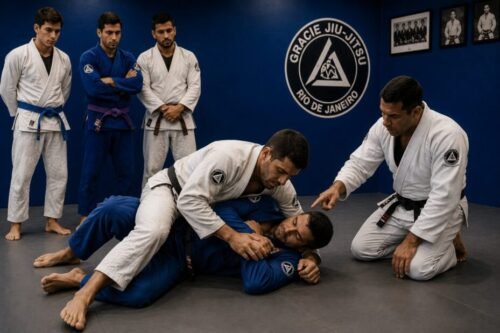





Brazilian Jiu-Jitsu instructor teaching students while practitioners roll on the mats during a Brazilian Jiu-Jitsu class.

Brazilian Jiu-Jitsu: Mastering the Ground Game

Brazilian Jiu-Jitsu transformed the way martial artists think about combat. This guide explores the grappling art that revolutionised MMA through its emphasis on control, submissions, pressure-testing, and technical skill.

Table of Contents

🔥 Introduction

Brazilian Jiu-Jitsu (BJJ) is a grappling-based martial art built around control, leverage, positional dominance, and submission holds. Rather than relying on punches and kicks to overcome an opponent, BJJ focuses on controlling resistance, improving position, and applying submissions when opportunities arise.

What makes BJJ unique is its emphasis on technique over raw athleticism. Practitioners learn how to escape disadvantageous positions, control larger opponents, and solve complex physical problems through timing, leverage, and efficient body mechanics. The art places a strong emphasis on live sparring, allowing techniques to be tested against fully resisting opponents rather than simply rehearsed in cooperative drills.

White belt Brazilian Jiu-Jitsu practitioner preparing for class in a gym changing room, tying his belt beside lockers and training gear.

Every Brazilian Jiu-Jitsu black belt started here. Before the techniques, competitions, and hard-earned belts comes the decision to step onto the mats and begin the journey.

Few martial arts have influenced the modern combat world as profoundly as Brazilian Jiu-Jitsu. Its effectiveness helped transform mixed martial arts, reshaped how fighters approached grappling, and introduced a global audience to the importance of ground fighting. Today, BJJ is practised worldwide for self-defence, competition, fitness, personal development, and as a core component of modern MMA training.

Whether your goal is learning practical self-defence, competing on the tournament mats, improving your fitness, or simply challenging yourself with a highly technical martial art, Brazilian Jiu-Jitsu offers a depth of study that can last a lifetime.

🧱 What Brazilian Jiu-Jitsu Actually Is

Brazilian Jiu-Jitsu is a grappling-based martial art built around control, positioning, and submissions.

While many martial arts focus primarily on striking, BJJ specialises in what happens when a fight moves into clinching range or onto the ground. Practitioners learn how to control opponents, escape disadvantageous positions, improve their position, and apply submissions using joint locks and chokeholds.

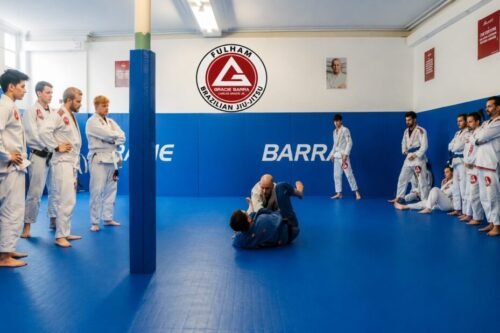
Technical instruction forms the foundation of Brazilian Jiu-Jitsu training.

A defining characteristic of BJJ is its emphasis on live sparring, known as rolling. Techniques are regularly tested against resisting opponents, helping practitioners develop timing, composure, adaptability, and practical skill under pressure.

Rather than relying on strength alone, BJJ rewards leverage, technique, and intelligent decision-making. This combination of realism, technical depth, and problem-solving has helped make it one of the most influential martial arts in the world.

The positions, submissions, and principles that make BJJ so effective are explored in greater detail in our dedicated Brazilian Jiu-Jitsu Explained guide.

🎯 The Core Idea

The central concept behind Brazilian Jiu-Jitsu is simple:

Control the opponent, improve your position, and finish with a submission when the opportunity presents itself.

Rather than relying on speed, power, or aggression alone, BJJ teaches practitioners to solve problems through leverage, timing, and positioning. A core principle of the art is often summarised as “position before submission.” Practitioners seek to establish control first, then attack once their opponent’s options have been reduced.

Leverage and technique allow skilled practitioners to overcome physical disadvantages.

This creates a constant battle for positional advantage, with both practitioners attempting to improve their position while preventing their opponent from doing the same. The result is a highly strategic martial art that rewards patience, technique, and composure under pressure.

Many practitioners describe Brazilian Jiu-Jitsu as physical chess, a comparison that reflects the art’s depth, complexity, and endless opportunities for learning. Every roll becomes a problem-solving exercise where mistakes are exposed immediately and success depends on timing, leverage, and decision-making rather than brute force.

🧭 Explore the BJJ Series

Brazilian Jiu-Jitsu is a deep and constantly evolving martial art. Whether you’re interested in its history, technical side, or competitive scene, the following guides explore the subject in greater detail.

From Japanese Jujutsu and Kodokan Judo to the Gracie family, Vale Tudo, and the rise of the UFC, discover the events and personalities that shaped one of the world’s most influential martial arts.

A closer look at the principles, positions, submissions, and strategies that form the foundation of the art. Learn how concepts such as guard, mount, positional control, and leverage combine to make BJJ such an effective grappling system.

Thinking of stepping onto the mats? Explore what happens in a typical BJJ class, the belt ranking system, Gi and No-Gi training, competition rules, scoring, and some of the biggest tournaments in the sport.

🎯 Why Learn Brazilian Jiu-Jitsu?

Brazilian Jiu-Jitsu is one of the most accessible martial arts available, attracting people from a wide range of ages, backgrounds, and fitness levels. However, like any discipline, it tends to suit certain personalities and goals more than others.

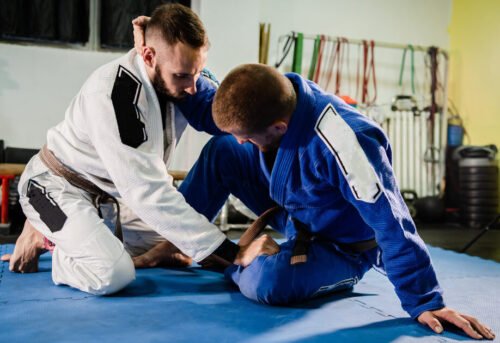
Brazilian Jiu-Jitsu students training with a resisting partner during practice.

Training against resistance helps practitioners develop timing, technique, and adaptability.

Click on links below to read more.

One of the biggest attractions of Brazilian Jiu-Jitsu is its reputation as a practical self-defence system. Rather than relying solely on strength, speed, or aggression, BJJ teaches practitioners how to control resisting opponents through leverage, positioning, and technique.

The art is particularly effective at close range, where many real-world confrontations eventually end up. While no martial art provides all the answers, BJJ offers a highly effective set of tools for dealing with physical resistance and controlling an opponent.

Many martial arts teach techniques in a cooperative environment. Brazilian Jiu-Jitsu takes a different approach. Live sparring, known as rolling, forms a core part of training and allows practitioners to test their skills against fully resisting opponents.

This pressure-testing develops timing, composure, adaptability, and confidence. It also helps separate techniques that work in theory from those that work in practice.

BJJ is often described as physical chess. Every roll becomes a problem-solving exercise where mistakes are exposed immediately and success depends on timing, leverage, and decision-making rather than brute force.

Practitioners must constantly adapt to changing situations while attempting to impose their own game plan on an opponent. This combination of physical exertion and mental engagement is one of the reasons so many people become passionate about the art.

Regular training develops strength, endurance, mobility, coordination, and resilience. Sessions can be physically demanding, but the technical nature of BJJ means improvements continue long after athletic attributes begin to decline.

Most academies also foster a strong sense of camaraderie. Training partners help each other learn, improve, and progress, creating an environment that often keeps people on the mats for years.

Unlike some combat sports that rely heavily on youth, speed, or explosive athleticism, Brazilian Jiu-Jitsu rewards experience, timing, and technical proficiency. While younger athletes may enjoy physical advantages, older practitioners can remain highly effective through efficiency, knowledge, and accumulated skill.

For many people, BJJ becomes more than simply a martial art. It becomes a lifelong pursuit of learning, self-improvement, and personal development.

👤 Who Is Brazilian Jiu-Jitsu For?

Brazilian Jiu-Jitsu is one of the most accessible martial arts available, attracting people from a wide range of ages, backgrounds, and fitness levels. However, like any discipline, it tends to suit certain personalities and goals more than others.

Two Brazilian Jiu-Jitsu practitioners battling for position during a scramble.

Positional control lies at the heart of Brazilian Jiu-Jitsu strategy.

Click on links below to read more.

Brazilian Jiu-Jitsu appeals to a wide range of people, but certain personalities tend to thrive in the art.

Those interested in practical self-defence often appreciate BJJ’s emphasis on control, escapes, and submissions. The art is also popular with MMA athletes, wrestlers, judoka, and anyone looking to develop a well-rounded grappling skill set.

BJJ tends to attract analytical thinkers who enjoy problem-solving and continuous learning. The technical depth of the art means there is always something new to explore, whether that is a sweep, guard pass, submission chain, or positional escape.

It can also be an excellent option for smaller practitioners. While size and strength will always matter in any physical confrontation, BJJ’s emphasis on leverage and technique allows skilled practitioners to remain competitive against larger training partners.

Unlike many striking arts, BJJ involves prolonged periods of close physical contact. Training often consists of clinching, grappling, pinning, and sparring at close quarters.

For some people this becomes one of the most enjoyable aspects of training. For others, it can take time to adjust. New students are often surprised by how physically demanding and intimate grappling can feel compared to striking-based martial arts.

Brazilian Jiu-Jitsu is not an art that offers instant gratification. Beginners frequently spend months learning basic positions, escapes, and defensive skills before feeling comfortable during sparring.

Progress can sometimes feel slow, particularly when training alongside more experienced practitioners. However, the same depth that makes BJJ challenging is also what keeps many students engaged for years.

Those primarily interested in striking, kicking, or weapons training may find other martial arts more aligned with their goals. Likewise, individuals looking for quick progression or a purely fitness-based activity may become frustrated by the technical complexity of BJJ.

The art also demands patience, humility, and a willingness to spend time in uncomfortable positions while learning. For those prepared to embrace the process, however, Brazilian Jiu-Jitsu can be one of the most rewarding martial arts available.

⚖️ Strengths and Weaknesses

Like any martial art, Brazilian Jiu-Jitsu has strengths, limitations, and trade-offs. Understanding both sides of the equation provides a more balanced picture of what the art does well, where its focus lies, and where other disciplines may offer advantages.

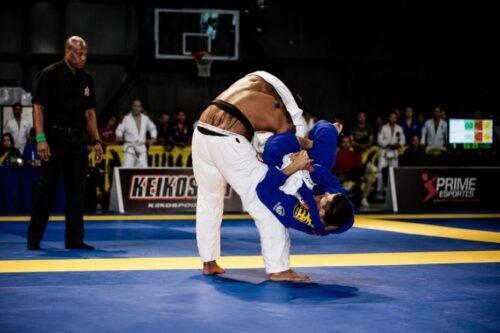
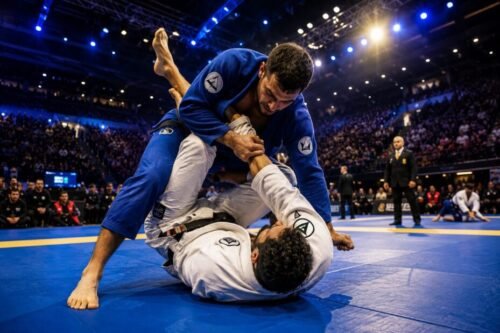
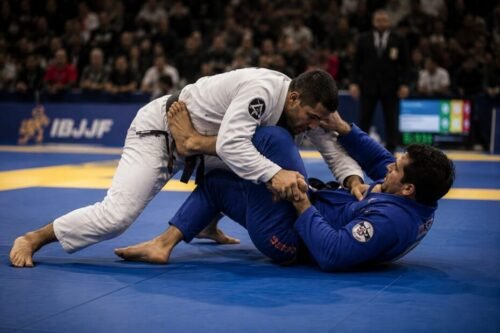
Brazilian Jiu-Jitsu competitors engage in a guard passing battle during a tournament match, demonstrating the positional strategy, control, and technical grappling that define BJJ.

From self-defence and competition to physical fitness and personal development, Brazilian Jiu-Jitsu is a lifelong study of position, control, and submission. The gentle art continues to challenge practitioners of all ages, sizes, and experience levels around the world.

✔ Strengths

  • Exceptional ground fighting and submission skills.
  • Pressure-tested through regular live sparring.
  • Allows smaller practitioners to compete effectively against larger opponents.
  • Strong emphasis on control, restraint, and positional dominance.
  • Deep technical system with almost endless opportunities for improvement.
  • Thriving competition scene and global community.

✘ Limitations

  • Limited emphasis on striking compared to boxing, Muay Thai, or kickboxing.
  • Ground fighting can be problematic when multiple attackers or environmental hazards are involved.
  • Some sport-specific tactics may not translate directly to self-defence situations.
  • Physically demanding and can be hard on the joints over time.
  • Steep learning curve for beginners.

Brazilian Jiu-Jitsu excels at what it was designed to do: control, submission, and ground fighting against resisting opponents. Most of its limitations stem from the fact that it is a specialised grappling art rather than a complete fighting system.

For this reason, many practitioners choose to complement their training with disciplines such as Wrestling, Judo, Boxing, Muay Thai, or Mixed Martial Arts to develop a broader skill set.

🧠 Closing Perspective

Brazilian Jiu-Jitsu has earned its reputation as one of the most influential martial arts of the modern era. Its emphasis on leverage, positional control, pressure-testing, and submission fighting has reshaped the way martial artists think about combat and played a major role in the evolution of mixed martial arts.

What makes BJJ particularly compelling is not simply its effectiveness, but the way it is trained. Regular live sparring forces practitioners to test their skills against resisting opponents, creating a training environment that rewards practicality, adaptability, and continuous improvement.

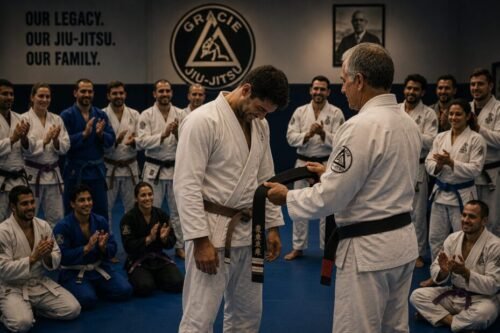
Brazilian Jiu-Jitsu instructor presenting a black belt to a humbled brown belt student as fellow practitioners applaud during a belt promotion ceremony.

A black belt is not simply awarded—it is earned through years of dedication, discipline and perseverance. In Brazilian Jiu-Jitsu, promotion marks not the end of the journey, but the beginning of a lifelong pursuit of mastery.

Like any martial art, BJJ has limitations. It is a specialised grappling system rather than a complete fighting style, and many practitioners choose to complement it with striking arts or other combat sports. However, within its area of expertise, few systems can match its depth, sophistication, or proven track record.

Perhaps more than any other martial art, BJJ teaches humility. Every practitioner spends time trapped, submitted, and forced to confront their mistakes. The learning process can be uncomfortable, but it is also one of the reasons the art develops such resilient and adaptable practitioners.

Whether your goal is self-defence, competition, fitness, or personal development, Brazilian Jiu-Jitsu remains one of the best martial arts available today—and one of the few that can genuinely occupy a lifetime of study.

If you have enjoyed this post please share or feel free to comment below 🙂

Related Posts

Our Other Posts

Leave a Reply

Your email address will not be published. Required fields are marked *

This site uses Akismet to reduce spam. Learn how your comment data is processed.

error: Content is protected !!

Join the Super Soldier Project Mailing List Today!!