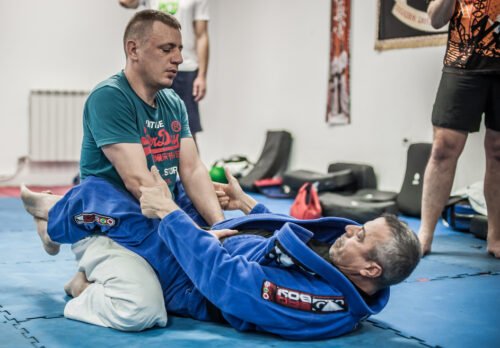
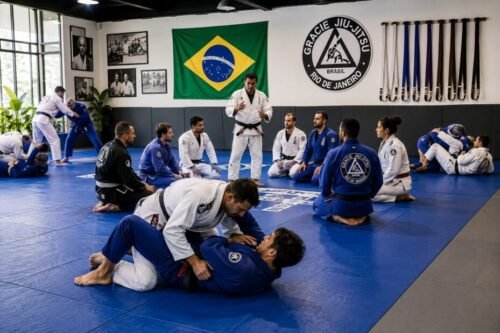
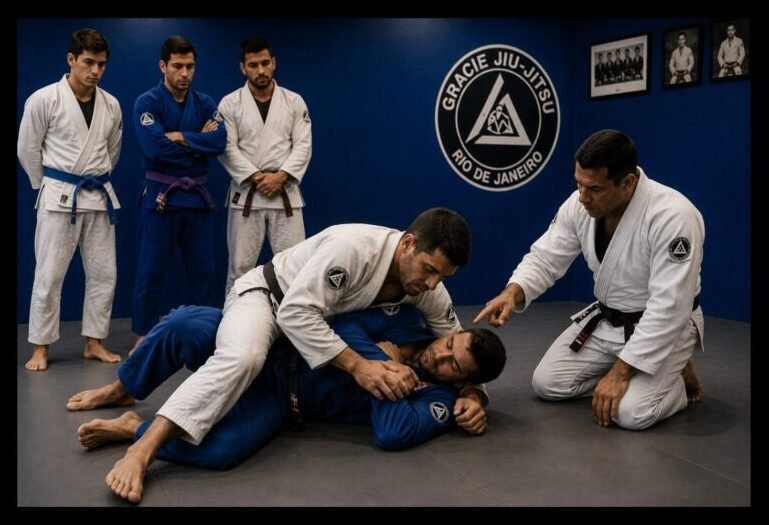
Brazilian Jiu-Jitsu instructor demonstrating a side control technique to students during a class while other practitioners observe and learn.

⚙️ Brazilian Jiu-Jitsu Explained

Position before submission. Control creates opportunity. This guide explores the principles, positions, and strategic thinking that form the foundation of Brazilian Jiu-Jitsu.

Table of Contents

🥋 Introduction

Brazilian Jiu-Jitsu is often described as the art of ground fighting, but that only tells part of the story.

At its core, BJJ is a grappling system built around control, leverage, positioning, and submission. Practitioners learn how to neutralise resistance, escape disadvantageous situations, improve their position, and ultimately force an opponent to submit through a joint lock or chokehold.

Unlike many martial arts that focus primarily on striking, BJJ concentrates on what happens when opponents clinch, grapple, or end up on the ground. The art places a strong emphasis on live sparring, allowing techniques to be tested against resisting opponents in a way few martial arts can match.

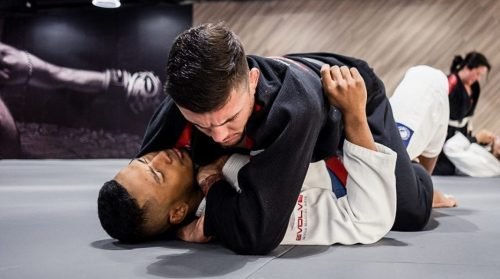
Brazilian Jiu-Jitsu practitioners grappling on the ground during live training, demonstrating positional control and submission techniques.

Ground fighting lies at the heart of Brazilian Jiu-Jitsu, where technique and control outweigh strength alone.

What makes Brazilian Jiu-Jitsu particularly effective is not any single technique. Rather, it is the way individual techniques combine into a complete system of control. Positions flow into transitions. Transitions create opportunities for submissions. Throughout the process, practitioners constantly seek to improve their position while limiting the options available to their opponent.

In this article, we examine the principles, positions, and concepts that form the foundation of Brazilian Jiu-Jitsu and explain why the art has become such an influential force in modern martial arts.

🧠 The Principles of Brazilian Jiu-Jitsu

While Brazilian Jiu-Jitsu contains countless techniques, most are built upon a small number of core principles. Understanding these ideas helps explain how BJJ practitioners control opponents, create opportunities, and consistently overcome resistance.

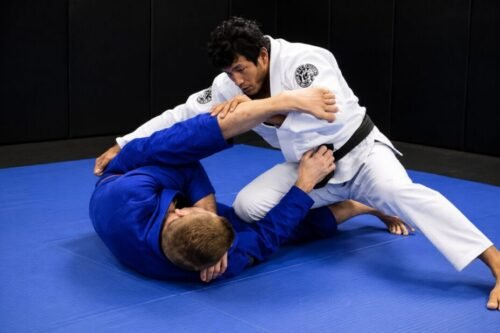
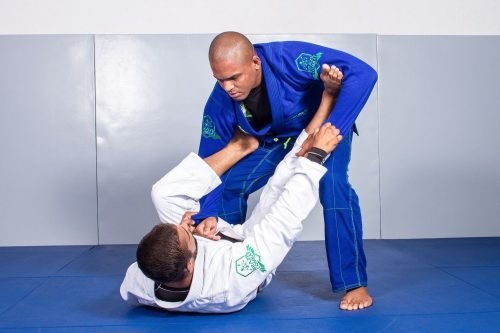
Brazilian Jiu-Jitsu practitioners training from the guard position, demonstrating leverage, control, and positional strategy during live sparring.

What appears to be a disadvantageous position is often where Brazilian Jiu-Jitsu is at its most effective. Through leverage, control, and technique, practitioners can create opportunities and launch attacks from seemingly unfavourable positions.

Click on the links below to read more.

One of the defining principles of Brazilian Jiu-Jitsu is the use of leverage to overcome physical advantages. Rather than meeting force with force, practitioners learn how to use body positioning, weight distribution, angles, and mechanical advantage to control opponents more efficiently.

This does not mean strength is unimportant. Size, power, and athleticism will always matter in a physical contest. However, BJJ seeks to reduce these advantages and make technique the deciding factor whenever possible.

Perhaps the most famous concept in BJJ is “position before submission.”

Rather than immediately chasing a choke or joint lock, practitioners focus on first achieving a dominant position. A strong position limits an opponent’s options, creates control, and significantly increases the likelihood of a successful submission attempt.

This emphasis on positional dominance forms the backbone of the entire art.

BJJ is often described as a game of control. Before attempting to finish a fight, a practitioner must first manage their opponent’s movement, balance, posture, and ability to escape.

The more control a practitioner achieves, the fewer options remain available to their opponent. As those options disappear, opportunities for sweeps, transitions, and submissions begin to emerge.

Every exchange in Brazilian Jiu-Jitsu presents a series of problems. One practitioner seeks to improve their position while the other attempts to defend, escape, or counter.

This constant battle of adjustment and adaptation is one of the reasons BJJ is often compared to chess. Success depends not only on technical knowledge, but also on timing, decision-making, patience, and the ability to remain calm under pressure.

Unlike many martial arts, BJJ places a strong emphasis on live sparring. Techniques are routinely tested against resisting opponents during training, helping practitioners develop practical skill rather than theoretical knowledge alone.

This culture of pressure-testing has played a major role in the art’s development and is one of the key reasons Brazilian Jiu-Jitsu has earned a reputation for effectiveness.

⚙️ Why BJJ Works

Brazilian Jiu-Jitsu is not magic, and it does not make size, strength, or athleticism irrelevant. What it does provide is a structured system for controlling opponents, reducing advantages, and solving problems under pressure. Understanding these concepts helps explain why BJJ has been so successful against resisting opponents.

Breaking through an opponent’s guard is one of the fundamental challenges in Brazilian Jiu-Jitsu. Successful guard passing allows practitioners to establish dominant positions and create opportunities for submissions.

Click on the links below to read more.

Many fights begin standing, but not all remain there. Once opponents move into clinching range, striking opportunities often decrease while grappling opportunities increase.

Brazilian Jiu-Jitsu is designed to operate effectively in these close-range exchanges. Whether through takedowns, trips, throws, or clinch work, practitioners seek to bring the fight into an environment where control and leverage become more important than raw striking power.

A larger, stronger opponent presents obvious challenges. BJJ does not magically eliminate those advantages, but it does provide methods for reducing their impact.

By controlling posture, limiting movement, disrupting balance, and forcing opponents into disadvantageous positions, practitioners can often make it difficult for larger opponents to fully utilise their size and strength.

Rather than focusing solely on submissions, BJJ seeks to progressively improve position throughout an exchange.

A practitioner might move from guard to a sweep, from a sweep to side control, from side control to mount, and finally from mount to a submission attempt. Each transition increases control while reducing an opponent’s ability to defend effectively.

This systematic approach is one of the reasons BJJ can be so effective against resisting opponents.

An opponent who actively resists creates problems that cannot be solved through technique memorisation alone.

Brazilian Jiu-Jitsu addresses this through constant live training. Practitioners learn to adapt, improvise, and react to resistance in real time. Rather than expecting opponents to cooperate, the art assumes they will do everything possible to escape, counter, and fight back.

Perhaps the greatest strength of Brazilian Jiu-Jitsu is that it functions as a complete system rather than a collection of isolated moves.

Individual techniques are important, but it is the connection between positions, escapes, sweeps, transitions, and submissions that makes the art effective. Each piece supports the next, creating a structured approach to controlling and overcoming resistance.

📍 Positional Hierarchy

One of the concepts that separates Brazilian Jiu-Jitsu from many other martial arts is its emphasis on positional hierarchy.

Imagine two practitioners rolling. One begins inside their opponent’s guard, works past the legs, establishes side control, advances to mount, takes the back, and eventually secures a submission. In many ways, that sequence represents the positional battle at the heart of Brazilian Jiu-Jitsu.

Rather than viewing a fight as a simple exchange of attacks and defences, BJJ sees it as a continuous struggle for increasingly dominant positions. Practitioners constantly seek to improve their position while preventing their opponent from doing the same.

The basic idea is straightforward: some positions offer more control and more offensive opportunities than others.

A practitioner trapped beneath an opponent is generally in a worse position than one controlling from the top. Likewise, a practitioner controlling an opponent’s back has more options available than one trapped underneath side control.

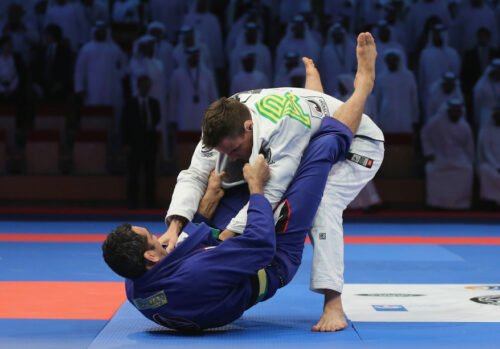
Competitor pulling guard during a Brazilian Jiu-Jitsu match.

Guard pulling allows practitioners to bring the fight into their preferred grappling environment.

This creates a constant cycle of movement and counter-movement. One fighter attempts to advance their position, while the other attempts to escape, reverse, or regain control.

Although there are many positions within Brazilian Jiu-Jitsu, most exchanges follow a broadly recognisable progression:

GuardGuard PassSide ControlMountBack ControlSubmission

This sequence is not a rigid rule, and fights rarely unfold in such a neat fashion. However, it provides a useful framework for understanding how BJJ practitioners think about grappling exchanges.

The positions below form the foundation of this hierarchy and represent some of the most important concepts in the art.

🛡️ The Guard

🧐 What Is Guard?

To many people unfamiliar with grappling, being on your back with an opponent standing over you appears to be a disadvantage.

Brazilian Jiu-Jitsu views the situation differently.

The guard is a position in which a practitioner uses their legs and hips to control, disrupt, and attack an opponent from the bottom position. Rather than simply defending, the guard allows a practitioner to launch submissions, create sweeps, and prevent an opponent from establishing more dominant positions.

The guard is one of the defining features of Brazilian Jiu-Jitsu and plays a major role in separating it from many other grappling systems.

🔒 Closed Guard

The closed guard is often the first guard position beginners learn.

Here, the bottom practitioner wraps their legs around their opponent’s waist and locks their ankles together behind them. This restricts movement, limits posture, and allows the bottom fighter to control distance.

Closed guard offers opportunities for submissions, sweeps, and transitions while making it difficult for the top practitioner to generate effective attacks.

Brazilian Jiu-Jitsu practitioner using the closed guard position.

Closed guard is one of the most important and widely used positions in Brazilian Jiu-Jitsu.

🔓 Open Guard

In open guard, the legs are no longer locked together. Instead, the practitioner uses their feet, shins, and hips to control distance and manage their opponent’s movement.

This creates greater mobility and opens up a wider range of attacking opportunities. Open guard forms the basis for many advanced guard systems used in modern BJJ competition.

While highly effective, open guard generally requires greater timing, movement, and technical understanding than closed guard.

Brazilian Jiu-Jitsu practitioner using open guard to control an opponent.

Open guard uses movement, angles, and distance management to create attacking opportunities.

⚖️ Half Guard

The half guard sits somewhere between full guard and having your guard passed entirely.

In this position, the bottom practitioner traps one of their opponent’s legs between their own. Although less controlling than a closed guard, half guard remains a highly effective position with numerous options for sweeps, escapes, and submissions.

Brazilian Jiu-Jitsu practitioners demonstrating the half guard position.

Half guard provides both offensive and defensive opportunities for the practitioner on the bottom.

Modern BJJ has developed half guard into an entire system of attack and defence, and many practitioners specialise in it as their primary guard position.

Regardless of the variation used, the guard remains one of the most important concepts in Brazilian Jiu-Jitsu. It allows practitioners to fight effectively from their backs and forms the starting point for many of the sweeps, reversals, and submissions that make the art so distinctive.

🚪 Passing the Guard

If the guard is one of the most important defensive positions in Brazilian Jiu-Jitsu, then passing the guard is one of the most important offensive objectives.

A guard pass occurs when the top practitioner successfully moves beyond their opponent’s legs and establishes a more dominant position. Since the legs are the primary tools used to control, sweep, and attack from guard, getting past them dramatically reduces the options available to the bottom fighter.

Passing the guard is rarely straightforward. The bottom practitioner is actively using their legs, hips, grips, and movement to prevent the pass while simultaneously looking for opportunities to sweep, submit, or reverse the position.

This creates one of the most common battles in BJJ:

Guard retention versus guard passing.

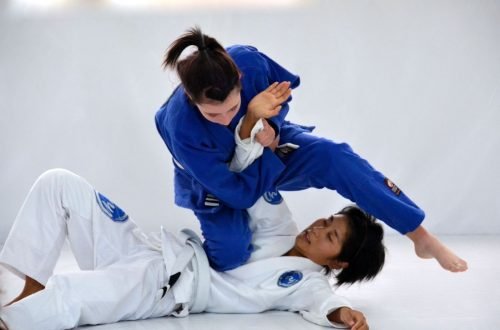
Brazilian Jiu-Jitsu athlete working to pass an opponent's guard.

Guard passing is a critical skill that allows progression through the positional hierarchy.

Whoever wins this battle often gains a significant positional advantage.

A successful guard pass typically leads to positions such as side control, mount, or back control, all of which provide greater opportunities for control and submission.

For this reason, guard passing is considered one of the fundamental skills in Brazilian Jiu-Jitsu and a major milestone in the positional hierarchy.

📌 Side Control

Once the guard has been passed, the top practitioner will often seek to establish side control.

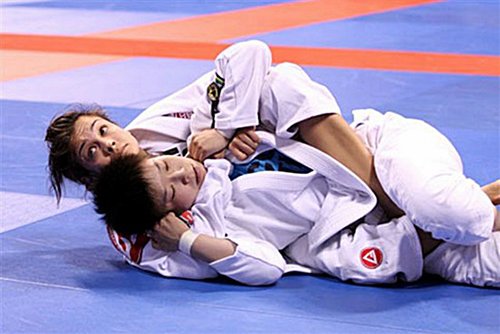
In this position, the attacker controls their opponent from the side, using bodyweight, pressure, and positioning to pin them to the mat. The bottom practitioner remains flat on their back while attempting to escape, recover guard, or reverse the position.

Side control is considered one of the first truly dominant positions in Brazilian Jiu-Jitsu. Unlike the guard, where both practitioners have meaningful offensive options, side control heavily favours the person on top.

The position allows the attacker to:

  • Control movement.
  • Limit escapes.
  • Apply pressure.
  • Set up submissions.
  • Transition to even stronger positions.
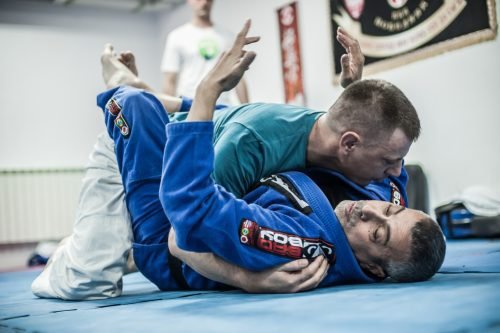
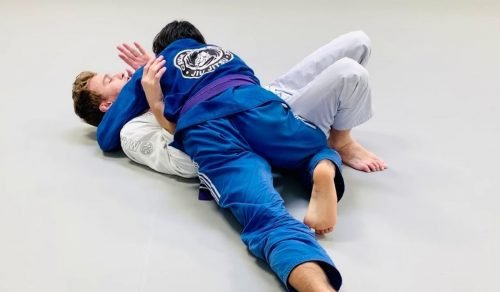
Brazilian Jiu-Jitsu practitioner controlling an opponent from side control.

Side control provides strong positional dominance while limiting an opponent’s movement.

A variety of attacks can be launched from side control, including joint locks and chokeholds. However, many practitioners use the position primarily as a staging point before advancing to mount or back control.

For the defender, the objective is simple: improve position before the attacker improves theirs. This often means creating space, recovering guard, or escaping entirely.

Side control demonstrates one of the central ideas of Brazilian Jiu-Jitsu: before seeking a submission, first establish control.

🦵 Knee-on-Belly

The knee-on-belly position sits somewhere between side control and mount.

As the name suggests, the top practitioner places a knee across their opponent’s torso while maintaining balance and control. Although less secure than some other dominant positions, knee-on-belly offers excellent mobility and allows the attacker to react quickly to their opponent’s movements.

Brazilian Jiu-Jitsu practitioner applying knee-on-belly control.

Knee-on-belly combines pressure, mobility, and control while creating attacking opportunities.

It is also an extremely uncomfortable position to be trapped beneath. The pressure created by the attacker’s bodyweight often forces the defender to react, creating opportunities for transitions, submissions, or further positional advancement.

For this reason, many practitioners use knee-on-belly as a transitional position that helps maintain pressure while moving towards more dominant forms of control.

👑 Mount

The mount is one of the most dominant positions in Brazilian Jiu-Jitsu.

In this position, the top practitioner sits astride their opponent’s torso, controlling them from above using bodyweight, balance, and pressure. The bottom practitioner is pinned beneath them and must work to escape while preventing attacks.

Mount offers several advantages. The attacker can maintain strong control, limit movement, and launch a variety of submissions. It also provides excellent opportunities to advance further, particularly if the defender turns and exposes their back while attempting to escape.

Brazilian Jiu-Jitsu practitioner holding the full mount position.

Full mount is one of the most dominant positions in Brazilian Jiu-Jitsu and MMA.

The position is equally important in mixed martial arts. From mount, a fighter can deliver strikes while maintaining a high degree of control over their opponent. This has made it one of the most sought-after positions in both sport grappling and MMA.

For the defender, mount can be an exhausting place to be. Escaping often requires precise timing, technical skill, and a considerable amount of energy. As a result, achieving mount is considered a major milestone in the positional hierarchy and often signals that a practitioner is close to finishing the fight.

🎒 Back Control

Many practitioners consider back control to be the strongest position in Brazilian Jiu-Jitsu.

In this position, the attacker controls their opponent from behind, typically using their legs to secure hooks around the defender’s hips while controlling the upper body with their arms. This allows the attacker to maintain close contact and limit their opponent’s ability to escape.

One of the greatest advantages of back control is that the defender cannot easily see or anticipate incoming attacks. At the same time, the attacker is positioned away from many of the defender’s strongest defensive tools, including their legs and hips.

Brazilian Jiu-Jitsu practitioner controlling an opponent from back control.

Back control offers exceptional dominance and access to some of BJJ’s highest-percentage submissions.

The position provides direct access to some of BJJ’s highest-percentage submissions, most notably the rear naked choke. As a result, back control is often viewed as the ultimate objective in the positional hierarchy.

For the defender, escaping back control can be extremely difficult. The priority is usually to prevent the attacker from establishing strong control, remove the hooks, and work back towards a more neutral position.

In many ways, back control represents the end goal of the positional battle that defines Brazilian Jiu-Jitsu. Once achieved, the attacker is often only one step away from securing a submission.

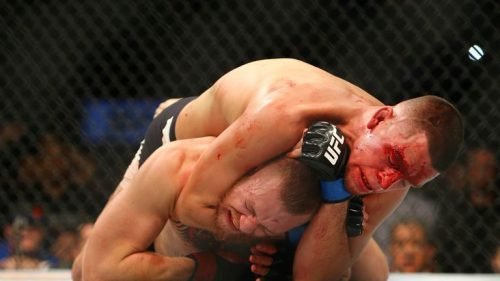
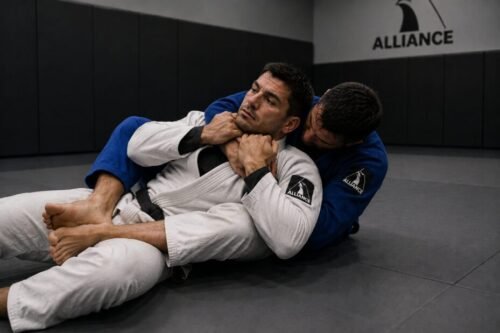
Rear naked choke being applied during a mixed martial arts contest.

The rear naked choke remains one of the most effective submissions in grappling and MMA.

🐢 Turtle Position

The turtle position is a defensive posture in which a practitioner protects themselves by staying on their hands and knees with their elbows tucked in close to the body.

Unlike many of the positions discussed previously, turtle is not generally considered a dominant position. Instead, it is often used as a temporary refuge when a practitioner is under pressure and trying to avoid a guard pass, submission, or positional advancement.

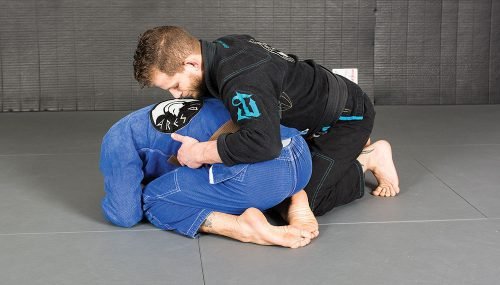
Brazilian Jiu-Jitsu practitioner demonstrating the turtle position.

The turtle position is often used defensively to prevent attacks and create escape opportunities.

While the turtle can make it difficult for an opponent to launch immediate attacks, it also presents opportunities for the attacker to establish back control or improve their position.

For this reason, most practitioners view turtle as a transitional position rather than somewhere they wish to remain for long. It can buy valuable time, but ultimately the objective is usually to escape, recover guard, or return to a stronger position.

Like many aspects of Brazilian Jiu-Jitsu, the turtle position demonstrates the importance of survival, patience, and intelligent decision-making under pressure.

🔒 Submissions

The ultimate objective in Brazilian Jiu-Jitsu is to force an opponent to submit.

A submission occurs when a practitioner applies a technique that leaves their opponent with little choice but to concede defeat. This is usually signalled by physically tapping their opponent or the mat, indicating that the match should be stopped immediately.

While there are countless variations, most submissions fall into two broad categories: joint locks and chokes.

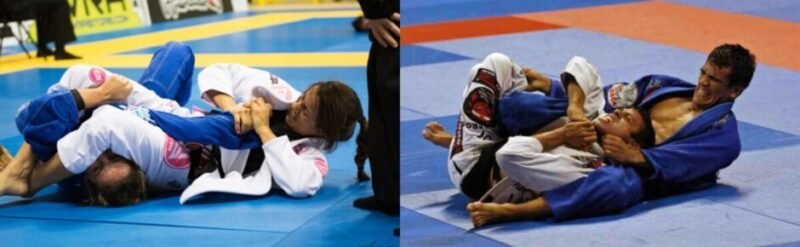
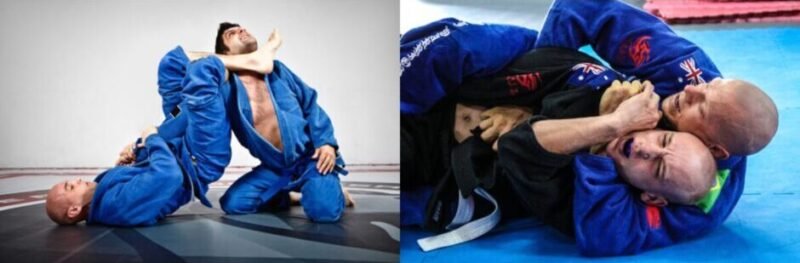
Brazilian Jiu-Jitsu practitioners applying an armbar and choke submission.

Submissions are the ultimate objective in Brazilian Jiu-Jitsu, forcing an opponent to concede defeat.

🦾 Joint Locks

Joint locks work by isolating a limb and applying controlled pressure to a joint beyond its normal range of movement.

Common targets include the elbow, shoulder, wrist, knee, and ankle. If applied correctly, a joint lock can cause significant pain and potentially serious injury if the defender refuses to submit.

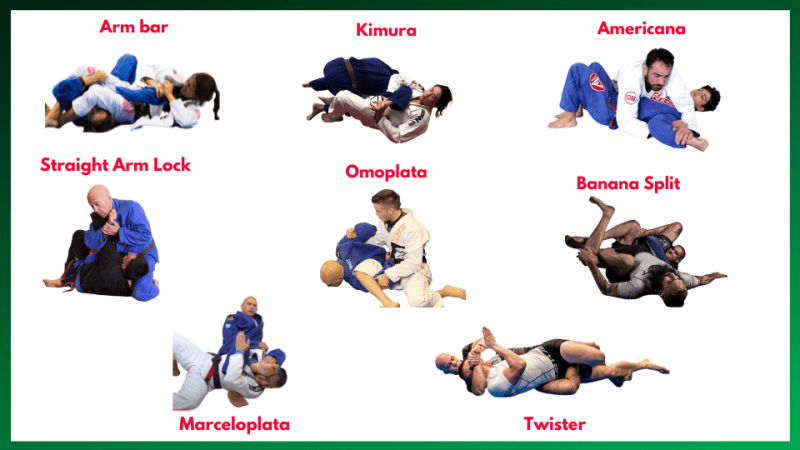
Some of the most recognisable examples include the armbar, kimura, americana, and various leg locks.

Some of the joint locks permitted and used in BJJ competition include:

🫁 Chokes

Chokes are among the most effective submissions in Brazilian Jiu-Jitsu.

Rather than attacking a joint, they restrict blood flow or airflow, forcing an opponent to submit or risk losing consciousness. When applied correctly, many chokes can end a match remarkably quickly.

The most famous example is the rear naked choke, a technique often associated with both BJJ and modern MMA. Other common examples include the guillotine choke, triangle choke, and cross-collar choke.

🎯 The End Goal

Although submissions often attract the most attention, they represent only the final stage of the process.

The positions, escapes, sweeps, guard passes, and transitions that make up Brazilian Jiu-Jitsu all exist to create opportunities for successful submissions. In many ways, a submission is simply the reward for winning the positional battle that came before it.

🥊 BJJ and Self-Defence

Brazilian Jiu-Jitsu has long been associated with practical self-defence, and for good reason. The art teaches practitioners how to control resisting opponents, escape disadvantageous positions, and apply effective submissions under pressure.

One of BJJ’s greatest strengths is its ability to prepare students for physical resistance. Regular live sparring develops timing, composure, and the ability to remain calm during chaotic situations. These attributes can be invaluable in a real confrontation.

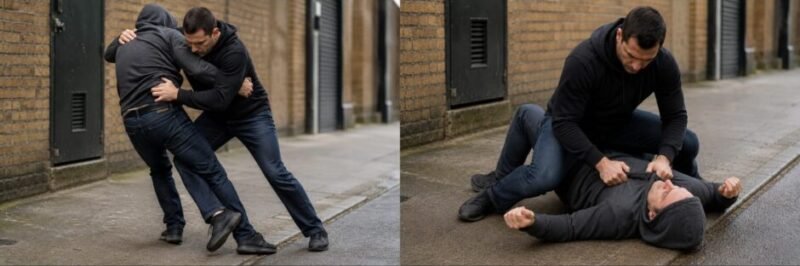
Defender using Brazilian Jiu-Jitsu to establish a dominant mounted position over an aggressor during a realistic self-defence scenario on a city street.

Many real-world confrontations end in a clinch or on the ground. Brazilian Jiu-Jitsu teaches practitioners to establish control, maintain dominant positions, and neutralise an aggressor.

However, BJJ is not a complete self-defence system. Modern sport BJJ places significant emphasis on grappling and ground fighting, while devoting less attention to striking, weapons, and multiple-attacker scenarios. Some techniques that work well under competition rules may also be less practical in an uncontrolled environment.

For this reason, many practitioners choose to supplement their training with disciplines such as Boxing, Muay Thai, Wrestling, or dedicated self-defence training.

Like any martial art, BJJ is best viewed as a tool rather than a complete solution. It excels in some areas, is less effective in others, and works best when its strengths and limitations are both understood.

🏆 BJJ in Modern MMA

Few martial arts have had a greater impact on modern mixed martial arts than Brazilian Jiu-Jitsu.

The success of Royce Gracie in the early UFC tournaments demonstrated the effectiveness of grappling and submissions against opponents with little ground-fighting experience. Almost overnight, fighters began to recognise the importance of takedown defence, positional control, and submission awareness.

Today, BJJ is considered a core component of MMA training. Even fighters who specialise in striking spend considerable time learning grappling skills, while many wrestlers and judoka incorporate BJJ techniques into their games.

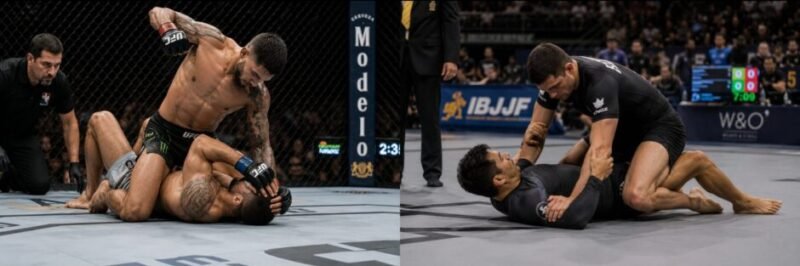
Modern No-Gi Brazilian Jiu-Jitsu competition alongside mixed martial arts, highlighting the close relationship between BJJ, submission grappling, and MMA.

Once a specialist grappling art, Brazilian Jiu-Jitsu now sits at the heart of modern mixed martial arts. In turn, MMA continues to shape the evolution of BJJ through No-Gi competition and submission grappling.

Modern MMA has also influenced BJJ in return. The growth of No-Gi competition, increased emphasis on wrestling, and the development of submission grappling have all helped shape the evolution of the art.

While pure BJJ and MMA are not the same thing, their relationship remains close. The success of one has continually influenced the development of the other, helping create the highly sophisticated grappling systems seen in combat sports today.

📌 Final Thoughts

Brazilian Jiu-Jitsu is far more than a collection of submissions and grappling techniques. It is a complete system built around leverage, control, positional dominance, and the ability to solve problems under pressure.

What makes the art unique is the way its individual components fit together. Guards lead to sweeps. Sweeps create dominant positions. Dominant positions create submission opportunities. Throughout the process, practitioners are constantly adapting to resistance and searching for ways to improve their position while limiting their opponent’s options.

Brazilian Jiu-Jitsu practitioner defending against back control by fighting the attacker's hands while trapped with hooks in during a grappling exchange.

Even in one of the most dangerous positions in Brazilian Jiu-Jitsu, the fight isn’t over. Good BJJ is built on patience, problem-solving, and constant adaptation—using sound technique to survive, escape, improve position, and eventually turn defence into attack.

This combination of technical depth, strategic thinking, and pressure-tested training has helped BJJ become one of the most influential martial arts in the world. Whether practised for self-defence, competition, fitness, or personal development, it offers a challenging and rewarding journey that can last a lifetime.

In our final article, we step off the mats and take a closer look at the practical side of training. We’ll explore what happens in a typical class, the belt ranking system, Gi and No-Gi training, competition rules, scoring, and some of the major organisations and tournaments that shape the modern sport.

If you have enjoyed this post please share or feel free to comment below 🙂

Our Other Posts

Operation Kettlebell Wrath. Kettlebell Commando Raids. Strength, balance and endurance workouts. Fat burners. AMRAP. EMOM. TABATA. Super Soldier Project.

Kettlebell Wrath

Heavy kettlebells. Minimal rest. Kettlebell Wrath is built around sustained pressure, grip fatigue, and relentless

Read More »

Leave a Reply

Your email address will not be published. Required fields are marked *

This site uses Akismet to reduce spam. Learn how your comment data is processed.

error: Content is protected !!

Join the Super Soldier Project Mailing List Today!!