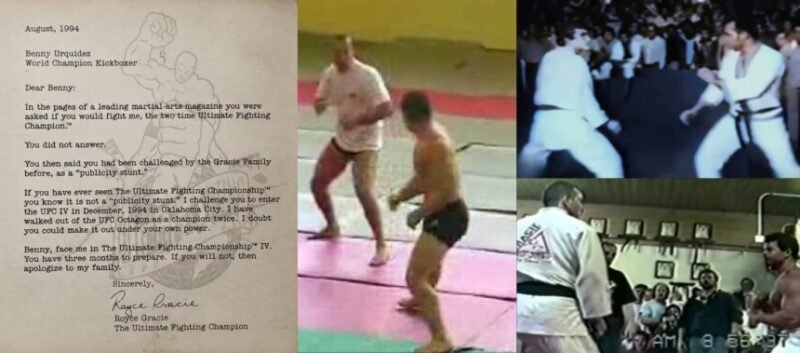
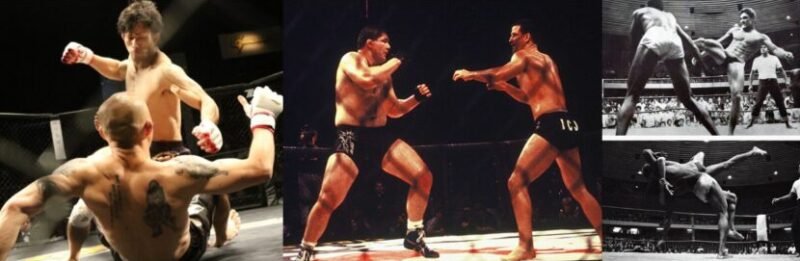
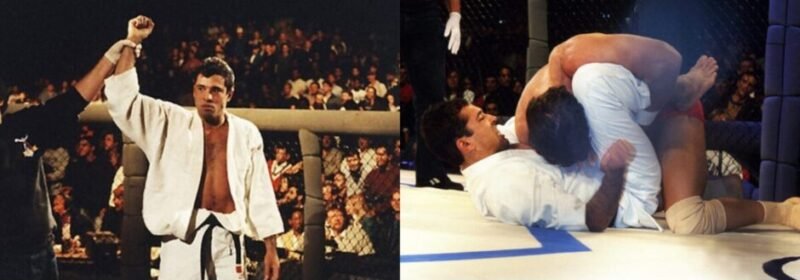
Royce repeatedly defeated larger opponents by taking them to the ground and submitting them. Many of his opponents had little understanding of grappling and even less understanding of how to defend against submissions. Techniques that had been refined through decades of challenge matches and Vale Tudo contests suddenly found themselves on a global stage.
Royce went on to win three of the first four UFC tournaments, and the martial arts world took notice.
Almost overnight, attitudes towards ground fighting began to change. Fighters who had previously focused exclusively on striking realised they needed grappling skills. Wrestlers began learning submissions. Strikers began learning takedown defence. Martial artists everywhere started reassessing what they thought they knew about fighting.
The impact of those early UFC events cannot be overstated. They helped transform Brazilian Jiu-Jitsu from a relatively obscure Brazilian martial art into a worldwide phenomenon.
In many ways, modern mixed martial arts was built on the lessons learned during that period.
The success of Royce Gracie and the UFC marked the beginning of a new chapter—one in which Brazilian Jiu-Jitsu would spread far beyond Brazil and establish itself as a truly global martial art.