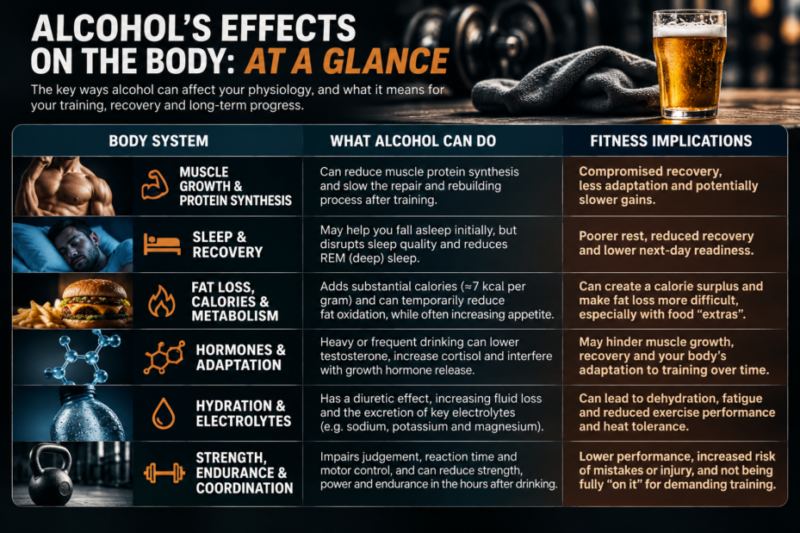
Alcohol can complicate weight management in ways that extend beyond the drink itself. At approximately 7 calories per gram, alcohol is surprisingly energy-dense, providing almost as many calories as fat. A pint of stronger beer can contain over 200 calories, while cocktails and sugary mixers can add considerably more.
Alcohol also changes how the body uses fuel. Because it must be metabolised and cleared, the body temporarily prioritises alcohol-derived energy, reducing fat oxidation while this process takes place. However, this doesn’t mean fat burning stops completely or that every drink automatically becomes body fat. Long-term fat loss still depends largely on overall energy balance.
The bigger problem is often what accompanies drinking. Alcohol can lower inhibitions around food and encourage overeating, particularly when calorie-rich meals become part of the evening. For someone trying to lose fat, the consequences can accumulate. Several hundred additional calories from alcohol each week, particularly alongside extra food and disrupted eating habits, may gradually undermine an otherwise consistent diet.
The calories in your glass are only part of the equation.