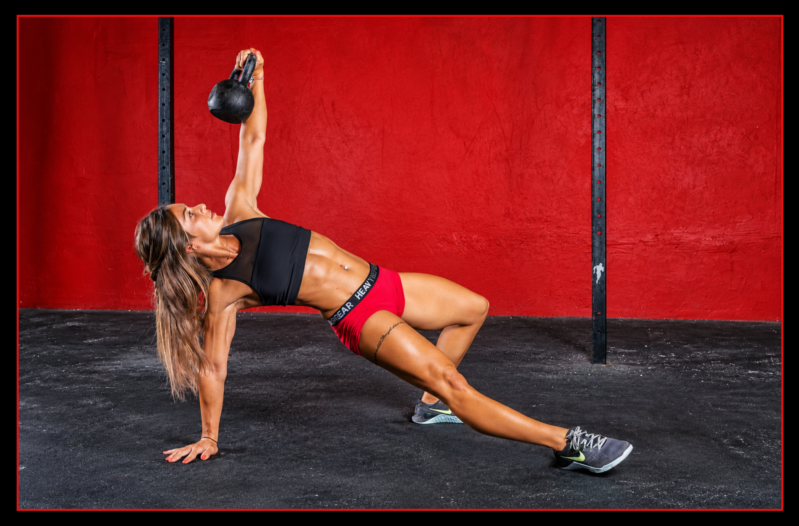



Athletic woman shown through a sequence of kettlebell movements including swing, clean, squat, press and carry.

๐Ÿ’ฃ Why Train With Kettlebells?

So kettlebell training benefits, what are they and why should you choose them over traditional forms of resistance training?

๐Ÿ“‘ Table of Contents

๐Ÿ’ฃ The Kettlebell Advantage

Kettlebells pack an enormous amount of training potential into a very simple piece of equipment. With a single bell, you can build strength, explosive power, conditioning, grip and trunk control, carry load, train one side of the body at a time and move seamlessly between slower strength work and fast ballistic exercise.

That versatility is what makes kettlebells so useful. They can provide a demanding strength-and-conditioning session in a small space, slot easily alongside barbells, running or combat-sport training, and allow a surprising amount of productive work without constantly changing equipment. One bell can perform a lot of different jobs.

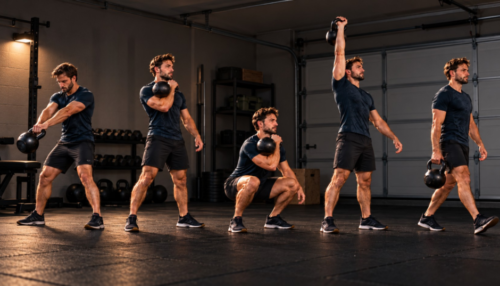
Athlete performing a sequence of kettlebell movements in a home garage gym, showing a swing, rack hold, goblet squat, overhead press and suitcase carry.

One kettlebell can cover a surprising amount of ground, from strength and ballistic work to loaded carries and overhead control.

Kettlebells are not magic, and they are not automatically better than barbells, dumbbells, machines or bodyweight training. They do not need to be. Their strength lies in being an exceptionally versatile training tool that can develop several physical qualities while remaining compact, adaptable and remarkably simple in design.

Used for the jobs they perform well, kettlebells earn their place very quickly.

So what does that look like in practice? The value of kettlebell training becomes clearer when you look at the different qualities one simple implement can help develop. The sections that follow explore some of the main reasons kettlebells continue to hold such a strong place in strength and conditioning.

๐Ÿ’ฅ Strength and Power

Kettlebells can be used for conventional strength exercises such as presses, squats, rows and carries, but their shape also makes them particularly well suited to ballistic movements. Swings, cleans and snatches require you to generate force rapidly through the hips, transfer that force into the bell and then control the moving load.

Athlete performing push-ups using two kettlebells as handles during strength training.

Kettlebells are not limited to swings and ballistics โ€” they can also support controlled strength work alongside more explosive training.

This is where kettlebell training really comes into its own. Ballistic exercises develop the ability to produce force quickly, accelerate an external load and remain in control as it moves, bringing strength, power and coordination together within the same movement. A kettlebell will not replace a barbell if your primary objective is maximising a squat, deadlift or bench press, but for developing explosive strength with relatively little equipment, it is an exceptionally effective tool.

๐Ÿซ Cardio and Conditioning

Kettlebells lend themselves naturally to repeated-effort training. Swings, cleans, snatches, squats and carries can be organised into sets, circuits or intervals that challenge both the working muscles and the cardiovascular system, which is one reason kettlebells feature so heavily in conditioning programmes.

This ability to combine strength, movement and sustained effort is one of the real attractions of kettlebell training. By changing the load, repetitions, work periods or rest, the same bell can be used for short explosive efforts, longer strength-endurance sets or demanding conditioning sessions without changing the basic tool.

That does not mean every workout needs to become an all-out endurance test. Heavy presses, controlled get-ups and lower-repetition strength work remain equally valid. The advantage is choice: kettlebells allow strength, power and conditioning to sit comfortably within the same training system.

๐Ÿงฑ Core Strength and Load Control

Kettlebells frequently place the body under offset or unilateral load, which changes the job of the trunk. A suitcase carry loads one side, the rack position places weight asymmetrically across the torso, and a one-arm press requires you to remain controlled while producing force overhead.

Athlete controlling a kettlebell overhead during a Turkish get-up, demonstrating core stability and whole-body load control.

Offset loading forces the core and trunk to resist unwanted movement while the rest of the body continues working.

Rather than simply asking the abdominal muscles to shorten repeatedly, these exercises require the muscles of the core and trunk to resist unwanted movement while the rest of the body continues working. That makes kettlebells particularly effective for developing bracing, load control and coordination between the hips, trunk and upper body, qualities that matter whenever you have to produce force while keeping the rest of the body organised under load.

๐Ÿ”„ Functional Strength and Movement

Kettlebells can be used across the major movement patterns, including hinging, squatting, pressing, pulling, carrying and lunging, while more advanced training can introduce rotation and smooth transitions between positions.

What makes that variety particularly useful is how easily one movement can lead into another. A clean can become a squat, a press or a carry without changing equipment, allowing several movement patterns to sit naturally within the same session or sequence.

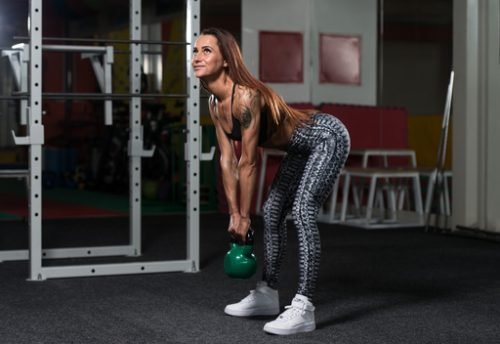
Woman performing a kettlebell deadlift using a hip-hinge movement in a gym.

Hinging, squatting, pressing, carrying and lunging give kettlebells a natural place in purposeful functional training.

This is also one reason kettlebells fit naturally into functional training when the exercises are chosen for a clear purpose. They can develop the ability to produce force, control load and move through positions that have relevance beyond a single isolated gym exercise.

That does not mean training needs to become increasingly elaborate. The goal is not to collect complicated exercises for their own sake, but to have a broad range of useful movements available from one simple tool and apply them where they serve the training.

๐Ÿšถ Carries and Loaded Movement

Kettlebells lend themselves naturally to loaded carries because they can be held at the side, in the rack, overhead or in both hands while you move. These variations challenge the grip, trunk, shoulders and general work capacity simultaneously while teaching you to maintain control under load.

Carries are also exceptionally easy to scale. A beginner can start with a moderately loaded suitcase carry, while a more experienced trainee can manipulate weight, distance, duration or carrying position to increase the challenge. Their simplicity is part of their value: pick up a meaningful load, control it while you move and develop several useful qualities at the same time.

โœŠ Grip Strength

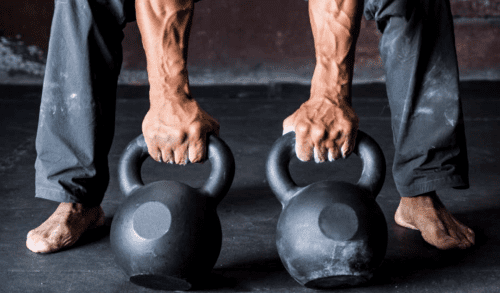
Most kettlebell exercises place a meaningful demand on the hands and forearms. The handle has to be controlled while the load hangs beneath it, moves around the hand or attempts to pull the body out of position.

That means grip strength becomes part of the training rather than an afterthought. Carries, swings, cleans and snatches all challenge the hands in slightly different ways while the rest of the body continues working, allowing grip and forearm strength to develop alongside the primary movement.

Close-up of an athlete gripping two kettlebells, demonstrating the demands kettlebell training places on the hands and forearms.

Grip strength becomes part of the training as you learn to hold, guide and control load through carries, swings, cleans and other movements.

You are not stopping the session simply to train the hands; you are learning to hold, guide and control a moving load while producing force elsewhere. That is one of the qualities that gives kettlebell training its distinctive feel.

Enjoying our Kettlebell Training Benefits? Check out some of our...

Super Soldier Workouts. Short on time? Need a brutally effective workout that doesn’tย leave you late for work? Look no further.

๐ŸŽฏ Coordination and Skill

Kettlebell training becomes increasingly technical once ballistic movements are introduced. The swing requires timing between the hips and the moving bell, the clean redirects that momentum into the rack position, and the snatch carries the same principle overhead.

Woman performing a kettlebell lunge while maintaining balance and control under load.

Kettlebell training develops more than strength. Moving under load also demands balance, coordination and control.

Those movements demand timing, body awareness and control, particularly as load or speed increases. That technical element gives kettlebell training considerable room to develop over time because progress is not measured only by adding more weight or repetitions. A movement can become smoother, sharper, more efficient and better controlled even when the load stays the same.

That pursuit of better movement is part of the appeal: you are not simply completing repetitions, but gradually learning to handle the kettlebell with greater precision.

โš™๏ธ Minimalist Training, Maximum Utility

For home training, travel or any situation where space and equipment are limited, kettlebells offer an obvious practical advantage. One or two bells can support a surprisingly wide range of useful work without requiring a rack, bench, cable station or large collection of plates.

The efficiency is not only about owning less equipment. Because the same kettlebell can move quickly from one task to another, it also lends itself to compact, high-density sessions. A clean can lead directly into a squat, press or carry, while swings, complexes, EMOMs and intervals allow you to get a great deal of productive work done without constantly changing stations or equipment.

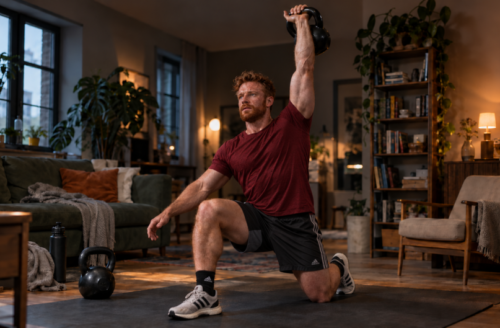
Man performing a half-kneeling kettlebell overhead press in a living room, showing how effective training can be done at home with minimal equipment.

You do not need a full gym to train seriously. One kettlebell, a little space and purposeful work can go a long way.

That does not mean one kettlebell can perfectly replace an entire gym. Heavy strength training and precise incremental loading are easier with equipment designed for those purposes. But when space, equipment or time are limited, kettlebells offer an exceptional amount of training potential from a remarkably small setup.

๐ŸŒŠ Training Rhythm, Focus and Mindset

Experienced kettlebell work can develop a distinctive rhythm as breathing, tension, relaxation and timing begin to work together. Longer sets demand concentration because small errors in grip, bell path or position become increasingly obvious as fatigue builds.

Once the technique becomes familiar, that rhythm can take on an almost meditative quality. Attention narrows to the bell, the breath and the next repetition. There is less room for distraction because the movement continually asks you to stay present, adjust tension and keep the sequence under control.

Woman performing a kettlebell windmill while maintaining an overhead position, balance and controlled movement.

Good kettlebell training demands focus, timing and control, keeping the athlete engaged with the movement even as the work becomes more demanding.

That focus becomes even more important when fatigue arrives. Good kettlebell training is not simply about forcing out another repetition; it is about staying composed enough to keep the movement clean, efficient and deliberate when the easier option would be to rush, tighten up or let technique deteriorate.

It is not a quality unique to kettlebells, but the combination of rhythm, repetition, technical attention and sustained effort gives the training a distinctive mental character. At its best, you are not just completing the work โ€” you are learning to stay present, controlled and purposeful while the work gets harder.

๐Ÿงฐ One Tool, Several Roles

Perhaps the strongest argument for kettlebells is how easily they can occupy different roles within the same programme. The same bell might be used for heavy presses or squats, explosive swings, conditioning intervals, loaded carries, unilateral strength work or higher-repetition strength-endurance training.

That flexibility makes kettlebells easy to integrate alongside barbells, dumbbells, bodyweight training, running, martial arts or other conditioning methods. You do not have to become a dedicated kettlebell specialist to benefit from them. The value lies in having one tool that can step into several different jobs, support the rest of your training and add something useful without demanding that everything else be pushed aside.

โš–๏ธ What Kettlebells Are Not Best At

Versatility does not mean superiority. If your primary goal is maximum strength, barbells allow substantially greater loading and more precise incremental progression. If your priority is maximising muscle hypertrophy, machines, cables and dumbbells can often make it easier to target particular muscles, stabilise movements and manipulate resistance across a wider range of exercises.

Likewise, running, cycling, rowing and similar modalities are generally easier to regulate when the goal is precise aerobic training, while some kettlebell movements demand more technical skill than conventional resistance exercises.

None of that diminishes the value of kettlebell training. It simply puts the tool in the right context. The kettlebell is best understood as one exceptionally versatile training tool rather than the answer to every training problem. Its strength lies in the number of useful qualities it can train well, and in knowing when those qualities are exactly what the programme needs.

๐Ÿ’ฃ Final Thoughts

Why Kettlebells Earn Their Place

The kettlebell earns its place through versatility. It can develop strength, explosive power, grip, conditioning, coordination and loaded movement while also providing enough technical depth to keep rewarding better movement as your training develops.

That does not make it the best tool for every objective, nor does it need to replace the rest of your training. Kettlebells sit comfortably alongside barbells, running, bodyweight work, combat sports and other methods, adding useful qualities without demanding that the entire programme revolve around them.

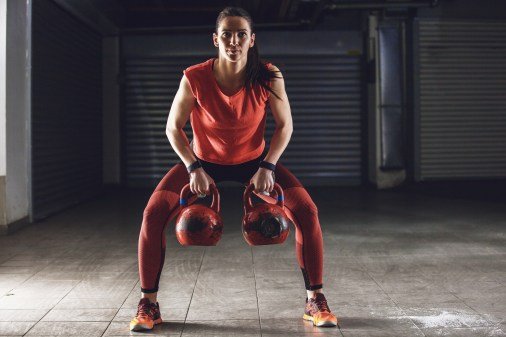
Woman performing a two-kettlebell squat in a gym, demonstrating whole-body strength and control under load.

One tool, several jobs: strength, conditioning and controlled movement can all sit comfortably within the same kettlebell session.

Their real advantage is not magical fat loss, perfect muscle isolation or unlimited strength potential. It is the ability to take one simple implement and use it to train several important physical qualities with remarkably little equipment, space or complication.

Learn the fundamentals, respect the technique and use the kettlebell for the jobs it does well. Do that, and a simple lump of iron becomes one of the most capable and rewarding tools you can train with.

If you have enjoyed this post please share or feel free to comment below ๐Ÿ™‚

๐Ÿ”— Our Other Posts

Leave a Reply

Your email address will not be published. Required fields are marked *

This site uses Akismet to reduce spam. Learn how your comment data is processed.

error: Content is protected !!

Join the Super Soldier Project Mailing List Today!!