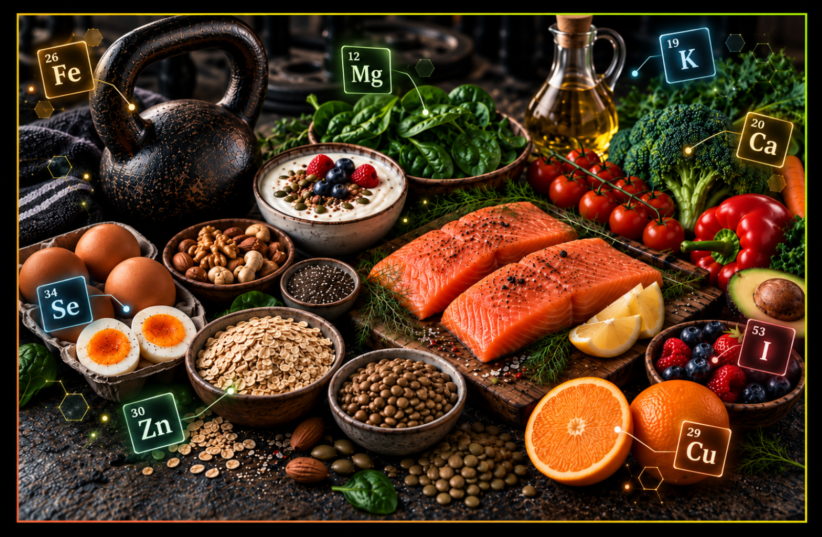









Nutrient-rich foods including salmon, eggs, vegetables, berries, nuts and grains arranged beside a kettlebell.

Breaking Good โ€” Micronutrients Made Easy

Small nutrients. Big responsibilities. From energy production and muscle function to bone health and immunity, vitamins and minerals help keep your body working at its best. Learn which ones matter, where to find them and how to avoid nutritional shortfalls.

๐Ÿ“‘ Table of Contents

๐Ÿฝ๏ธ Introduction

Protein, carbohydrate and fat usually dominate conversations about sports nutrition because they supply energy, support recovery and provide the raw materials needed to maintain and build tissue. Alongside them sits another group of nutrients that receives considerably less attention: micronutrients.

Micronutrients are the vitamins and minerals the body requires in relatively small amounts. They do not provide calories, but they are involved in hundreds of processes that allow the body to use the food we eat and function normally. These include energy metabolism, oxygen transport, bone formation, muscle and nerve function, immune defence, blood production, and the maintenance and repair of tissues.

๐Ÿ‹๏ธ Why Micronutrients Matter for Training

For someone who trains regularly, adequate micronutrient intake supports systems placed under repeated demand. Iron contributes to oxygen transport, calcium and vitamin D are important for bone health, several B vitamins participate in energy metabolism, and minerals such as magnesium and potassium contribute to normal muscle and nerve function.

Problems are more likely when intake or nutrient status becomes inadequate, particularly where restrictive diets, low energy intake, limited food variety or other factors increase the risk of deficiency. Taking more once requirements are already covered does not generally produce an additional performance advantage, and excessive intakes of some vitamins and minerals can be harmful.

The practical aim is adequacy rather than excess: understand where micronutrients come from, recognise circumstances in which shortages become more likely, and know when food alone may not cover a genuine need.

๐Ÿ”ฌ What Are Micronutrients?

Micronutrients fall into two broad groups: vitamins and minerals. Both are essential to normal physiology, although they differ in their structure, how the body handles them and the amounts required.

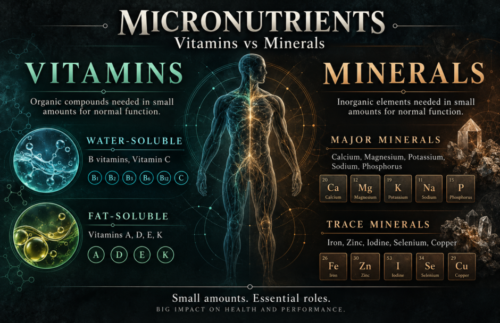
Educational infographic comparing water-soluble and fat-soluble vitamins with major and trace minerals.

Vitamins and minerals work differently, but both are essential. Understanding the basics makes it easier to build a diet that covers your needs.

Their relatively small required quantities should not be confused with limited importance. A nutrient may only be needed in milligrams or micrograms while still playing an essential role in processes such as red blood cell production, bone maintenance or nerve function.

๐Ÿ‘‡ Click on links below for more

Vitamins are organic compounds required for normal metabolism, growth and maintenance. They are commonly divided according to how they are absorbed and stored.

Water-soluble vitamins include vitamin C and the B-vitamin family. They dissolve in water and, with some exceptions such as vitamin B12, are generally stored in more limited quantities. Regular dietary intake is therefore important.

Fat-soluble vitamins include vitamins A, D, E and K. They are absorbed alongside dietary fat and can be stored in the liver and other tissues. That storage capacity is useful, but it also means excessive supplemental intake of some fat-soluble vitamins can accumulate over time.

Minerals are inorganic elements obtained through food and drink. Some are required in relatively larger quantities and are often described as major minerals, including calcium, magnesium, potassium, sodium and phosphorus. Others, such as iron, zinc, iodine, selenium and copper, are required in much smaller quantities and are commonly described as trace minerals.

These labels refer to quantity rather than importance. Iron is required in relatively small amounts, for example, yet inadequate iron status can have substantial effects on oxygen transport and exercise tolerance.

Micronutrients rarely operate in isolation. Vitamin D influences calcium metabolism, vitamin C improves the absorption of non-haem iron, and several B vitamins participate in related pathways involved in energy metabolism.

This helps explain why dietary variety matters. A mixed diet supplies vitamins and minerals in different combinations, making it easier to cover overall requirements without chasing individual nutrients or foods marketed as nutritional shortcuts.

๐Ÿ”Ž Micronutrients That Deserve Particular Attention

Every vitamin and mineral has a physiological role, but several deserve closer attention because the risk of inadequate intake or low nutrient status increases under particular diets, lifestyles or training demands.

๐Ÿฉธ Iron

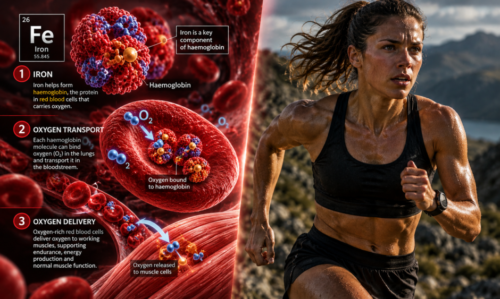
Iron is required for the production of haemoglobin, which allows red blood cells to transport oxygen around the body. It also contributes to cellular energy metabolism and normal muscle function, making adequate iron status particularly important for endurance performance.

Risk of inadequate iron status is higher in some athletes, particularly those with heavy menstrual losses, low energy intake or restrictive diets. Endurance athletes may face additional challenges through factors such as gastrointestinal losses, sweat losses and repeated foot-strike haemolysis in runners.

Split infographic showing iron's role in haemoglobin and oxygen transport alongside a female endurance runner.

Iron helps haemoglobin carry oxygen to working muscles. When iron status falls too low, endurance and exercise tolerance can suffer.

Useful dietary sources include red meat, shellfish, legumes, fortified cereals, nuts, seeds and leafy green vegetables. Iron from animal foods is generally absorbed more readily, while vitamin C can improve the absorption of iron from plant sources.

Iron supplements should not be taken casually. Persistent fatigue has many possible causes, and excessive iron can be harmful. Testing is more useful than assuming deficiency from symptoms alone.

โ˜€๏ธ Vitamin D

Vitamin D contributes to calcium regulation, bone health and normal muscle function. Unlike most vitamins, the body can produce vitamin D in the skin when exposure to sunlight is sufficient.

Food sources are relatively limited and include oily fish, eggs and fortified foods. This makes vitamin D status more vulnerable during periods when sunlight exposure is low.

Three-panel image showing sardines, a female athlete resting in the sunshine on a coastal terrace, and boiled eggs with toast.

Sunlight helps the skin produce vitamin D, while oily fish and eggs provide dietary support. In darker months, supplementation may still be useful.

In the UK, adults are generally advised to consider a 10 microgram vitamin D supplement during autumn and winter, with some people requiring supplementation throughout the year because of limited sun exposure. This is one of the clearer examples where supplementation may have a useful place even within an otherwise good diet.

๐Ÿ‘‡ Click on links below for more

Calcium is central to bone and dental health, while also contributing to muscle contraction, nerve signalling and normal blood clotting. Bone tissue continues to remodel throughout adulthood, making adequate calcium intake relevant well beyond childhood.

For active people, concern increases when high training loads are combined with low energy availability or restrictive eating patterns. Chronically inadequate intake can compromise bone health and contribute to a greater risk of bone stress injury.

Dairy foods such as milk, yoghurt and cheese are convenient sources, while calcium-set tofu, fortified plant drinks, some leafy vegetables and fish eaten with their bones can also make useful contributions. Anyone replacing dairy with plant alternatives should check whether those products are fortified, as their calcium content varies considerably.

Vitamin B12 is required for red blood cell formation, DNA synthesis and normal nervous-system function. The body can store considerable amounts, which means inadequate intake may take time to become apparent.

Natural dietary sources are predominantly animal-derived and include meat, fish, eggs and dairy products. Fortified cereals, fortified nutritional yeast and fortified plant drinks can also provide reliable B12.

This makes vitamin B12 particularly important for people following a vegan diet, where a dependable fortified or supplemental source is essential. Some gastrointestinal conditions and medications can also reduce absorption, so low B12 status is not always caused by diet alone.

Iodine is required to produce thyroid hormones, which regulate metabolism, growth and normal cellular function. Both inadequate and excessive intake can interfere with thyroid health.

Important UK dietary sources include milk and dairy products, eggs, sea fish and shellfish. Some plant-based drinks are fortified with iodine, although many are not.

People following a vegan diet may therefore need to plan iodine intake more deliberately. Seaweed can contain substantial amounts, but concentrations vary enormously between products, making it an unreliable way to control intake precisely.

Folate, or vitamin B9, supports DNA synthesis, cell division and normal red blood cell formation. Good food sources include leafy vegetables, broccoli, asparagus, beans, lentils, citrus fruits and fortified cereals.

Most people eating a varied diet can obtain useful amounts from food. Requirements become particularly important during pregnancy because folate plays a critical role in early fetal development, which is why specific folic-acid supplementation recommendations exist before conception and during early pregnancy.

For the wider training population, low folate intake is more likely where overall food intake is poor, diets are highly restrictive or vegetables and legumes are consumed infrequently.

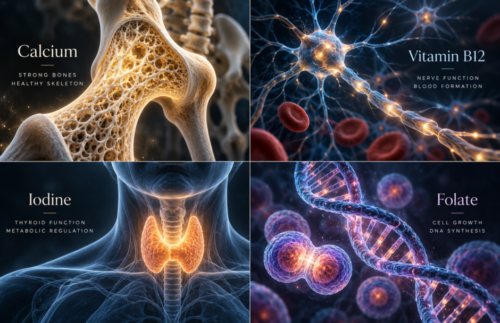
Bone health, nerve function, thyroid regulation and cell division. Four nutrients, four essential jobs within the body.

๐Ÿ“‹ The Rest of the Picture

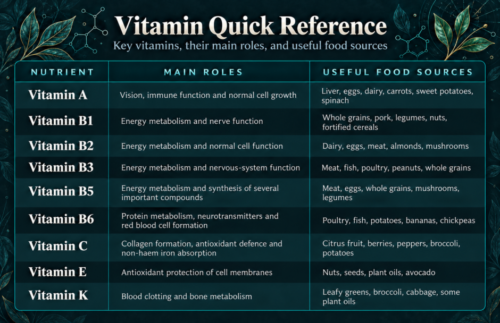
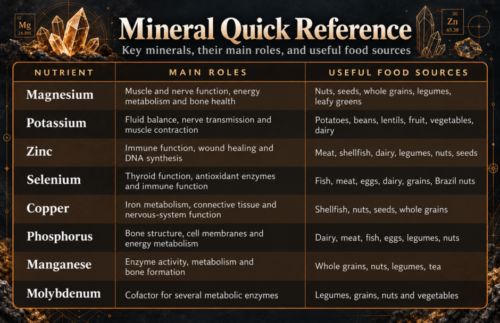
The nutrients above warrant additional attention in particular circumstances, but they are only part of the micronutrient picture. The table below provides a concise reference to the principal roles and food sources of other important vitamins and minerals.

Infographic table summarising key vitamins, their main roles in the body, and useful food sources.
Infographic table summarising key minerals, their main roles in the body, and useful food sources.

Recommended intakes vary according to age, sex, pregnancy, breastfeeding and national guidance, so there is little value in forcing one numerical target onto every reader. Detailed targets become more useful where there is an established risk of deficiency, a restrictive diet or a medical reason to monitor intake.

For most active people, the more useful question is whether the overall diet consistently provides a broad range of nutrient-rich foods.

๐Ÿฅ— Food First โ€” How to Cover Your Bases

Micronutrient adequacy usually comes from eating enough overall and maintaining dietary variety, rather than tracking every vitamin and mineral individually. Different foods provide different nutrient combinations, so repeatedly eating from a narrow selection can leave gaps even when calorie and protein intake appear adequate.

Open refrigerator stocked with varied groceries beside a kitchen worktop holding oats, bread, nuts, lemons and tinned sardines.

Variety doesn’t require a perfect pantry. Fresh produce, grains, nuts and tinned fish all pull their weight.

A useful dietary pattern regularly includes:

  • Vegetables and fruit for vitamin C, folate, potassium and carotenoids.
  • Whole grains, potatoes and other starchy foods for B vitamins, magnesium, potassium and fibre.
  • Beans, lentils, nuts and seeds for iron, magnesium, zinc, folate and other minerals.
  • Dairy foods or fortified alternatives for calcium, iodine and vitamin B12.
  • Meat, fish and eggs, where included, for iron, zinc, selenium, iodine and vitamin B12.
  • Appropriate fortified foods or supplements where a dietary pattern makes particular nutrients difficult to obtain reliably.

Variety also matters within those groups. Rotating between different vegetables, fruits, grains and protein sources provides a broader nutrient profile than relying on a small collection of supposedly superior foods.

Fresh food is not automatically nutritionally superior either. Frozen vegetables, canned beans, tinned fish and fortified foods can all make valuable contributions while improving affordability, convenience and consistency.

โš ๏ธ Who Is More Likely to Fall Short?

Training does not automatically create dramatically higher micronutrient requirements, but some circumstances make deficiencies or inadequate intakes more

Split photograph of a Black female runner catching her breath on an athletics track and a South Asian shopper examining plant-based food alternatives.

Heavy training and restrictive diets can leave nutritional gaps. Eating enough, maintaining variety and choosing suitable fortified foods can help protect against micronutrient shortfalls.

๐Ÿ‘‡ Click on links below for more

When total food intake falls, micronutrient intake often falls with it. Athletes combining high training loads with aggressive dieting or prolonged cutting phases may therefore struggle to obtain enough iron, calcium, vitamin D, B vitamins, zinc and other nutrients.

A diet can consist entirely of nutritious foods and still be inadequate when there is simply not enough food being eaten.

Menstruation increases iron requirements, while heavy menstrual bleeding can raise the risk further. The combination of menstrual losses, endurance training and low energy intake deserves particular attention.

Persistent fatigue or declining endurance should not automatically be labelled iron deficiency, but these concerns can justify appropriate investigation.

Well-planned vegan diets can support health and athletic performance, although several nutrients require more deliberate planning. Vitamin B12 requires a reliable fortified or supplemental source, while iodine, calcium, iron, zinc and vitamin D may also need closer attention depending on food choices.

The same principle applies to any diet that excludes large numbers of foods. Removing a food group also removes the nutrients it commonly supplied, so suitable replacements need to be considered.

People who spend most of their time indoors, cover much of their skin or live in regions with limited seasonal sunlight may be at greater risk of low vitamin D status. This is particularly relevant in northern climates.

Appetite, total food intake and nutrient absorption can change with age. Vitamin B12, vitamin D and calcium deserve particular attention where diets become less varied or overall intake falls.

Some gastrointestinal conditions interfere with the absorption of micronutrients even when dietary intake appears adequate. Certain medications can also affect absorption or metabolism.

Where an absorption problem exists, simply eating more of a nutrient may not correct the underlying issue, making individual assessment more important.

๐Ÿ’Š Supplements โ€” When They Make Sense

Micronutrient supplements are most useful when they address a defined need. That might involve a confirmed deficiency, an established public-health recommendation, a restrictive diet, reduced absorption or a nutrient that is genuinely difficult to obtain through food.

Female health-store assistant comparing two zinc supplement bottles with a blonde male athlete in a supplement aisle.

Useful supplementation starts with a genuine need, a suitable product and the right dose. More isn’t automatically better.

๐Ÿ•’ Before, During and After Training

Vitamin D during the darker months, vitamin B12 within a vegan diet and medically indicated iron supplementation are straightforward examples. In each case, the supplement has a specific purpose.

A multivitamin may be useful in some circumstances, but it cannot compensate for consistently inadequate food intake. Whole foods provide vitamins and minerals alongside protein, carbohydrate, fats, fibre and numerous other compounds that isolated supplements do not reproduce.

๐Ÿšซ More Is Not Better

High-dose supplementation creates a different problem. Some nutrients can accumulate, while others interfere with the absorption or metabolism of neighbouring nutrients.

Fat-soluble vitamins such as A and D can reach harmful levels when taken excessively. Too much iron can damage tissues and organs, excessive selenium can produce toxicity, and high supplemental zinc intake can interfere with copper absorption.

Antique brass balance scales contrasting a small selection of supplements with an overloaded collection of bottles and capsules.

When supplements overlap, more can become too much. Check ingredients and dosages before stacking products.

Problems can also arise when several products are combined without checking their contents. A multivitamin, fortified protein powder, electrolyte product and separate vitamin supplement may contain overlapping nutrients.

Recommended intake levels are designed to cover physiological requirements. Upper intake limits are safety boundaries, not performance targets.

Where a genuine deficiency requires treatment, dosage and duration should follow appropriate professional guidance rather than the assumption that larger quantities will correct the problem faster.

๐Ÿ“Œ Practical Takeaways

For most people, there is little need to track every vitamin and mineral individually. A varied diet providing enough total energy will usually cover much of the micronutrient picture, while a smaller number of nutrients deserve extra attention when diet, lifestyle or health circumstances increase the risk of inadequate intake.

A few principles cover most situations:

  • Build variety across the week rather than relying on a narrow selection of โ€œhealthyโ€ foods.
  • Pay closer attention to iron, vitamin D, calcium, vitamin B12 and iodine when your circumstances make low intake more likely.
  • Use fortified foods where they provide a practical solution.
  • Treat supplements as targeted tools rather than automatic additions to a training diet.
  • Avoid unnecessary high-dose supplementation.
  • Investigate suspected deficiency rather than diagnosing it from vague symptoms alone.
People sharing a varied meal around a rustic dining table, with salmon, roasted potatoes, vegetables, legumes and wholegrain bread.

A varied diet does most of the heavy lifting. Eat enough, mix up your food choices and address genuine micronutrient gaps when needed. No obsessive tracking required.

Good micronutrient nutrition is largely a matter of covering the basics consistently. With enough total food and a varied diet, most micronutrient requirements can be met without tracking individual vitamins and minerals. The exceptions can then be identified and addressed deliberately, rather than through guesswork or a cupboard full of supplements.

If you have enjoyed this post please share or feel free to comment below ๐Ÿ™‚

๐Ÿ”— Our Other Posts

Leave a Reply

Your email address will not be published. Required fields are marked *

This site uses Akismet to reduce spam. Learn how your comment data is processed.

error: Content is protected !!

Join the Super Soldier Project Mailing List Today!!