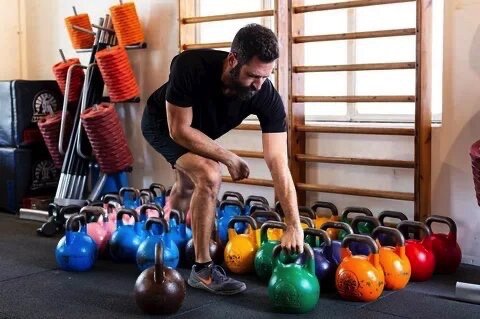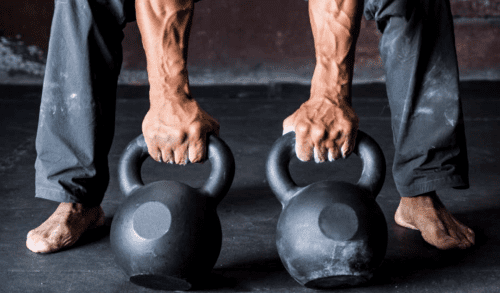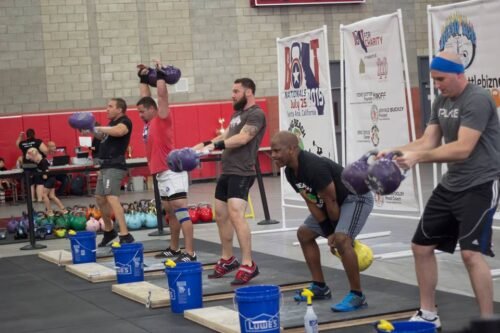
Girevoy Sport. Long cycle. Kettlebell training. Kettlebells for fitness. Kettlebell types of training.

An Introduction to Kettlebell Long Cycles

Welcome to the world of Girevoy Sport and the dynamic, comprehensive workout that is the Kettlebell Long Cycle. In this post, we shall delve into the technique of this exercise and explore its myriad benefits in improving strength, endurance, and overall fitness.

Table of Contents

Introduction

The kettlebell ‘long cycle’ is a cornerstone of Girevoy Sport (GS) or kettlebell sport, renowned for its ability to enhance strength, endurance, and overall functional fitness. Widely embraced by athletes across various disciplines, its integration into fitness routines has surged owing to its versatile nature and comprehensive benefits for physical conditioning.  In this post, we delve into the exercise, exploring its fundamentals and the profound impact it can have on your workout regimen. With a keen focus on understanding its core principles and advantages, we’ll unveil how this exercise can elevate your fitness journey.

Girevoy Sport. Long cycle Snatch. Types of kettlebell training. Kettlebells for fitness. Kettlebell training.

The mentality required for the Long cycle combines discipline, resilience, and a relentless drive to push through physical and mental barriers.

About the exercise:

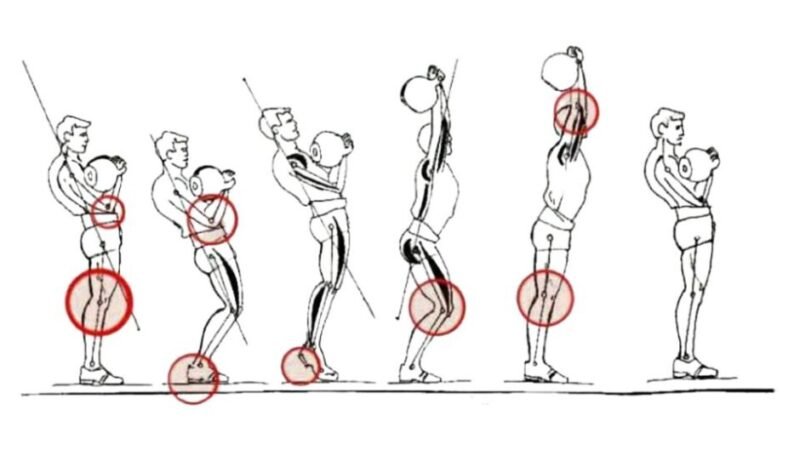
The kettlebell long cycle entails a dynamic sequence.  It starts with swinging the kettlebell between the legs. This is followed by a smooth transition to cleaning it to the rack position. It culminates in a powerful jerk overhead. Targeting multiple muscle groups, including the glutes, legs, back, arms, core, and shoulders, it stands out as a full-body workout. Renowned for its ability to boost functional work capacity, strength, power, endurance, and cardiovascular fitness, it’s often executed for high repetitions or set durations. Mastering proper technique and form is paramount to harnessing its full potential while mitigating injury risks.

Unlike traditional clean and jerks, where each repetition starts from a stationary position, the KB LC requires fluid transitions between the clean and jerk phases without pause, demanding precise timing and control throughout the entire movement.

About Girevoy Sport (GS)

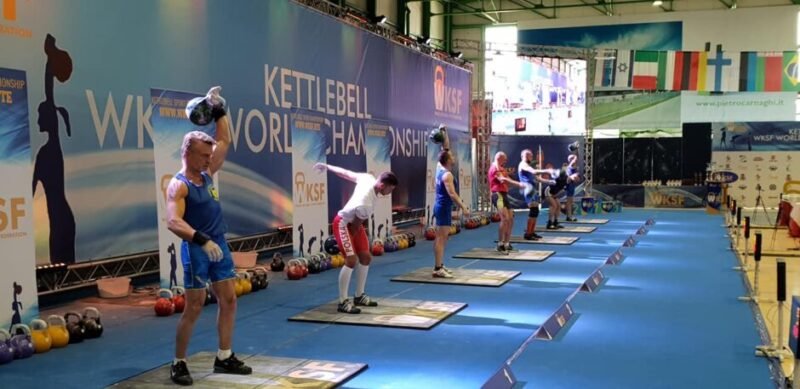
GS is a competitive discipline originating from Russia, emphasising strength and endurance. Athletes, known as gireviks, aim to complete as many repetitions as possible within a set time frame. They focus on lifts such as the snatch, jerk, and long cycle using one or two kettlebells.

This demanding sport requires both physical and mental stamina, with participants prioritising technique, efficiency, and total body conditioning to excel. The sport has gained popularity in various other countries around the world, including the United States, Canada, European nations, and parts of Asia.

Benefits

Kettlebell long cycles offer several benefits. Click on the links below for more details.

Long cycles engage multiple muscle groups simultaneously, including the shoulders, arms, core, legs, and back, providing a comprehensive workout in a single exercise.

The dynamic movements involved in long cycles help to build muscular strength, particularly in the shoulders, legs, and core, due to the combination of lifting and stabilizing the kettlebell weight.

Performing long cycles for high repetitions or extended durations challenges cardiovascular endurance, muscular endurance, and mental stamina, making it an effective conditioning exercise.

The explosive nature of the clean and jerk movements in long cycles helps to develop power, speed, and coordination, which are essential for athletic performance and functional fitness.

Long cycles can contribute to calorie expenditure and fat loss due to their high-intensity nature and the engagement of multiple muscle groups, making them an efficient option for those looking to burn calories and improve body composition.

Long cycles mimic real-life movements such as lifting, carrying, and overhead pressing, making them beneficial for improving overall functional fitness and enhancing daily activities.

Kettlebell long cycles can be adapted to different fitness levels by adjusting the weight of the kettlebell, the number of repetitions, and the duration of the workout, making them suitable for beginners to advanced athletes.

The KB Long Cycle entails intricate movements and biomechanics, demanding precise coordination and technique to execute efficiently and safely.

Overall, kettlebell long cycles offer a time-efficient and effective way to improve strength, endurance, power, and functional fitness, making them a valuable addition to any workout routine.

🎯 Technique

Breaking Down the Long Cycle

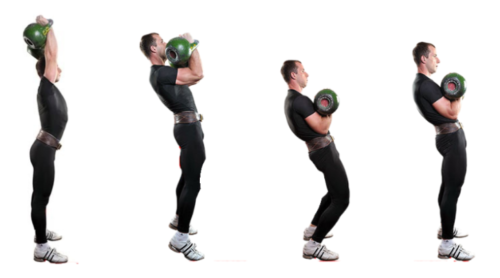
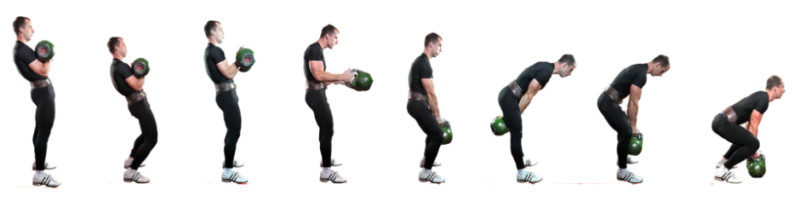
The kettlebell long cycle is one continuous loop: backswing → clean → rack → jerk → drop → backswing. Mastering the details of each phase is what makes ten minutes possible.

  1. Start.
  2. Clean to Rack.
  3. Jerk.
  4. Drop to Rack.
  5. Drop to Back Swing.

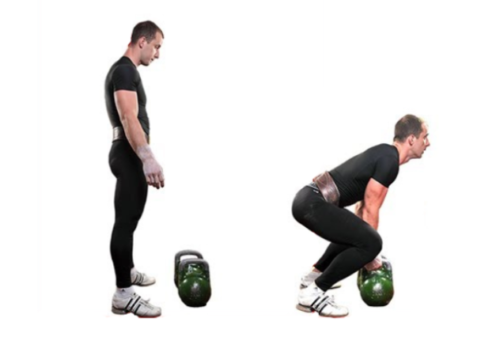
1.Start:

  1. Stand with your feet hip-width apart, toes slightly turned out.
  2. Place the kettlebell on the floor between your feet.
  3. Hinge and Grip: Hinge at the hips and bend your knees slightly to reach down and grab the handle of the kettlebell with both hands.
  4. Your back should be flat, chest up, and arms fully extended.

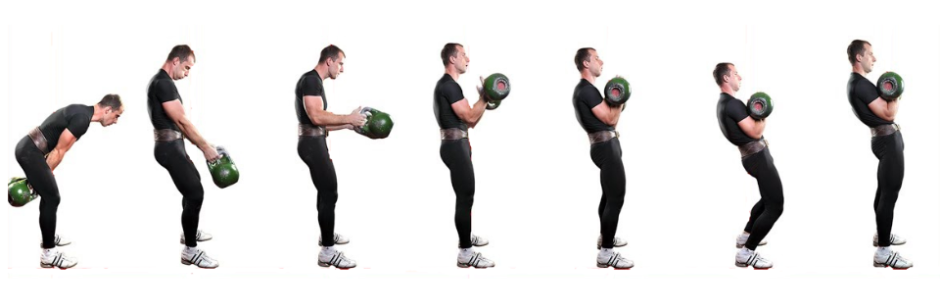
2. Clean to Rack:

  1. Swing: Initiate the movement by driving through your hips and legs to swing the kettlebell back between your legs.
  2. Keep your arms relaxed, and the kettlebell should swing freely, driven by the momentum generated from your hips.
  3. As the kettlebell swings back, explosively extend your hips and knees to propel the kettlebell forward.
  4. As it reaches hip height, pull the kettlebell towards your body by quickly bending your elbows and bringing your hands towards your shoulders.
  5. Rotate your wrists slightly so that your palms face inward at the top of the movement.
  6. Catch the kettlebell at shoulder height in the racked position, with your elbow tucked in close to your body and your wrist straight.

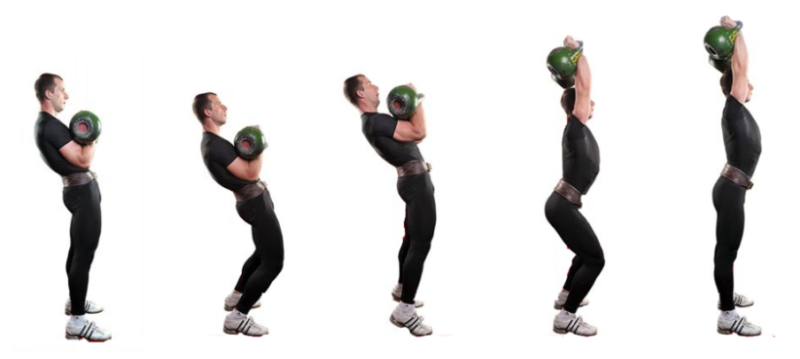
3. Jerk:

  1. From the racked position, dip your knees slightly and then forcefully extend your legs and drive through your heels to propel the kettlebell overhead.
  2. Simultaneously, press the kettlebell overhead by fully extending your arms.
  3. Lock your elbows at the top of the movement, with your biceps close to your ear and your wrist stacked over your shoulder.
  4. Your torso should remain upright, and your core engaged to stabilise the weight overhead.
  5. As you lock out the kettlebell overhead, your legs should be straight, but avoid hyperextending your lower back.

4. Drop to Rack:

  1. Lower the kettlebell back to the racked position by bending your elbows and allowing the weight to descend under control.
  2. Keep your core engaged and maintain stability as you guide the kettlebell back to the racked position.

5. Drop to Back Swing

  1. After returning to the racked position, allow the kettlebell to swing back between your legs to initiate the next repetition.
  2. Maintain a smooth and fluid motion, linking the clean and jerk movements together seamlessly.

By following these steps and focusing on proper technique, you can perform kettlebell long cycles safely and effectively to reap the full benefits of this dynamic full-body exercise.

🚦 Starting Out

Building Your Foundation

The long cycle is demanding, especially if you’re new to kettlebell training or unfamiliar with Girevoy Sport mechanics. The goal at the start isn’t speed or load — it’s learning to move efficiently and stay relaxed under tension. These are the fundamentals you need to build first.

Click on links below to look at fundamentals of the Long Cycle.

Begin with a kettlebell you can move comfortably and cleanly. Even 8–12 kg (men) or 4–8 kg (women) is enough to learn the pattern safely.

Your first priorities:

  • A tight, efficient backswing.
  • A clean that doesn’t crash.
  • A stable, restful rack.
  • A jerk driven by the legs.
  • A smooth return to the backswing.


These are the pillars of long-cycle efficiency.

Long-cycle mechanics differ from the typical hardstyle clean and press seen in most gyms.

GS lifting is:

  • Looser.
  • More relaxed.
  • Driven by timing, not aggression.

You’ll need to unlearn stiff shoulders, over-gripping, and pressing the bell overhead.
Take the process slowly — technique is everything.

Good technique develops faster with feedback. Use:

  • A training partner.
  • Video recordings.
  • Mirrors.
  • Quick posture checks between reps.

Look for a consistent rack, relaxed arms, even breathing, and a clean, efficient jerk.
If something feels inefficient — it is.

Early sessions should be short and technical, not exhausting.

Try:

  • 2–3 minutes.
  • Light weight.
  • Smooth, quiet reps.

Only once the movement feels natural should you progress to structured sets.

Beginners quickly notice:

  • Forearm fatigue.
  • Faster breathing.
  • Core working hard to stabilise the rack.

Normal. GS taxes grip, posture, and breath control early on.
Technique will make these demands manageable.

The rack position is where you:

  • Breathe.
  • Reset.
  • Conserve energy.

Relaxing in the rack is the skill that allows ten-minute sets.

Only increase load when:

  • The clean is ‘quiet’.
  • The rack is stable.
  • The jerk fixates cleanly.
  • Your back stays neutral.
  • You can hold rhythm without drifting.

Control comes first. Weight comes second.

Denis Vasilev KB Long Cycle

1 Videos

Who better to go to than renowned Girevoy Sport (GS) athlete Denis Vasilev to observe for tips on technique. Denis has won multiple world championships and holds numerous records in the sport.

🟩 Absolute Beginners

Your First Test Set

The long cycle is famous for its 10-minute standard — but that’s not where beginners start. Your first goal is to understand how the movement feels under fatigue and how long you can maintain clean technique. A short, structured test set introduces the demands of GS without overwhelming you.

Click on links below for tips on your first test sets.

What you can press or swing in a normal gym session doesn’t matter here. GS lifting is about moving the bell for time, not grinding heavy reps.

A good starting point:

  • Men: 8–12 kg.

  • Women: 4–8 kg.

If the bell crashes in the clean or your rack collapses, it’s too heavy. Technique comes first — always.

A full 10-minute long cycle is brutally demanding even for trained gireviks.

A 5-minute test will:

  • Introduce proper pacing.
  • Show how quickly fatigue builds.
  • Reveal your technical weak points.
  • Build confidence before advancing.

Half the time — still very real.

Start with a simple rhythm:

4 reps per minute → one clean & jerk every 15 seconds.

This pace helps you focus on:

  • Breathing.
  • Rack efficiency.
  • Leg-driven jerks.
  • Smooth transitions.

No rushing. No heroics. Just clean work.

Technique

  • Did the clean land softly or crash?.
  • Did you use your legs in the jerk or start pressing?.
  • Was your rack stable?.

Weight

  • Was the bell too heavy or too light?.
  • Did it pull you off-centre?.

Pace

  • Could you add a rep per minute?.
  • Or was 4 RPM already a grind?.

This evaluation becomes your personal baseline.

Progress by increasing one variable at a time — never all three:

  • Increase weight by choosing a heavier kettlebell.
  • Increase time from 5 → 7 minutes.
  • Increase pace from 4 RPM → 5–6 RPM.

Small increments. Clean technique. GS rewards consistency, not ego.

You’re prepared for the full 10-minute long cycle when you can complete:

  • Five minutes with clean technique.
  • A stable rack under fatigue.
  • A steady, sustainable pace.
  • Zero breakdown in posture or grip.

Technique remains the gatekeeper. Everything else builds from that.

Only increase load when:

  • The clean is ‘quiet’.
  • The rack is stable.
  • The jerk fixates cleanly.
  • Your back stays neutral.
  • You can hold rhythm without drifting.

Control comes first. Weight comes second.

🔥 The Real Deal

10 Minutes of Hell

The 10-minute long cycle is the signature test of Girevoy Sport. No dropping the bell. No resetting. No breaks. Just one uninterrupted loop of cleans, racks, jerks, and swings. It’s less a workout and more a negotiation between technique, breathing, and mental resilience. This is where the long cycle stops being a drill — and becomes a fight with time.

kettlebell workouts. Kettlebell grip strength.

From here the rules are simple, no putting the bells down till 10 minutes is up!

Click on links below for tips on your first Long Cycle proper.

Before you begin, choose a weight and pace that reflects your 5-minute test.

  • Choose a kettlebell you can control for the full duration.
  • Select a sustainable rhythm — most beginners hold 4–6 RPM.
  • Avoid optimism. The set punishes ego instantly.

Your goal is to finish with clean, repeatable reps — not to “win” the first minute and die by the third.

Ten minutes is psychological. Set yourself up properly:

  • Put on music that drives rhythm without rushing you.
  • Use a visible or audible timer with clear minute beeps.
  • If possible, have someone call reps or encourage you.

The right environment keeps your brain calm when the body wants out.

Once the clock starts:

  • Keep the clean smooth and quiet.
  • Treat the rack as your breathing chamber.
  • Use the legs for every jerk — no grinding presses.
  • Let the bell fall softly back into the backswing.
  • Lock into a rhythm and repeat.

The long cycle rewards flow. The moment you force it, fatigue multiplies.

Breathing keeps technique alive:

  • Inhale in the rack.
  • Exhale during the dip and drive.
  • Reset your breath every rep or every two reps.

If your breath collapses, everything else follows.

Around minutes 4–7, everyone hits a wall.
This is normal. Expect it.

Use simple cues to stay present:

  • “Relax the shoulders.”
  • “Breathe in the rack.”
  • “Legs on the jerk.”
  • “One more rep.”

The set is won through composure, not aggression.

As you enter the final 90 seconds:

  • Keep your pace steady — don’t sprint unless your form is bulletproof.
  • Focus on fixation: clean lockout, clean overhead control.
  • Complete the set with technique intact, not by flailing for rep counts.

Finishing clean is worth more than finishing fast.

If you can:

  • Maintain clean technique for the full duration.
  • Keep a steady pace without panic pauses.
  • Hold a stable rack throughout.
  • Keep your back neutral and posture consistent.
  • Avoid grip failure or elbow collapse.

— then you’ve completed a legitimate 10-minute GS long cycle.

❓ FAQs

Long Cycle Essentials

🧲 How heavy should my kettlebell be for long cycles?

The ideal weight depends on your strength, technique, and conditioning. Start light enough to move with control while learning the pattern.

  • Men: 8–12 kg.
  • Women: 4–8 kg.

Mastery of technique comes before load. Increase weight only when your clean is smooth, your rack is stable, and your jerk fixates cleanly.

🔢 How many reps should I aim for?

Repetitions vary based on fitness level and goals. Beginners typically work at lower RPM until technique and endurance improve.
More experienced lifters may target higher RPM or heavier kettlebells.

Use your test set to establish your baseline RPM, then increase weight, time, or pace as technique allows.

📅 How often should I train long cycle?

Most lifters benefit from 1–3 sessions per week, depending on recovery ability and overall training load.
The long cycle is demanding — quality matters more than frequency.

🟩 Are kettlebell long cycles suitable for beginners?

Yes. Beginners can train safely by:

  • Starting with a light kettlebell.
  • Keeping sessions short.
  • Focusing on technique and efficiency.

Intensity increases only after movement quality is consistent.

⚠️ What common mistakes should I avoid?

Typical errors include:

  • Using excessive momentum instead of clean technique.
  • Letting the bell swing too far away from the body.
  • Arching the lower back during the jerk.
  • Pressing the bell instead of using the legs.
  • Losing rack stability or rushing the pace.

Good long-cycle technique is controlled, relaxed, and efficient.

🔥 Can kettlebell long cycles help with weight loss?

Yes. Long cycles burn significant calories due to continuous full-body effort.
When paired with a balanced diet and consistent training, they support fat loss and improved body composition.

🔁 Are there alternatives that offer similar benefits?

Yes. Other exercises like barbell clean and jerks, dumbbell thrusters, and medicine ball cleans develop similar qualities.

However, the long cycle offers unique advantages thanks to the kettlebell’s:

  • Offset centre of mass.
  • Natural grip path.
  • Ability to cycle smoothly for extended time.

This makes it one of the most efficient time-under-tension conditioning tools available.

🔚 Final Thoughts

The kettlebell long cycle is one of the most complete strength–endurance tests in modern training. Rooted in the discipline of Girevoy Sport, it blends technique, rhythm, breath control, and mental resilience into a single continuous effort. Few exercises demand as much from the entire body — and fewer still offer such a powerful return on that investment.

Whether you train for performance, conditioning, or sheer personal challenge, the long cycle forces you to refine how you move, how you breathe, and how you manage fatigue. It teaches efficiency over aggression, consistency over ego, and composure under pressure. These lessons carry over into every other aspect of strength training — and life.

If you’re new, start light and prioritise technical mastery. If you’re experienced, push toward the 10-minute standard and treat every set as an opportunity to sharpen your efficiency. Either way, the long cycle delivers a level of fitness that is hard to replicate with any other tool.

If this style of training interests you, keep an eye out for our upcoming kettlebell long cycle workshop, where we break down mechanics, pacing, progression, and performance strategy in far greater depth.

Girevoy Sport/Kettlebell Sport International Organisations.

If you have enjoyed this post please share or feel free to comment below 🙂

Related Posts

Our Other Posts

Leave a Reply

Your email address will not be published. Required fields are marked *

This site uses Akismet to reduce spam. Learn how your comment data is processed.

error: Content is protected !!

Join the Super Soldier Project Mailing List Today!!