







Run smart from the start. New to running — or coming back after a break? This guide gives you the fundamentals and a 4-week plan that keeps you moving, improving, and injury-free from day one.
Table of Contents
🏁 Introduction
Running isn’t complicated — but starting well matters. Many people rush, push too far, or try to mimic athletes who’ve been training for years. The result is predictable: frustration, injury, and quitting before progress has a chance to appear.
This guide simplifies the first phase. You’ll learn how to prepare your body, choose gear that protects rather than impresses, and build a routine that improves steadily without overwhelming your system. The focus isn’t on speed — it’s on consistency, confidence, and staying healthy enough to keep moving forward.
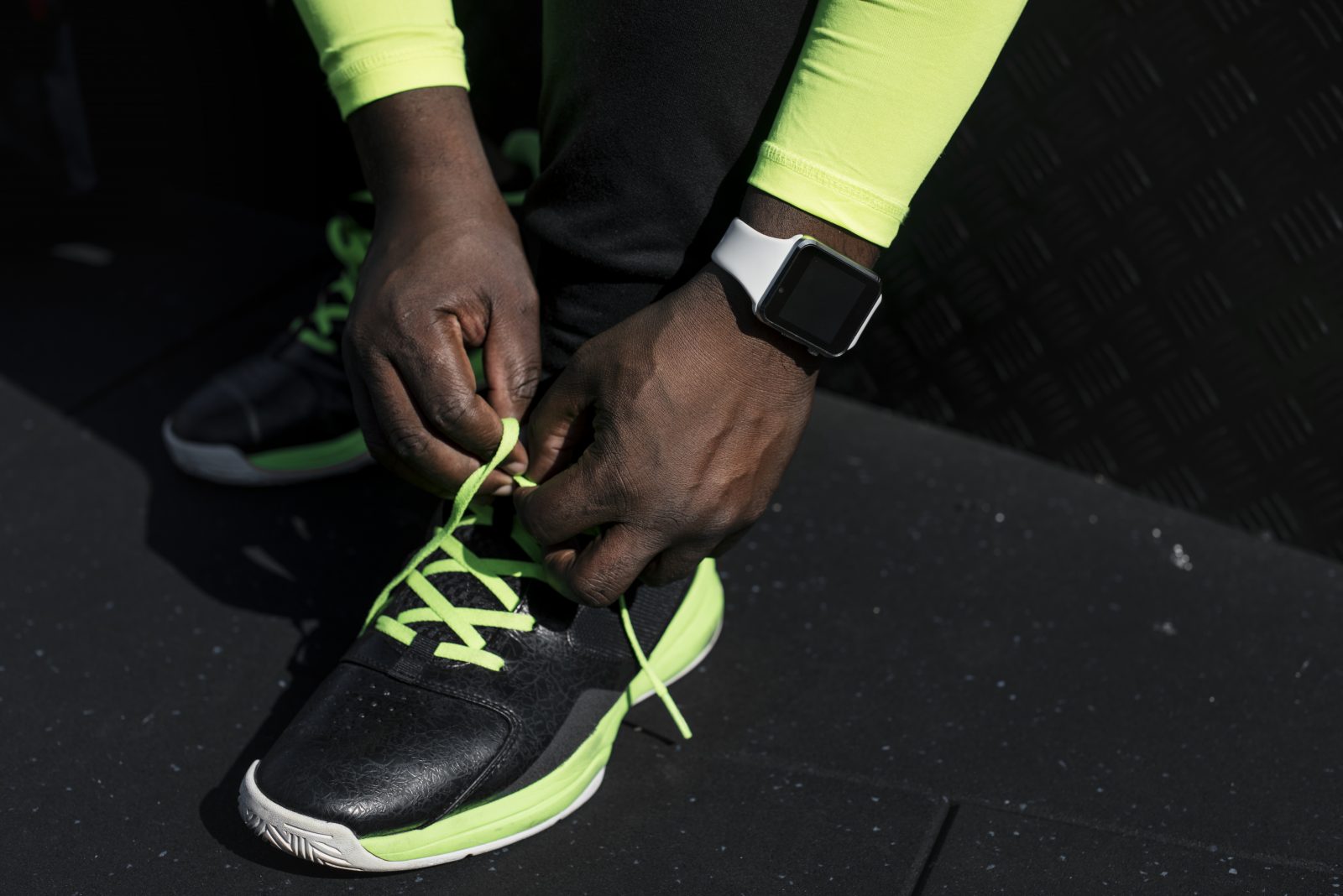
Starting the session with intent — preparation sets the pace.
Returning to Running
Life, injury, weight changes, or lost motivation can pull you away from running — that’s normal. This guide still applies. Your head might remember what you could once do, but your tissues need time to rebuild tolerance. Treat this as a smart re-entry, not a step backwards.
If you’re ready to train with purpose rather than shortcuts, you’re in the right place. And at the end, you’ll find a 4-week run–walk plan to follow step by step.
🔧 Before You Start
Assess Your Starting Point
If you haven’t been active recently, begin with short walks. Your first goal is simple: move comfortably for 20–30 minutes without struggling. You’re preparing your heart, lungs, and joints for what comes next.
There’s no rush. The foundation you’re building now is strength and tolerance, not speed.
Know where you’re starting from — it makes the progress easier to see and the plan easier to follow.
Medical Considerations
A quick check with your GP is wise if
You’re over 40 and new to exercise.
You have a BMI above 35.
You have a history of heart or respiratory issues.
You’re recovering from recent injury or surgery.
You’re not looking for permission to move — you’re making sure you start from a safe place and know any limits you should respect. Clear the basics first, then push the boundaries.
Mindset & Expectations
Early progress often feels slow — until suddenly it doesn’t. You’ll notice improvements in:
How long you can run.
How quickly you recover.
How much control you have over your breathing.
Commit to the process: 2–3 runs per week for the first month. That’s enough to create real change if you stick with it.
Build a Routine That Works For You
You’ll be more successful if you treat training like a standing appointment, not a “maybe if I have time”.
Decide in advance:
Days you’ll run.
Times you’ll run.
Routes you’ll use.
If it’s planned, it’s far more likely to happen — and far less likely to be negotiated away when you’re tired.
👟 Essential Gear
Running doesn’t demand much, but the right basics prevent setbacks and keep you comfortable from day one. Focus on equipment that supports your body — not expensive accessories pretending to be progress.
Shoes That Suit Your Gait
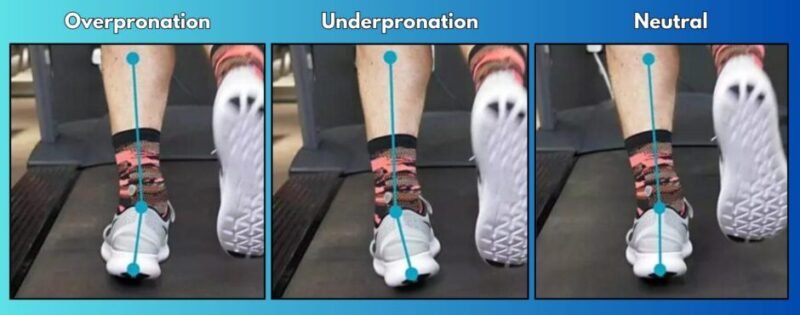
Your running shoes are your most important tool. A proper fit reduces impact stress and lowers the risk of injury. Everyone lands differently — some roll inward (overpronation), others outward (supination), and some stay neutral.
If you can, visit a specialist running store for a quick gait analysis. It’s often free, and it helps you choose a shoe that works with your movement rather than against it.
Different running gaits affect foot strike and joint stress — knowing yours helps you choose the right shoes.
General Guidance:
Replace shoes every 300–500 miles (480–800km).
Rougher terrain, heavier bodyweight, or cheaper shoes = faster wear.
If you feel new joint quirks (knees, shins, ankles)… worn shoes might be the real culprit.
When support goes, problems sneak in quietly — and usually show up as shin splints first.
Clothing: Start Simple
You only need:
Lightweight, breathable tops.
Running shorts or leggings.
Comfortable, blister-resistant socks.
Avoid cotton against the skin — it traps moisture and increases chafing. Modern synthetics wick sweat away and keep you comfortable longer into the session.
A good sports bra is essential for women: better comfort, better form, better focus.
Comfort is performance when you’re starting out.
Useful Tech (Not Mandatory)
Helpful, but not necessary:
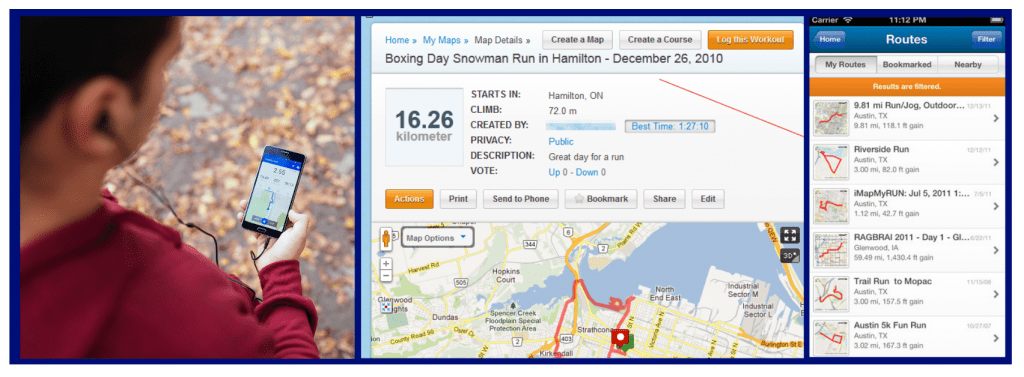
GPS watch or smartphone app (track distance and pacing).
Heart-rate monitor (helps manage effort).
Wireless or bone-conduction earphones.
Tech is a tool, not the goal — use it to guide the session, not control it.
Just don’t let gadgets dictate your session. Tech should support training, not turn it into a daily exam.
Your fitness improves because you show up — not because your wrist looks intelligent.
🚶♂️➡️🏃♂️ First Steps: The Starting Phase
The aim in the first few weeks is simple: build consistency without overwhelming the body. Your cardiovascular system will adapt faster than your connective tissues — so patience early on protects you later.
Start with run–walk intervals. They allow your breathing, joints, and confidence to grow together. You’ll find a 4-week beginner plan at the end of this guide — follow it as written, and repeat a week if needed.
If You’ve Run Before
Start at Week 2 or 3 if Week 1 feels too easy — but only if you finish with control, no limping, and good breathing. Egos are how most returners get injured. Respect the gap between memory and current capacity.
Pace & Breathing: Stay in Control
Beginners and returners quit more often from pacing errors than from injury.
Easy pace means controlled breathing.
Use this test:
If you can’t speak a short sentence while running, you’re going too fast.
Checklist for relaxed form:
Shoulders loose, not creeping up.
Gentle arm swing, elbows close.
Short strides with quiet footfalls.
Full exhale → let breathing settle naturally.
Running shouldn’t feel like a sprint for survival. Smooth rhythm first — speed comes later.
How to Know When to Progress
You’re ready to increase running time if you can:
Finish the session without gasping.
Recover within 1–2 minutes of walking.
Maintain consistent form throughout.
If a session feels too hard — repeat the same structure next time. That is progress.
Progression isn’t a race. It’s a response to adaptation.
The Golden Rule for Beginners and Returners
End every session feeling like you could have done a bit more.
That feeling is momentum — the engine of habit.
🗺️ Route, Terrain & Safety
Regular running for beginners means getting out at least twice a week. Your running will improve as your body adapts to the demands of the training.
Your first routes should feel uncomplicated. Choose familiar, flat areas where you know the distance and where the finish line is. A park loop, a quiet neighbourhood circuit, or a football pitch works well. These early runs are about building rhythm without distractions like traffic or unpredictable terrain. Running outdoors is unpredictability by design — you’re learning to move through the real world. Smart route choices allow you to enjoy that freedom safely.
Choose Familiar Ground
Start on flat, local routes where you know:
How long the loop is.
Where the inclines are.
Your finish point.
A park, quiet neighbourhood streets, football pitches, or a track are all ideal. Avoid long downhill sections early — they hit the quads harder than most beginners realise.
Traffic & Environment Awareness
If you’re running near roads:
Keep audio low enough to hear traffic and cyclists.
Make eye contact with drivers at crossings.
Be predictable with your movement.
Wear something visible when light conditions are poor.
Night running requires planning: lighting, reflectors, and sticking to areas with people around.
Weather isn’t an excuse not to run. It’s something you prepare for.
Weather Planning
Rain isn’t a reason to skip — plan for the weather and keep the routine alive.
Your comfort and safety change dramatically with conditions:
☔ Rain: Stay warm when you stop — plan a route ending close to home
☀️ Heat: Go earlier/later, hydrate, breathable clothing, dial pace back.
❄️ Cold: Layers, gloves, cover ears if needed. Warm up thoroughly.
🌬️ Wind: Run into headwind first — use the tailwind to come home strong.
Weather isn’t an excuse not to run. It’s something you prepare for.
🔥 Warm-Up & Cool-Down
A short preparation routine makes a noticeable difference. Running without warming up is one of the quickest ways to invite frustration, poor performance, and avoidable injury. A few focused minutes before and after each session protect your progress and keep you training consistently.
Warm-Up (5 minutes total)
Start with easy walking.
Gradually increase pace to light jog.
Add a few dynamic movements:
Leg swings.
Ankle circles.
Marching knee lifts.
Hip openers.
Avoid static stretching before running — it relaxes the muscles you need to contract explosively and weakens the readiness you’re trying to build.
Cool-Down (3–5 minutes)
When the session ends, don’t stop dead. Walk until breathing settles and the heart rate comes down smoothly. If your muscles feel tight, spend a moment on the major lower-body areas:
Finish strong — a short cooldown and stretch keeps tomorrow’s run on track.
Walk until breathing settles.
Static stretch lightly if comfortable:
Calves.
Quads.
Hamstrings.
The cool-down doesn’t need to be elaborate. Under five minutes is enough to help recovery and reduce next-day stiffness without adding fatigue.
The goal is simply controlled recovery, not contortion.
⚠️ Injury Prevention & Red Flags
Some stiffness is the price of adaptation. Tired calves, a little heaviness in the legs, or general soreness the next day is normal — proof that your body is absorbing new stress. Pain, however, that changes your movement, worsens as you continue, or sharpens under load is not something to push through. It’s a warning.
Normal Adaptation Sensations
These are expected when you begin training:
Mild muscle soreness 24–48 hours after a run.
Stiff calves (very common early on).
Heavy legs toward the end of a training week.
Your body is adjusting. This is the work taking effect.
Warning Signs
These are reasons to pause immediately:
If in doubt, stop the run, walk it off, and reassess next time. Small problems ignored become big problems quickly in running.
Increasingly localised pain during the run.
Joint pain (knees, ankles, hips) that doesn’t ease with movement.
Visible or palpable swelling.
Limping or altered gait.
Sudden sharp pain during impact or push-off.
If in doubt, stop the run, walk it off, and reassess next time. Small problems ignored become big problems quickly in running.
Early rule: If it changes the way you move, it’s a red flag.
🧠 Psychology & Motivation
Beginners and returners often quit because they treat every run like a test. The early weeks are nothing of the sort. They’re a pact with yourself: show up two or three times a week, move forward at a pace you can sustain, and let the adaptation happen quietly in the background. You’re building the habit before you build the engine.
Progress rarely introduces itself early. It arrives slowly, then suddenly — the same loop feels easier, breathing settles sooner, the finish doesn’t feel like a rescue. These are the wins that stack. Tracking them — through an app, a watch, or a simple notebook — gives you proof the process is working, even on days when motivation disappears.
Track what matters — progress is proof, not pressure.
And those days will come. When life gets loud, adjust the run — shorter, slower, or a brisk walk. One compromised session preserves the habit. Missing everything resets it.
Running doesn’t demand perfection. It demands persistence.
The Principles That Matter Early On
Consistency over intensity.
Two to three runs per week is enough to transform you.
Repeat a week when needed — that is progress.
Don’t chase pace — it will come when earned.
These are rules that build runners, not excuses that break them.
Handling Bad Days
Fatigue, stress, weather — real life intrudes. When it does:
Run shorter.
Run slower.
Or swap for a brisk walk.
Doing something keeps momentum alive. If you miss a day, continue. The only reason to start over is if you stop completely.
➡️ Next Steps When You’re Ready
Once you can run most of a 20–30 minute session with steady form and controlled breathing, the foundation is there. At that point, you’re not testing whether you can run. You’re already doing it. Now the path opens up.
Your goals can grow in whatever direction keeps you interested. Maybe it’s your first continuous 5K. Maybe it’s an extra weekly session. Maybe it’s adding strength work to support joints and improve your stride. Or maybe it’s simply exploring new routes because running finally feels good again.
This is the moment where you stop asking if you can run and start asking a better question: how far do I want to take this?
Options from Here
Target your first 5K.
Transition to a continuous running programme.
Add light intervals or gentle hills.
Include strength training once or twice per week to support technique and joint health.
Ready for the next test — your first race turns running into a mission.
There isn’t a single correct direction. Choose the one that keeps you progressing and interested.
The first milestone is competency, not speed. Your body already knows it can run. Now it gets to find out how far you’ll take it.
📅 Beginner/Returner Running Plans
(Run–Walk Intervals to Build Habit & Durability)
This plan builds your running capacity without overwhelming the body. It gives your heart and lungs a chance to progress while your joints, tendons, and technique catch up. Follow the structure, keep the pacerelaxed, and finish each session feeling like you could have done a little more.
Instructions:
2–3 sessions per week — never back-to-back days.
If a week feels too hard: repeat it. That is progress.
Always follow the warm-up & cool-down protocols from Section E.
Starter Pack: Weeks 1-4
Week
Structure
Total Running
Total Time
Week 1
Run 1 min → Walk 2 min (× 8).
8 mins.
~24 mins.
Week 2
Run 90 sec → Walk 2 min (× 8).
12 mins.
~28 mins.
Week 3
Run 2 min → Walk 1 min (× 8).
16 mins.
~24 mins.
Week 4
Run 3 min → Walk 1 min (× 6).
18 mins.
~24 mins.
Progression: Weeks 5-8
Week
Structure
Total Running
Total Time
Week 5
Run 5 min → Walk 1 min (× 4).
20 mins.
~24 mins.
Week 6
Run 8 min → Walk 2 min (× 2).
16 mins.
~20 mins.
Week 7
Run 10 min → Walk 1 min (× 2).
20 mins.
~22 mins.
Week 8
Continuous run.
22–25 mins.
22–25 mins.
🏁✨ Conclusion
Beginning a running journey isn’t about athletic ambition. It’s about showing up for yourself. You prepare the body gradually. You choose gear that protects rather than impresses. You pick routes that allow you to focus on movement, not survival. Each session adds a small win, and those wins stack fast.
A warm-up and cool-down keep progress on track. Catching early warning signs keeps you training rather than sidelined. Motivation will come and go. On those low days, the shorter or slower session is the one that matters most. Imperfect still counts. Missing everything doesn’t.
Work done. Recovery starts. Tomorrow, we go again.
Once you can move comfortably for twenty to thirty minutes, you’re already a runner in practice, not theory. From there the map widens: new distances, new routes, new strength. Running is simple, and it’s hard. That’s what gives it value.
You’ve built the foundation. Now push the boundary.
If you have enjoyed this post please share or feel free to comment below 🙂
Fastidious replies in return of this issue with firm arguments and describing everything
concerning that.