Jon Jones UFC champion montage with championship belt, fight action and New York City backdrop.

Hail to the King – The Jon Jones Workout

Welcome to our Hail to the King – The Jon Jones Workout. The fourth of our MMA Legend workouts. Based on the training regime of UFC fighter and GOAT Jon ‘Bones’ Jones.

Want to skip the intro and go straight to the Jon Jones workouts? Click below!

📑 Table of Contents

🔥 Introduction

Jon “Bones” Jones is an American professional mixed martial artist and one of the most dominant fighters in the history of the Ultimate Fighting Championship (UFC). Rising to prominence in the light heavyweight division, Jones became the youngest champion in UFC history and established himself as one of the most successful fighters the sport has produced. He later moved to heavyweight, adding another chapter to a career that has seen him compete at the highest level across multiple eras of MMA.

Jones is known for his exceptional fight IQ, athleticism, unorthodox striking, wrestling, and ability to adapt to different opponents. His physical attributes are only part of the equation. A diverse skill set and highly intelligent approach to fighting have allowed him to neutralise elite opponents and remain at the top of the sport for much of his career.

In this post, we explore Jon Jones’s background, rise to the UFC title, fighting style, and training methods before putting those qualities into practice with an SSP workout inspired by the physical demands of his approach to MMA.

🗂️ Background

Click on the links below for Jon Jones history and background.

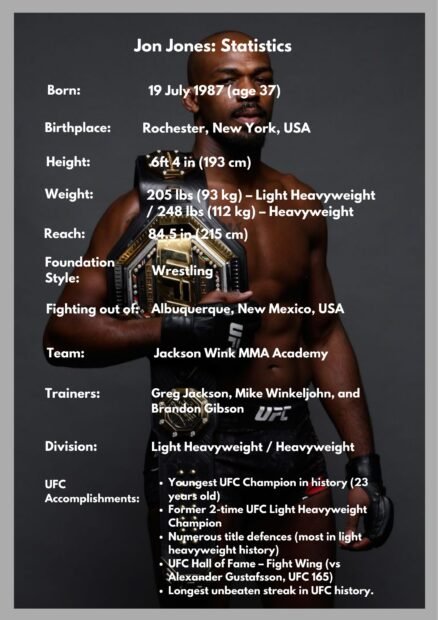
Jon “Bones” Jones was born on July 19, 1987, in Rochester, New York, to Arthur and Camille Jones. One of four siblings, Jones grew up in a close-knit family with a strong sporting background. His athletic ability became apparent early, particularly in wrestling, and he went on to become a standout wrestler at Union-Endicott High School in Endicott, New York.

While at Union-Endicott High School, Jones won a New York State wrestling championship. His tall, slender build also earned him the nickname “Bones” from his coach, a name that would follow him throughout his MMA career.

After graduating, Jones attended Iowa Central Community College, where he continued wrestling and won a NJCAA national championship. He later left college and turned his attention to mixed martial arts, taking with him the wrestling base that would become one of the foundations of his fighting style.

At just 20 years old, Jones made his professional MMA debut in April 2008. Within months, his combination of wrestling, creative striking, and athleticism caught the attention of the UFC, where he made his debut later that year.

Jones quickly established himself as one of the most dangerous prospects in the light heavyweight division, defeating increasingly experienced opposition as he climbed the rankings. In March 2011, at just 23 years old, he defeated Maurício “Shogun” Rua to capture the UFC Light Heavyweight Championship, becoming the youngest champion in UFC history.

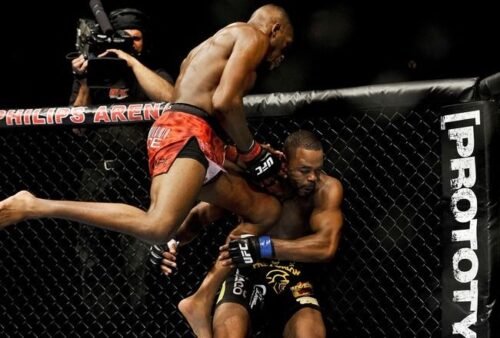
What followed was a prolonged period at the top of one of the UFC’s strongest divisions. Jones defeated former champions and leading contenders including Quinton “Rampage” Jackson, Lyoto Machida, Rashad Evans, Vitor Belfort, Chael Sonnen, Alexander Gustafsson, and Daniel Cormier, building one of the most accomplished records in MMA history.

Jon Jones dominated the UFC with unparalleled skill, creativity, and composure, dismantling legends and rewriting what was possible in mixed martial arts.

Click on the links below for more on Jon Jones history and background.

Jon Jones’ career, while extraordinary, has also been repeatedly disrupted by controversies outside the octagon. These have included a hit-and-run incident, failed drug tests, arrests, and other legal issues, resulting at various points in suspensions, cancelled fights, and the loss or vacation of UFC titles.

Those incidents remain an unavoidable part of any assessment of Jones’ career. They complicate the legacy of a fighter whose achievements inside the cage place him among MMA’s all-time greats, while ensuring that discussion of his career has rarely been confined to fighting alone.

Despite those interruptions, Jones repeatedly returned to competition and remained at the top of the light heavyweight division. His rivalry with Daniel Cormier became one of the defining feuds of his career, while later victories over Alexander Gustafsson, Anthony Smith, Thiago Santos, and Dominick Reyes extended his championship record into another generation of contenders. Jones vacated the UFC Light Heavyweight Championship in 2020, bringing his long association with the division to an end as he prepared for a move to heavyweight.

After vacating the light heavyweight title in 2020, Jon Jones spent more than three years away from competition before returning at heavyweight. At UFC 285 in March 2023, he defeated Ciryl Gane by first-round submission to capture the vacant UFC Heavyweight Championship, becoming a two-division UFC champion.

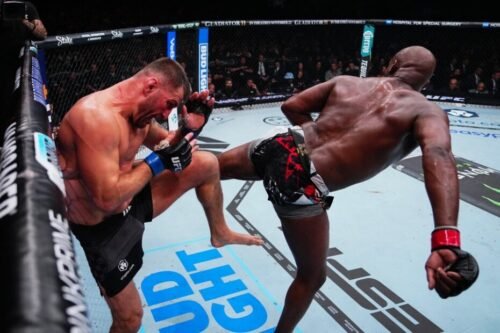
Jones later defended the title against former heavyweight champion Stipe Miocic at UFC 309 in November 2024, winning by third-round TKO. The victory added another major name to Jones’ record and extended a career that had begun in the UFC more than 16 years earlier.

Jon Jones dismantled Stipe Miocic at UFC 309 with a devastating spinning back kick to the ribs, followed by a barrage of strikes to the head, securing a dominant finish and cementing his heavyweight supremacy.

Whatever judgement is made of the controversies surrounding his career, Jon Jones’ achievements inside the octagon are exceptional. From becoming the youngest champion in UFC history to capturing titles at light heavyweight and heavyweight, Jones built his success around an unusual combination of wrestling, reach, creativity, adaptability, and elite fight IQ. His ability to find solutions against vastly different opponents has made him one of the defining fighters of his generation and an enduring figure in any discussion of MMA’s greatest competitors.

🧠 Style

Jon Jones’ fighting style is defined by versatility, creativity, and an exceptional ability to adapt to the opponent in front of him. An accomplished wrestler before entering MMA, Jones developed that foundation into a remarkably complete fighting system incorporating wrestling, striking, clinch work, and submissions.

🦵🏿 Unorthodox Striking

Jon Jones’ fighting style is defined by versatility, creativity, and an exceptional ability to adapt to the opponent in front of him. An accomplished wrestler before entering MMA, Jones developed that foundation into a remarkably complete fighting system incorporating wrestling, striking, clinch work, and submissions.

🤼🏿 Wrestling and the Clinch

Jones’ wrestling remains one of the foundations of his game. He has used takedowns, trips, throws, and positional control against high-level opposition, while his work from the clinch allows him to combine wrestling with knees and elbows at close range. His leverage and physical dimensions make him particularly effective when controlling opponents against the cage.

🥋 Grappling and Submissions

Once the fight reaches the ground, Jones combines positional control with a dangerous submission game. Chokes and joint locks give him finishing options alongside ground-and-pound, meaning opponents must contend with more than simply getting back to their feet after being taken down.

🧠 Fight IQ and Adaptability

Perhaps Jones’ greatest strength is his ability to blend those different elements together. He can fight at range, attack from the clinch, wrestle, grapple, or change approach as a fight develops. That adaptability, combined with an exceptional understanding of distance and timing, has allowed him to solve very different tactical problems throughout his career.

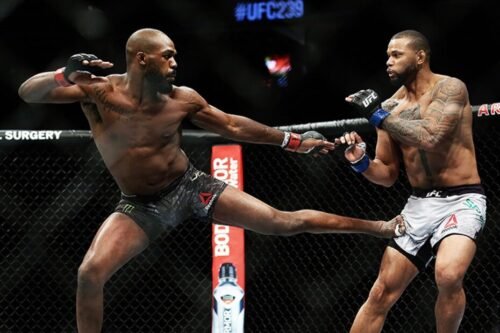
Jon Jones expertly deploys oblique kicks, calf strikes, and brutal thrust kicks to the thigh, systematically crippling his opponents’ movement and setting them up for his relentless attacks.

📊 Stats

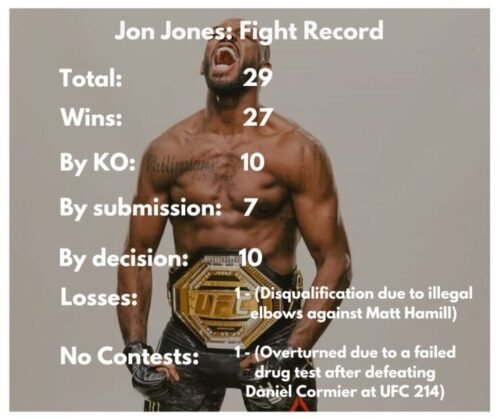
🏆 Fight Record

🏟️ Significant Professional Fights

Click on the links below for more details on Jon Jones significant fights.

This fight marked Jones becoming the youngest champion in UFC history at just 23 years old. He defeated Rua via TKO in the third round, showcasing his dominance and marking the start of his legendary title reign.

Often considered one of the greatest fights in UFC history, this bout pushed Jones to his limits. He earned a unanimous decision victory in a razor-close fight that proved his resilience and cemented his legacy. This fight was later inducted into the UFC Hall of Fame (Fight Wing).

A heated rivalry culminated in Jones handing Cormier his first professional loss, earning a unanimous decision victory. This fight solidified Jones’ claim as the best light heavyweight of all time.

Despite facing serious adversity when Belfort nearly submitted him with an armbar in the first round, Jones defended his title by winning via submission (Americana). This showcased his composure and well-rounded skillset as a champion.

After being out of action due to personal and legal issues, Jon Jones returned to face his fiercest rival, Daniel Cormier, in a highly anticipated rematch. Jones reclaimed the light heavyweight title with a spectacular third-round head-kick knockout, reaffirming his dominance and silencing doubts about his place atop the division. This victory marked a triumphant return for Jones and further solidified his status as one of the greatest fighters in MMA history.

After a three-year hiatus and a move to the heavyweight division, Jones faced Gane for the vacant title. He won via submission (guillotine choke) in the first round, claiming the heavyweight title for the first time in his career and solidifying his status as one of the greatest fighters of all time.

Facing the greatest heavyweight in UFC history, Stipe Miocic, Jones defended his newly acquired heavyweight belt.

From the opening bell, Jones came out strong, establishing early momentum with his speed and precision. Miocic, seemingly caught off guard by Jones’ quickness, struggled to find any rhythm in the early exchanges. Midway through the first round, Jones secured a takedown, landing a series of brutal elbows to the temple that set the tone for the fight.

Throughout the bout, Miocic appeared slow in his approach, failing to land significant strikes as Jones maintained constant pressure, utilising a sharp jab and well-timed body kicks. By the third round, the damage began to take its toll. A perfectly placed spin kick to the ribs dropped Miocic, and Jones followed up with a clinical finish, securing another dominant victory.


💪 Training

Jon Jones’ training focuses on versatility, strength, and technical development. His preparation incorporates wrestling drills, striking, grappling, and functional conditioning, reflecting the broad physical and technical demands of mixed martial arts.

Jones incorporates pad work, sparring, and clinch drills to develop his striking and transitions. His physical preparation has also included strength work, explosive exercises, plyometrics, and agility training to develop speed, power, and athleticism. Together, these different elements prepare him for the varied demands of competition.

A perfectionist, Jon Jones took a deliberate three-year hiatus to bulk up and adapt to his new heavyweight frame, ensuring he felt confident and fully prepared to compete at the highest level in his new division. Light heavyweight Jones (Left), Heavyweight Jones (right).

During training camps, Jones combines demanding training sessions with recovery and technical work. As a fight approaches, training can be tapered to manage fatigue and sharpen technique, with the emphasis shifting towards arriving at the fight physically prepared rather than accumulating unnecessary workload.

Jones’ adaptable approach to training provides the foundation for the workouts that follow, combining strength, conditioning, explosive movement, and MMA-specific training into a programme inspired by the physical demands of his fighting style.

👑 Hail to the King Workouts

This workout is inspired by the training methods and fighting style of Jon “Bones” Jones. It combines strength, explosive power, conditioning, core work, and MMA-specific drills to reflect the versatility and athletic demands that have defined his approach to the sport.

Expect a varied session built around strength, movement, conditioning, and combat performance. Time to get to work.

🧰 Equipment

Jon Jones’ workouts require a selection of strength and functional training equipment, including dumbbells, kettlebells, barbells, sandbags, medicine balls, and battle ropes. Boxing/MMA gloves, sparring pads, and a heavy bag are also useful for the striking and combat-specific elements of the programme.

The exact equipment required will vary between individual workouts, so check each circuit before beginning and have the necessary kit ready.

🧩 Structure

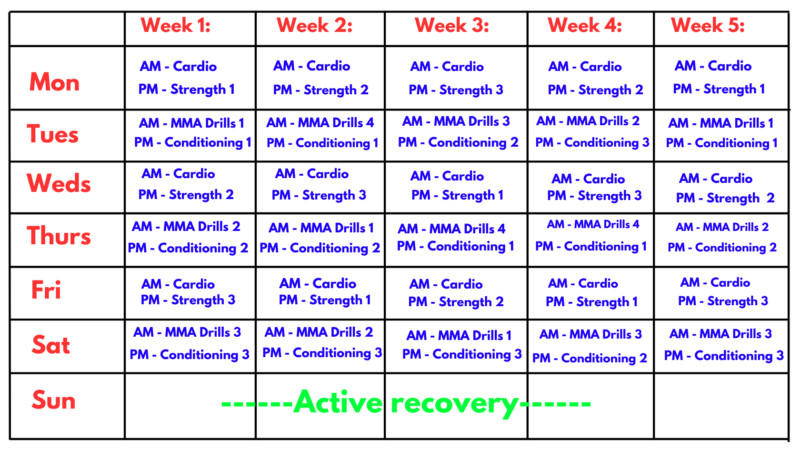
The programme is structured over 6 days per week, with Sunday reserved for active recovery. Each training day includes 2 sessions: one in the morning (AM) and one in the afternoon or evening (PM).
Cardio sessions are alternated in the mornings (30–45 minutes), while the later sessions focus on strength training, MMA drills, or conditioning, depending on the day. Across the week, these elements are balanced to develop cardiovascular fitness, strength, power, conditioning, and MMA-specific skills.

Click on the links below for more details on the structure of the Jon Jones Workouts.

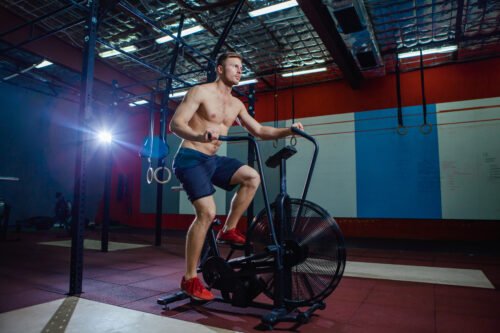
The cardio sessions are designed to build a strong endurance base while developing the explosiveness and stamina required for MMA. They combine steady-state activities such as running or swimming with high-intensity intervals such as sprints or cycling, developing both aerobic and anaerobic conditioning to reflect the changing pace of an MMA fight.

These sessions also develop the ability to recover between repeated bursts of high-intensity effort, an important requirement when maintaining performance across multiple rounds. Longer-duration cardio develops the aerobic base, while interval training targets speed, power, and repeated-effort conditioning.

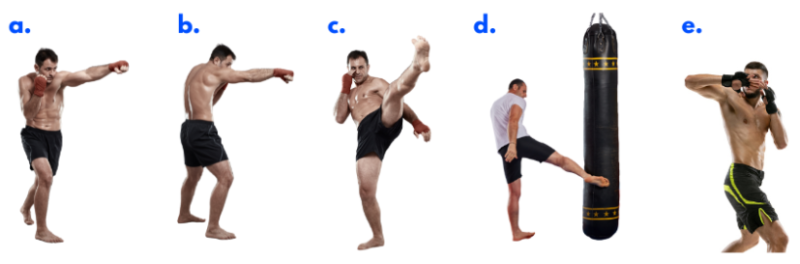
Jones’ MMA drills focus on versatility and precision, reflecting his dynamic fighting style. These routines cover striking, grappling, and defence, incorporating characteristic techniques such as spinning elbows and oblique kicks alongside takedowns, clinch work, and ground and pound.

Also included are drills to develop footwork, timing, combinations, and distance management, as well as conditioning circuits designed to simulate the changing intensity of an MMA fight.

Strength training is a cornerstone of the programme, designed to develop maximal strength, muscular endurance, and explosive power. These routines focus on compound lifts such as squats, deadlifts, and push presses to train multiple muscle groups and build full-body strength.

The sessions also integrate functional exercises such as kettlebell swings and farmer’s walks to develop core stability, grip strength, and power. Together, these exercises build the physical qualities required to control opponents in the clinch, resist takedowns, produce explosive movements, and maintain strength throughout a fight.

🏃🏿 Cardio Sessions

The cardio training focuses on developing endurance, repeated-effort conditioning, and explosive power. Sessions include a mixture of steady-state cardio and high-intensity intervals, using running, cycling, and swimming to develop both aerobic and anaerobic capacity.

Functional circuits and plyometric drills add a further conditioning element, preparing the body for the changing intensity and repeated bursts of effort encountered during MMA.

🤸🏿 Flexibility

The cardio sessions offer flexibility, allowing you to stick to a single activity or combine different methods for variety. Options include steady-state endurance work, interval sprints, and HIIT-style conditioning using running, cycling, swimming, or similar activities.

Sessions should generally last 30–45 minutes, with the exact duration and intensity adjusted to the training method being used. Include an appropriate warm-up and cool-down, and scale the session to your current fitness level and the demands of the wider programme. The flexibility allows you to customise the cardio to match your own goals and preferences.

🔋 Endurance Options

– 45 mins steady-state run.

– 45 minutes on a rowing machine or stationary bike.

SAS workout. Who Dares Wins Workout. Physical Fitness.

⏱️ Sprint and HIIT

– 200-metre sprints x 15 (30–45 seconds rest in between).

– 30 seconds on battle ropes x 10 (rest as needed).

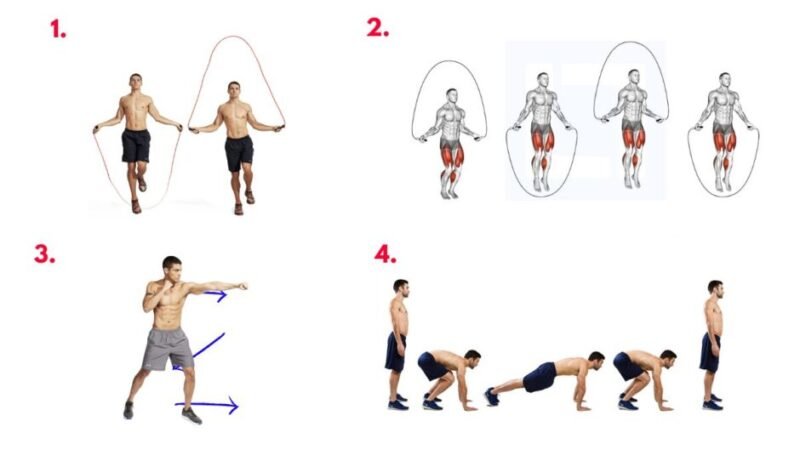
– Jump rope: 10 minutes (continuous or broken into intervals).

Functional Training Methods. Battleropes. Full Body Workouts. Core Workouts. Super Soldier Project.
Predator. Francis Ngannou. Bodyweight Workout. MMA workouts. MMA Drills. MMA. UFC. Mixed Martial Arts.

🚣🏿 Mixed Cardio Routine

– 20 minutes interval running (e.g., 1-minute sprint, 1-minute jog intervals).

– 10 minutes cycling at moderate intensity.

– 15 minutes interval rowing (alternate between 45 seconds fast, 90 seconds recovery).

Treadmill Sprints. Cardio Work. Khabib Nurmagomedov Workout. MMA Workouts. Super Soldier Project.
Rowing. Cardio Work. Thors Hammer Workout. Warrior Workouts. Super Soldier Project.

🚴🏿 Mixed Cardio Routine 2

– 500-metre warm-up jog.

– 2 miles treadmill run. (Moderate speed).

– 200-metre sprints x 15 (30-45 seconds rest in between).

– 30 seconds battle rope x 10.

– 10 minutes jump rope.

Treadmill Sprints. Cardio Work. Khabib Nurmagomedov Workout. MMA Workouts. Super Soldier Project.
Battleropes workout. Functional Training. Total body workouts. Strength. Endurance. Flexibility. Core. Motor skills. Agility. Train everyday. No excuses. Super Soldier Project.
Functional Training Methods. Jump Rope. Full Body Workouts. Core Workouts. Super Soldier Project.

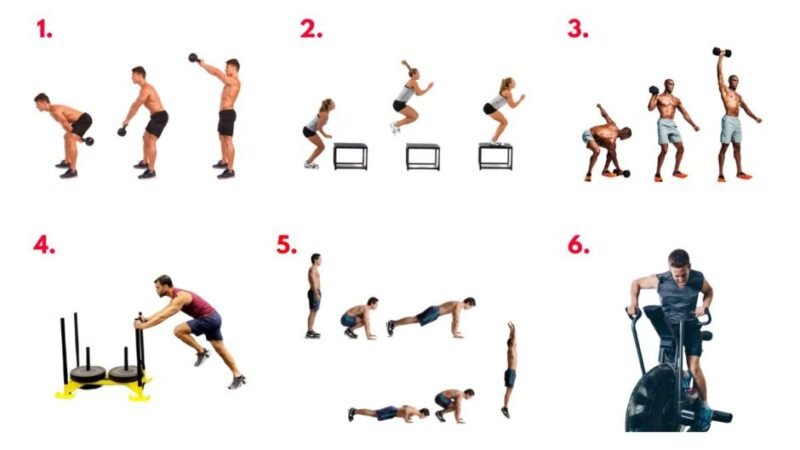
⚡ HIIT Circuit Option - 4 rounds (40 seconds work/20 seconds rest)

  1. KB Swings.
  2. Box Jumps.
  3. Single DB press.
  4. Sled Push.
  5. Burpees.
  6. Assault Bike.

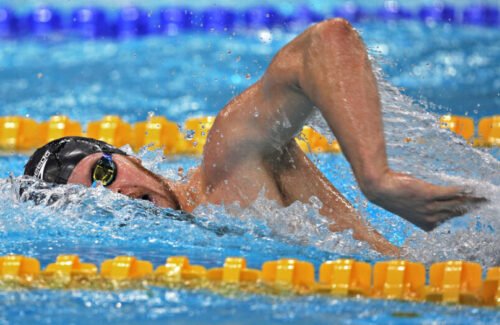
🏊🏿 Swimming Session – 45 Minutes

Warm-Up (5 minutes):

  • 200 metres freestyle at a relaxed pace
  • 100 metres alternating strokes (e.g., breaststroke, backstroke)

Main Workout (35 minutes):

Endurance:

  • 800 metres steady-state swim (maintain a moderate pace)

Intervals:

  • 4 x 100-metre sprints (rest 20–30 seconds between each)

Cool Down (5 minutes):

  • 200 metres freestyle at a relaxed pace
Swimming for fitness. Drown proofing. HIIT cardio.

🥊 MMA Drills and Conditioning

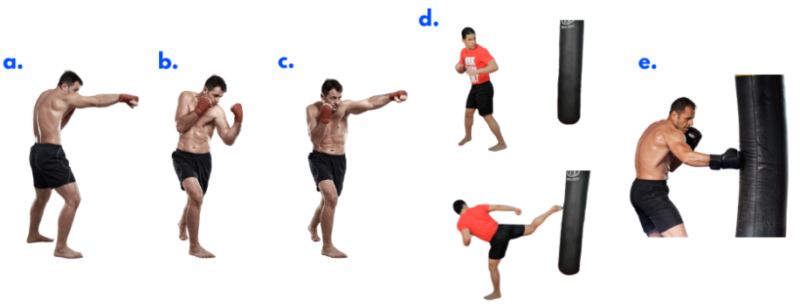
These MMA sessions focus on speed, agility, technique, and fight-specific conditioning, incorporating striking, footwork, defence, and grappling movements. Expect combinations using punches, kicks, and elbows alongside movements such as sprawls, takedowns, and clinch work.

The emphasis is on movement and volume rather than maximal power. Keep the intensity controlled, concentrate on clean technique and fluid combinations, and use the sessions to develop MMA-specific cardio without adding excessive fatigue alongside the more demanding strength and conditioning workouts.

Across the 5-week programme, the drills progressively expose you to different elements of MMA while developing technique, movement, and conditioning.

🌡️ Warm Up

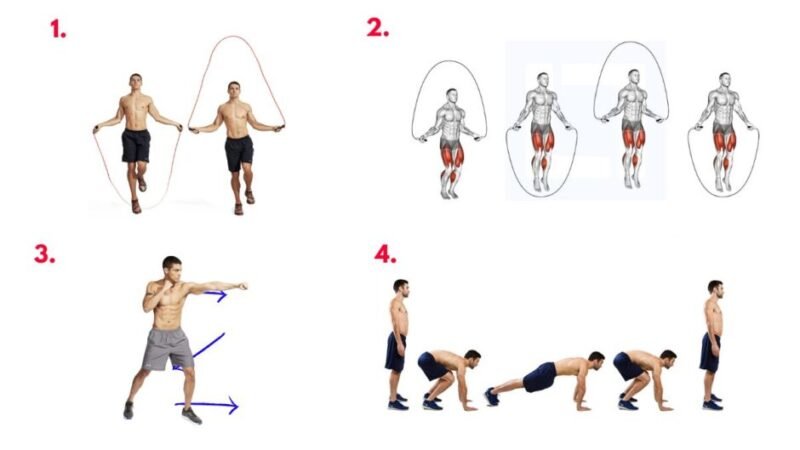
Do 3 x 1-minute rounds of the following:

  • Jumping jacks
  • Reverse lunges
  • Ice skaters
  • Burpees
  • Inchworms
  • Duck Walks
  • Run-on the spot with punches
MMA warmups. MMA workouts. MMA Drills. MMA. UFC. Mixed Martial Arts.

👊🏿 MMA Drills

MMA Basics
Predator. Francis Ngannou. Bodyweight Workout. MMA workouts. MMA Drills. MMA. UFC. Mixed Martial Arts.

💥 MMA Drills Circuit 1

📍 Station 1:

For time.

  1. Jump rope x 2 minutes
  2. Double-unders x 1 minute.
  3. Shadowboxing x 1 minute.
  4. Sprawls x 1 minute.

📍 Station 2:

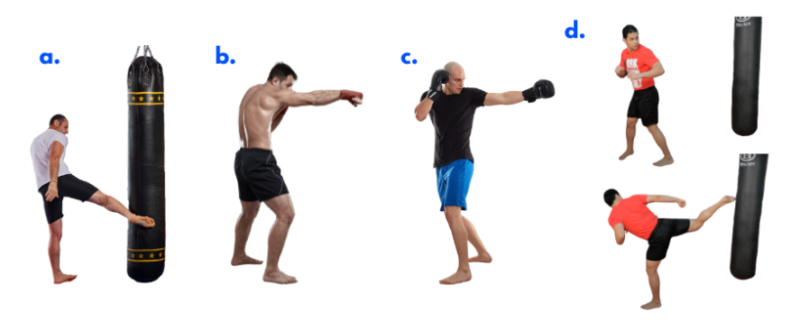
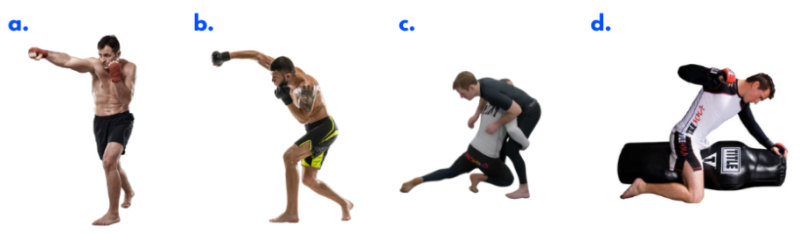
Undertake the following combination for 3 minute round.

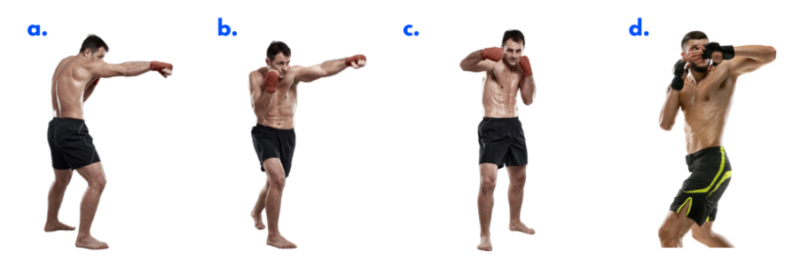
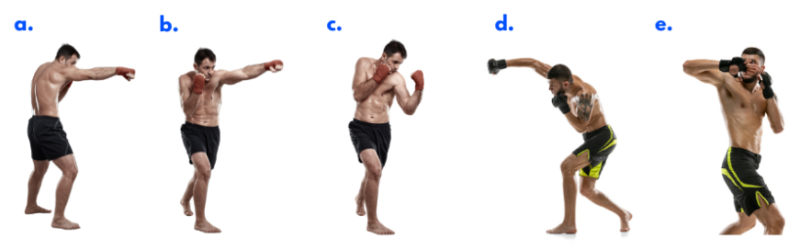
Combination: Jab – Cross – Lead Hook – Spinning Elbow.

📍 Station 3:

Undertake the following combination for 3 minute round.

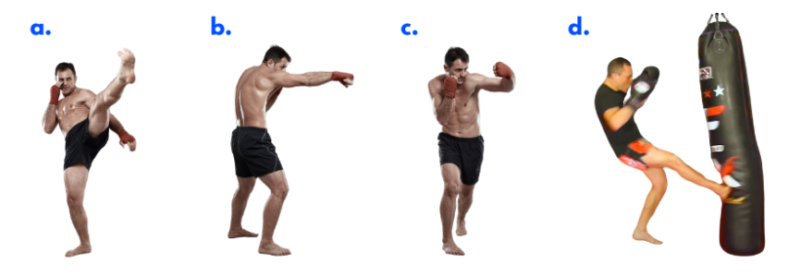
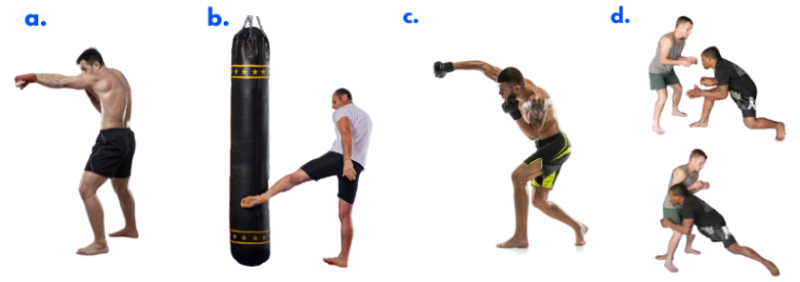
Combination: Teep Kick – Straight – Lead Hook – Oblique Kick.

📍 Station 4:

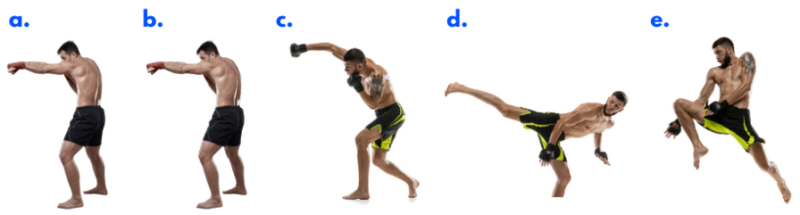
Undertake the following combination for 3 minute round.

Combination: Low Kick – Cross – Spinning Backfist – Jump Spin Kick.

📍 Station 5:

Undertake the following combination for 3 minute round.

Combination: Double Jab – Overhand Right – Side Thrust Kick- Flying Knee.

📍 Station 6:

Bag clinch strikes: Grab the bag close and pound with punches, knees, and elbows. (2-3 minutes).

🔥 Finisher:

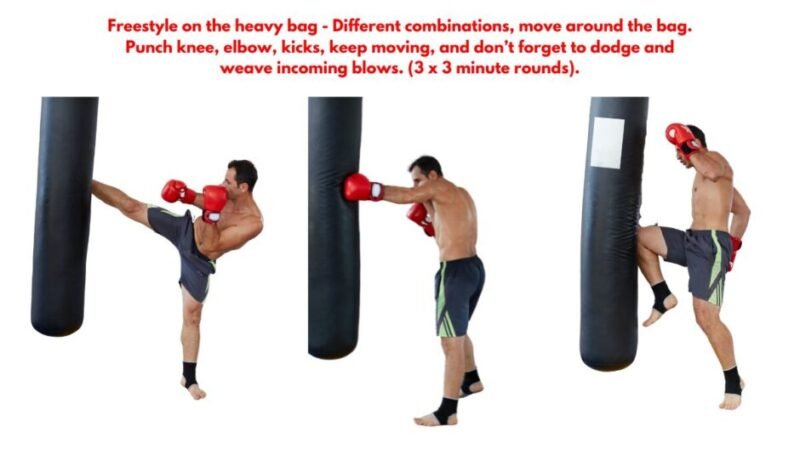
Freestyle on the heavy bag – Different combinations, move around the bag. Punch knee, elbow, kicks, keep moving, and don’t forget to dodge and weave incoming blows. 3×3 minute rounds. No rest.

💥 MMA Drills Circuit 2

📍 Station 1:

For time.

  1. Jump rope x 2 minutes
  2. Double-unders x 1 minute.
  3. Shadowboxing x 1 minute.
  4. Sprawls x 1 minute.

📍 Station 2:

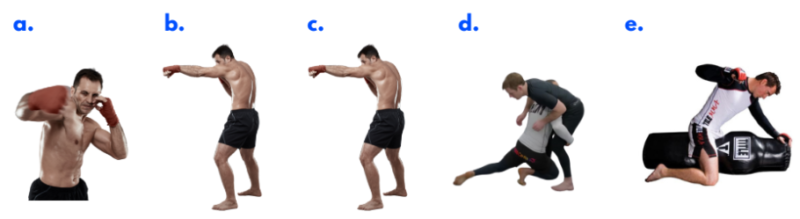
Undertake the following combination for 3 minute round.

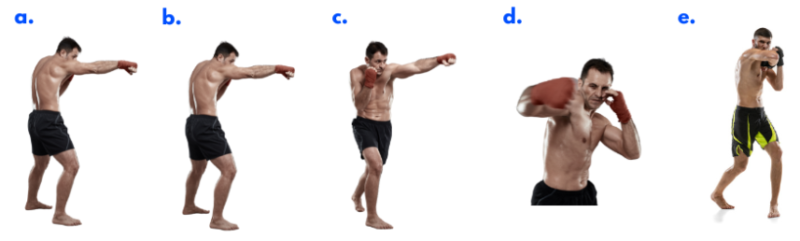
Combination: Jab – Cross – Lead Uppercut – Overhand Right – Spinning Elbow.

📍 Station 3:

Undertake the following combination for 3 minute round.

Combination: Double Jab – Cross – Lead Hook – Step-In Elbow.

📍 Station 4:

Undertake the following combination for 3 minute round.

Combination: Cross – Jab – Teep Kick – Low Kick – Spinning Back Elbow.

📍 Station 5:

Undertake the following combination for 3 minute round.

Combination: Jab – Lead Uppercut – Cross – Spin Kick – Body Hook.

📍 Station 6:

Ground and Pound. Attack with elbows, punches, hammerfists. Change position and attack from different angles. (3 minutes).

🔥 Finisher:

Freestyle on the heavy bag – Different combinations, move around the bag. Punch knee, elbow, kicks, keep moving, and don’t forget to dodge and weave incoming blows. 3×3 minute rounds. No rest.

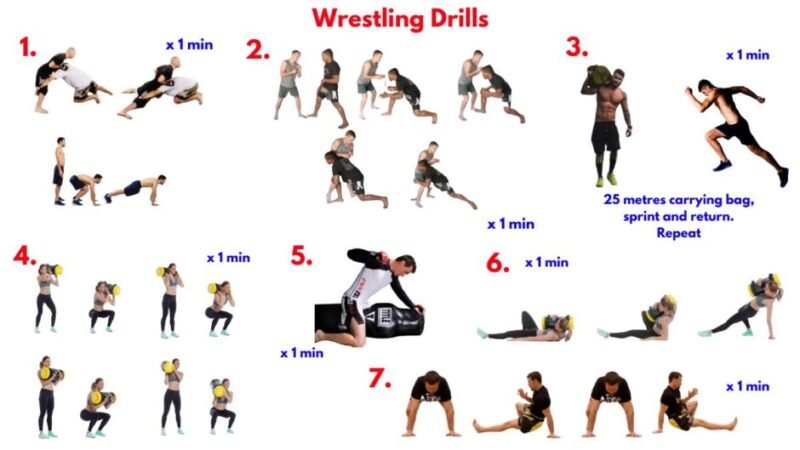
🤼🏿 MMA Drills Circuit 3 - Wrestling Drills

📍 Station 1:

4 x rounds (30 seconds rest each exercise. 90 seconds rest between Sets)

  1. Sprawl drills (run on the spot in the squat position for 5 seconds. Sprawl. Repeat as fast as you can) – 1 minute.
  2. Shoot drills (Shoot forward as if attempting a single leg takedown). Move around, change directions (1 minute).
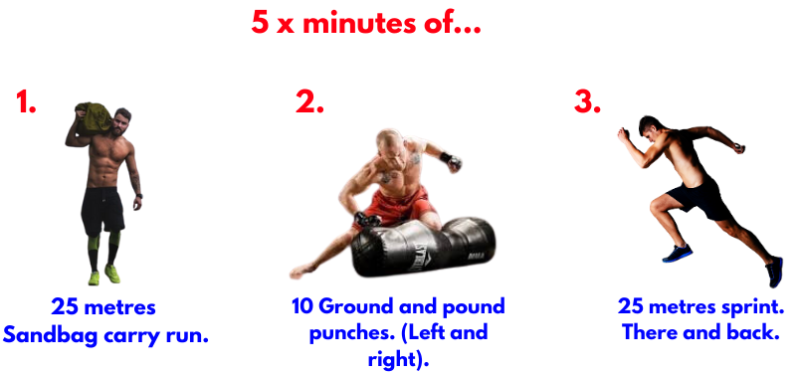
  3. Sandbag fireman carries and sprints. (25 yds each for 1 minute).
  4. Sandbag alternate squats (alternate between squat variations for 1 minute).
  5. Ground and Pound (1 minute).
  6. Sandbag half get-ups (1 minute).
  7. MMA Sit Outs (1 minute).

📍 Station 2:

Practice the following combination for 3 minute round.

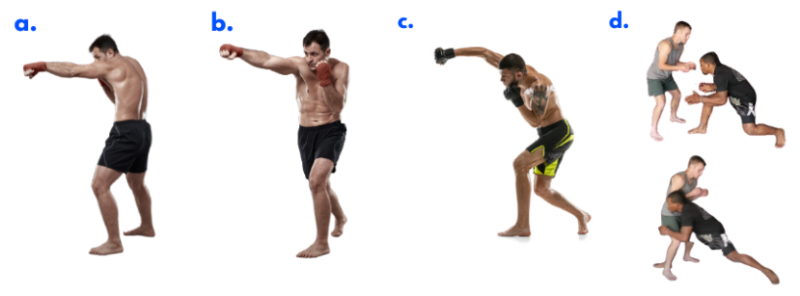
Combination: Jab – Cross – Overhand Punch – Single Leg Takedown.

📍 Station 3:

Practice the following combination for 3 minute round.

Combination: Cross – Overhand Right – Shoot for Double Leg – Transition to mount for Ground and Pound.

📍 Station 4:

Practice the following combination for 3 minute round.

Combination: Lead Hook – Double Jab – Shoot for Double Leg – Transition to mount for Ground and Pound.

📍 Station 5:

Practice the following combination for 3 minute round.

Combination: Jab – Low Kick – Feint Overhand – Single Leg to Dump.

🔥 Finisher:

Smash the Bag – 5 minute round.

Khabib Nurmagomedov. UFC. MMA. Combat Sambo. Pankration. Dagestan. MMA Workout. Strength and conditioning. Bodyweight workouts. Resistance training. MMA drills.

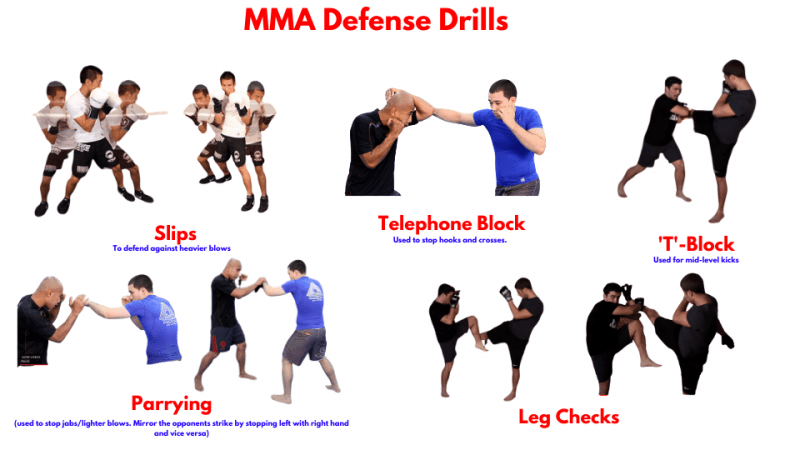
🛡️ MMA Drills Circuit 4 - Defensive Drills

Duration: 30 Minutes.
Focus: Striking Defence and Counters.

NB: These drills are ideal with a partner to simulate realistic fight scenarios and refine technique under pressure. However, they can still be effectively practised solo by visualising an opponent and focusing on precision, movement, and execution.

Predator. Francis Ngannou. Bodyweight Workout. MMA workouts. MMA Drills. MMA. UFC. Mixed Martial Arts.

📍 Station 1: Circle and Pivot Drills (5 mins)

  • Imagine an opponent in front of you and move around them in circular patterns.
  • Practice pivoting on your lead foot to create angles for punches while maintaining a proper guard.
  • Focus: Creating openings, improving angles, and maintaining balance.

📍 Station 2: Slipping Drills (5 mins)

  • Pair with a partner and take turns leading. One person initiates strikes (slow and controlled) while the other slips and mirrors footwork.
  • Incorporate defensive counters (e.g., slip and jab or slip and hook).
  • Focus: Reading opponent movements, quick reactions, and countering effectively.

📍 Station 3: Shadowboxing with Defence Focus (5 mins)

  • Incorporate slipping, bobbing, weaving, and stepping offline while shadowboxing.
  • Add counters such as hooks, uppercuts, or straight punches immediately after defensive movements.
  • Focus: Integrating defence into fluid movement and transitioning to offence.

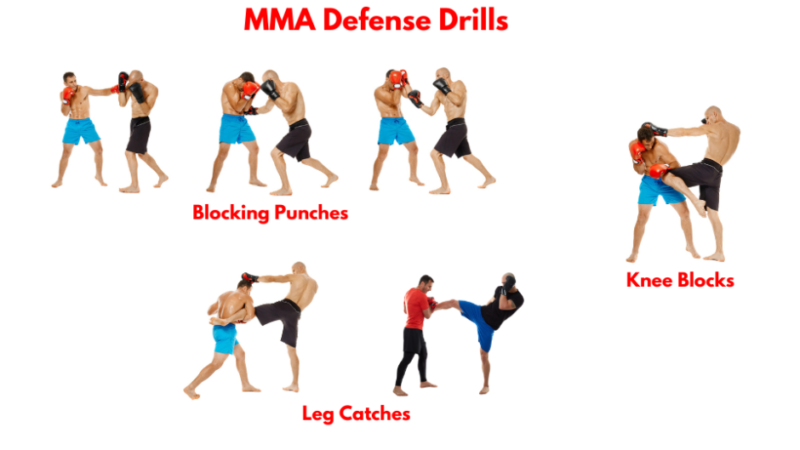
📍 Station 4: Defensive Muay Thai Drills (5 mins)

  • Checking Kicks: Practise lifting your lead leg to check low kicks.
  • Parries and Counters: Drill parrying incoming jabs and countering with a jab or low kick.
  • Clinching Defence: Simulate defending against clinch attempts by framing and pummelling.
  • Focus: Blocking, parrying, and defending common Muay Thai strikes.

📍 Station 5: MMA Defensive Sparring (10 mins)

– Light, controlled sparring with an emphasis on defence and counters.

– Alternate offence and defence roles with a partner, focusing on:

  • Boxing Defence: Slips, rolls, and counters (e.g., slip–cross).
  • Kick Defence: Checking, stepping offline, and returning kicks.
  • Elbow and Knee Defence: Guarding against clinch strikes and framing for control.

– Focus: Building comfort under pressure while maintaining defensive technique.

🫀 MMA Conditioning

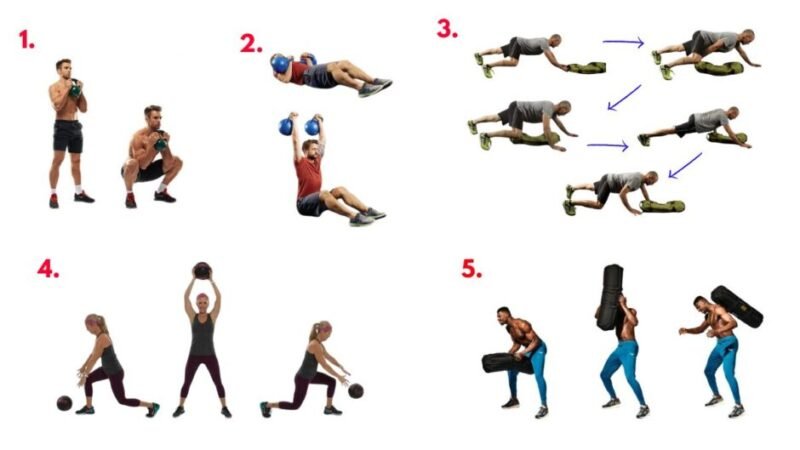
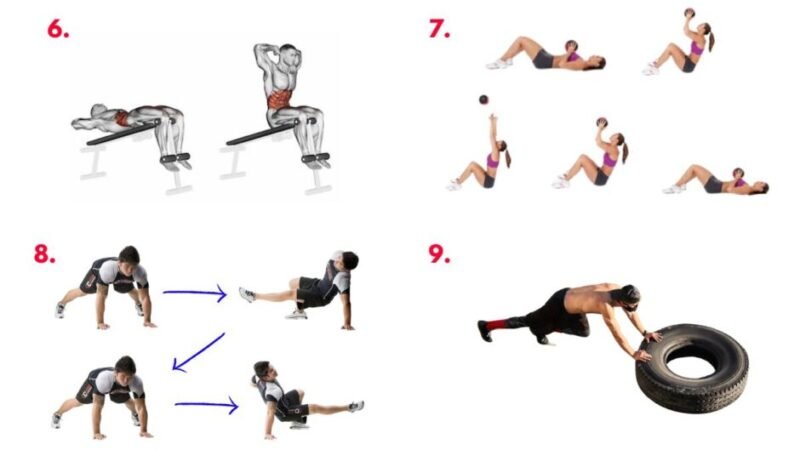
These conditioning circuits are designed to develop the power, endurance, and functional strength required for MMA. Combining explosive movements such as tire flips and kettlebell swings with core-focused drills, the workouts target the ability to produce repeated bursts of high-intensity effort under fatigue.

Rotate the circuits to emphasise different aspects of conditioning while maintaining a full-body training effect.

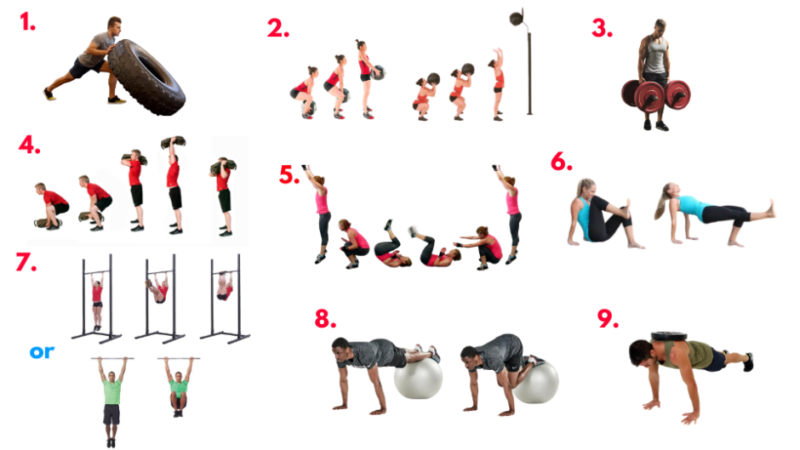
⚡ MMA Conditioning 1

3 x rounds – 45 seconds work, 15 seconds rest. (45 seconds rest after each round).

  1. Tire Flips.
  2. Wall Balls.
  3. Heavy Farmer’s Walks.
  4. Sandbag Shouldering.
  5. Reverse Burpees.
  6. MMA Up Kicks.
  7. Hanging Knee. Raises or Toes to Bar.
  8. Jackknives.
  9. Weighted Plank.

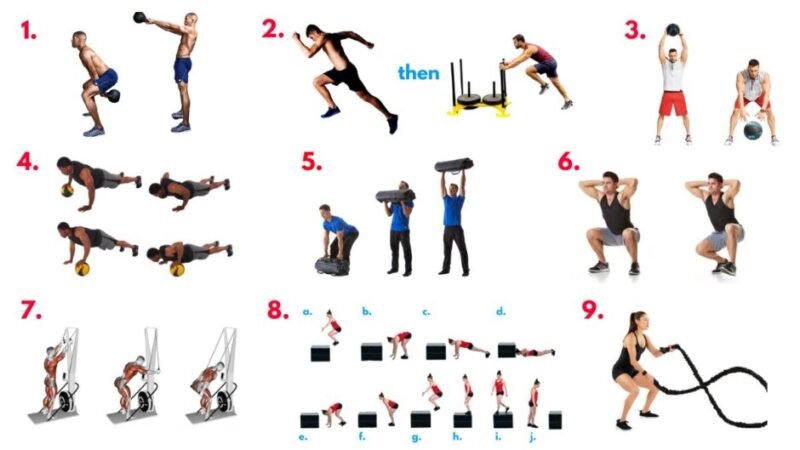
⚡ MMA Conditioning 2

3 x rounds – 45 seconds work, 15 seconds rest. (45 seconds rest after each round).

  1. Kettlebell Swings.
  2. Sprints with Sled Push.
  3. Medicine Ball Slams.
  4. Med Ball Push-Ups.
  5. Sandbag Clean and press.
  6. Duck Walks.
  7. Box jumps.
  8. Sprawl with Box Jump.
  9. Battle Ropes.

⚡ MMA Conditioning 3

3 x rounds – 45 seconds work, 15 seconds rest. (45 seconds rest after each round).

  1. Goblet Squats.
  2. Kettlebell Angel Press.
  3. Sandbag Drag.
  4. Medicine Ball Lateral Slams.
  5. Med Ball Over-Shoulder Toss.
  6. Decline Sit-Ups.
  7. Sit-Up with Medicine Ball Throw and Catch.
  8. MMA Kick Throughs.
  9. Tire Push.

🏋🏿‍♂️ Strength Training

The Jon Jones strength training programme focuses primarily on developing muscular strength, with additional elements of endurance and explosive power relevant to MMA. Reflecting Jones’ transition to the heavyweight division, the workouts emphasise compound lifts such as deadlifts, squats, and bench presses, targeting multiple muscle groups and building full-body strength.

Across the 5-week programme, the aim is to progressively increase the training load while maintaining good technique. Progression is based on progressive overload, using small, manageable increases in weight as strength improves.

For the heavier compound lifts, select loads appropriate to the prescribed sets and repetitions rather than chasing a predetermined percentage of your one-rep max. Increase the weight only when you can complete the required work with controlled technique.

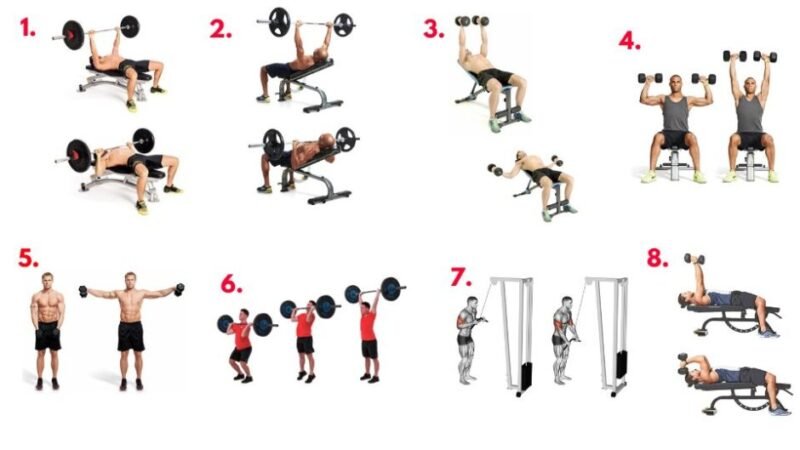
⚙️ Circuit 1 - Chest, Shoulders, and Triceps

  1. Barbell Bench Press: 4 sets – 12 reps at 65%, 10 reps at 70%, 8 reps at 75%, 8 reps at 80% of 1RM.
  2. Incline Dumbbell Press: 8 sets of 5 reps at heavy weight (~75–80% of max effort) for hypertrophy and strength.
  3. Dumbbell Fly: 3 sets of 12 reps at moderate weight (~60–65%) with controlled eccentric movements.
  4. Seated Shoulder Press: 4 sets – 12 reps at 60%, 12 reps at 65%, 10 reps at 70%, 10 reps at 75%.
  5. Lateral Raises: 4 sets – 12 reps at moderate weight, 10 reps heavy, 8 reps heavier, 8 reps maximal (~65–75%).
  6. Barbell Push Press: 8 sets of 5 reps at 70–75% of 1RM (30-second rest to prioritise explosive power).
  7. Triceps Pulldown: 3 sets – 12 reps at 65%, 10 reps at 70%, 8 reps at 75%.
  8. Skullcrusher: 3 sets – 12 reps at 60%, 10 reps at 65%, 10 reps at 70%.

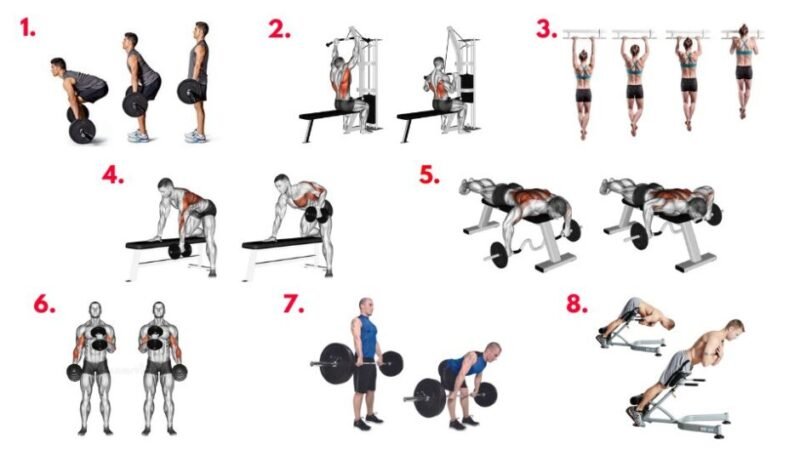
⚙️ Circuit 2 - Back and Biceps

  1. Barbell Deadlifts: 5 sets of 5 reps at 75–85% of 1RM for maximal strength and power.
  2. Lat Pulldown: 4 sets – 12 reps at 60%, 12 reps at 65%, 10 reps at 70%, 10 reps at 75%.
  3. Pull-Ups: 3 sets to failure. Add weights with a vest or plates once 8–10 bodyweight reps become consistent.
  4. Back Rows (Single Arm Heavy): 4 sets of 8 reps per side at 70–80% for unilateral strength and control.
  5. Seal Rows: 3 sets of 12 reps at moderate to heavy weight (~60–70%).
  6. Cross-Body Hammer Curls: 3 sets of 10 reps per side at heavy weight (~65–70%).
  7. Romanian Deadlift: 3 sets – 12 reps at 65%, 10 reps at 70%, 8 reps at 75%.
  8. Weighted Hyperextension: 3 sets of 12–15 reps with moderate weight (~50–60%).

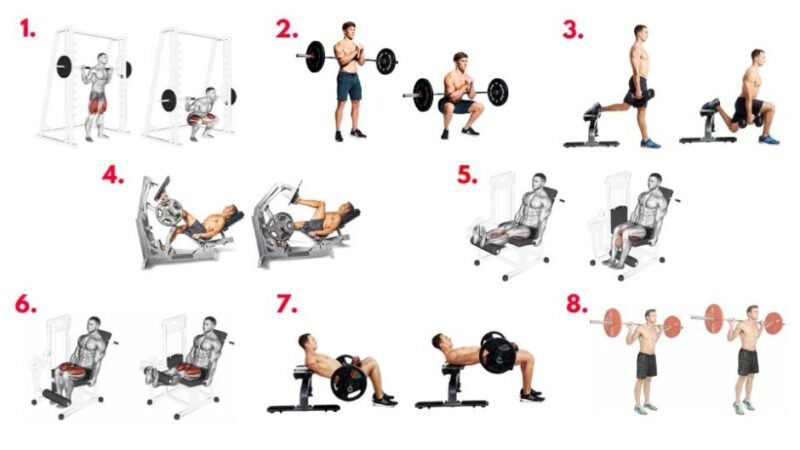
⚙️ Circuit 3 - Legs

  1. Smith Squats: 4 sets of 8 reps at 70–80% of 1RM for hypertrophy and control.
  2. Zercher Squats: 4 sets of 6 reps at 75–80% for core and quad dominance.
  3. Bulgarian Split Squats: 3 sets of 10 reps per leg, moderate-heavy (~65–75%) for unilateral strength.
  4. Single Leg Press: 3 sets of 12 reps at 70–80% for explosive leg power.
  5. Leg Curls: 6 sets of 6 reps at 70–80% for hamstring strength.
  6. Leg Extensions: 3 sets of 12 reps at moderate weight (~60–70%).
  7. Barbell Hip Raise: 3 sets – 12 reps at 70%, 10 reps at 75%, 8 reps at 80%.
  8. Calf Raises: 4 sets of 15 reps with heavier loads (~65–75%) to build endurance and stability.

⚖️ Adjustments for Heavyweight Strength:

  • Higher-Intensity Loads: For the major compound lifts, work primarily within 70–85% of your 1RM, adjusting the load according to the prescribed sets and repetitions. This provides sufficient resistance to develop strength while allowing good technique and manageable training volume.
  • Progressive Overload: Gradually increase the resistance across the 5-week programme as your strength improves. Progress only when you can complete the prescribed repetitions with controlled technique rather than automatically increasing the load each week.

🧘🏿 Active Recovery and Flexibility

Recovery is as important as the training itself, allowing the body to repair, adapt, and prepare for the next session. With the volume of strength, conditioning, cardio, and MMA work included throughout the week, dedicated recovery helps manage fatigue and maintain training quality.

Sunday is reserved for active recovery, with an emphasis on flexibility, mobility, light movement, and general recovery before the next training week begins.

♻️ Recovery Routine

  • Yoga or Mobility Work: Use yoga or dedicated mobility work to develop flexibility, range of motion, and movement quality, particularly around areas that feel tight after the training week.

  • Light Cardio: Perform around 20 minutes of easy walking, swimming, or cycling to encourage movement and blood flow without adding significant training fatigue.

  • Stretching: Use dynamic mobility and static stretching where appropriate to maintain flexibility and address areas that feel restricted or tight.

Incorporate stretch days and foam rolling into your routine to enhance flexibility, reduce muscle soreness, and support recovery from these intense workouts.

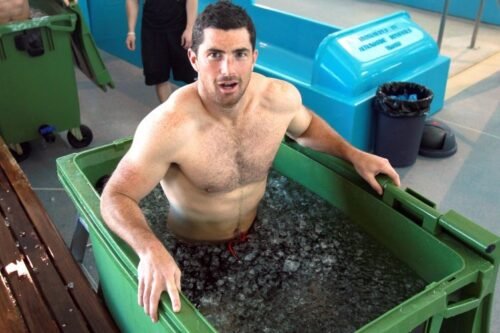
To optimize your recovery, incorporate advanced methods like ice baths, foam rolling, or massage therapy to effectively reduce muscle soreness, decrease acute inflammation, and lower tension. While these tools are excellent for relieving pain and managing the physical demands of intense training, they should serve as optional complements to the core fundamentals of recovery: high-quality sleep, proper nutrition, consistent hydration, and managed training loads.

Ice baths have become a popular recovery tool for reducing inflammation and managing soreness, while cold showers offer a more accessible alternative for those looking to reap similar benefits without the intensity.

By integrating active recovery and flexibility work into your schedule, you can support the strength, endurance, and mobility needed to maintain a demanding training programme while managing fatigue and reducing injury risk. Recovery isn’t simply rest; it is an important part of the training and adaptation process.

🥗 Diet and Nutrition

Jon Jones’ approach to nutrition has emphasised nutrient-dense foods to support training, performance, and recovery. A balanced diet providing sufficient energy alongside protein, healthy fats, and complex carbohydrates can support muscle recovery, endurance, and overall health during demanding periods of training.

🥩 Key Foods

  • Proteins: Chicken, turkey, steak, salmon, eggs, protein shakes.
  • Carbs: Oatmeal, quinoa, brown rice, bananas.
  • Fats: Avocados, olive oil.
  • Greens: Kale, spinach.

⚠️ Foods to Avoid

  • Sugar.
  • Junk food.
  • Refined and processed foods.
  • Hydrogenated fats.
  • Artificial ingredients.

🍽️ Example Daily Meal Plan

  1. Breakfast: Five large whole eggs with a big bowl of porridge.
  2. Midday Snack: Low-sugar protein shake.
  3. Lunch: A large bowl of pasta with chicken.
  4. Evening Snack: Another low-sugar protein shake.
  5. Dinner: Steak, baked potato, and broccoli.
  6. Before Bed: Low-sugar protein shake.

💧 Whichever workout you undertake. Remember to always cool down, stretch and rehydrate!

🥊 Workout Complete!!

The Champ is Here!

If you have enjoyed this workout please share or feel free to comment below 🙂

Warning!

Please be aware that I am not a professional fighter or instructor. This MMA workout is intended for fun and general fitness, not expert training. Prioritize safety by using proper techniques and gear. Practice moves cautiously and avoid excessive force, especially with throws and striking. If you’re looking for more intense training, consider seeking guidance from a professional MMA gym. Remember, this workout carries inherent risks, and you assume responsibility for any potential injuries.

🔗 Our Other Posts

Leave a Reply

Your email address will not be published. Required fields are marked *

This site uses Akismet to reduce spam. Learn how your comment data is processed.

error: Content is protected !!

Join the Super Soldier Project Mailing List Today!!