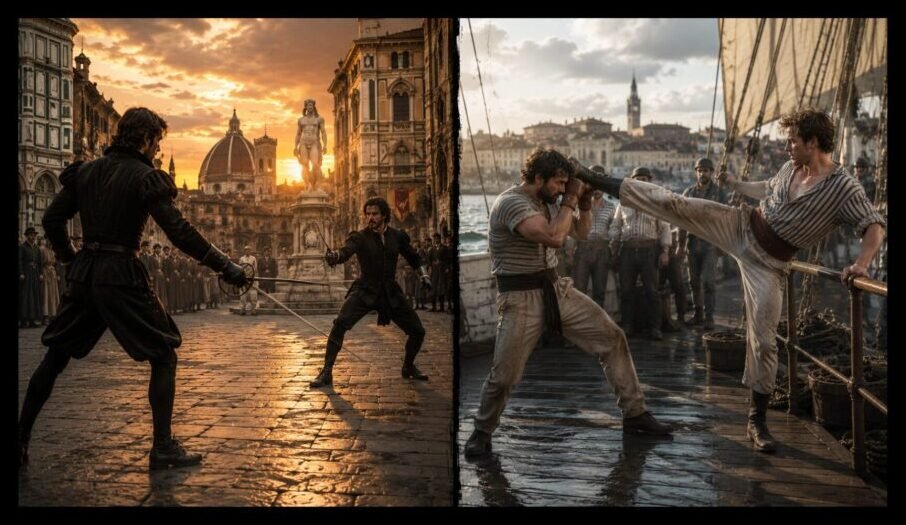
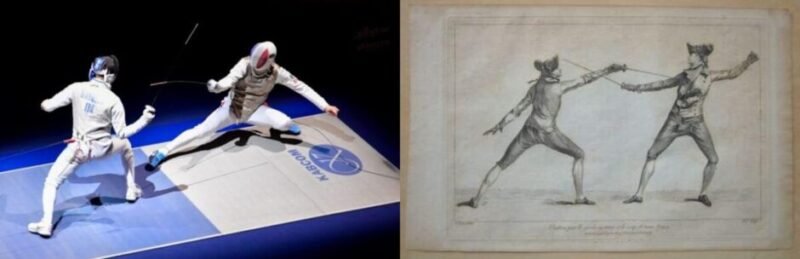
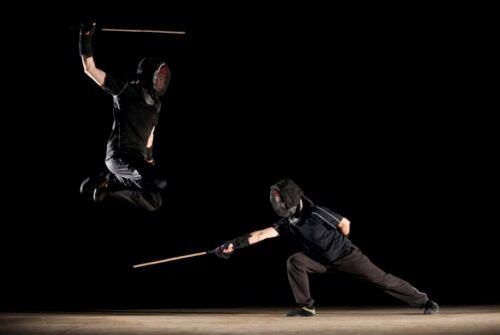
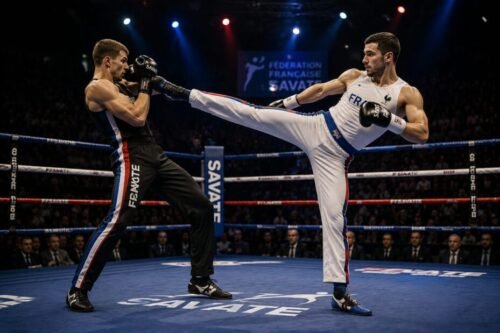
French fencing places great importance on precision and economy. Rather than relying on elaborate movements or excessive force, practitioners seek to achieve maximum effect with the smallest necessary action, reducing risk while maintaining control of the engagement.
Key themes include:
- Economy of Motion: Eliminating unnecessary movement to improve speed and efficiency.
- Precision: Delivering accurate attacks while maintaining strong defensive structure.
- Technical Discipline: Emphasising correct mechanics and consistent execution.
- Point Control: Developing fine blade manipulation and accuracy.
- Defensive Responsibility: Maintaining protection while creating opportunities to attack.
- Competitive Application: Refining techniques through structured practice and regulated competition.
As fencing evolved from duelling into a modern sport, many French principles became increasingly influential. Their emphasis on efficiency, accuracy, and technical precision helped shape the development of foil, épée, and sabre, leaving a lasting mark on modern fencing around the world.