The British Isles — Boxing, Wrestling, Weapons & Combatives

From bare-knuckle prizefighting and catch wrestling to Irish stick fighting and wartime combatives, the British Isles produced some of the world’s most influential combat systems. Explore the traditions that helped shape modern boxing, grappling, self-defence, and combat sports.

Table of Contents

🔥 Introduction

Unlike many of Europe’s weapon-focused traditions, the martial arts of the British Isles increasingly evolved toward competition, self-defence, and practical combat.

Boxing became one of the world’s most influential combat sports. Wrestling survived through numerous regional traditions. Weapon systems such as Bataireacht and Singlestick preserved older fighting methods, while later systems like Bartitsu and Defendu helped shape modern self-defence and military combatives.

Together, these traditions helped transform combat from local practice into organised sport, structured training, and practical self-protection.

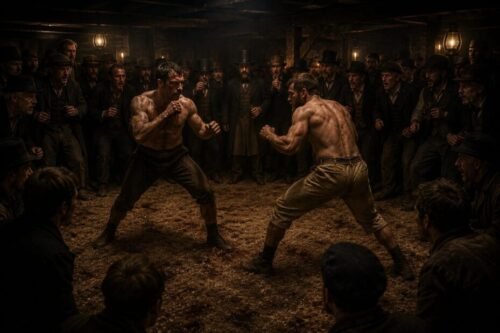
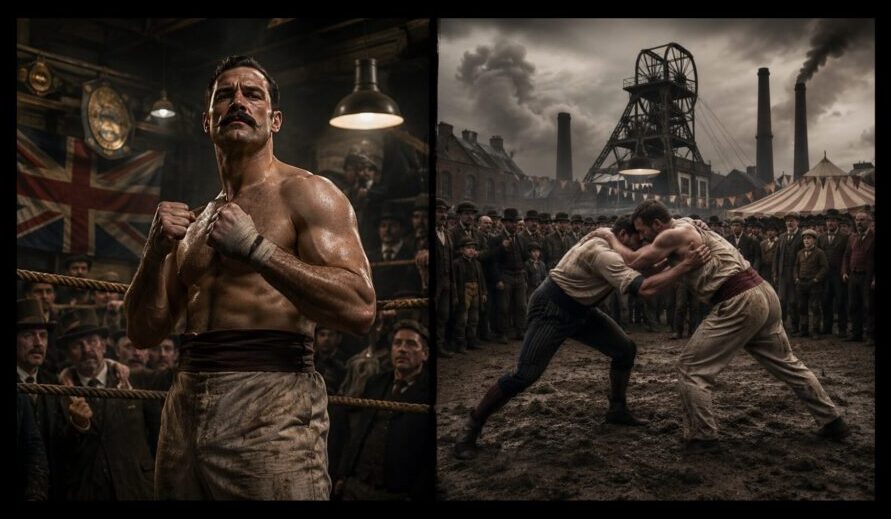
Born in the fighting pits, taverns, and fairgrounds of Britain, prizefighting laid the foundations of modern boxing. Though often fought under crude conditions and limited rules, these contests developed the skills, traditions, and competitive culture that would transform boxing into a global sport.

🥊 Striking Systems

The British Isles played a central role in the development of modern striking arts. From the brutal world of bare-knuckle prizefighting to the technical sophistication of modern boxing, these systems helped shape combat sports around the world. Their emphasis on pressure testing, endurance, and practical effectiveness continues to influence fighters across multiple disciplines.

🇬🇧 Bare-Knuckle Prizefighting

Bare-knuckle boxing was the foundation of modern striking in the West. Fights were often long, chaotic affairs that combined punching, clinching, and grappling under minimal regulation. Developed in working-class Britain, it rewarded resilience, adaptability, and the ability to endure punishment.

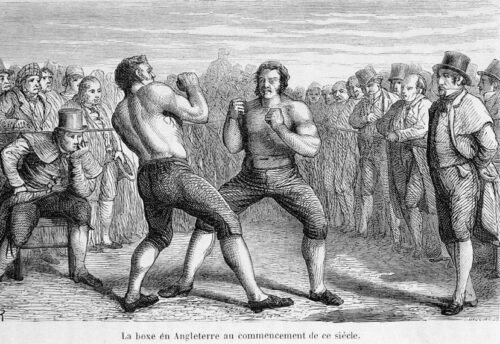
Historical illustration of two bare-knuckle English prizefighters facing each other during an 18th-century boxing match, surrounded by spectators.

Long before gloves and weight classes, English prizefighters battled in brutal bare-knuckle contests that helped shape modern boxing.

Unlike modern boxing, bare-knuckle prizefighting placed far greater emphasis on survival, endurance, and adaptability. Fighters had to cope with changing circumstances, limited rules, and contests that could last for hours rather than minutes.

Key themes include:

  • Durability: Fights could extend across dozens of rounds, placing enormous demands on stamina and recovery.
  • Clinch Fighting: Grappling, holding, and close-range control often played a major role in wearing opponents down.
  • Infighting: Many exchanges took place at close range, where fighters traded punches and fought for position.
  • Body Attacks: Strikes to the torso were commonly used to reduce mobility and drain energy.
  • Hand Preservation: Without gloves, fighters had to strike carefully, often targeting softer areas to avoid damaging their hands.
  • Adaptability: Competitors frequently blended striking, clinching, and wrestling depending on the situation.

Bare-knuckle prizefighting rewarded grit as much as skill. Its emphasis on conditioning, pressure, and practical effectiveness helped lay the groundwork for the development of modern boxing and many of the combat sports that followed.

🇬🇧 Modern Boxing

With the introduction of the Marquess of Queensberry Rules, boxing transitioned into a structured sport. Gloves, timed rounds, and defined rules shifted the focus toward skill, efficiency, and strategy. Modern boxing emphasises footwork, head movement, combinations, and defensive awareness.

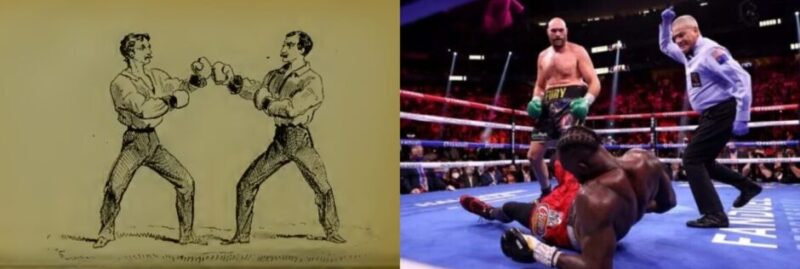
Split image showing Victorian boxers competing under the Marquess of Queensberry Rules alongside Tyson Fury knocking down Deontay Wilder in a modern professional boxing match.

The Marquess of Queensberry Rules transformed boxing through gloves, timed rounds, and standardised regulations, helping create the modern sport we recognise today.

Modern boxing revolves around controlling distance, creating openings, and delivering effective strikes while minimising damage in return. Success depends as much on positioning and decision-making as it does on punching power.

Key themes include:

  • Footwork: Dictating range, creating angles, and controlling the pace of the fight.
  • Head Movement: Slipping, rolling, and weaving to avoid punches without giving up position.
  • Combination Punching: Linking attacks together to overwhelm defences and create openings.
  • Counter-Punching: Punishing mistakes by striking during or immediately after an opponent’s attack.
  • Ringcraft: Using movement, positioning, and pressure to control where the fight takes place.
  • Conditioning: Maintaining speed, power, and concentration over multiple rounds.

Modern boxing’s influence extends far beyond the ring. Its striking mechanics, defensive skills, and footwork have shaped kickboxing, Muay Thai, self-defence systems, and MMA, making it one of the most influential combat sports in the world.

⏳ Britains’s Greatest Export

Few combat sports have spread as successfully as boxing. What began as British prizefighting eventually became one of the world’s most recognised and widely practised fighting systems.

British soldiers, sailors, and workers carried boxing throughout the Empire, where it was adopted, adapted, and refined by local cultures. Nations such as the United States, Mexico, Cuba, and the Philippines would go on to become major forces within the sport, each adding their own styles and traditions while retaining the framework established by British rules.

🤼 Wrestling Traditions

Wrestling has deep roots throughout the British Isles, with regional styles developing in local communities, fairs, and sporting contests for centuries. These traditions emphasised balance, leverage, control, and throwing skill, helping lay the foundations for later grappling systems such as Catch Wrestling and influencing modern combat sports.

🇬🇧 Catch Wrestling

Catch Wrestling evolved from British and Irish folk wrestling traditions, focusing on takedowns, control, and submissions. Unlike more restrictive systems, it allowed a wide range of techniques, making it highly adaptable and influential in modern grappling and MMA.

Catch Wrestling is built around the principle of imposing pressure and forcing mistakes. Rather than slowly accumulating points or maintaining positions, practitioners often seek to overwhelm opponents through constant attacks, transitions, and submission threats.

Key themes include:

  • Takedowns: A wide variety of throws, trips, snaps, and clinch entries designed to put opponents on the ground quickly.
  • Submission Hunting: Joint locks, neck cranks, compression locks, and painful holds are often attacked aggressively rather than patiently set up.
  • Pins and Control: Strong positional dominance remains important, reflecting the system’s wrestling roots.
  • Chain Wrestling: Techniques flow continuously from one attack to another, making it difficult for opponents to settle into a defensive rhythm.
  • Pressure and Attrition: Practitioners often use physical pressure and relentless pace to wear opponents down.
  • Finish-Oriented Mindset: The objective is not merely to control an opponent but to secure a decisive finish whenever possible.

Compared to many modern grappling systems, Catch Wrestling often favours aggression over patience and attack over defence. Its influence can be seen throughout submission grappling, professional wrestling, and MMA, where many fighters continue to apply its principles of pressure, control, and relentless offensive grappling.

🥊 MMA Connection

Modern MMA owes much to the martial traditions of the British Isles. Boxing remains one of the sport’s primary striking systems, providing the footwork, timing, defensive skills, and punching mechanics used by countless fighters. Catch Wrestling helped shape the development of submission grappling, professional wrestling, and early mixed combat competition, contributing many of the takedowns, control positions, and submission concepts still seen today.

The British emphasis on pressure testing also left a lasting mark. From prizefighting and wrestling contests to modern combat sports, techniques were expected to prove themselves against resisting opponents rather than exist only in theory. This culture of live competition and practical effectiveness remains one of the defining characteristics of MMA today.

🇬🇧 British Folk Wrestling Styles

Regional styles such as Cumberland & Westmorland Wrestling, Cornish Wrestling, and Scottish Backhold Wrestling focus on grips, throws, and positional dominance. These systems were often practised at local fairs, festivals, and competitions, maintaining strong ties to regional identity.

Although each style developed its own rules and traditions, British folk wrestling generally places a strong emphasis on balance, leverage, and the ability to unbalance an opponent without relying on brute force alone. Success often comes from superior positioning, timing, and an understanding of body mechanics.

Key themes include:

  • Grip Fighting: Establishing and controlling grips to limit an opponent’s movement and create throwing opportunities.
  • Off-Balancing: Forcing opponents out of position before attempting a throw.
  • Clean Throws: Many styles reward decisive throws rather than prolonged ground fighting.
  • Posture and Base: Maintaining stability while disrupting an opponent’s balance.
  • Technical Efficiency: Using leverage and body positioning to overcome larger or stronger opponents.
  • Competition Tradition: Local tournaments and festivals helped preserve these styles across generations.

Unlike modern grappling systems that often continue on the ground, most British folk wrestling styles focus on standing exchanges and throwing skill. Their influence can still be seen in Catch Wrestling, modern wrestling, and the wider development of British combat sports.

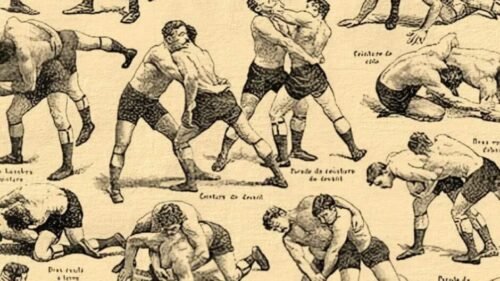
Historical illustration of English catch wrestlers demonstrating throws and grappling techniques during a traditional catch wrestling match.

English Catch Wrestling evolved from traditional folk wrestling styles, developing into one of the world’s most influential grappling systems.

⏳ Wrestling Was Everywhere

Before organised combat sports became widespread, wrestling was arguably the most common martial activity in the British Isles. Nearly every region maintained its own rules, customs, and competitive traditions, creating a rich and diverse grappling culture that helped shape many later combat sports.

Wrestling contests could be found at village fairs, agricultural shows, festivals, and public gatherings throughout Britain and Ireland. In industrial regions, miners, factory workers, dockers, and labourers often tested themselves through informal bouts, helping preserve local styles and competitive traditions. Although many of these systems declined with the rise of modern sporting formats, their influence can still be seen in Catch Wrestling and the wider development of competitive grappling.

🦯 Weapons & Traditional Systems

Alongside unarmed combat, the British Isles produced a variety of weapon traditions shaped by local culture, warfare, and everyday life. From Irish stick fighting to military sword training and longbow archery, these systems demonstrate the diversity of Britain’s martial heritage beyond boxing and wrestling.

🇮🇪 Bataireacht

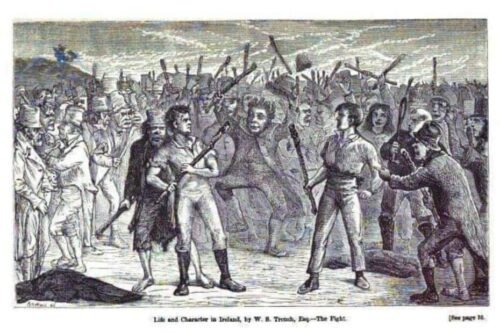
Bataireacht is a traditional Irish stick-fighting system using the shillelagh. It combines striking with elements of grappling and positioning, often applied in close-range encounters. Historically linked to faction fighting, it reflects a practical approach to self-defence using everyday tools.

Illustration of Irish fighters armed with shillelaghs engaged in a traditional faction fight, demonstrating techniques associated with Bataireacht.

Bataireacht developed alongside Ireland’s faction-fighting culture, where shillelagh-armed rivals tested skill, courage, and reputation in organised brawls.

Unlike many formal fencing systems, Bataireacht was designed for rough encounters where speed, adaptability, and practical effectiveness mattered more than strict rules or etiquette. The shillelagh served as both a walking stick and a defensive weapon, making it a versatile tool in everyday life.

Key themes include:

  • Striking: Fast blows delivered from a variety of angles using the stick’s length and weight.
  • Timing: Intercepting attacks and exploiting openings before an opponent can recover.
  • Footwork: Maintaining distance while creating favourable angles for attack and defence.
  • Hand Protection: Using the stick and positioning to shield the weapon hand from strikes.
  • Close-Range Fighting: Transitioning from longer strikes into clinching, grappling, or controlling an opponent.
  • Adaptability: Applying the same principles to sticks, canes, and other improvised weapons.

Many modern interpretations of Bataireacht draw upon surviving family traditions, historical accounts, and comparative study of other stick-fighting systems. While styles vary between schools, the emphasis on timing, control, and practical self-defence remains central to the art.

⏳ Weapons as Everyday Tools

Unlike many military weapon systems, sticks and walking canes were common everyday objects. This made them practical tools for personal protection while also serving as symbols of status and identity. Because they could be carried openly without attracting the attention associated with swords or other weapons, canes became a natural focus for civilian self-defence. Across Europe, this gave rise to a variety of stick-fighting traditions that transformed ordinary objects into effective martial tools.

🇬🇧 Singlestick

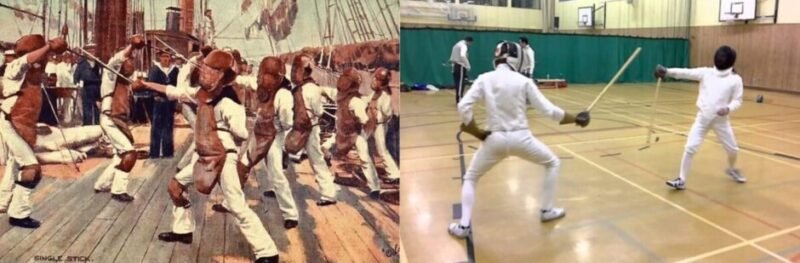
Singlestick is a traditional British weapon system that uses a wooden stick as a substitute for the sabre or backsword. Originally developed as a safer training method, it allowed practitioners to practise cutting, defence, and footwork without the risks associated with sharp weapons. Over time, it evolved into a competitive activity in its own right.

Singlestick provided a safer way to develop swordsmanship, allowing sailors to train combat skills without the risks of live blades.

Although often viewed as a training tool rather than a complete martial art, Singlestick played an important role in preserving British swordsmanship. It provided a practical way to develop the skills needed for military sabre combat, duelling, and civilian self-defence.

Key themes include:

  • Distance Management: Learning to strike while remaining outside an opponent’s effective range.
  • Timing: Identifying openings and delivering attacks at the correct moment.
  • Cutting Mechanics: Developing efficient striking patterns that transfer directly to sword use.
  • Defensive Skill: Blocking, parrying, and countering incoming attacks.
  • Footwork: Maintaining balance and mobility while controlling the engagement.
  • Pressure Testing: Competitive bouts allowed practitioners to apply techniques against resisting opponents.

Unlike many historical weapon systems that disappeared entirely, Singlestick survived as both a training method and a sport. Its influence can still be seen in historical fencing, military sabre traditions, and modern HEMA practice, where it remains a valuable tool for developing weapon-handling skills.

🏹 English & Welsh Longbow Traditions

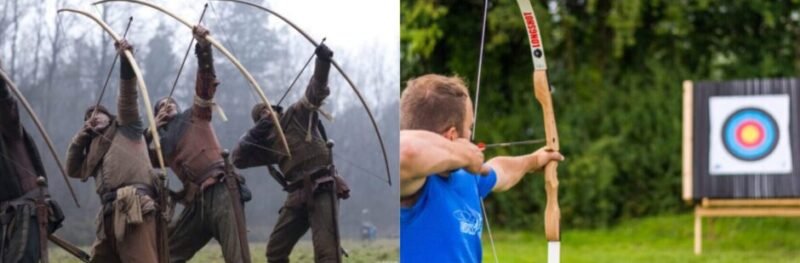
Once a decisive battlefield weapon, English and Welsh archery evolved into a popular competitive sport and recreational pastime.

The English and Welsh longbow became one of the most influential weapons in medieval warfare. Requiring years of dedicated practice, skilled archers could deliver accurate and powerful volleys that helped shape battles such as Crécy, Poitiers, and Agincourt. Although its military role declined with the rise of firearms, traditional archery survived through sporting, cultural, and historical traditions that continue to this day.

The longbow was far more than a weapon. Effective use required years of training, exceptional physical conditioning, technical precision, and mental discipline. In many respects, medieval archery functioned as a martial art, demanding mastery through repetition in much the same way as fencing, wrestling, or the Japanese art of Kyudo. While rarely included in modern discussions of martial arts, it remains one of Europe’s most significant martial traditions.

🛡️ Self-Defence & Combatives

As society changed, many British martial systems evolved to address the practical realities of personal protection, policing, and military service. These arts prioritised adaptability, simplicity, and effectiveness under pressure, helping shape some of the most influential self-defence and combatives systems of the modern era.

🇬🇧 Bartitsu

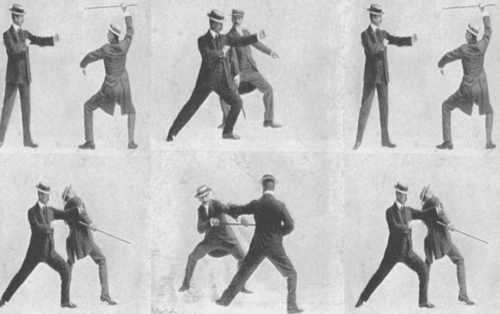
Developed in the late nineteenth century, Bartitsu combined Boxing, Savate, Jujutsu, and stick fighting. It was designed for urban self-defence, blending multiple systems into a single approach.

Illustration of Bartitsu practitioners demonstrating a combination of boxing, savate, and Japanese jiu-jitsu techniques for urban self-defence.

Developed in Victorian England, Bartitsu combined British and international fighting methods into one of the world’s earliest hybrid self-defence systems.

Bartitsu is often regarded as one of the world’s earliest hybrid martial arts. Rather than relying on a single fighting style, practitioners learned to select the most appropriate response for the situation, moving seamlessly between striking, grappling, and weapon use.

Key themes include:

  • Range Awareness: Understanding when to strike, grapple, or disengage.
  • Pragmatic Self-Defence: Focusing on practical solutions rather than sporting competition.
  • Off-Balancing: Using leverage and positioning to disrupt an opponent before applying a technique.
  • Weapon Integration: Employing walking sticks, umbrellas, and other everyday objects as defensive tools.
  • Adaptability: Combining techniques from multiple systems rather than adhering to a single method.
  • Control Over Force: Neutralising threats efficiently without relying solely on strength or aggression.
Many of Bartitsu’s concepts feel surprisingly modern. Its emphasis on cross-training, situational awareness, and integrating multiple disciplines anticipated the development of later self-defence systems and even aspects of modern mixed martial arts.

⏳ Ahead of Its Time

More than a century before modern cross-training became common, Bartitsu combined techniques from multiple martial arts into a single integrated system, making it one of Europe’s earliest hybrid fighting methods.

🇬🇧 Defendu

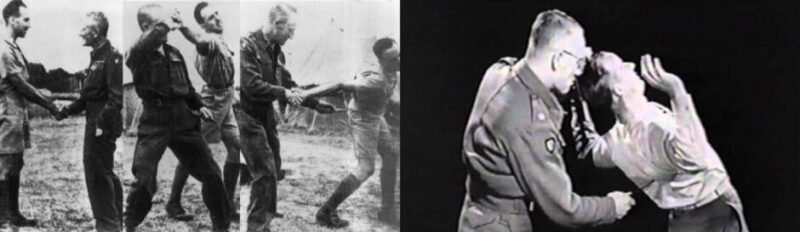
Created by William E. Fairbairn, Defendu was built for real-world use by military and law enforcement personnel. It prioritises simple, effective techniques that can be applied under stress. The system removes complexity in favour of speed and practicality.

Illustration of practitioners demonstrating Defendu techniques, showcasing the close-quarters strikes, escapes, and self-defence methods developed by William E. Fairbairn.

Developed by William E. Fairbairn, Defendu prioritised simple and effective techniques for real-world self-defence, military service, and law enforcement.

Defendu was designed around a simple premise: under extreme stress, people rarely perform complex techniques reliably. Instead, the system focuses on instinctive movements, aggressive action, and rapidly ending a confrontation before it escalates.

Key themes include:

  • Gross Motor Movements: Techniques that remain functional under fear, fatigue, and adrenaline.
  • Pre-Emptive Action: Striking first when a threat is unavoidable rather than waiting to react.
  • Target Selection: Focusing attacks on vulnerable areas to maximise effectiveness.
  • Relentless Follow-Up: Continuing pressure until the threat is neutralised.
  • Weapon Awareness: Preparing practitioners for encounters involving knives, clubs, and improvised weapons.
  • Simplicity Under Stress: Prioritising a small number of high-percentage techniques over a large technical curriculum.

Unlike combat sports, Defendu was never intended to win matches or score points. Its purpose was survival in violent encounters, making it one of the most influential military combatives systems of the twentieth century. Many modern military, law enforcement, and self-defence programmes continue to reflect Fairbairn’s emphasis on simplicity, aggression, and practicality.

⏳ The Fairbairn Legacy

Fairbairn’s methods influenced military and law-enforcement training around the world, helping shape many modern combatives systems long after the Second World War. Concepts pioneered by Fairbairn and his contemporaries continue to appear in military combatives, police defensive tactics, and civilian self-defence programmes across the globe.

🇬🇧 Suffrajitsu

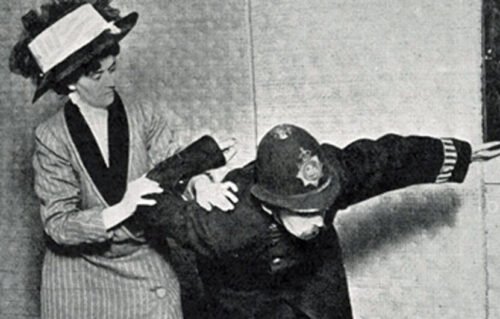
Developed during the women’s suffrage movement, Suffrajitsu adapted jujutsu and practical self-defence methods to help women protect themselves during demonstrations and public activism. It remains one of the most unusual and historically significant examples of martial arts being used as a tool for social change.

Suffragette practising self-defence techniques inspired by jiu-jitsu and other martial arts during the campaign for women's voting rights in Britain.

Developed during the women’s suffrage movement, Suffrajitsu combined self-defence and martial arts training to help activists protect themselves during protests and arrests.

Suffrajitsu emerged from a period of political tension in which many suffragettes faced harassment, assault, and arrest while campaigning for women’s voting rights. Rather than relying solely on protest, some activists learned practical self-defence skills to protect themselves and fellow campaigners.

Key themes include:

  • Self-Protection: Escaping holds, restraining techniques, and common assaults.
  • Leverage Over Strength: Using technique and body mechanics to overcome larger opponents.
  • Defensive Grappling: Controlling or disrupting attackers without relying on striking power.
  • Situational Awareness: Recognising danger and creating opportunities to escape.
  • Group Protection: Assisting fellow demonstrators and maintaining cohesion during confrontations.
  • Empowerment Through Training: Building confidence and independence through practical skills.

Unlike most martial arts of the period, Suffrajitsu was closely linked to a political movement rather than sport, military training, or duelling culture. Its legacy serves as a reminder that martial arts can be used not only for combat, but also for personal empowerment, self-defence, and social change.

🇬🇧 Military Combatives

Modern British military combatives trace much of their heritage to the work of William Fairbairn and Eric Sykes, whose experiences in policing and wartime training helped shape a practical approach to close-quarters combat. Designed for soldiers operating under extreme stress, these systems prioritise simple, effective techniques that can be applied quickly and decisively.

Military combatives are built around the realities of combat rather than sporting competition. Training focuses on preparing personnel to function effectively under stress, fatigue, and uncertainty, often in environments where hesitation can have serious consequences.

Key themes include:

  • Simplicity: Techniques must be easy to learn, retain, and apply under pressure.
  • Aggression: Taking initiative and maintaining momentum during an encounter.
  • Close-Range Fighting: Operating effectively in confined spaces and at grappling distance.
  • Weapon Integration: Understanding the relationship between unarmed skills and weapons.
  • Stress Conditioning: Training to perform while fatigued, distracted, or under psychological pressure.
  • Mission Focus: Using force to accomplish an objective rather than to win a sporting contest.

Modern military combatives continue to evolve by incorporating lessons from boxing, wrestling, Judo, Brazilian Jiu-Jitsu, MMA, and battlefield experience. While training methods have changed, the underlying principle remains similar to Fairbairn’s original philosophy: keep it simple, make it practical, and ensure it works when it matters most.

💬 Discussion

🪖 Combat Under Pressure

One of the defining characteristics of the British martial tradition is its emphasis on testing techniques through competition and live practice. From bare-knuckle prizefights and regional wrestling contests to military training and practical self-defence, effectiveness was measured by results rather than reputation. Techniques survived because they worked under pressure, while ineffective methods were gradually discarded.

This emphasis on live testing helped create fighters who were expected to adapt, improvise, and perform against resisting opponents rather than simply demonstrate technical knowledge. The same mindset can be seen across British boxing, Catch Wrestling, military combatives, and many later combat sports. This culture of pressure testing became a defining feature of British martial traditions and would later influence combat sports, military programmes, and self-defence systems around the world.

⚠️ Reality vs Representation

British martial traditions are sometimes portrayed as highly structured systems, but the reality was often far messier. Early prizefights could last for hours, wrestling rules varied from region to region, and many self-defence methods evolved through trial and error rather than formal instruction.

Success depended on far more than technical knowledge alone. Physical conditioning, toughness, adaptability, and the ability to perform under pressure frequently mattered just as much as skill. Even the most sophisticated systems ultimately had to prove themselves against resisting opponents rather than cooperative training partners.

Modern practitioners benefit from safer training methods, standardised rules, and a deeper understanding of coaching and sports science. Yet the central lesson remains unchanged: techniques mean little unless they can be applied effectively under pressure.

🧠 Closing Perspective

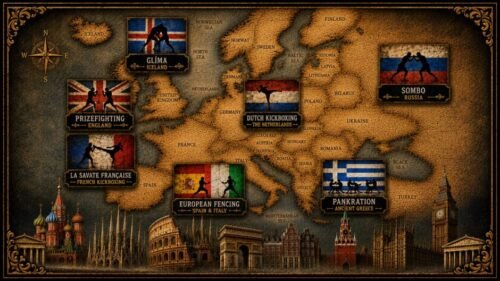
The martial traditions of the British Isles occupy a unique position within European combat. While other regions became known for fencing schools, duelling systems, or military doctrines, Britain, Ireland, and Scotland helped develop many of the foundations of modern combat sport and practical self-defence.

From boxing and Catch Wrestling to Bataireacht, Bartitsu, and Defendu, these systems emphasised pressure, practicality, and adaptation. Their history also reflects a broader European trend: the gradual transition from battlefield skills and local traditions to organised sport, structured training, and modern self-defence systems.

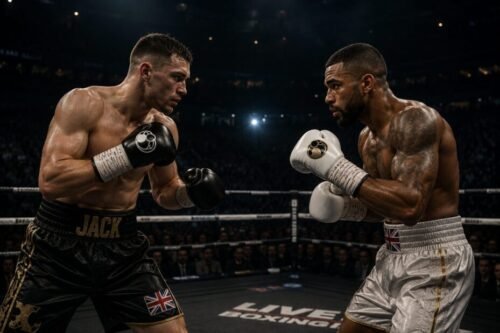
Two professional boxers square off beneath arena lights in a modern championship ring, showcasing the speed, skill, and athleticism of contemporary boxing.

From the sawdust pits of the bare-knuckle era to sold-out arenas watched by millions, boxing has evolved into one of the world’s most respected combat sports while retaining many of the principles forged in Britain’s early fighting traditions.

In many ways, the British Isles helped accelerate that transformation. The emphasis on competition, pressure testing, and practical application not only shaped British martial traditions but also influenced the development of modern boxing, grappling, combatives, and mixed martial arts around the world.

If you have enjoyed this post please share or feel free to comment below 🙂

Leave a Reply

Your email address will not be published. Required fields are marked *

This site uses Akismet to reduce spam. Learn how your comment data is processed.

error: Content is protected !!

Join the Super Soldier Project Mailing List Today!!