πŸ‡·πŸ‡Ί Eastern Europe β€” Sambo, Wrestling & Combat Systems

From folk wrestling traditions and Sambo to military combatives and modern MMA, Eastern Europe’s martial arts are built on a simple principle: gain control, apply pressure, and solve the problem efficiently.

Table of Contents

πŸ”₯ Introduction

Eastern Europe has produced some of the most effective combat athletes and martial systems in the modern world.

The region’s martial culture was shaped by centuries of warfare, frontier conflict, wrestling traditions, military requirements, and later state-sponsored sports programmes. This created an environment where techniques were constantly tested, refined, and adapted.

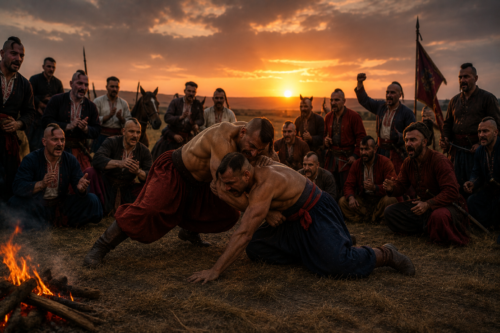
Two Cossack wrestlers grappling beside an evening campfire on the Eastern European steppes, reflecting the region's traditions of wrestling, toughness, and martial skill.

The frontier cultures of Eastern Europe helped shape a martial heritage that continues to produce world-class wrestlers, fighters, and combat athletes today.

Unlike the technical weapon traditions of Southern Europe or the sporting culture of the British Isles, Eastern European systems place particular emphasis on control, physical toughness, and practical application.

The result is a martial landscape that has produced world-class wrestlers, boxers, judoka, Sambo practitioners, military combatives instructors, and MMA champions.

🀼 Wrestling Foundations

The Base Layer

Before the rise of Sambo and modern combat systems, Eastern Europe possessed a rich tradition of wrestling styles shaped by local culture, military preparation, and competitive sport. These arts emphasised balance, control, toughness, and the ability to dominate opponents at close range.

πŸ‡·πŸ‡Ί Russian Belt Wrestling

Traditional belt wrestling styles found throughout Russia emphasise controlling the opponent through grips and off-balancing. Competitors maintain control of belts, jackets, or fixed grips while attempting to execute clean and decisive throws.

The defining feature of Russian Belt Wrestling is the constant connection between opponents. Because grips are established from the outset, competitors spend less time hand-fighting and more time attempting to manipulate posture, balance, and positioning to create throwing opportunities.

Key themes include:

  • Grip Dominance: Maintaining strong control over the belt or jacket throughout the contest.
  • Off-Balancing: Creating instability before committing to a throw.
  • Throwing Mechanics: Using leverage, timing, and body positioning rather than brute strength alone.
  • Hip and Leg Attacks: Employing sweeps, reaps, and hip-based throwing techniques.
  • Positional Awareness: Recognising subtle shifts in balance and exploiting them immediately.
  • Efficiency: Seeking clean, decisive techniques rather than prolonged struggles.

Because competitors begin with an established grip, Russian Belt Wrestling places a premium on sensitivity, timing, and mechanical efficiency. Many of its principles can also be seen in other grappling traditions, including Judo, Sambo, and regional wrestling styles throughout Eastern Europe and Central Asia.

πŸ‡·πŸ‡Ί Cossack Wrestling Traditions

Within Cossack warrior culture, wrestling formed part of broader combat preparation. Training emphasised toughness, aggression, physical resilience, and the ability to dominate an opponent at close range.

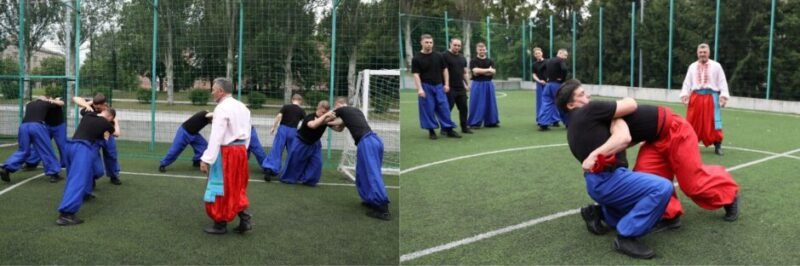
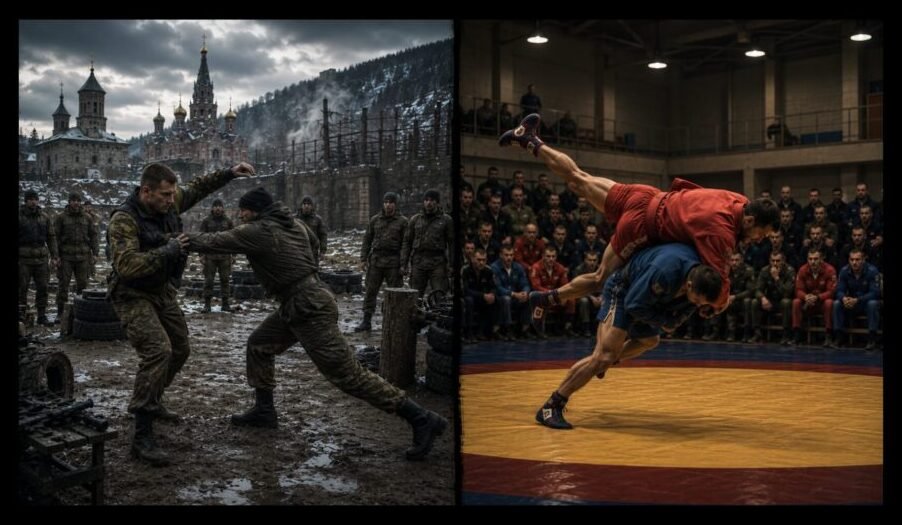
Cossack warriors engaged in traditional wrestling and hand-to-hand combat training on the steppes, demonstrating strength, balance, and grappling skills.

Cossack wrestling and hand-to-hand combat traditions helped lay the foundations for many of the grappling and combat systems that later emerged across Eastern Europe.

Cossack wrestling reflects the practical mindset of a warrior culture where physical confrontation was regarded as a normal part of life. Practitioners sought to overwhelm opponents through pressure, strength, and decisive action, using grappling as a means of controlling and neutralising resistance.

Key themes include:

  • Clinch Dominance: Securing strong positions and preventing opponents from creating space.
  • Aggressive Pressure: Constantly forcing the action rather than reacting passively.
  • Throws and Takedowns: Bringing opponents off balance and driving them to the ground.
  • Physical Resilience: Developing the strength and toughness needed for prolonged struggle.
  • Adaptability: Adjusting tactics to suit different opponents and circumstances.
  • Functional Movement: Emphasising practical techniques that work under resistance.

Rather than focusing on sporting competition alone, Cossack wrestling developed alongside a broader martial culture that valued toughness, initiative, and the ability to prevail in unpredictable situations. These qualities continue to influence how the tradition is viewed and practised today.

⏳ The Cossack Warrior Tradition

The Cossacks developed a reputation as some of Eastern Europe’s most capable frontier warriors and light cavalry.

Their culture placed a strong emphasis on horsemanship, weapons training, wrestling, physical toughness, and self-reliance. Wrestling was only one component of a broader martial tradition built around survival and warfare.

πŸ‡ΊπŸ‡¦ Combat Hopak

Combat Hopak combines elements of traditional Ukrainian dance with strikes, kicks, throws, and acrobatic movement. Often compared to Capoeira due to its blend of cultural performance and combat application, it represents one of Eastern Europe’s most distinctive modern martial arts.

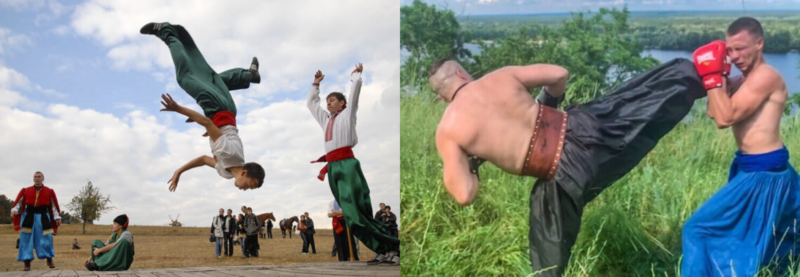
Combat Hopak blends Ukrainian cultural traditions with martial techniques, combining agility, acrobatics, and dynamic striking.

Combat Hopak places a strong emphasis on movement, rhythm, and body control. Practitioners develop the ability to generate power from dynamic footwork and flowing transitions, using mobility and athleticism to create offensive and defensive opportunities.

Key themes include:

  • Dynamic Kicking: A wide variety of kicking techniques delivered from multiple angles.
  • Mobility: Constant movement designed to create openings and avoid attacks.
  • Body Control: Developing balance, coordination, and spatial awareness.
  • Acrobatic Movement: Jumps, spins, and aerial techniques that enhance agility and athleticism.
  • Striking and Grappling Integration: Combining punches, kicks, throws, and takedowns into a unified system.
  • Cultural Expression: Preserving Ukrainian traditions while adapting them to a modern martial framework.

Unlike purely sporting systems, Combat Hopak places equal value on physical development, cultural identity, and martial training. Its combination of athletic movement and combat techniques makes it one of the most visually distinctive martial arts in Eastern Europe.

⏳ The Soviet Sports Machine

The Soviet Union invested heavily in combat sports as part of physical culture and military preparedness.

Wrestling, boxing, Judo, and Sambo received significant state support, producing generations of highly skilled athletes and helping establish Eastern Europe as one of the world’s great combat sports regions.

This system would heavily influence the development of Sambo and many of the martial arts that followed.

πŸ₯‹ Sambo β€” The Core System

If one martial art defines Eastern Europe’s contribution to modern combat, it is Sambo. Drawing upon wrestling traditions, Judo, and military requirements, Sambo became the foundation from which many of the region’s most successful combat athletes and fighting systems would emerge.

πŸ‡·πŸ‡Ί Sport Sambo

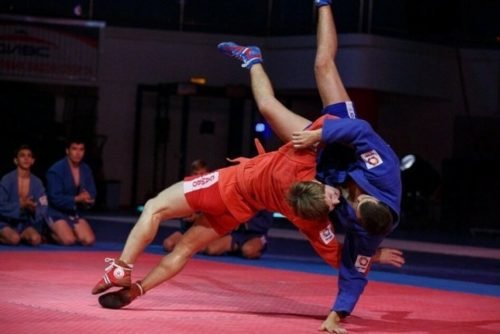
Developed during the early Soviet period, Sport Sambo integrated Russian wrestling traditions with Judo and other grappling systems. It focuses on dynamic throws, rapid transitions, leg locks, and continuous offensive pressure.

A Sport Sambo competitor executing a powerful suplex during a match, demonstrating the throws and wrestling techniques that define the sport.

Sport Sambo places a strong emphasis on throws, takedowns, and control, producing some of the world’s most accomplished grapplers.

Sport Sambo rewards initiative and momentum. Competitors are encouraged to attack constantly, using throws, submissions, and positional transitions to keep opponents under pressure and prevent them from settling into a defensive rhythm.

Key themes include:

  • Dynamic Throws: Fast, explosive takedowns designed to score immediately or create dominant positions.
  • Continuous Transitions: Moving quickly between attacks without allowing opponents time to recover.
  • Leg Locks: A hallmark of the system, with a strong emphasis on attacking the lower body.
  • Positional Awareness: Maintaining control while creating opportunities for further attacks.
  • Aggressive Tempo: Forcing the pace and dictating the flow of the contest.
  • Live Resistance: Techniques are refined through sparring and competition against resisting opponents.

Unlike many grappling systems that prioritise prolonged positional control, Sport Sambo often rewards decisive action and rapid offensive sequences. Its blend of throwing, submissions, and relentless pressure has made it one of the most influential grappling styles in modern combat sports and a major contributor to the success of many Eastern European fighters.

πŸ‡·πŸ‡Ί Combat Sambo

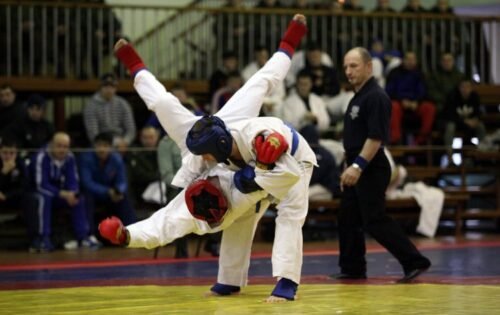
Combat Sambo expands the system by incorporating punches, kicks, clinch fighting, takedowns, and ground control. Originally developed for military and law-enforcement use, it remains one of the most complete combat sports in the world.

Two Combat Sambo competitors exchanging punches during a match while wearing protective headgear and gloves.

Combat Sambo expanded upon Sport Sambo’s wrestling foundation, combining striking and grappling in a format that anticipated modern MMA.

Combat Sambo is built around seamless transitions between striking and grappling. Rather than treating these as separate phases of combat, practitioners learn to combine them continuously, using strikes to create takedown opportunities and grappling to set up submissions or further attacks.

Key themes include:

  • Striking and Grappling Integration: Combining punches, kicks, takedowns, and submissions into a single fighting system.
  • Clinch Dominance: Controlling opponents at close range while creating opportunities to strike or throw.
  • Aggressive Transitions: Moving rapidly between ranges to maintain initiative.
  • Submission Threats: Applying chokes and joint locks whenever openings appear.
  • Pressure Fighting: Constantly forcing opponents to react rather than dictate the pace.
  • Competitive Realism: Training against resisting opponents under rules that encourage a broad range of techniques.

Unlike many combat sports that specialise in a single area, Combat Sambo rewards versatility and adaptability. Competitors must be comfortable striking, wrestling, and grappling, making it one of the closest sporting approximations to full-spectrum combat.

⏳ Sambo and MMA

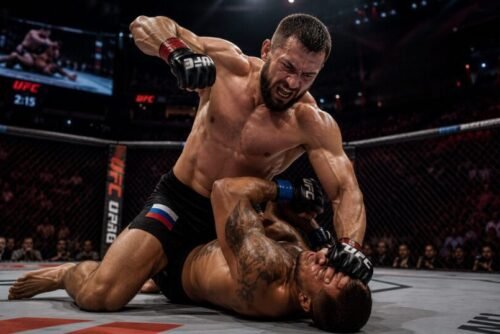
Many of Eastern Europe’s most successful MMA fighters emerged from Sambo backgrounds. The system’s blend of takedowns, clinch work, submissions, positional control, and striking provides a natural foundation for mixed martial arts, where athletes must operate effectively across multiple ranges.

Unlike specialists who focus primarily on striking or grappling, Sambo practitioners are accustomed to transitioning rapidly between phases of combat, making the adjustment to MMA comparatively smooth.

Champions such as Fedor Emelianenko, Khabib Nurmagomedov, and Islam Makhachev helped showcase Sambo’s effectiveness on the world stage, while numerous other fighters from Russia, Ukraine, Georgia, and across Eastern Europe continue to demonstrate its influence in modern MMA.

πŸͺ– Military Combatives β€” Applied Systems

Beyond sporting competition, Eastern Europe developed a range of military and security-oriented systems designed for practical application. These arts prioritise adaptability, efficiency, and performance under pressure, reflecting the realities of military service and law-enforcement work.

πŸ‡·πŸ‡Ί Rukopashny Boi

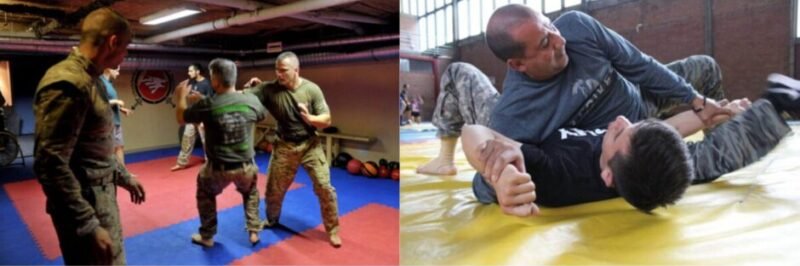
Rukopashny Boi is a broad term describing hand-to-hand combat methods used by Russian military and law-enforcement personnel. Drawing from wrestling, boxing, Sambo, and weapon defence, it focuses on practical solutions to unpredictable situations.

Two practitioners demonstrating Rukopashny-Boi techniques, combining striking, wrestling, throws, and close-quarters combat skills.

Like Combat Sambo, Rukopashny-Boi blends striking and grappling, continuing Eastern Europe’s tradition of practical hybrid fighting systems.

Rukopashny Boi emphasises functionality over style. Practitioners are trained to respond quickly to changing circumstances, applying simple and effective techniques while maintaining control of the situation.

Key themes include:

  • Close-Quarters Fighting: Operating effectively at striking, clinching, and grappling range.
  • Scenario-Based Training: Practising against realistic and unpredictable threats.
  • Rapid Decision-Making: Recognising opportunities and responding under pressure.
  • Weapon Awareness: Understanding how weapons can influence distance, tactics, and risk.
  • Control and Neutralisation: Stopping threats efficiently rather than engaging in prolonged exchanges.
  • Stress Performance: Maintaining effectiveness while fatigued, distracted, or under psychological pressure.

Unlike competitive combat sports, Rukopashny Boi is designed around practical problem-solving rather than winning matches. Its blend of striking, grappling, and situational training reflects the demands placed upon military and law-enforcement personnel operating in uncertain environments.

πŸ‡·πŸ‡Ί Systema

Systema emphasises natural movement, breathing, relaxation, and fluid adaptation under pressure. Rather than relying on fixed techniques, practitioners learn to respond dynamically to changing circumstances.

Systema practitioners demonstrating fluid movement, striking, and defensive techniques, emphasising relaxation, breathing, and adaptability.

Systema reflects a modern Russian approach to combat, emphasising adaptability, efficiency, and performance under stress.

Systema approaches combat as a process of problem-solving rather than the application of predetermined techniques. Practitioners seek to remain calm, mobile, and aware, allowing them to adapt to whatever situation develops rather than forcing a specific response.

Key themes include:

  • Breathing: Using controlled breathing to manage tension, fatigue, and stress.
  • Relaxed Movement: Reducing unnecessary muscular tension to improve efficiency and responsiveness.
  • Mobility: Maintaining freedom of movement rather than becoming fixed in rigid positions.
  • Awareness: Recognising changes in distance, timing, and intent.
  • Adaptability: Responding to problems as they arise rather than relying on memorised sequences.
  • Stress Management: Developing the ability to function effectively under pressure.

Systema places considerable emphasis on principles rather than techniques. Supporters argue that this encourages creativity and adaptability, while critics contend that training quality can vary significantly between instructors. As with many martial arts, effectiveness depends heavily on how principles are trained, tested, and applied in practice.

πŸ‡·πŸ‡Ί Kadochnikov System

The Kadochnikov System applies principles of physics, leverage, and biomechanics to combat. Its emphasis lies in using structure and positioning rather than physical strength to solve tactical problems.

The Kadochnikov System views combat through the lens of mechanics and efficiency. Rather than focusing on memorising large numbers of techniques, practitioners learn to understand how balance, leverage, and body structure influence movement and control.

Key themes include:

  • Leverage: Using mechanical advantage to overcome larger or stronger opponents.
  • Body Structure: Maintaining efficient alignment to maximise stability and force generation.
  • Balance Manipulation: Disrupting an opponent’s posture before applying a technique.
  • Movement Efficiency: Eliminating unnecessary effort and conserving energy.
  • Problem Solving: Applying underlying principles rather than relying solely on fixed responses.
  • Biomechanical Understanding: Using knowledge of human movement to improve control and effectiveness.

Unlike systems that emphasise speed, power, or aggression, the Kadochnikov System seeks to achieve results through superior mechanics and positioning. Its analytical approach has earned it a reputation as one of the more technically minded combat systems to emerge from Eastern Europe, appealing to practitioners interested in the scientific side of martial arts.

πŸ‡·πŸ‡Ί ARB (Army Hand-to-Hand Combat)

ARB combines striking and grappling within a structured competitive format derived from military training. It allows practitioners to pressure-test techniques in a controlled but highly demanding environment.

ARB is designed to bridge the gap between combat sport and military combatives. Practitioners are encouraged to apply techniques against fully resisting opponents, developing the timing, composure, and resilience needed to perform under pressure.

Key themes include:

  • Pressure Testing: Techniques are refined through regular sparring and live competition.
  • Integrated Combat: Combining striking, clinch fighting, takedowns, and ground work.
  • Controlled Aggression: Maintaining offensive initiative without sacrificing discipline or technique.
  • Physical Conditioning: Developing the strength, endurance, and durability required for demanding exchanges.
  • Competitive Realism: Operating under rules that encourage a broad range of practical techniques.
  • Mental Resilience: Learning to make effective decisions while fatigued and under pressure.

Unlike purely military training systems, ARB provides a competitive environment in which practitioners can regularly test their skills against resisting opponents. This emphasis on live application has helped make it one of Eastern Europe’s most respected military-derived combat sports, combining practicality with the benefits of structured competition.

πŸ›‘οΈ Modern Self-Defence Systems

Not every Eastern European martial art was developed for the battlefield or the sporting arena. Some systems focus primarily on personal protection, conflict management, and practical self-defence, adapting traditional principles to modern security concerns.

πŸ‡·πŸ‡Έ Real Aikido

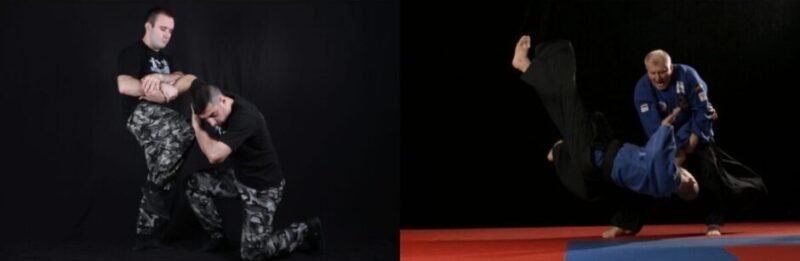
Developed in Serbia by Ljubomir VračareviΔ‡, Real Aikido combines elements of Aikido, Judo, and Jujutsu while simplifying techniques for practical use. The system focuses on controlling aggressive situations, defensive responses, and weapon threats.

Practitioners demonstrating Real Aikido techniques, including joint locks, throws, and defensive responses designed for practical self-defence situations.

Developed by Ljubomir VračareviΔ‡, Real Aikido combines elements of Aikido, Judo, and Jujutsu into a practical self-defence system.

Real Aikido places a strong emphasis on controlling confrontations safely and efficiently. Rather than engaging in prolonged exchanges, practitioners aim to neutralise threats through positioning, leverage, and restraint techniques that can be applied under pressure.

Key themes include:

  • Control and Restraint: Managing opponents through locks, holds, and positional control.
  • Defensive Responses: Reacting to common attacks with simple, repeatable actions.
  • Weapon Awareness: Addressing threats involving knives, clubs, and other handheld weapons.
  • De-Escalation: Creating opportunities to disengage or resolve situations without unnecessary force.
  • Mechanical Efficiency: Using leverage and body positioning rather than relying on strength alone.
  • Scenario Training: Practising responses to realistic self-defence situations.

Unlike many competitive combat sports, Real Aikido is primarily concerned with personal protection and security applications. Its focus on control, restraint, and practical decision-making has made it popular among civilians, security personnel, and self-defence practitioners seeking an approach centred on managing conflict rather than winning contests.

🌍 Beyond Russia

Eastern Europe's Wider Wrestling Heritage

While Sambo and Russian combat systems dominate much of the modern discussion, they emerged from a region with a long and diverse wrestling culture.

Across Eastern Europe, local wrestling traditions developed as methods of competition, physical conditioning, military preparation, and cultural expression.

Notable examples include:

  • πŸ‡¬πŸ‡ͺ Chidaoba (Georgia).
  • πŸ‡·πŸ‡΄ TrΓ’ntΔƒ (Romania).
  • πŸ‡§πŸ‡¬ Bulgarian Wrestling Traditions.
  • πŸ‡ΊπŸ‡¦ Cossack Wrestling Traditions.
  • 🀼 Greco-Roman Wrestling, which became one of Eastern Europe’s great sporting strengths.

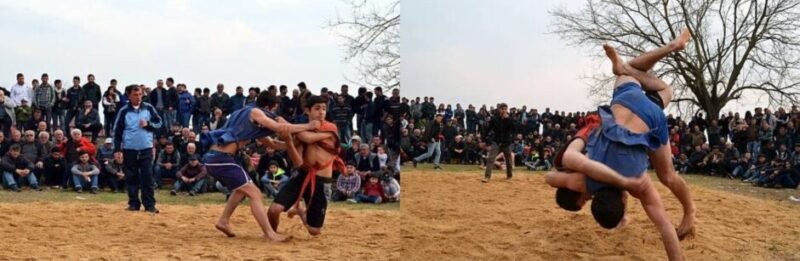
Two wrestlers competing in a Chidaoba match, demonstrating the throws, balance, and grappling techniques of Georgia’s national wrestling style.

Together, these traditions demonstrate that wrestling has long been one of Eastern Europe’s most enduring martial languages, providing the foundation upon which many modern combat systems were later built.

πŸ’¬ Discussion

βš”οΈ Beyond Empty-Hand Combat

Eastern Europe’s martial heritage extends far beyond wrestling and hand-to-hand combat. The region also produced influential weapon traditions, including Polish sabre fencing, Hungarian sabre systems, Cossack weapon arts, and numerous military fencing traditions.

Many of these systems declined with changing military technology, while others evolved into sporting or military disciplines. Today, growing interest in historical martial arts has led to renewed efforts to preserve, study, and reconstruct these traditions.

⚠️ Reality vs Representation

Some Eastern European systemsβ€”particularly Systemaβ€”are often misunderstood, either through exaggerated claims or unrealistic demonstrations.

As with any martial art, effectiveness depends less on the name of the system and more on how it is trained. Quality instruction, live resistance, pressure testing, and consistent practice remain the foundations of functional skill regardless of style.

Ultimately, Eastern Europe’s reputation was not built on theory or marketing. It was built through competition, military service, and generations of athletes proving their skills against resisting opponents.

⏳ Why Eastern Europe Produces Fighters

Eastern Europe maintains a strong culture of wrestling, boxing, Judo, Sambo, and combat sports. Combined with rigorous coaching systems, state-supported athletic development, and a tradition of competitive toughness, this has produced a disproportionate number of elite fighters relative to population size.

From Olympic wrestling mats to MMA championships, the region continues to punch well above its weight.

🧠 Closing Perspective

Eastern Europe’s martial traditions were shaped by harsh environments, military demands, competitive sport, and a long history of physical culture. While the systems themselves vary widely, they tend to share a common philosophy: practicality over ornamentation and effectiveness over theory.

Whether expressed through wrestling, Sambo, military combatives, or modern self-defence systems, the emphasis remains remarkably consistent:

  • Gain control.
  • Apply pressure.
  • Adapt to the situation.
  • Solve the problem efficiently.

Eastern Europe’s dominance in modern MMA is no accident, it is the product of centuries of wrestling traditions, combat sports, and practical fighting systems.

This focus on functionality has helped Eastern European martial arts influence modern MMA, military training, combat sports, and self-defence systems across the world. More than perhaps any other region in Europe, Eastern Europe demonstrates what happens when martial arts are developed with one question in mind:

Does it work?

If you have enjoyed this post please share or feel free to comment below πŸ™‚

Leave a Reply

Your email address will not be published. Required fields are marked *

This site uses Akismet to reduce spam. Learn how your comment data is processed.

error: Content is protected !!

Join the Super Soldier Project Mailing List Today!!