







You can’t out-train poor nutritional foundations. Before worrying about supplements, meal timing or the latest dietary trends, learn what your body needs to fuel performance, support recovery and maintain long-term health.
📑 Table of Contents
🔥 Introduction
Good nutrition is often buried beneath conflicting advice, fashionable diets and endless rules about what you should or shouldn’t eat. Strip away the noise, however, and the fundamentals are straightforward: provide your body with enough energy, essential nutrients and adequate fluid to support health, training and recovery.
The details will differ depending on your goals. Someone looking to lose body fat won’t necessarily eat the same way as someone building muscle or training for endurance. The underlying principles remain broadly consistent, but how you apply them depends on your individual needs.
Good nutrition starts with variety. Combining appropriate energy intake with protein, carbohydrates, healthy fats and micronutrient-rich foods helps support health, training, recovery and adaptation.
This first post explains those foundations and how to put them into practice. The remaining four explore energy balance, macronutrients, portion control and meal planning, giving you the knowledge and tools to make informed nutritional decisions without unnecessary complications.
🥗 What Is Optimal Nutrition?
Optimal nutrition isn’t about following a particular diet or eating the same foods as everyone else. It’s about meeting your individual nutritional needs through a balanced, varied and sustainable approach to eating.
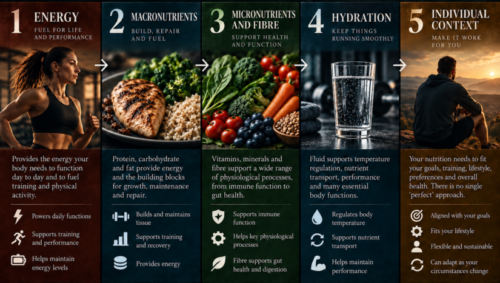
Good nutrition involves more than calories. Energy, macronutrients, micronutrients, fibre and hydration must work together within an approach suited to the individual.
⚙️ The Foundations
Protein, carbohydrates and fats are the three main energy-yielding macronutrients. Protein supports muscle growth and tissue repair, carbohydrates provide fuel for everyday activity and training, while dietary fats contribute to cell structure and help the body absorb certain vitamins.
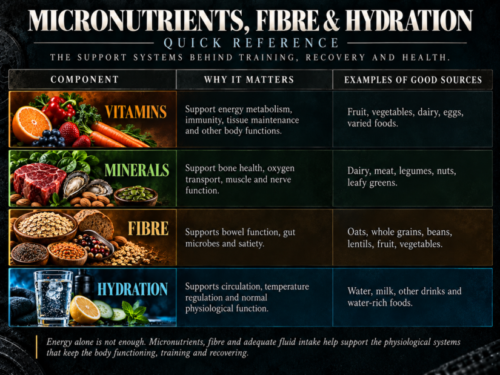
Alongside these, micronutrients — vitamins and minerals — support essential functions throughout the body. Fibre contributes to digestive health, while adequate hydration supports normal physiological function and physical performance.
Each has a role to play. Eating enough calories doesn’t necessarily mean getting all the nutrients your body needs, which is why dietary variety and food quality matter.
🔁 Consistency Over Perfection
Good nutrition isn’t determined by one meal or an occasional indulgence. It’s the overall pattern of eating across days and weeks that counts.
Your requirements will also vary with body size, activity, training demands and personal goals. An endurance athlete, a strength athlete and someone exercising recreationally may need different amounts and combinations of food.
The fundamentals remain the same: meet your nutritional needs through an approach that works for you and can be maintained consistently.
Vitamins, minerals, fibre and adequate hydration support the physiological processes behind everyday health, training and recovery.
🧱 Getting Your House in Order
Understanding nutrition is one thing. Putting it into practice is another. Fortunately, eating well doesn’t require elaborate meal plans or constant calculations. A few reliable habits can provide the foundation for a healthier, more effective diet.
Eat poorly, get poor results. Fuel properly, and performance follows.
🍽️ Build the Base
Start with a varied selection of nutritious, everyday foods. Lean meats, fish, eggs, dairy, beans, whole grains, fruit, vegetables, nuts and healthy fats can all contribute to a balanced diet.
Rather than worrying about every individual nutrient, use a simple approach when putting meals together:
Protein: Include a suitable source to support muscle maintenance, growth and repair.
Carbohydrates: Add foods such as potatoes, rice, oats or whole grains to help fuel daily activity and training.
Fruit and vegetables: Provide fibre, vitamins and minerals.
Healthy fats: Include foods such as olive oil, nuts, seeds or oily fish.
You don’t need every meal to follow an identical formula. Variety across the day matters more than making every plate perfect.
Nor does nutritious food have to be fresh or completely unprocessed. Frozen vegetables, canned beans, yoghurt and tinned fish are all examples of processed foods that can contribute to a healthy diet. What matters is their nutritional value and how they fit into your overall eating pattern.
A good diet is built across days and weeks, not judged by a single plate. Variety, consistency and the overall pattern of intake matter more than trying to make every individual meal perfect.
⚖️ Portions and Hydration
Even nutritious foods provide calories, so how much you eat matters alongside what you eat. Portion sizes should reflect your activity, appetite and goals, whether you’re looking to lose body fat, build muscle or maintain your current weight.
Hydration deserves attention too. Drink regularly throughout the day, using thirst and activity levels as practical guides. Longer sessions, heavy sweating and hot conditions may require additional fluid and sometimes electrolytes, but an ordinary workout doesn’t automatically call for a sports drink.
You don’t need to abandon favourite foods or follow a rigid eating schedule. Build a routine around sensible portions, balanced meals and adequate hydration — one that fits your lifestyle and is easy enough to repeat.
⚡ What Happens When You Get This Right
Training provides the stimulus for improvement, but nutrition supplies the energy and building materials your body needs to respond. When your diet consistently supports those demands, the benefits extend beyond the gym to everyday health and wellbeing.
Performance is not built by training alone. Good nutrition helps fuel the work, support recovery and provide the resources the body needs to adapt over time.
💪 The Benefits of Eating Well
Energy and Performance: Adequate calorie intake helps sustain physical activity and training intensity. Carbohydrates are particularly important for fuelling longer, harder or repeated sessions, helping you maintain performance as demands increase.
Recovery and Muscle Growth: Exercise places demands on muscles and energy stores. Protein supplies the amino acids needed for tissue repair and muscle growth, while carbohydrates help replenish glycogen used during training. Sufficient overall energy supports these recovery and adaptation processes.
Body Composition: Matching calorie intake to your goals, alongside adequate protein and resistance training, helps you manage body fat while supporting muscle maintenance or growth.
Focus and Concentration: Adequate nutrition and hydration support normal cognitive function, helping you maintain concentration and mental performance throughout daily activities.
Long-Term Health: A varied diet providing sufficient fibre, vitamins, minerals and other essential nutrients supports cardiovascular, digestive and immune health, while helping reduce the risk of certain chronic diseases.
🎯 The Bigger Picture
These benefits develop through consistent nutritional support rather than individual meals or short-term dietary fixes. Good nutrition won’t replace effective training, appropriate recovery or healthy lifestyle habits, but it provides an essential foundation for all three.
☠️ What Happens When You Get It Wrong
Poor nutrition doesn’t always produce immediate problems. You might continue training, working and getting through your day without noticing much difference. But over time, eating too little, too much or failing to get the nutrients your body needs can undermine performance, recovery and long-term health.
Poor nutrition can gradually undermine energy, training performance, recovery and long-term health. Consistently under-fuelling, inadequate nutrient intake and poorly balanced eating habits can all take their toll.
⚠️ The Consequences of Poor Nutrition
Low Energy and Poor Performance: Consistently eating too little for your activity and training demands can leave you fatigued, struggling to maintain intensity and finding previously manageable sessions increasingly difficult.
Slower Recovery: Inadequate energy and protein can compromise tissue repair and training adaptation, making it harder to recover between demanding sessions and maintain progress.
Unwanted Weight Changes: Regularly consuming more energy than you expendencourages weight gain, while excessive calorie restriction can lead to unwanted muscle loss alongside body fat.
Nutritional Deficiencies: A limited or poorly balanced diet may leave you short of essential vitamins, minerals and other nutrients, affecting everything from normal immune function to bone health.
Long-Term Health Risks: Dietary patterns consistently high in saturated fat and salt, or lacking sufficient fibre and nutritious foods, can increase the risk of cardiovascular disease and other chronic health problems.
🔋 The Problem With Under-Fuelling
For active individuals, consistently failing to eat enough to support training and normal bodily functions deserves particular attention. Prolonged low energy availability can affect recovery, bone health, hormonal function and performance.
This can result from aggressive dieting, but it can also happen unintentionally when training demands increase without a corresponding increase in food intake. A sensible calorie deficit isn’t automatically harmful; the concern is allowing the shortfall to become excessive or persistently inadequate for your needs.
Persistent fatigue, declining performance and unusually poor recovery may be warning signs, although these symptoms can have other causes and warrant medical assessment if they continue.
The answer isn’t always to eat more, eat less or reach for supplements. Start by considering whether your overall intake, food choices and eating habits adequately support what you’re asking your body to do.
💊 Supplementation
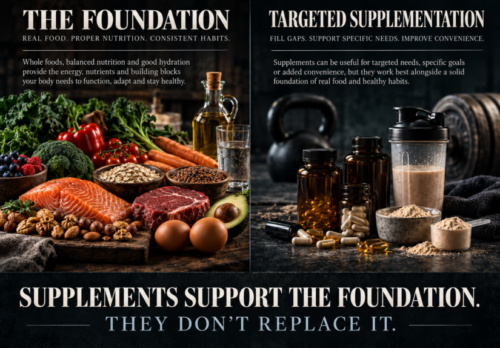
Supplements can be useful, but they’re exactly what the name suggests — an addition to your diet, not a replacement for good nutrition.
Products such as protein powders and creatine can offer practical benefits when used appropriately. Protein powders provide a convenient way to meet your daily protein requirements, while creatine monohydrate can improve strength and performance during repeated high-intensity efforts, as well as support muscle growth alongside resistance training.
Vitamin and mineral supplements may also be beneficial when dietary intake is inadequate, a deficiency is identified or specific health needs require them. However, taking additional nutrients when you’re already getting enough doesn’t automatically improve health or performance.
Supplements can address specific nutritional needs or offer convenience, but they work best alongside adequate energy intake, a varied diet and consistent eating habits.
🎯 Food First, Supplements Second
Build your diet around nutritious foods, adequate energy, balanced meals and consistent hydration. Supplements can help fill nutritional gaps or support specific goals, but they cannot compensate for persistently poor eating habits.
Not every supplement is necessary, and not every product delivers on its marketing claims. Choose according to your needs and the quality of the supporting evidence, rather than the latest fitness trend.
The principle is straightforward: get the nutritional foundations right and use supplements where they offer a genuine benefit.
📌 Summary
Get the Fundamentals Right
Good nutrition begins with understanding what your body needs and building eating habits that consistently meet those requirements. Adequate energy, balanced nutrients, dietary variety and hydration provide the foundation for health, training and recovery.
Good nutrition provides the foundation for training, recovery and long-term health. The aim is not perfect eating, but a consistent, sustainable approach that supports your goals and everyday life.
🎯 Your Practical Takeaways
Eat a varied diet: Include quality sources of protein, carbohydrates, healthy fats, fruit and vegetables to cover your nutritional needs.
Match intake to your goals: Consider your activity level, training demands and whether you’re aiming to lose fat, build muscle or maintain bodyweight.
Stay hydrated: Drink regularly and account for additional fluid losses during demanding exercise.
Make consistency the priority: Focus on sustainable eating habits rather than individual meals or occasional indulgences.
Use supplements selectively: Choose products that address a genuine nutritional need or offer an established performance benefit.
You don’t need to master nutritional science to put these principles into practice. Start with the fundamentals, develop habits that fit your lifestyle and refine your approach as your needs change. The following posts will show you how.
Now that we’ve established the foundations of good nutrition, the next step is understanding how much energy your body needs and how to adjust your intake to suit your goals.
In Post 2: Energy Balance, we’ll explore the relationship between calories consumed and calories expended, and how this influences weight loss, maintenance and gain.
More importantly, you’ll learn how to estimate your energy requirements, monitor your progress and make sensible adjustments based on real-world results — without complicated calculations or obsessive tracking.
🔬 Under the Hood
Low Energy Availability and REDs
What happens when training demands exceed your nutritional support?
Low Energy Availability (LEA) occurs when the energy remaining after exercise is insufficient to adequately support the body’s other physiological functions.
When this shortfall becomes sufficiently severe or prolonged, it can contribute to Relative Energy Deficiency in Sport (REDs) — a condition affecting both male and female athletes. Potential consequences include hormonal disruption, impaired bone health, reduced immune function and declining physical performance.
Unlike ordinary tiredness after a hard session, the concern is an ongoing mismatch between training demands and nutritional support. Warning signs can include persistent fatigue, recurrent illness, poor recovery, menstrual disruption, reduced libido or repeated bone stress injuries.
Not every calorie deficit leads to REDs. The severity, duration and individual response matter. Where concerning symptoms persist, assessment by an appropriately qualified sports medicine professional or sports dietitian is advisable.
The takeaway? Fuel the work you’re asking your body to perform, even when managing body fat is part of your goal.
⚠️ Disclaimer
The information in this series provides general nutrition guidance, not personalised medical or dietary advice. Individual requirements can be affected by factors including medical conditions, allergies, diagnosed deficiencies, medications and specific health needs.
Use these principles as a practical starting point. If you require individual assessment or have a medical or nutritional concern, seek advice from an appropriately qualified healthcare professional, such as a registered dietitian.
If you have enjoyed our post please share or feel free to comment below 🙂