Fear is a poor compass. It points towards safety, familiarity, and certainty, but rarely towards growth. Learn how to stop fear making your decisions and start moving towards the life you genuinely want.
Table of Contents
🧭 Introduction
Fear is one of the most powerful forces in human life. It helped our ancestors survive predators, warfare, harsh environments, and countless other dangers. Even today, fear remains hardwired into us, warning us when something feels threatening or uncertain.
The problem is that fear does not always know the difference between genuine danger and everyday challenges. What once protected us from physical threats can now be triggered by failure, rejection, uncertainty, embarrassment, loss, and change. These fears rarely threaten our survival, yet they can still shape our decisions, limit our actions, and prevent us from reaching our potential.
Mastering Fear
The goal is not to eliminate fear. Fear is a natural part of being human and, in many situations, a useful one. The goal is to understand it, manage it, and prevent it from taking control of our decisions.
Living courageously does not mean feeling no fear. It means recognising fear for what it is and refusing to let it dictate the direction of your life. Fear is a poor compass. It points towards safety, familiarity, and certainty, but not necessarily towards growth, achievement, or fulfilment.
In this post, we will explore the nature of fear, the hidden costs of living fearfully, and practical strategies for building the confidence and resilience needed to move forward. Fear will always be part of the journey. The challenge is learning to master it rather than be mastered by it.
🚶 Moving Forward Anyway
Fear has a habit of making us believe that safety lies in retreat. When faced with uncertainty, our instinct is often to delay action, avoid confrontation, or wait for a better moment to act. We tell ourselves that we will start next week, make the decision next month, or pursue the opportunity when we feel more confident. Unfortunately, confidence rarely arrives before action. More often, it is action that creates confidence.
Fear usually points you towards safety, not necessarily towards the life you want.
Avoidance feels good in the short term because it provides immediate relief. The difficult conversation is postponed, the challenge delayed, and the decision pushed into the future. Yet while avoidance may reduce discomfort temporarily, it rarely solves the problem. Instead, fear grows larger in our imagination. What might have been a manageable obstacle becomes an intimidating source of anxiety simply because it has been left unchallenged.
The Cost of Standing Still
Many of life’s biggest regrets stem not from failure, but from inaction. Jobs never applied for. Businesses never started. Relationships never pursued. Adventures never taken. While failure is often temporary, the question of “what if?” can linger for years. Fear convinces us that avoiding risk will protect us from disappointment, yet it rarely mentions the opportunities and personal growth sacrificed in the process.
Its primary purpose is survival, not fulfilment. It points towards safety, familiarity, and certainty, but not necessarily towards growth, achievement, or the life we genuinely want. If followed blindly, fear encourages us to stay where we are rather than venture into the unknown.
Every worthwhile achievement carries some degree of uncertainty. There are no guarantees of success, and fear will often be present at the beginning of the journey. The people who achieve meaningful things are not those who never experience fear, but those who refuse to let it make their decisions.
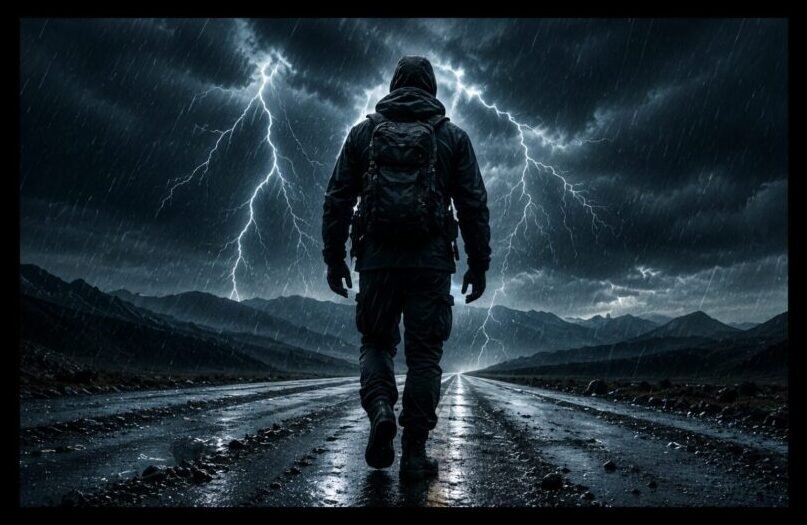
Living courageously means accepting that uncertainty is part of life. Waiting for fear to disappear is a losing strategy because it rarely disappears completely. Progress comes from moving forward despite uncertainty. Much like walking into a storm, the anticipation is often worse than the reality, and the only way through is forward.
🧠 Understanding Fear
Fear is one of humanity’s oldest survival mechanisms. Long before modern society existed, our ancestors relied upon it to identify danger and respond quickly to threats. Those who recognised risks, avoided hazards, and reacted decisively were more likely to survive. Over countless generations, fear became deeply embedded within the human nervous system and remains one of the most powerful forces influencing human behaviour today.
Fear is a survival mechanism. Problems arise when the body remains trapped in a state of constant alertness.
When the brain perceives a threat, the body prepares for action. Heart rate rises, breathing becomes faster, muscles tense, and awareness sharpens. This fight, flight, or freeze response evolved to help our ancestors survive dangerous situations and remains remarkably effective when faced with genuine physical threats.
Click on links below to read more.
Ancient Wiring in a Modern World
The problem is that while the world has changed dramatically, the human brain has not.
Thousands of years ago, fear was most often triggered by predators, warfare, starvation, hostile tribes, or harsh environmental conditions. Today, most people will never encounter these dangers, yet the same biological machinery remains active. Instead of responding to a charging animal or an enemy spear, it may be triggered by a job interview, financial uncertainty, public speaking, social rejection, or the prospect of failure.
To the primitive parts of the brain, a threat to status, security, belonging, or self-esteem can feel surprisingly similar to a threat to survival. Rationally, we may understand there is little real danger. Physically and emotionally, however, the response can feel every bit as intense.
When Fear Takes the Wheel
Fear is not the enemy. In many situations it serves a valuable purpose. It keeps us alert, encourages preparation, and prevents reckless decisions. Most people would not want to eliminate fear entirely.
Problems arise when fear stops functioning as a warning signal and starts becoming a decision-maker. Instead of helping us navigate genuine risks, it begins shaping our behaviour, narrowing our choices, and limiting our willingness to act. Opportunities are avoided, ambitions are abandoned, and comfort gradually becomes a substitute for growth.
The challenge is learning to recognise when fear is protecting you and when it is simply preventing you from moving forward.
📱The Modern Age of Fear
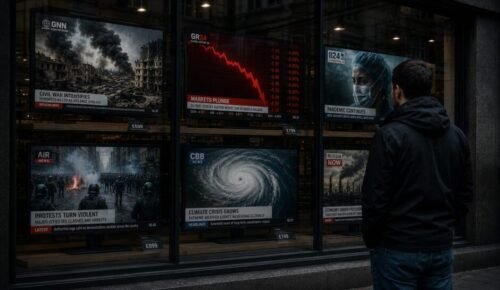
Fear has always been part of the human experience, but modern society has created entirely new ways to trigger and amplify it. Unlike our ancestors, who typically faced immediate and visible threats, we are exposed to a constant stream of information about dangers occurring across the world. Wars, economic crises, political turmoil, disease outbreaks, crime, social conflict, and environmental disasters are delivered directly to our phones, televisions, and computers every day.
Fear sells. The more attention a threat captures, the more valuable it becomes.
There is nothing inherently wrong with staying informed. Problems arise when information becomes a form of mental consumption rather than something useful or actionable. Many people spend hours each day absorbing stories about events they have little influence over, leaving them anxious, angry, and emotionally exhausted. The result is a growing sense that danger is everywhere and that disaster is always just around the corner.
Click on links below to read more.
Fear Porn and Doomscrolling
Fear captures attention. News organisations know it. Social media platforms know it. Advertisers know it. Stories that provoke outrage, anxiety, or alarm consistently generate engagement because human beings are naturally drawn towards potential threats.
The problem is that constant exposure can distort perception. When every headline predicts disaster and every social media feed is filled with conflict, it becomes easy to believe the world is spiralling out of control. Many people find themselves trapped in a cycle of doomscrolling, consuming an endless stream of bad news without ever feeling better informed or better prepared.
Being informed is useful. Living in a permanent state of anxiety is not.
Fear of Failure, Rejection, and Change
Some of the most powerful fears have nothing to do with world events. They come from within. Fear of failure prevents people from pursuing opportunities because they worry about making mistakes or looking foolish. Fear of rejection stops people from speaking up, forming relationships, taking risks, or putting themselves forward for new challenges.
These fears rarely threaten our survival, yet they can shape entire lives. Careers stagnate, ambitions are abandoned, and opportunities disappear because the discomfort of possible failure feels more threatening than remaining exactly where we are.
Human beings are creatures of habit. We naturally gravitate towards routines, familiar environments, and predictable outcomes. This is why change often feels uncomfortable, even when it has the potential to improve our lives.
A new job, a move to a different city, the start of a new relationship, or the decision to pursue a long-held goal all require stepping into uncertainty. There are no guarantees. There never have been. Yet growth and change are inseparable. Every major improvement in life requires leaving something behind and accepting that the future cannot be fully controlled.
The irony is that failure, rejection, and change are often among life’s greatest teachers. Every successful person has experienced them. The difference is that they viewed them as part of the process rather than evidence that they should stop.
🎒 A Leap in the Dark
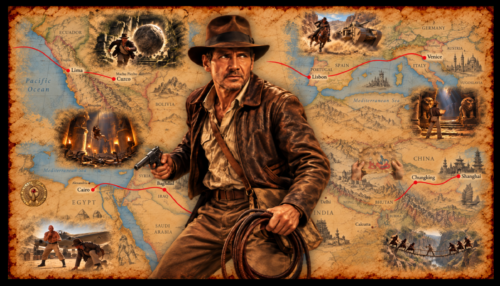
Years ago, I was living in Cheetham Hill in Manchester. It was home, familiar and comfortable, but I had always been fascinated by the wider world. As a child, my mum gave me an encyclopedia that sparked an interest in different countries, cultures, and history. From that point on, I wanted to see as much of the world as I could. There was only one problem. I kept convincing myself that I needed someone to go with me.
Like many people, I looked for reassurance. I tried repeatedly to persuade friends to join me, believing that travelling with others would make the leap easier. Each attempt ended the same way. Plans fell apart, priorities changed, and the commitment simply wasn’t there. Eventually, I realised I had a choice. I could keep waiting for the perfect circumstances and the right travelling companion, or I could go anyway. So I left.
I found work in Jordan, Israel, and Egypt and set off on what became one of the greatest adventures of my life. Looking back, the hardest part was not the travelling itself. It was making the decision to leave everything familiar behind.
Had I waited until I felt completely comfortable, I might never have gone at all. The experience changed my life, but it only became possible when I stopped waiting for fear to disappear and started moving forward despite it.
💸 The Cost of Living Fearfully
Fear often presents itself as a form of protection. It convinces us that by avoiding risks, challenges, and uncertainty, we are keeping ourselves safe from disappointment, embarrassment, failure, or loss. In some situations, caution is wise and necessary. However, when fear becomes the primary force guiding our decisions, the price can be far greater than we realise.
A life built around avoiding discomfort often becomes a life limited by it.
Many of life’s greatest opportunities arrive disguised as uncertainty. New careers, relationships, adventures, business ventures, creative projects, and personal goals all involve some degree of risk. There are no guarantees of success, which is precisely why fear appears in the first place. Yet by refusing to act, we guarantee something else: nothing changes.
Click on links below to read more.
The Regret of Inaction
One of the most common themes found in people reflecting on their lives is not regret over the things they attempted and failed at, but regret over the things they never attempted at all. The business that was never started. The conversation that was never had. The journey that was never taken. The opportunity that slipped away because the timing never felt perfect.
Failure can be painful, but it often brings lessons, experience, and closure. Inaction offers none of these things. Instead, it leaves unanswered questions that can linger for years.
The Shrinking World
Fear rarely remains confined to a single area of life. When avoidance becomes habitual, the world gradually becomes smaller. People stop taking risks, trying new things, meeting new people, travelling to unfamiliar places, or pursuing ambitious goals. Comfort zones expand while opportunities contract.
At first, these decisions can seem harmless. Staying where it feels safe provides immediate relief. Over time, however, the cumulative effect can be profound. A life built around avoiding discomfort often becomes a life limited by it. The walls intended to provide protection gradually become a prison of our own making.
The Hidden Cost
Perhaps the greatest cost of fear is the person we never become. Every challenge faced develops resilience. Every risk taken teaches valuable lessons. Every setback overcome builds confidence. Growth is rarely comfortable, but neither is stagnation.
Many people spend years waiting to feel ready before pursuing what they truly want. They wait for more confidence, more certainty, better timing, or the perfect set of circumstances. In reality, those conditions rarely arrive. Growth happens through action, not before it.
Fear will always be present whenever something important is at stake. The question is not whether fear exists, but whether we allow it to determine the boundaries of our lives. The more often we choose courage over avoidance, the more freedom we gain to pursue the life we genuinely want rather than the life fear has chosen for us.
🚪Common Escape Routes
When fear becomes uncomfortable, most people do not confront it directly. Instead, they look for ways to reduce the discomfort. These coping mechanisms often provide temporary relief, but they rarely solve the underlying problem. In many cases, they strengthen fear by reinforcing the belief that the situation should be avoided rather than faced.
Avoidance may provide temporary relief, but rarely addresses the underlying fear.
While these behaviours may look very different on the surface, they often serve the same purpose: creating distance between ourselves and whatever is making us uncomfortable. The immediate relief feels rewarding, which is why these patterns can become deeply ingrained over time. Unfortunately, every retreat sends the same message to the mind: this situation is dangerous, avoid it.
Click on links below to read more.
Escape and Avoidance
Avoidance is perhaps the most common response to fear. We postpone difficult conversations, delay important decisions, put off challenging tasks, and convince ourselves that we will deal with the problem later. Modern life makes this easier than ever. Endless scrolling, binge-watching, excessive gaming, and constant digital stimulation provide an almost unlimited supply of distractions.
The danger is that avoidance rarely solves anything. Bills still need paying. Conversations still need having. Goals still require action. The fear remains exactly where it was, often growing larger while we distract ourselves from it. What begins as a temporary escape can easily become a permanent habit.
Numbing the Discomfort
Some people respond to fear by attempting to dull its effects. Alcohol, recreational drugs, comfort eating, compulsive shopping, and other forms of escapism can provide a temporary break from stress and anxiety. For a short time, the discomfort fades and the mind is allowed to focus elsewhere.
The problem is that fear cannot be solved through numbness. Once the distraction disappears, the original issue remains. In many cases, additional problems have been added to the equation, including poor health, financial stress, dependency, guilt, or regret. What began as an attempt to escape fear often becomes another burden to carry.
Hiding Behind Strength
Not all fear responses appear fearful. Some people react by becoming aggressive, confrontational, defensive, or reckless. Rather than admitting vulnerability, they attempt to project confidence and control. To outsiders this can appear strong, but appearances can be deceiving.
True confidence does not come from pretending fear does not exist. It comes from acknowledging it and acting anyway. The strongest people are not those who never experience fear. They are the ones who no longer feel the need to hide from it.
Breaking the Cycle
Every escape route comes with a cost. The comfort gained in the present is often purchased at the expense of future growth. This is why recognising our own patterns is so important. Everyone has them. Some people avoid discomfort entirely, others numb it, while some hide behind a façade of bravado and control.
The first step towards mastering fear is recognising where you run when discomfort appears. Once these patterns become visible, they lose much of their power. You can begin replacing avoidance with action and temporary relief with genuine progress.
Fear grows when it is constantly avoided. It weakens when it is faced.
🎯 Taking Back Control
Fear cannot be defeated through wishful thinking, positive affirmations, or by pretending it does not exist. The only reliable way to reduce fear’s influence is to face it. This does not mean charging recklessly into every uncomfortable situation or taking unnecessary risks. It means developing the habits, mindset, and resilience required to act despite uncertainty.
Many fears lose their power when we stop avoiding them and choose to take a closer look.
The encouraging reality is that courage functions much like a muscle. The more often it is used, the stronger it becomes. Small acts of courage build confidence, and confidence makes larger challenges easier to confront. Over time, situations that once felt intimidating become routine because experience has replaced uncertainty.
Click on links below to read more.
Recognise the Fear
The first step is identifying exactly what you are afraid of. Many fears appear larger than they really are because they remain vague and undefined. Taking the time to examine a fear often reveals a deeper concern beneath the surface. Fear of public speaking may actually be fear of embarrassment. Fear of starting a business may be fear of failure. Fear of change may be fear of losing security or control.
By clearly defining the problem, you transform fear from a shadowy threat into something concrete that can be understood and addressed. What is named can be examined. What is examined can be challenged.
Challenge the Story
Fear often creates narratives that are far more dramatic than reality. The mind begins imagining worst-case scenarios, embarrassing outcomes, or catastrophic consequences that may never occur. While preparation is sensible, catastrophising is not.
When faced with a fear, it can be useful to ask simple questions. What is the worst realistic outcome? How likely is it? If it happened, could I recover from it? More often than not, the answer is yes. The situation may be uncomfortable, disappointing, or inconvenient, but rarely as devastating as fear first suggests.
Build Confidence Through Action
Confidence is often misunderstood. Many people believe confidence comes before action, when in reality it usually comes after it. We become confident drivers by driving, confident speakers by speaking, and confident athletes by training. Confidence is earned through experience, not granted beforehand.
The same principle applies in training. Few people walk into a boxing gym, martial arts class, or weight room feeling completely confident. There is often uncertainty, self-doubt, and the fear of looking inexperienced. Yet these fears diminish through exposure. The first session becomes the second, the second becomes the tenth, and eventually what once felt intimidating becomes routine.
Every time you face a fear, no matter how small, you gather evidence that you are capable of handling discomfort and uncertainty. Confidence is not something you wait for. It is something you build.
Prepare, Then Proceed
Preparation is one of the most effective ways to reduce unnecessary fear. Knowledge, training, planning, and practice all reduce uncertainty. A well-prepared individual will usually experience less fear than someone who relies entirely on hope.
Preparation should not become an excuse for endless delay, however. There comes a point where additional planning provides diminishing returns and action becomes necessary. The goal is to prepare thoroughly, then step forward despite the remaining uncertainty. No amount of preparation can eliminate risk entirely, and waiting for perfect certainty often becomes another form of avoidance.
Strengthen the Mind and Body
A healthy body and a resilient mind make fear easier to manage. Regular exercise, quality sleep, proper nutrition, meaningful social connections, and effective stress management all contribute to emotional stability and mental resilience. People who neglect these foundations often find themselves more vulnerable to anxiety, stress, and fear-based thinking.
This is one reason physical training remains so valuable. Exercise teaches us to function under discomfort, manage stress, and continue moving forward when things become difficult. Whether it is pushing through a demanding workout, stepping onto the mats for the first time, entering a competition, or returning after a setback, training repeatedly teaches the same lesson: discomfort is rarely as dangerous as it first appears.
The lessons learned in training often carry over into other areas of life. Every challenge overcome becomes further proof that difficult things can be faced, endured, and eventually mastered.
🥊 A Lesson from the Ring
Years ago, I entered my first Thai boxing competition. In the days leading up to the fight, I was nervous as hell. On the night itself, I wasn’t sure whether I wanted to throw up or make a dash for the nearest toilet. Every instinct was telling me not to do it. The voice in my head was busy listing reasons why stepping into the ring was a terrible idea.
What stayed with me was something my instructor, Master Toddy, told me beforehand: keep moving forward.
The walk to the ring was the hardest part. Once the fight began, there was no time left for fear. My opponent was tough, the fight was scrappy, and I lost a close decision. It wasn’t the sort of performance that would impress the fighters of Bangkok.
Yet what I gained that night was worth far more than a win. Looking back, the walk to the ring remains far more memorable than the fight itself. My opponent was tough, I lost the decision, and life moved on. What stayed with me was the knowledge that I had faced something I genuinely feared and come through it. The anticipation had been far worse than the reality.
🔍 A Different Way to View Fear
Much of our relationship with fear depends on how we interpret it. If fear is viewed as a signal to stop, retreat, or avoid a situation, it becomes a barrier. If it is viewed as information, however, it can become a useful guide. Fear often appears when something important is at stake. It highlights uncertainty, risk, and potential consequences, but it can also point towards opportunities for growth, development, and achievement.
Confidence rarely arrives before action. More often, it is action that creates confidence.
Many of the experiences that shape our lives involve some degree of fear. Starting a business, changing careers, entering a relationship, learning a new skill, travelling alone, stepping into a gym for the first time, or speaking in front of a crowd all carry uncertainty. Fear accompanies these experiences not because they are necessarily bad ideas, but because they require us to move beyond what is familiar. More often than not, fear is found at the edge of personal growth.
Click on links below to read more.
Fear as a Teacher
Rather than asking how to eliminate fear, it can be more useful to ask what fear is trying to teach us. Sometimes fear reveals a genuine weakness that requires attention. A lack of preparation, poor planning, insufficient knowledge, or unrealistic expectations can all generate fear for legitimate reasons. In these situations, fear serves as valuable feedback, highlighting areas that need improvement.
At other times, fear exposes limiting beliefs rather than genuine dangers. It reveals the stories we tell ourselves about failure, rejection, embarrassment, or loss. By confronting these fears, we often discover that reality is far less threatening than our imagination suggested. The lesson is not that fear disappears, but that it becomes easier to place in its proper perspective.
Memento Mori
The ancient Stoics frequently reflected on mortality through the phrase Memento Mori — “Remember that you must die.” While this may sound bleak, its purpose was not to create fear, but to reduce it. By accepting that life is finite, they believed we become less concerned with trivial worries and more focused on what truly matters.
Many fears lose their power when viewed through this lens. The fear of looking foolish, making mistakes, or being judged by others begins to seem less significant when compared to the reality that our time is limited. Life is not an unlimited resource. Every opportunity delayed, every ambition abandoned, and every meaningful experience avoided is time that can never be reclaimed.
Courage Over Fearlessness
Despite the title of this post, the goal is not true fearlessness. Fearless people often ignore risks, underestimate dangers, and make reckless decisions. Courage is something entirely different. Courage acknowledges fear, understands it, and chooses to act anyway.
This distinction matters because courage is available to everyone. You do not need to eliminate fear before taking action. You simply need to refuse to let fear make your decisions. The objective is not to become someone who never experiences fear, but someone who is no longer ruled by it.
🏁 Conclusion
Fear is a natural part of life. It has helped humanity survive for thousands of years and, in the right circumstances, remains a valuable ally. The problem is not fear itself, but allowing it to dictate our decisions, limit our ambitions, and determine the direction of our lives.
There will always be reasons to hesitate. There will always be uncertainty, risk, setbacks, and outcomes beyond our control. Waiting for perfect confidence or complete certainty is a losing strategy because neither ever truly arrives. Progress belongs to those willing to move forward despite their doubts.
Fear will always be part of the journey. Master it, and you gain the freedom to pursue the life you genuinely want.
Fear is a poor compass. It points towards safety, familiarity, and certainty, but not necessarily towards growth, achievement, or fulfilment.
Every worthwhile journey involves uncertainty. Every meaningful challenge carries risk. The question is not whether fear will appear, but whether you will allow it to decide what comes next. Master fear, and you reclaim the freedom to pursue the life you genuinely want rather than the life fear has chosen for you.
If you have enjoyed this post please share or feel free to comment below 🙂
Our Other Posts

Vampire Hunter Protocol – The Blade Workout
Welcome to the Blade Workout – a deadly combination of strength, agility, and relentless conditioning


Wrestling with the Devil – Battling Resistance
Resistance isn’t laziness—it’s a shape-shifting enemy. Doubt, fear, procrastination, overthinking… They’re all masks of the