



New to kettlebells? You don’t need a rack full of weights or a catalogue of complicated exercises. This beginner’s guide covers everything you need to get started, from choosing your first kettlebell to learning the fundamental movements and building your training from the ground up.
๐ Table of Contents
๐ Introduction
Kettlebells are simple tools, but many of the movements performed with them involve speed, momentum and repeated force. That makes good technique, sensible progression and awareness of the training environment especially important.
The aim is not to make kettlebell training cautious or timid. It is to make sure the weight is being controlled rather than simply survived. A beginner who learns good habits early can train hard without allowing fatigue, poor setup or unnecessary complexity to turn the session into a test of luck.
๐งฑ Learn the Movement Before Loading It
Do not use more weight than your technique can control. Strength alone is not enough when the exercise also requires timing, positioning and coordination.
A swing, clean or snatch can become much harder to correct once poor technique has been reinforced under heavier loads. Learn the movement pattern first, then increase resistance as repetitions become consistent and repeatable.
Progression should make the exercise harder, not messier.
Strength cannot compensate for poor control. Learn the movement first, then add load without sacrificing position.
๐๏ธ Build the Hinge Before the Swing
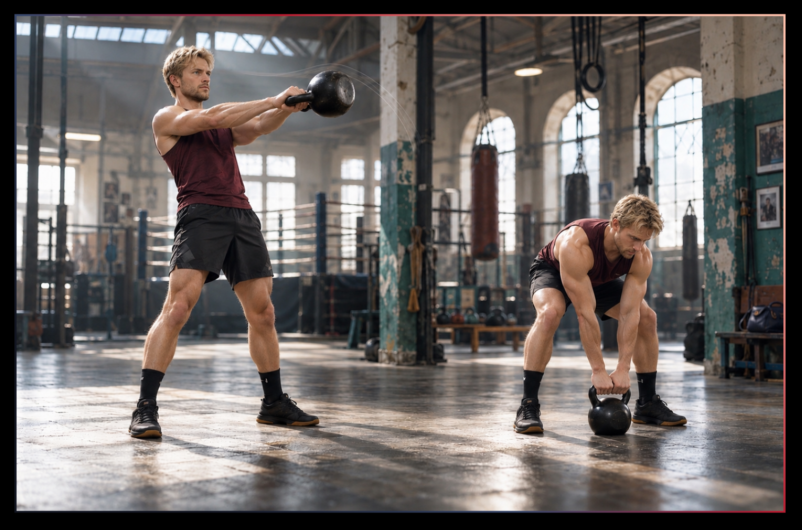
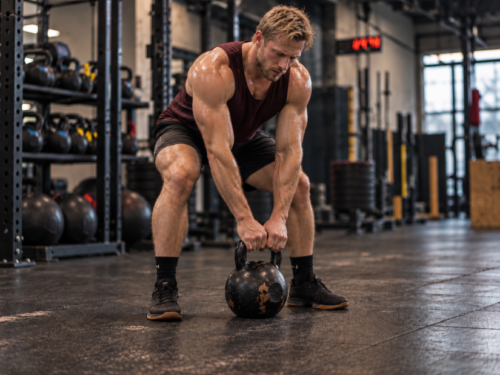
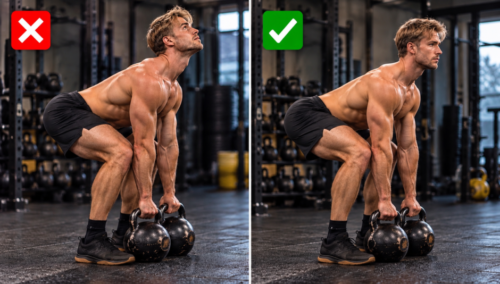
For most beginners, the swing should begin with learning the hip hinge. Deadlifts and controlled hinge practice teach you to move through the hips, maintain trunk position and control the kettlebell before speed is introduced.
Once that pattern is reliable, the swing becomes an explosive expression of a movement you already understand rather than an entirely new skill. The principle is simple: do not add ballistic speed to a pattern you cannot yet control slowly.
๐ Respect the Grip
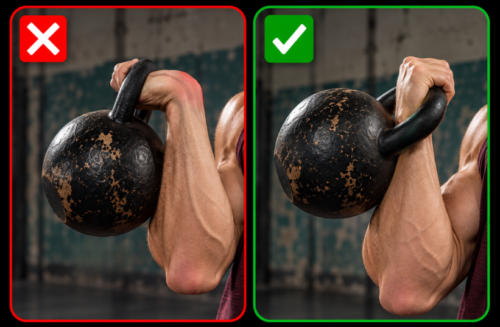
Your hands are the connection between you and the kettlebell, so the grip needs to be secure without becoming unnecessarily tense. Make sure the handle is dry and free from anything that could interfere with control, but avoid crushing it harder than the movement requires.
An excessively tight grip can increase forearm fatigue and make exercises such as cleans and snatches feel rougher than they need to. The aim is to hold the bell firmly enough to control it while still allowing the hand to move naturally where the technique demands it.
Proper hand insertion allows the handle to sit securely while keeping the wrist aligned with the forearm.
Hand care also matters once training volume increases. Repeated swings, cleans and snatches can create hot spots or torn calluses if the bell is allowed to drag excessively across the palm. Keep rough calluses managed and stop before minor irritation becomes a split hand that interrupts training.
๐ฉ Check the Kettlebell
Before training, take a few seconds to inspect the equipment itself. Check for rough seams, sharp edges, cracks, loose adjustable components, excessive wear around the handle or an unstable base.
A kettlebell should feel solid and predictable. If the handle is badly finished, the base rocks noticeably or an adjustable mechanism is loose, the equipment needs attention before you train with it. Donโt treat a defect as something you simply have to work around.
๐ Give Yourself Enough Space
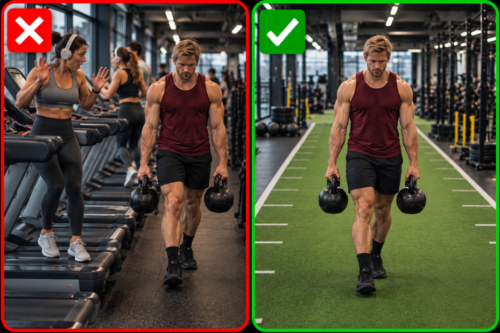
Ballistic kettlebell training needs more room than many conventional resistance exercises. Before swinging, cleaning or snatching, make sure there is enough clear space in front of you, behind you and overhead, with nobody standing inside the possible path of the bell.
The same principle applies at home. Check for low ceilings, lights, fans, furniture, pets, children and anything else that could suddenly enter the training area. Bags, bottles, benches and loose equipment should be moved out of the way before the set begins.
If you lose control of a kettlebell, your priority is getting yourself safely clear, not trying to save the floor, furniture or the bell itself.
Good technique is not enough if the environment is unsafe. Choose a clear route with predictable space around you.
๐ Use a Stable Training Surface
Your footing should remain predictable throughout the movement. Avoid surfaces that are excessively slippery, uneven or soft enough to compromise balance.
Training barefoot or in flat, stable footwear is common because it can provide a solid base, but the exact choice matters less than having secure contact with the floor. Whatever you wear, you should not be fighting your footing while trying to control a moving kettlebell.
๐ซ Do Not Chase Fatigue at the Expense of Technique
Kettlebell training can become demanding very quickly, particularly during swings, complexes and timed conditioning work. The problem is not fatigue itself, but the point at which fatigue begins to alter the movement you are supposed to be training.
Watch for clear warning signs such as slower or erratic bell speed, excessive arm pulling, deteriorating rack position, unreliable grip, lost overhead control, worsening balance or technique changing from rep to rep.
Fatigue is part of training. Technical breakdown does not have to be. Finish the set while you can still park the bell properly.
A useful rule is simple: stop the set when technique noticeably changes, grip becomes uncertain or the bell path becomes unpredictable. Conditioning should test your capacity without requiring you to abandon control just because the clock is still running.
๐ Change One Variable at a Time
There are several ways to make kettlebell training harder: increase the weight, perform more repetitions, add sets, reduce rest, move faster, introduce more complex exercises or begin using two bells.
Those are separate progression variables, and beginners rarely need to push several at once. Changing one factor at a time makes it easier to judge whether technique is still holding together and which part of the progression is actually creating the additional challenge.
Progression does not require changing everything at once. Add load or complexity gradually while keeping the movement familiar.
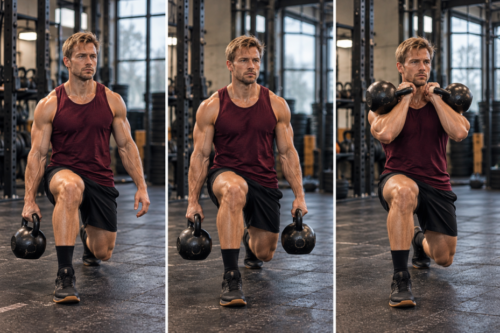
Double-kettlebell work deserves particular respect because it changes more than the total load. It also increases the demands on rack position, bracing, coordination and overall technical control.
Progression works best when each increase is deliberate, not piled on top of several others at once.
๐ง Technical Complexity Matters
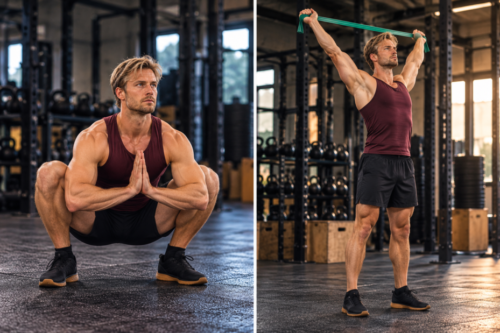
Some kettlebell movements are simply more demanding to learn than others. Deadlifts, goblet squats and carries provide relatively straightforward starting points, while swings introduce speed, cleans require the bell to travel efficiently into the rack, and snatches extend that ballistic movement overhead.
More advanced movements should therefore be earned through progression, not rushed simply because they look impressive. . The principle is not to avoid complexity, but to add it only when the underlying movement quality is ready for it.
More complex movements demand greater timing, coordination and control. The snatch links hinge, acceleration, hand insertion and overhead stability into one movement.
๐งโ๐ซ Get Coaching When You Need It
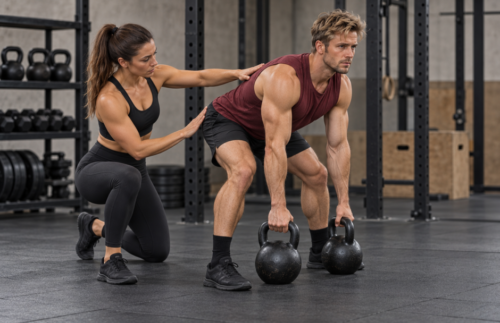
Good instruction can shorten the learning curve considerably, particularly with more technical ballistic lifts. If a swing, clean or snatch is proving difficult to understand, a competent coach can often identify faults that are hard to recognise from inside the movement.
Video can also help. Recording a few repetitions from the side or front can make problems with timing, posture or bell path much easier to spot and gives you something concrete to compare as your technique improves.
A good coach can identify positional errors that are difficult to recognise from inside the movement itself.
๐ฆต Train Through an Appropriate Range
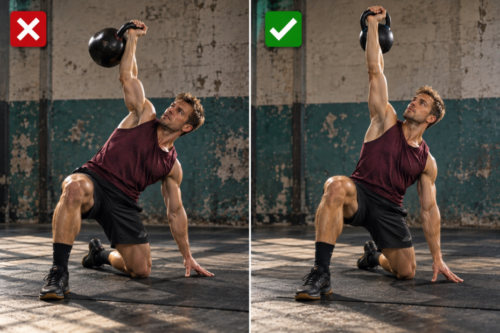
You do not need to force yourself into positions that your current mobility or control does not support. Squat depth, overhead position and the ranges used during exercises such as Turkish get-ups should reflect what you can control under load, not an idealised textbook shape.
Keep the trunk organised and the spine controlled. Do not manufacture position by excessively arching or forcing range.
Work towards better movement over time and avoid forcing a position the body is not ready to own. That is particularly important overhead: if the shoulder, upper back and trunk cannot maintain a stable position, adding more load or range will not solve the problem.
Pain, sharp discomfort or a sense of instability are signals to reassess the exercise, not reasons to push further simply because the programme says another rep is due.
๐ Keep Ballistics Controlled
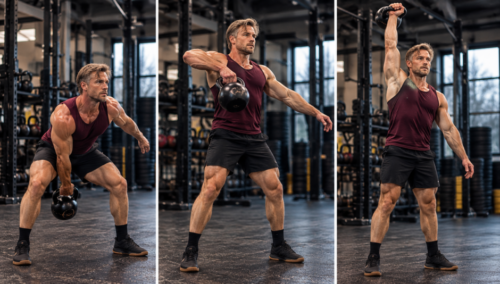
Ballistic training uses momentum, but that does not mean the kettlebell should become uncontrolled. A good swing follows a clear path, a clean should arrive smoothly into the rack, and a snatch should finish in a stable overhead position.
In cleans and snatches, the bell should travel around the hand rather than crash onto the forearm. Excessive impact is usually a sign that the timing, hand insertion or bell path needs attention; your forearms should not simply be expected to tolerate it.
Speed should come from efficient force production and good timing, not from throwing the kettlebell around as aggressively as possible. The faster the bell moves, the more important control becomes.
A clean should finish with the bells settling into position, not crashing into it. Timing and control matter as much as power.
๐ง Know How to Abort a Rep
Not every repetition will go perfectly. If the kettlebell starts moving somewhere you did not intend, your first priority is your own safety.
Do not try to catch a badly moving bell with your foot, twist awkwardly to save it or chase it across the floor. If necessary, let it go and move clear.
That is another reason why adequate training space matters. A safely abandoned repetition is far preferable to an injury caused by trying to rescue one that has already gone wrong.
๐ ฟ๏ธ Learn to Park the Bell
A kettlebell repetition is not finished simply because the hard part is over. Safe technique also includes how you start the movement and how you return the bell to the floor.
For swings in particular, the initial hike and the final park are part of the lift. The bell should be guided back deliberately into a stable position rather than dropped, dumped forward or allowed to pull you out of balance at the end of the set.
A repetition is not finished until the kettlebell has been returned under control.
๐ฅ Warm Up for the Session You Are About to Do
A kettlebell warm-up does not need to be elaborate. It should prepare the joints, positions and movement patterns you are about to use.
For a swing-focused session, that may mean a little hinge practice, light deadlifts and progressively harder swings. For pressing or overhead work, include enough preparation for the shoulders, upper back and overhead position to feel ready before the working sets begin.
The warm-up should support the session, not become a second workout before it starts.
A useful warm-up prepares the positions you are about to use โ hips, trunk and shoulders included.
๐ Pain Is a Signal to Reassess
Hard training can create effort, fatigue and muscular discomfort, but those are not the same as sharp pain, sudden weakness, instability or symptoms that feel abnormal.
If something feels wrong, stop the exercise and reassess instead of repeatedly testing the problem under load. Persistent pain or a suspected injury is a reason to seek appropriate professional assessment, not a cue to prove toughness by pushing through it.
๐งญ Final Thoughts
Kettlebell safety is mostly about control, progression and awareness. Learn the movement before loading it heavily, give yourself enough room to train, use sound equipment and recognise when fatigue is beginning to change the quality of the exercise.
Good kettlebell training ends the same way it begins: under control, with the bell safely parked and everyone walking away in one piece.
Progress should make the training more demanding without making the movement less predictable. That means respecting the grip, the bell path, the setup and the finish of each repetition rather than treating safety as something separate from technique. A kettlebell does not care whether you intended to control it. Either you did, or you did not.
Train hard, but keep good judgement on the same side as the effort.
If you have enjoyed this post please share or feel free to comment below ๐