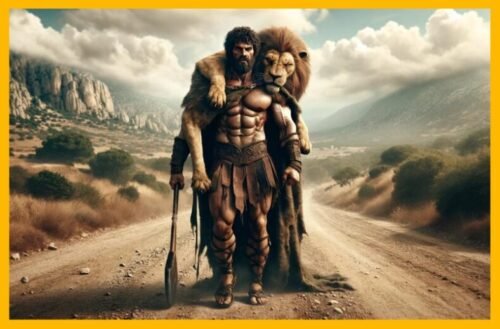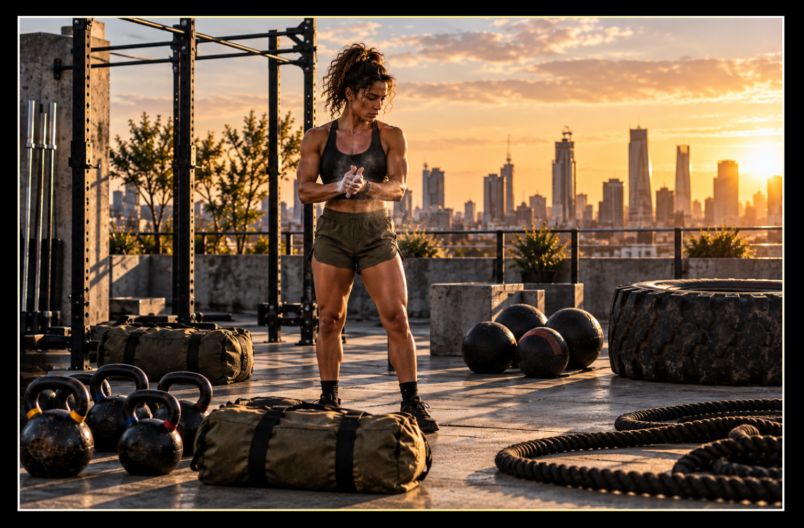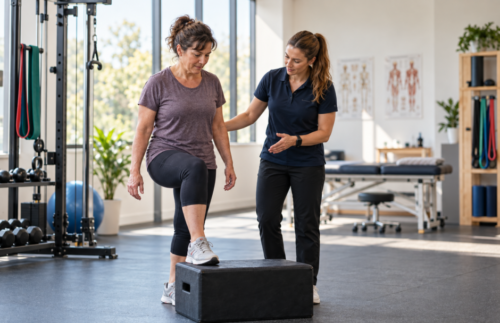
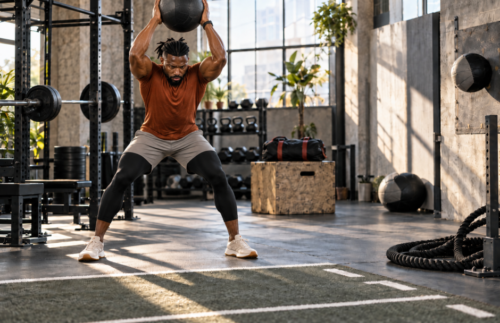

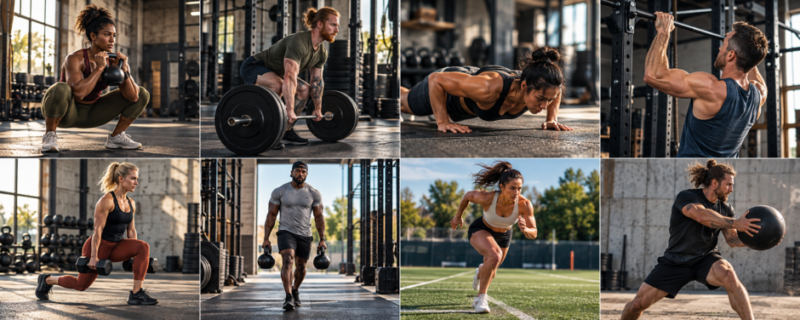




Functional training isn’t about kettlebells, battle ropes or making exercises unnecessarily complicated. It’s about training your body for what you actually need it to do. In Part One of this series, we strip away the hype and explore what functional training really means.
๐ Table of Contents
โ๏ธ Introduction
Training for Something
Functional training is one of those terms used so loosely in fitness that it can mean almost anything. Kettlebells, battle ropes, suspension trainers, tyre flips, crawling, balance drills and high-intensity circuits have all worn the label. Somewhere along the way, the equipment and exercises became confused with the principle behind them.
At its simplest, functional training means training to improve your ability to do something. What that โsomethingโ is depends on the individual. It might mean becoming stronger and more mobile for everyday life, handling physical work, hiking difficult terrain or maintaining independence as you get older. An athlete may need to accelerate, change direction, produce force or sustain performance under fatigue, while a fighter, soldier or emergency worker faces another set of physical demands.
This is why asking whether an exercise is โfunctionalโ in isolation misses the point. The better question is functional for what? A barbell squat, machine exercise, kettlebell swing, farmerโs carry, sprint, pull-up or simple walk can all be functional when they develop the physical qualities required for the task, sport or life of the person performing them.
๐ How โFunctionalโ Lost Its Meaning
The concept has strong roots in rehabilitation, where exercises and tasks are selected to help people regain abilities required for everyday living following injury, illness or surgery. The fitness industry expanded that principle into athletic performance and general training, but over time โfunctionalโ became increasingly associated with particular equipment, unstable surfaces and elaborate exercises.
Functional training has roots in rehabilitation, where exercise was used to restore the movement and physical capacity required for everyday tasks.
The concept has strong roots in rehabilitation, where exercises and tasks are selected to help people regain abilities required for everyday living following injury, illness or surgery. The fitness industry expanded that principle into athletic performance and general training, but over time โfunctionalโ became increasingly associated with particular equipment, unstable surfaces and elaborate exercises.
The original idea was much simpler: train according to the function you want to improve. Functional training does not need to look unusual, and conventional strength training does not become useless simply because it takes place in a gym. Balancing on one leg while swinging a kettlebell overhead may have a purpose, but complexity alone does not make an exercise functional.
Done properly, functional training is purposeful training. Identify what you want your body to be capable of, determine the physical qualities required and train those qualities progressively. The objective is not to look functional. It is to become capable.
๐ง What Functional Training Actually Means
If function is the goal, the value of an exercise depends largely on what you need it to achieve. Two principles help explain this: specificity and transfer.
Specificity means that the body adapts according to the demands placed upon it. Developing strength requires sufficient resistance. Improving aerobic endurance requires sustained demands on the aerobic system. Becoming more explosive requires force to be produced with appropriate speed and intent. Training does not have to reproduce the final activity exactly, but it does need to develop qualities relevant to it.
Transfer describes how useful those adaptations become beyond the exercise itself. A rugby player doesnโt need to recreate a tackle with resistance bands attached to his waist, just as preparing to carry shopping doesnโt require practising with supermarket bags in the gym. Strength, power, balance, coordination and work capacity can support those tasks without visually imitating them. The important question is whether the adaptation developed in training contributes to the performance that actually matters.
Functional training is purposeful training. Exercises, equipment and methods are selected according to the movement capacity and physical qualities you need to develop.
๐๏ธ Functional vs Traditional Training
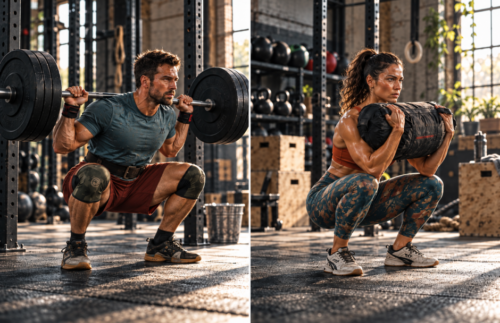
This is why functional fitness should not be treated as the opposite of traditional resistance training. Barbells, dumbbells and resistance machines can all contribute to functional goals. Deadlifts develop force production through the hips and legs, rows and pull-ups strengthen pulling, presses develop upper-body strength, and isolation exercises can strengthen specific muscles, address weak points or provide additional training volume.
Likewise, kettlebells, sandbags, suspension trainers and battle ropes do not become functional simply because they look less conventional. They are different tools capable of producing different training stimuli. Free weights provide freedom of movement and straightforward loading, machines can provide stability that allows a muscle or movement to be trained effectively, unilateral exercises challenge each side independently, and carries combine locomotion with external load.
The useful distinction is therefore not machines versus free weights, isolation versus compound exercises, or traditional versus functional training. It is whether the exercise and the way it is programmed contribute to the function you are trying to develop. Viewed this way, functional training stops being a collection of supposedly functional exercises and becomes a way of thinking about training.
๐ค Functional for Whom?
There is no universal functional training programme because there is no universal function. Age, occupation, sport, lifestyle, training history and individual goals all influence what useful physical capacity actually looks like.
For an older adult, the priority may be maintaining enough strength, balance and mobility to climb stairs, get down to the floor and back up, carry shopping and remain physically independent. Someone in a demanding job may need greater emphasis on lifting, carrying, pushing, pulling, grip strength and muscular endurance, while an athlete may require a much more specialised balance of strength, speed, power, conditioning and movement skill.
Function depends on the individual. Everyday life, physical work and sport can require very different combinations of strength, endurance, power and movement capacity.
Even within sport, the requirements differ enormously. A rugby player may need acceleration, force production, change of direction and repeated high-intensity effort, while a distance runner places far greater emphasis on endurance, running economy and tissue capacity. Combat sports combine strength and power with rotation, coordination, conditioning and repeat-effort ability under fatigue.
Nor does functional training require a sporting objective. Gardening, travelling, carrying luggage, moving furniture, playing with children, climbing stairs and simply remaining active all place demands on the body. Everyday life provides plenty of functions worth preserving.
๐ฏ Train for Your Life
Functional training should therefore begin with the individual rather than the exercise. There is little reason to follow the physical preparation of a professional fighter if your real objective is to remain strong, mobile and capable into later life, just as an athlete should not select exercises merely because they carry the label โfunctionalโ.
Identify the demands your life, sport or goals place upon you, then develop the physical qualities required to meet them. Those demands will change as circumstances, priorities and abilities change, and your training should be allowed to change with them.
Functional fitness is ultimately about building a body that is fit for its intended purpose.
๐งญ The Foundations of Human Movement
Human movement is enormously varied, but many of the things we do can be organised around a relatively small number of fundamental movement patterns. These patterns provide a useful framework for developing strength and physical capacity without reducing the body to a collection of isolated muscles.
They are not rigid categories. Real movement frequently combines several patterns at once. Picking up a heavy object, carrying it across a room and placing it onto a shelf involves the legs, hips, trunk and upper body working together through several different actions. Even so, understanding the basic patterns gives us a practical way to organise training.
Squatting, hinging, pushing, pulling, stepping, carrying, locomotion and rotation provide a practical framework for organising movement.
๐ For more detail, open the sections below.
๐๏ธ Squat
The squat involves movement through the hips, knees and ankles and appears constantly in everyday life. Sitting down, standing up, lowering yourself towards the floor and lifting objects from lower positions all involve variations of the same broad pattern.
Squats, goblet squats and other variations allow us to progressively develop lower-body strength and control through useful ranges of motion.
๐ Hinge
The hinge places greater emphasis on movement through the hips while the trunk remains controlled. Deadlifts, Romanian deadlifts, kettlebell swings and many lifting tasks all use variations of this pattern.
The ability to produce force through the hips contributes to everything from lifting heavy objects to sprinting, jumping and athletic movement.
โ Push
Pushing can occur horizontally, vertically and at numerous angles between the two. Push-ups, bench presses, overhead presses and dips provide obvious training examples, while everyday equivalents include pushing a heavy door, moving furniture or placing an object overhead.
๐ง Pull
Pulling either brings resistance towards the body or moves the body towards an object. Rows, pull-ups and chin-ups develop this capacity, while climbing, dragging and physically moving objects provide more direct examples outside the gym.
๐ถ Lunge and Step
Walking, climbing stairs, changing level and many sporting movements require the legs to work independently rather than always producing force together.
Lunges, split squats and step-ups develop single-leg strength, control and coordination, exposing each side to demands that bilateral exercises alone may not provide.
๐งณ Carry
Loaded carries are one of the simplest examples of strength meeting movement: pick something up and move with it.
Farmer carries, suitcase carries, front-rack carries and awkward-object carries challenge the grip, trunk and whole body while requiring position to be maintained under load. Carrying is also one of the clearest examples of a physical capacity with an obvious application beyond the gym.
๐ Locomotion
Locomotion simply means moving the body through space. Walking, running, sprinting, crawling and climbing can all have a place depending on the individual and the function being trained.
For one person, improving the ability to walk comfortably for an hour may represent an important functional gain. For another, the requirement may be repeated sprinting, climbing or moving efficiently across difficult terrain.
๐ Rotation and Anti-Rotation
Life and sport rarely happen entirely in straight lines. We turn, reach, throw, strike and transfer force across the body.
Rotational training develops the ability to produce and control rotation, while anti-rotation work trains the body to resist unwanted rotational forces. Both can contribute to a strong, capable trunk and to the transfer of force between the upper and lower body.
๐งญ Moving in Three Dimensions
Human movement occurs across three anatomical planes. The sagittal plane involves predominantly forward and backward movement, the frontal plane side-to-side movement, and the transverse plane rotation.
Traditional gym exercises often emphasise sagittal-plane movement, but that does not make them inferior. Squats, deadlifts, presses and rows remain enormously useful because they allow important physical qualities to be developed efficiently and progressively.
The point is simply that if your life or sport requires you to move laterally, rotate, change direction or control forces from different angles, your training should eventually prepare you for those demands as well. Movement patterns give us a framework for doing that, but they do not dictate the programme. The function still determines which patterns matter most and how they should be trained.
โ๏ธ The Physical Qualities Behind Function
Knowing how to squat, hinge, push, pull and carry is only part of the picture. How effectively you can perform those movements depends on the physical qualities supporting them.
Functional fitness is therefore concerned not only with what movements you train, but with developing the strength, power, endurance, mobility and control required to perform them when they matter. Different goals require these qualities in different proportions.
An exercise does not become functional because of the equipment used. Different methods can develop the same underlying movement capacity or physical quality.
๐ For more detail, open the sections below.
๐ช Strength
Strength is the ability to produce force against resistance. It underpins a huge range of physical tasks, from standing up and carrying shopping to lifting heavy loads, grappling with an opponent or accelerating on a sports field.
Greater strength also creates physical reserve. As your maximum capacity increases, many everyday and sporting tasks represent a smaller percentage of what you are capable of producing, making them relatively easier to perform.
โก Power
Strength and power are related, but they are not the same thing. Power involves producing force quickly.
Jumping, sprinting, throwing, striking and rapidly changing direction all depend to varying degrees on generating force at speed. Not everyone requires elite explosive ability, but some capacity to move quickly and forcefully can be valuable in both sport and broader physical performance.
๐ Muscular Endurance
Producing force once is different from producing it repeatedly. Muscular endurance is the ability to continue producing or sustaining force over time.
Carrying loads over distance, climbing several flights of stairs, performing manual work and repeatedly producing movements during sport can all place significant demands on this quality.
โค๏ธ Cardiovascular Fitness
Strength is of limited use if you cannot sustain activity or recover effectively between efforts. Aerobic fitness supports prolonged work and contributes to recovery, while harder tasks may also require the ability to repeatedly produce much higher intensities.
The balance depends on the function. A long hike, five-round fight and repeated sprint sport all place very different demands on the cardiovascular system.
๐คธ Mobility
Mobility is the ability to access and control the ranges of motion required for a task. More is not automatically better. A weightlifter, martial artist and recreational walker do not require identical movement ranges; the objective is enough usable mobility for the activities you need to perform.
Nor does mobility always need to be trained separately. Resistance exercises performed with control through appropriate ranges can develop strength and movement capacity together. Dedicated mobility work can still be useful where a specific restriction requires attention, but flexibility for its own sake is not the goal.
๐ก๏ธ Stability and Control
Stability is the ability to maintain or control position while forces act upon the body. That might mean maintaining trunk position during a heavy carry, controlling the hip and knee during a single-leg movement or resisting unwanted rotation as force passes through the body.
This does not require every exercise to be performed on an unstable surface. Stability can be challenged by the load, body position and movement itself.
โ๏ธ Balance and Coordination
Balance helps us control our centre of mass, while coordination allows different parts of the body to work together efficiently.
Both become increasingly important when movement is complex, the environment is unpredictable or tasks must be performed quickly. Their relevance ranges from sport and martial arts to something as ordinary as navigating uneven ground confidently.
๐ฏ The Right Balance for the Job
No programme needs to maximise every physical quality simultaneously. A marathon runner, powerlifter, firefighter, fighter and active older adult may all benefit from being strong, mobile and well-conditioned, but the balance between those qualities will differ substantially.
Functional training is therefore not about becoming equally good at everything. It is about developing the physical qualities that support the things you need and want your body to do.
๐ซ What Functional Training Is NOT
As functional training became more popular, the label was increasingly attached to anything that looked unconventional. Exercises became more elaborate, equipment more specialised and instability was often added simply because making a movement harder was assumed to make it more โfunctionalโ.
That confuses difficulty with purpose. Novelty, complexity and instability are training variables, not measures of function. A complicated exercise can be useful, but it can also be an unnecessarily difficult way of developing something a simpler exercise would train more effectively.
Functional training is not defined by instability, novelty or complicated exercises. Effective training can take many forms when each exercise serves a clear purpose.
๐ For more detail, open the sections below.
๐ช It Isnโt a Circus Act
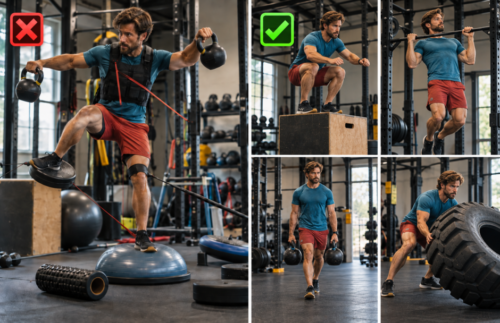
Unstable surfaces can have legitimate uses when balance, control or instability itself is part of the objective. BOSU trainers, balance boards and stability balls can therefore belong in an appropriate programme.
Problems arise when instability is added to exercises whose main purpose is strength or power. If maintaining balance becomes the limiting factor, the amount of force you can produce and resistance you can handle may fall substantially. Sometimes instability is exactly the stimulus you want; at other times you simply need to put your feet on the floor and get stronger.
๐๏ธ It Isnโt Anti-Machine
Machines were often cast as the enemy during the rise of functional fitness because they guide movement and provide external stability. Those characteristics can also be useful.
Removing some of the balance and coordination requirements can allow a muscle or movement to be loaded effectively, making machines valuable for developing strength and muscle, increasing training volume, targeting particular areas or working around certain limitations. Machines and free weights are both tools; their usefulness depends on what you need them to do.
๐ช It Isnโt Anti-Isolation
Compound movements deserve a prominent place in most programmes because they allow several joints and muscle groups to work together, but isolation exercises still have legitimate roles.
Curls strengthen the elbow flexors, calf raises train the calves, hamstring curls load knee flexion and lateral raises provide targeted shoulder work. If strengthening a particular muscle addresses a weakness, supports performance or simply provides useful additional training volume, the exercise has a function.
๐งฉ It Isnโt About Making Simple Things Complicated
Combining several movements does not automatically improve them. A squat-to-curl-to-overhead-press performed while balancing on one leg may look demanding, but the result can be an exercise in which no individual quality receives enough load or focus to be developed particularly well.
Complexity should be justified by the task rather than added for entertainment. Much effective training remains remarkably simple: squat, hinge, push, pull, carry, run, jump and progressively improve the qualities behind those movements.
๐ฅ It Isnโt Another Name for HIIT
Functional training and high-intensity interval training can overlap, but they are not interchangeable. A functional session does not need to involve racing against a clock, minimal rest or finishing every workout beside a battle rope in a puddle of sweat.
Strength work may require substantial recovery between sets. Power training benefits from maintaining speed and movement quality. Aerobic work may deliberately remain at a sustainable intensity for extended periods. Intensity should serve the adaptation, rather than being treated as proof that the workout was effective.
๐ It Doesnโt Have to Copy Your Sport or Your Life
Specificity matters, but taking it too literally can produce poor training. A runner does not need every strength exercise to resemble running, and preparing to carry shopping does not require recreating the supermarket inside the gym.
The same principle applies to sport. A boxer punching with heavy dumbbells may appear highly specific, but the added resistance can alter the speed, timing and mechanics of the punch. If the objective is stronger shoulders and arms, train them with suitable resistance exercises; if the objective is better punching technique, practise punching.
The gym is often most useful for developing the physical qualities that support an activity, while the activity itself develops the specific skill. An exercise does not need to look like the final task to contribute to it.
๐ฏ Function Before Fashion
Functional training should not be judged by how unusual an exercise looks, how much specialist equipment surrounds it or how exhausted it leaves you. The more useful question is what is this exercise supposed to improve, and is it an effective way of improving it?
If there is no convincing answer, making the exercise wobblier, harder or more elaborate probably will not fix the problem.
๐งฐ Tools, Not Training Systems
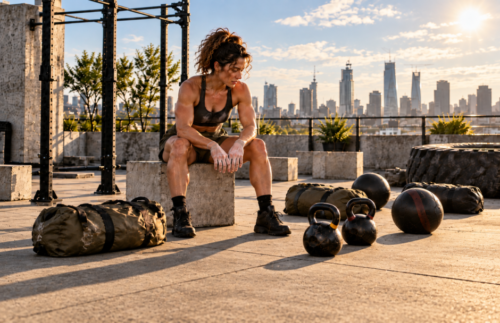
Modern functional gyms may contain kettlebells, barbells, dumbbells, sandbags, medicine balls, sleds, suspension trainers, resistance bands, battle ropes, plyometric boxes and perhaps a mace or two. All can be useful, but none is inherently functional.
Equipment simply gives us different ways to create load, resistance, speed, momentum, leverage, instability and movement. A barbell makes heavy progressive loading straightforward, kettlebells lend themselves to ballistic work and carries, sandbags introduce awkward loading, medicine balls can be thrown explosively, and sleds allow substantial resistance to be pushed or pulled while moving through space. Machines can also provide exactly the stimulus required when a muscle or movement needs to be loaded effectively.
That confuses difficulty with purpose. Novelty, complexity and instability are training variables, not measures of function. A complicated exercise can be useful, but it can also be an unnecessarily difficult way of developing something a simpler exercise would train more effectively.
๐จ Choose the Tool for the Job
The mistake is allowing the equipment to dictate the training. Owning a kettlebell does not mean every problem requires a kettlebell solution, and having battle ropes available does not mean they belong at the end of every workout.
Start with the goal, identify the physical quality you want to develop, then select the exercise and equipment that allow you to train it effectively. Sometimes that means a barbell, sled, sandbag or mace; sometimes your own bodyweight is enough.
The tool serves the training. The training doesnโt serve the tool.
๐ Why Functional Training Matters
Strip away the marketing and functional training has a straightforward purpose: develop physical capacity that you can actually use. That might mean performing better in competition, handling a demanding job, remaining independent as you age or simply having a body capable of dealing with whatever ordinary life throws at it.
The benefits come from identifying useful physical qualities and training them consistently and progressively, then carrying those adaptations beyond the gym.
Physical capacity matters beyond the gym. Strength, endurance, coordination and resilience create greater reserve for work, recreation and everyday demands.
๐ For more detail, open the sections below.
๐ Everyday Physical Capability
Daily life contains more physical demands than we often notice. We lift objects from the floor, carry bags, climb stairs, reach overhead, get in and out of chairs, move furniture and occasionally deal with something heavier or more awkward than expected.
Improving strength, mobility, balance and cardiovascular fitness increases the reserve available for those tasks. The greater your capacity, the less demanding ordinary physical activity tends to become relative to what your body can handle.
๐ช Strength You Can Use
Functional training encourages strength to be developed in ways that support the individualโs needs. That may include heavy bilateral lifting, unilateral work, upper-body pushing and pulling, loaded carries or exercises requiring the trunk to transfer and resist force.
There is no separate physiological category called โfunctional strengthโ. Strength is strength. What matters is whether you possess enough of it, and can express it effectively, when the task demands it.
๐คธ Maintain Movement Capacity
Bodies adapt to what we repeatedly ask them to do. If daily life involves very little movement, there is little incentive to retain broad physical capacity.
Training allows us to deliberately use useful ranges of motion, different movement patterns and progressively greater physical demands. The aim is not extreme flexibility or mastery of every possible movement, but maintaining enough capacity to perform the activities that matter comfortably and confidently.
โค๏ธ Build Work Capacity
Physical capability is not only about what you can do once, but what you can sustain, recover from and repeat.
For an athlete, that might mean maintaining performance through a match or recovering between intense exchanges. In everyday life it could mean walking further, climbing stairs without becoming excessively breathless or completing a physically demanding day without feeling completely spent.
โก Improve Athletic Performance
When training is built around the demands of a sport, improvements in strength, power, speed, conditioning and movement control can support better performance.
The key word is support. Gym training does not replace technical practice, tactical awareness or sporting skill; it develops physical qualities that allow those abilities to be expressed more effectively. The weight room can build the engine, but you still have to learn how to drive.
๐ง Develop Movement Confidence
Capability also changes how confidently we approach physical tasks. Someone who has progressively practised lifting, carrying, stepping, balancing and moving under load has experience dealing with physical demands in a controlled environment.
As strength, control and competence improve, tasks that once felt intimidating can become routine. Training does not make the body indestructible, but it can provide a larger reserve of physical options when unfamiliar or demanding situations arise.
๐ก๏ธ Build Resilience, Not Invincibility
Older functional-training claims often suggested that the right exercises could โprevent injuryโ. Reality is more complicated. Injuries have many causes, and no training method can guarantee protection.
Sensible training can, however, progressively develop strength, capacity, coordination and tolerance to physical demands. Preparing the body for stresses it is likely to encounter is valuable, even if it cannot make you injury-proof.
The aim is to become better prepared, not invulnerable.
๐ฅ Body Composition Comes Along for the Ride
Functional training can contribute to fat loss, muscle gain and improved body composition, but there is nothing uniquely fat-burning about kettlebells, circuits, tyre flips or battle ropes.
Resistance training can build or preserve muscle, conditioning increases energy expenditure and improves fitness, and nutrition remains central to changes in body fat. Functional training can therefore help you look better as well as perform better, but sweating harder does not reveal some hidden metabolic loophole.
๐ฏ Capability Is the Payoff
Ultimately, the value of functional training lies in what it allows you to do: lift more, move further, work longer, react faster, carry what needs carrying and continue participating in the activities that matter to you.
That is where function becomes meaningful. The exercises, equipment and programmes are simply the means of building the capacity to meet the demands of life, work or sport.
๐ Function Changes With You
What you need from your body at 20 may be very different from what you need at 40, 60 or 80. Sporting ambitions change, careers change, injuries happen, family responsibilities appear and available training time rises and falls. Activities that once mattered enormously may disappear from your life while completely new ones take their place.
Your definition of functional fitness should be allowed to change with them.
What you need from training can change with age, circumstances and priorities. The function changes, and the programme should evolve with it.
A younger athlete may prioritise speed, explosive power and sporting performance. Years later, the same person may care more about maintaining strength, muscle mass, cardiovascular fitness and enough mobility to keep training well without constantly feeling beaten up by it. Later still, preserving physical independence may become increasingly important, with the ability to walk confidently, climb stairs, carry loads, recover balance and get down to the floor and back up representing genuine physical freedom.
โณ Train for Now. Prepare for Later
Functional training should address the demands you face today while helping preserve the capacity you are likely to value tomorrow. That does not mean training cautiously as you get older, abandoning performance goals or asking younger people to structure every session around distant old age.
It simply means recognising that physical capacity is worth maintaining before you desperately need it. Strength, muscle, aerobic fitness, balance and mobility all provide options, and the more capacity you retain, the larger the gap between what everyday life demands and what your body is capable of delivering.
A good programme is therefore not something you discover once and follow forever. It should evolve as you do.
๐งญ From Principle to Practice
Understanding functional training is only the starting point. Once you know what you are training for and which physical qualities matter, you still need the right methods to develop them and a programme capable of progressing them over time.
That is where the next two parts of this series come in.
The Functional Training Toolbox looks at the equipment and training methods available, from barbells, kettlebells and bodyweight to sandbags, sleds, medicine balls, bands and more. The aim is not to collect every possible tool, but to understand what each one does well and when it earns a place in the programme.
The final part, Functional Training: Putting It Into Practice, then brings everything together: assessing where you are starting from, establishing priorities, selecting movements and exercises, structuring sessions and training weeks, managing conditioning and recovery, and progressing the programme over time.
First understand the function. Then choose the tools. Then build the programme.
๐ Summary
Build a Body That Can Do Things
Functional training has spent years being associated with particular exercises, pieces of equipment and workout styles, but the underlying idea is far simpler: train your body for what you want it to be capable of doing.
There is no single functional exercise and no universally functional programme because function depends on the individual. Barbells and machines are not the enemy, kettlebells and battle ropes are not magic, and making an exercise unstable, complicated or exhausting does not automatically make it more useful.
The goal is not to make training look functional. It is to build the strength, fitness and movement capacity that allow you to do more when it matters.
What matters is whether your training develops the movement capacity and physical qualities required for the job. That means knowing what you are training for, building strong foundations, choosing appropriate tools and progressing the qualities that matter rather than constantly chasing novelty.
Functional fitness should ultimately give you more options outside the gym, not simply more exercises inside it. Train with purpose, build capability and keep adapting as your goals and life change.
If you have enjoyed this post please share or feel free to comment below ๐
๐ Our Other Posts


Kettlebell Hell
Minimal rest. Maximum punishment. Kettlebell Hell is an 10-station conditioning assault built to test endurance,

Functional Training: Fit for Purpose
Functional training isn’t about kettlebells, battle ropes or making exercises unnecessarily complicated. It’s about training