
Greek culture. Greek history. History of the Olympics. Ancient civilisations. Ancient civilizations. greco roman wrestling

Ancient Pankration — History and Origins

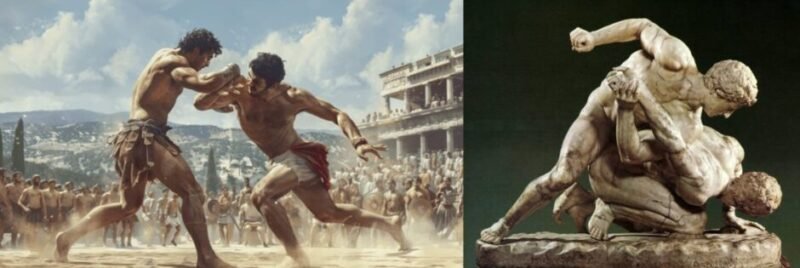
Pankration was an Ancient Greek no-holds-barred martial art combining aspects of boxing and wrestling, introduced in the Greek Olympic games in 648 BC.  

Table of Contents

📖 Introduction

Pankration (Greek: παγκράτιον) was one of the most demanding combat sports of the ancient world. Introduced to the Olympic Games of Ancient Greece in 648 BC, it combined the striking of boxing with the grappling of wrestling to create a contest with very few restrictions.

The name reflects this philosophy. Derived from the Greek words πᾶν (pan), meaning all, and κράτος (kratos), meaning strength or power, pankration translates as “all powers” or “complete force.”

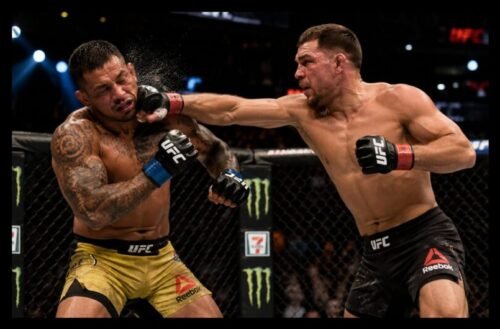
Pankration combined striking and grappling within a single, continuous exchange.

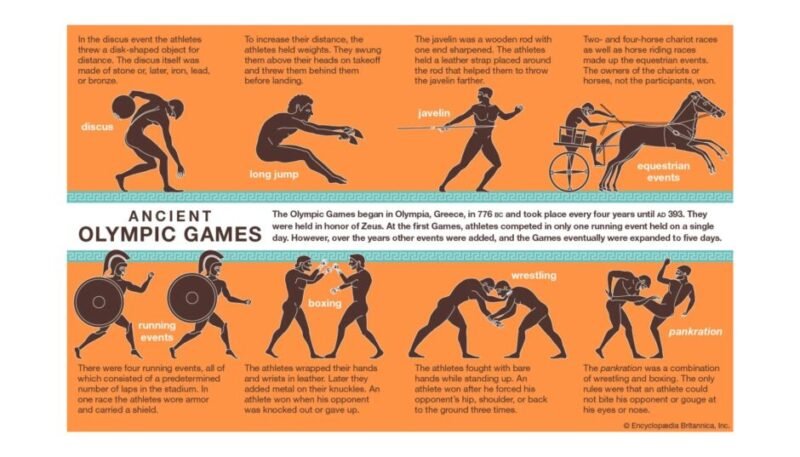
Competitors, known as pankratiasts, used punches, kicks, throws, chokes, and joint locks in contests that tested endurance, toughness, and tactical control. Only two techniques were generally forbidden: biting and eye-gouging.

Victories were typically achieved by submission, unconsciousness, or incapacitation, making pankration one of the most physically demanding contests in the ancient athletic world.

🩸 Brutality of the Games

Among the Olympic combat sports, pankration had a reputation for being particularly unforgiving. Fighters could strike, grapple, choke, and apply joint locks with minimal restriction.

Matches could be long and exhausting, often continuing until one competitor signalled defeat by raising a finger, lost consciousness, or was rendered unable to continue. Injuries were common, and the physical demands were severe.

Pankration formed part of the Olympic “heavy contests,” alongside boxing and wrestling. These disciplines demanded exceptional strength, stamina, and resilience, attracting some of the most formidable athletes of the ancient Greek world.

🏛️ The Greek World and Its Combat Culture

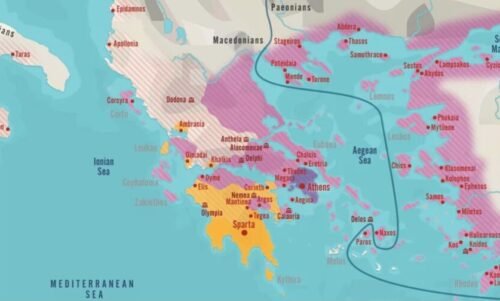
Ancient Greece was not a unified nation, but a collection of independent city-states with distinct political systems, cultures, and military traditions. Rivalries were frequent, and warfare played a central role in shaping society.

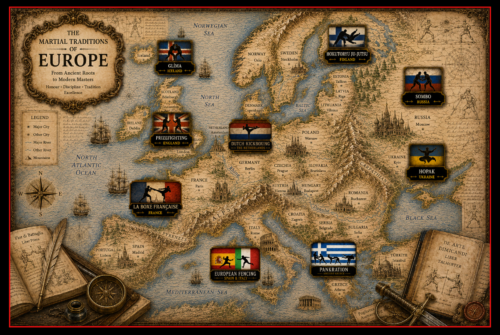
Ancient Hellas (modern Greece)—the city-states that produced pankration, a complete system of unarmed combat.

Ancient Greece was not a unified nation, but a collection of independent city-states with distinct political systems, cultures, and military traditions. Rivalries were frequent, and warfare played a central role in shaping society.

As a result, physical training and martial ability were highly valued. Athletic contests were not just entertainment—they were public demonstrations of strength, endurance, and skill. Combat sports such as wrestling, boxing, and pankration developed within this environment and became central to the major athletic festivals of the Greek world.

Greek mythology reflects this cultural emphasis. Figures such as Heracles and Theseus were depicted as masters of unarmed combat. While mythological, these accounts reinforce how the Greeks associated physical excellence with ideals of courage, resilience, and power.

⚔️ The Formation of Pankration

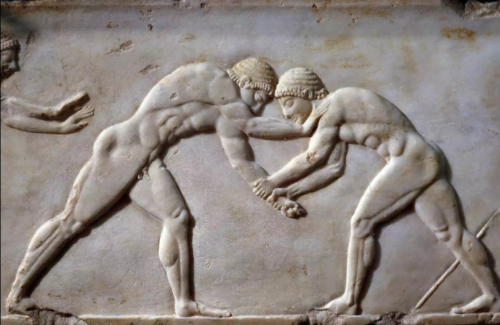
Most historians believe pankration developed through the integration of two earlier disciplines: boxing (pyxmachia) and wrestling (palé). Over time, techniques from both were combined into a single system that allowed athletes to strike, grapple, and apply submissions within the same contest.

By the Classical period, pankration had become one of the most prestigious events in Greek athletics. Victory brought honour not only to the athlete, but to his city.

The sport featured in the major Panhellenic festivals:

  • The Olympic Games at Olympia.
  • The Pythian Games at Delphi.
  • The Isthmian Games at Corinth.
  • The Nemean Games at Nemea.

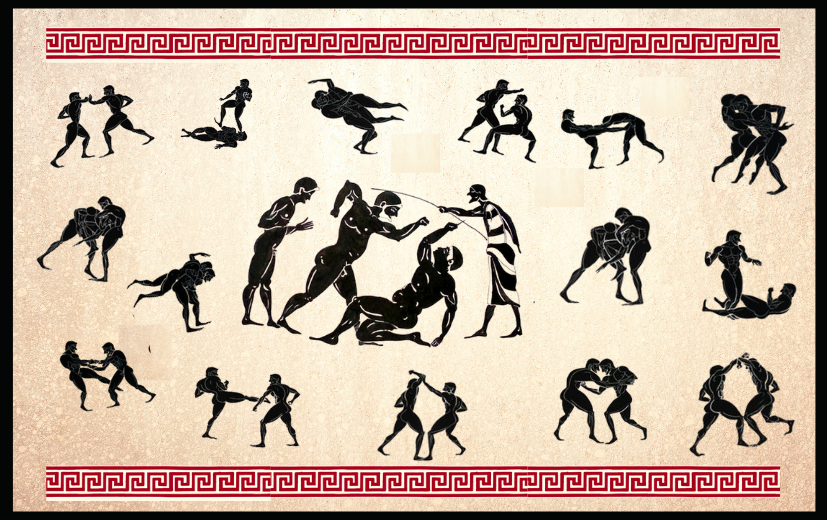
Pankration was one of many events in the Panhellenic Games, alongside wrestling and boxing, featured at the Olympic, Pythian, Nemean, and Isthmian festivals.

⚔️ Pankration and Greek Warfare

Physical training formed a central part of Greek culture, particularly in societies where citizens were expected to serve as soldiers in defence of their city-state. Athletic contests such as wrestling, boxing, and pankration developed strength, endurance, balance, and resilience—qualities that carried directly into warfare.

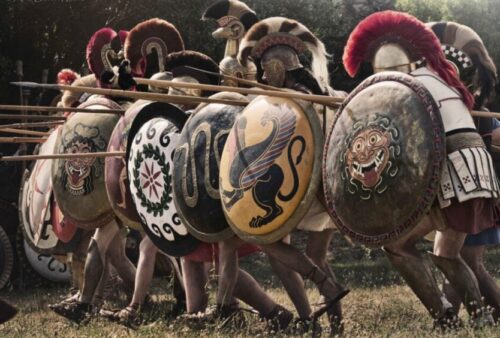
Greek infantry, known as hoplites, fought in tightly organised formations called the phalanx, using spear and shield as their primary weapons. Success depended on discipline, conditioning, and the ability to maintain cohesion under pressure.

Greek Phalanx. Sparta. Athens. Greek culture. Greek history. History of the Olympics. Ancient civilisations. Ancient civilizations. Hoplite warfare.

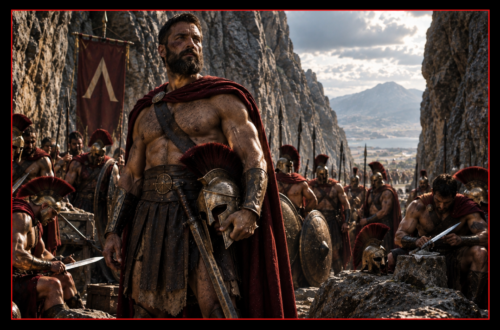
Pankration may have influenced hoplite training (parmachon), though evidence remains limited.

There is little evidence that pankration was used as formal military training. However, the attributes it developed—strength, control, and close-range effectiveness—aligned with the physical demands of combat.

When formations broke or weapons were lost, fighting shifted to close quarters. In these conditions, the ability to grapple, strike, and dominate an opponent became decisive. Pankration sat within this broader culture of preparation, reinforcing the physical qualities required for both competition and warfare.

🛡️ Spartans and Physical Culture

Sparta represents the most concentrated example of this relationship between physical training and warfare. Through the agoge, Spartan citizens were subjected to a structured system designed to develop discipline, endurance, and combat readiness from an early age.

While pankration was not unique to Sparta, the qualities it demanded—resilience, control under pressure, and effectiveness at close range—aligned closely with Spartan ideals. Spartan athletes competed across the major Panhellenic games, reinforcing the connection between martial culture and athletic performance.

In this context, combat sports were not separate from warfare, but part of the same developmental system. They produced individuals capable of operating under physical stress, maintaining composure, and applying force effectively when structure broke down.

👑 Alexander the Great and the Hellenistic World

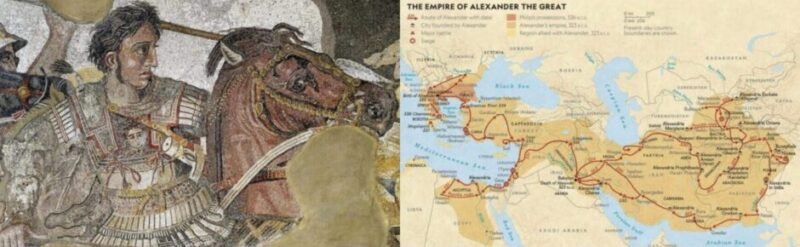
The conquests of Alexander the Great in the fourth century BC expanded the reach of Greek culture far beyond the mainland. As his armies moved east through Persia and into Central Asia and India, Greek language, customs, and institutions spread across the emerging Hellenistic world.

Athletic traditions travelled with this expansion. Gymnasia—centres of physical training and education—were established in many newly founded cities. These institutions promoted athletic competition and extended Greek sports such as wrestling, boxing, and pankration into regions far beyond their original setting.

Alexander the Great, reportedly a supporter of pankration, may have spread aspects of it eastward—though this remains uncertain.

Some modern writers suggest that contact between Greek and eastern cultures may have influenced martial traditions in Asia. However, clear historical evidence for direct transmission remains limited. In practical terms, these connections are better understood as cultural contact rather than proven lineage.

🏺 Pankration under the Romans

As the Greek city-states declined following the Hellenistic period, the expanding Roman Republic absorbed much of the Greek world. Along with territory, Rome adopted key elements of Greek culture, including philosophy, education, and athletic traditions.

Combat sports such as wrestling, boxing, and pankration continued under Roman rule, often under Latinised names. Pankration became known as pancratium and remained part of the broader athletic culture inherited from Greece.

In the Roman world, pankration persisted, reshaped by a culture that favoured spectacle and brutality.

At the same time, Roman society developed its own forms of combat spectacle. The most prominent were the gladiatorial games, where armed fighters competed before large audiences. While fundamentally different from Greek athletic contests, they reflect a shared cultural interest in organised combat as public display.

✝️ Christianity and the End of the Games

In the later centuries of the Roman Empire, traditional pagan festivals declined as Christianity became the dominant religion. Many of the major athletic competitions of the Greek world—including the Olympic Games—were closely tied to religious observance.

In 393 AD, the emperor Theodosius I issued edicts restricting pagan practices across the empire. As a result, the Olympic festivals lost imperial support and were eventually discontinued.

With the disappearance of the Panhellenic competitions, sports such as pankration faded from the historical record. By the early fifth century AD, there is little reliable evidence that the discipline continued in its original form.

🗿 Legacy

Ancient pankration stands as one of the earliest recorded combat systems to combine striking and grappling within a single contest. Fighters were expected to use punches, kicks, throws, chokes, and joint locks, making the discipline unusually comprehensive for its time.

At its core, pankration demanded one thing: the ability to operate across all phases of combat.

Greek culture. Greek history. History of the Olympics. Ancient civilisations. Ancient civilizations. greco roman wrestling

The legacy of ancient pankration lies in its integration of striking and grappling within a single system.

That idea defines its legacy—but it only becomes meaningful when examined in practice. How fights were structured, how techniques were applied, and how fighters adapted under pressure determined whether that integration held up under real conditions.

➡️ Transition Forward

The next article moves from principle to application—examining how ancient pankration was actually fought, from the structure of competition to the methods used within it.

If you have enjoyed this post please share or feel free to comment below 🙂

Related Posts

Our Other Posts

Leave a Reply

Your email address will not be published. Required fields are marked *

This site uses Akismet to reduce spam. Learn how your comment data is processed.

error: Content is protected !!

Join the Super Soldier Project Mailing List Today!!