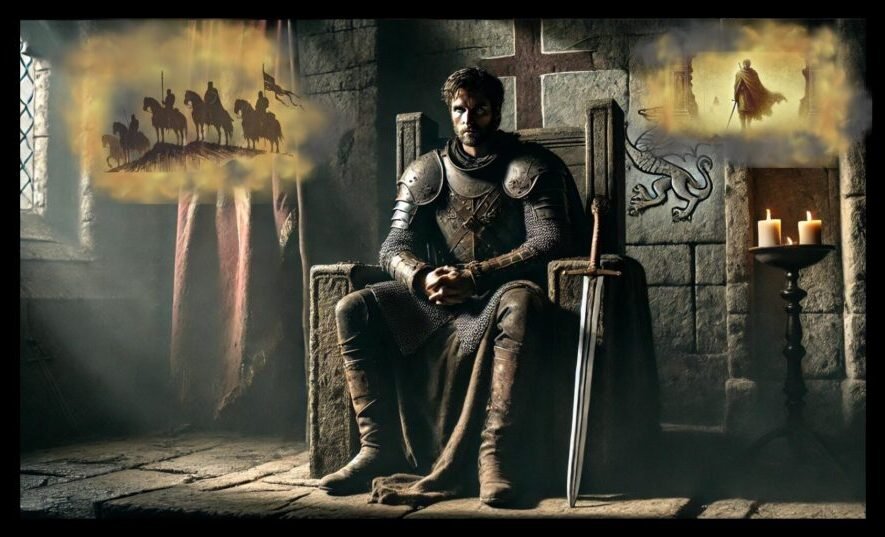
Arthur is often associated with the post-Roman period, when Britain was transitioning from Roman rule to a more fragmented, warlord-led society. After the Romans withdrew around 410 AD, the local population, now largely Romanized, faced threats from Saxons, Picts, and Irish raiders. It’s during this turbulent time that the legend of Arthur is believed to have originated, with some suggesting he was a real leader—a commander (Dux Bellorum) who led the Britons in defense against these invaders, possibly securing a victory at the Battle of Mount Badon.
*”Dux bellorum” is a Latin term meaning “leader of battles” or “war leader,” a title given to Arthur in the Historia Brittonum, the earliest surviving text that mentions him. This early portrayal depicts Arthur as a military commander who led the Britons to victory against invaders, a stark contrast to the later, more fictionalized King Arthur of romantic legends.