What you do between workouts is what separates growth from burnout. This post breaks down how active recovery repairs the body faster, keeps performance high, and turns soreness into progress.
Introduction
Pushing yourself to the limit is easy when you’re fired up and chasing progress. But what about the days between training sessions? The days when your muscles feel like they’ve been through a blender and stairs become your mortal enemy?
That is where Active Recovery earns its reputation.
Training stress causes:
Delayed onset muscle soreness (DOMS).
Muscle damage (small microscopic tears).
Inflammation.
An overall feeling of physical fatigue.
This discomfort isn’t a sign of weakness — it’s evidence you’ve demanded adaptation. But adaptation only happens when recovery is handled properly.
There are two primary tools to speed up this healing:
Passive Recovery.
Active Recovery.
Let’s take a serious look at both.
⚔️ Passive vs Active Recovery
Passive Recovery — Full Shutdown Mode
Passive recovery simply means complete rest. After a brutal session, you may collapse on the couch, catch up on sleep, and avoid any movement you don’t absolutely have to do. No judgement — you paid for the couch time with pain.
Passive recovery is essential when:
You’re injured.
You’re in sharp pain, not just the good soreness.
You’re mentally or physically exhausted to the point of dysfunction.
Active rest (left) hiking vs passive rest (right) recovery by doing very little.
It gives your body the space to repair. But here’s the catch: It’s not the fastest road back to performance. Too many “do-nothing” days stack up and you start losing mobility, circulation, and movement quality. Passive recovery is allowed — but not forever.
Active Recovery — Movement That Heals
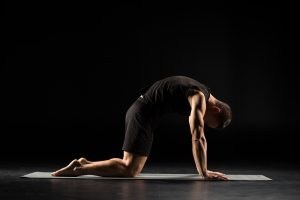
Active recovery introduces light, low-impact movement between demanding training days — cycling, swimming, mobility work, long walks, light calisthenics… movement that nourishes, not punishes.
This isn’t about grinding through extra training. It’s strategic restoration that:
Flushes waste from muscles.
Maintains joint range of motion.
Keeps your cardiovascular system awake.
Boosts recovery without adding more fatigue.
And best of all: It prepares you to perform again sooner.
Both recovery types are tools. Smart athletes know when to switch between them.
🛠️ How, What, Where & Why
The Practical Side
Active recovery helps the body repair faster through light movement that boosts circulation and clears waste from tired muscles. It keeps your system switched on instead of letting it seize up between hard sessions.
This is the time to sharpen the overlooked elements of training:
Flexibility and range.
Balance and control.
Core stability and posture.
Work that doesn’t demand much energy, but pays off in performance.
Cycling is a great form of active recovery. Allows you to get away from the city. Hit the parks, local trails or the countryside if that is an option.
These sessions should feel like maintenance — not pressure. A steady walk, an easy swim, or a relaxed cycle is enough to loosen you up and reset your head. No stopwatch. No grind. Just movement with purpose. If you finish feeling better than you started, that’s active recovery done right. If you finish cooked, you’ve missed the point.
Active recovery isn’t taking it easy — it’s making sure tomorrow isn’t a write-off.
🏋️ Professional Athletes & Recovery
At elite levels of sport, a full day of inactivity is rarely an option. Athletes can’t afford to let performance drop, so their “rest days” almost always include active recovery. These sessions are lighter, targeted, and designed to maintain movement quality. That may mean technique drills, controlled conditioning, mobility work, or core activation — just enough to stay sharp while the body repairs.
Professional athletes cannot afford time off. They need to be on top of their game. Their recovery days are their ‘rest’ days.
🔄 Restoring Homeostasis
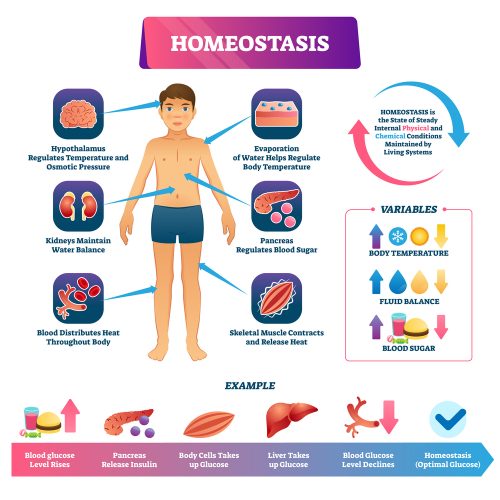
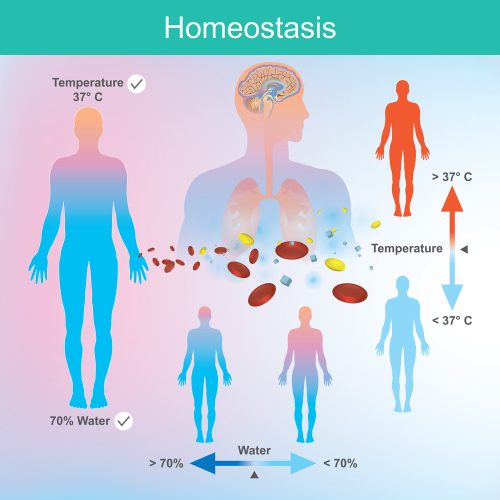
The entire point of recovery — active or passive — is to bring the body back into homeostasis, the state where everything functions smoothly. Training pushes you away from that balance on purpose. Muscles are damaged, energy stores drained, and stress hormones elevated. Recovery is the process of closing that gap.
Homeostasis. The body feedback loop system for regulating the body’s functions and keeping us in an ‘optimum survival state’.
When homeostasis returns, soreness fades, energy levels recover, inflammation settles, and your mindset shifts from survival back to performance. Sleep, nutrition, hydration, mobility work, and deliberate light activity are all part of resetting the system. Ignore this process long enough and the warnings appear: slower workouts, heavy legs, zero motivation. That isn’t a bad day — it’s your physiology reminding you that you haven’t let it catch up.
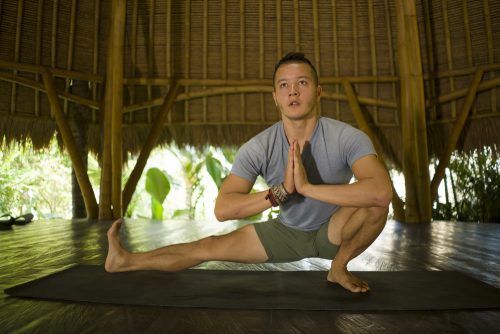
Rebalancing the books. Stretching out the tight muscles and getting rid of the lactic acid build up.
Recovery isn’t optional. It’s the reason progress continues.
📉 Balancing the Books
A simple programming rule: the harder you train, the smarter you must recover. Push hard without allowing the body to adapt, and you’re just digging a deeper hole. At least one dedicated recovery day each week is a good baseline — two when the workload is high or you’re newly back into training. Your body will tell you when it needs more: constant soreness, sluggish movement, and a mind that’s checked out are all red flags.
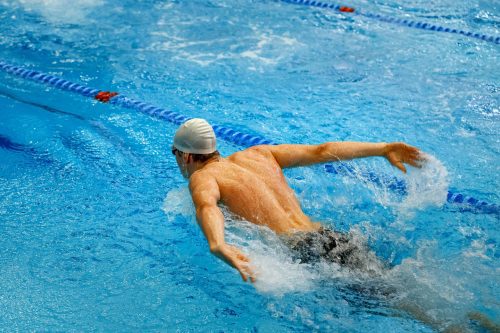
Swimming is a perfect active recovery tool. Non impact but still engaging all the muscles and giving a good cardio workout also.
Active recovery must stay recovery. If you finish drained, sweating, and wrecked — you’ve missed the point. The goal is readiness, not another stress hit. Skip recovery long enough and performance falls apart: broken sleep, immune issues, nagging pain, forgotten progress. The body keeps score. Respect the balance.
⚡ Summary of the Benefits
There are some very great benefits active recovery days offer.
Enhanced recovery:
Light movement boosts blood flow, clearing waste and delivering nutrients so muscles heal faster and soreness fades sooner.
Serotonin release:
You finish recovery days feeling switched on — not flat — helping motivation stay where it should be.
Stress release:
A break from intensity without shutting down completely reduces stress and improves overall readiness.
Burns calories:
Even low-intensity movement keeps metabolism active without interfering with recovery.
Improved circulation:
Enhanced blood flow speeds healing and prevents stiffness from taking hold.
Work on Flexibility:
Recovery is the perfect time to restore range and keep movement fluid instead of tight.
Work on Mobility:
Maintaining healthy joint motion improves technique and lowers injury risk.
Mental preparedness:
You stay in the rhythm of training, making the next session easier to attack.
Staying Focused:
Consistency improves when recovery days still feel purposeful.
Fixing Weak Links
Tackle tight hips, bad ankles, poor posture, weak glutes, etc.
Opportunity to socialize:
Get out and play some sports. Join a club. Go walking with a friend.
The opportunity to try something new:
Trying new activities or training with others keeps things enjoyable and sustainable.
🧭 Conclusion
Training isn’t just the high-intensity effort — it’s the whole cycle of breaking down and building back up. Without proper recovery, the body stops adapting and starts resisting, turning hard work into frustration.
Active recovery bridges the gap between sessions. It keeps you moving, keeps you healthy, and keeps progress consistent. Passive rest has its place when you’re exhausted or injured, but if you want long-term performance, the days between sessions matter just as much as the sessions themselves. Respect recovery. Treat it like part of the job. Give your body what it needs today, so it can give you what you want tomorrow.
Our next post will look at 10 ideas for active rest.
If you have enjoyed this post please share or feel free to comment below 🙂