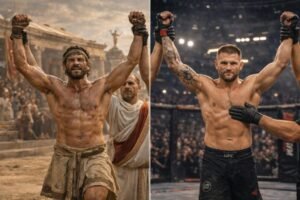
Pankration. Old vs New.

Worlds Apart — Ancient vs Modern Pankration

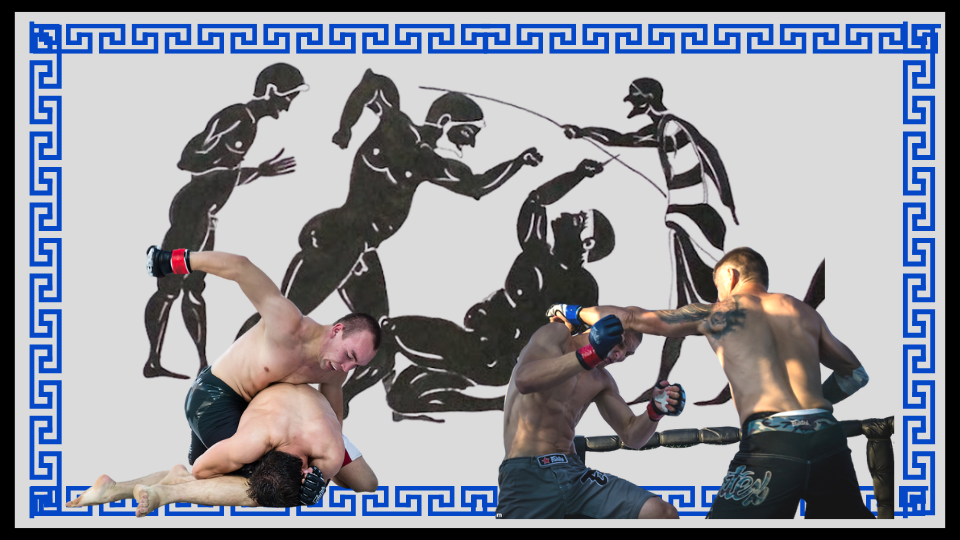
Ancient pankration and its modern forms share a name — but not the same discipline. What began as a brutal, open-ended contest now exists as structured sport and reconstructed systems. Understanding that divide is key to understanding what pankration was — and what it has become.

Table of Contents

🏛️ Three Interpretations — One Name

The modern revival of pankration has produced three distinct interpretations of the discipline. They share a name—but they do not represent the same kind of practice.

Ancient pankration functioned as a combat sport defined by minimal rules and decisive outcomes. Neo-Pankration emerged as a modern attempt to reconstruct the art as a combat system, built around integration and adaptability. Pankration Athlima developed as a regulated sport, structured for safe and repeatable competition.

These are not variations of a single system. They are separate responses to the same underlying idea, shaped by different constraints, priorities, and environments.

🏟️ The Ancient Combat Environment

Ancient pankration developed within a framework defined by minimal restriction and decisive outcomes. There were no weight divisions, no protective equipment, and no imposed time limits. A contest ended only when one fighter could no longer continue—through submission, incapacitation, or exhaustion.

This structure dictated how the system functioned. Without time limits, pacing strategies were limited. Fighters could not rely on surviving rounds or winning on points; they had to impose a decisive outcome. Without weight classes, physical disparity was a constant factor, requiring adaptability rather than optimisation for a narrow bracket. With few restrictions on technique, effectiveness took priority over safety or presentation.

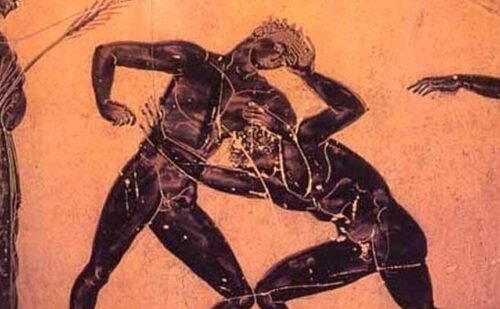
Pankration. Greek culture. Greek history. History of the Olympics. Ancient civilisations. Ancient civilizations. greco roman wrestling

Ancient pankration was shaped by its conditions—no weight classes, no time limits, and minimal rules—requiring fighters to impose decisive outcomes under continuous pressure.

The result was a system selected for durability, pressure, and the ability to operate across all phases of combat without interruption. Techniques were not shaped by rulesets or scoring criteria. They were retained or discarded based on whether they worked under these conditions.

Ancient pankration was not just different in intensity—it was different in structure, and that structure dictated everything that followed.

🧠 Neo-Pankration — A Concept Without Structure

Neo-Pankration did not attempt to recreate the ancient environment or operate as a regulated sport. It approached pankration as a training concept—focused on developing a fighter capable of functioning across all phases of combat.

Because it was not tied to a formal ruleset, it was not shaped by scoring systems, weight divisions, or competitive constraints. This allowed for broader technical inclusion and an emphasis on adaptability, transitions, and functional application rather than compliance with a specific format.

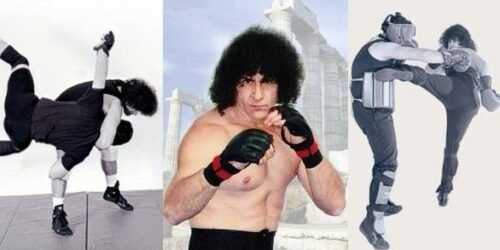
Best martial arts. Jim Arvanitis. Pankration. Greek culture. Greek history. Best martial arts for self defence. Best martial arts for street fighting. Neo-Pankration. Mu Tau Pankration.

Neo-Pankration functioned as a training concept—integrating striking and grappling without the constraints of a ruleset, but lacking the structure required for standardisation, evaluation, and long-term development.

However, this flexibility came with structural limitations. Without standardisation, there was no unified framework for progression, no consistent method of evaluation, and no competitive environment to refine the system under pressure. Interpretation varied between practitioners, and development remained dependent on the individual rather than the collective.

As a result, Neo-Pankration did not establish itself as a sustained discipline. It remained an approach—one that explored the idea of integrated combat, but lacked the structure required to preserve or evolve it over time.

🥋 Pankration Athlima

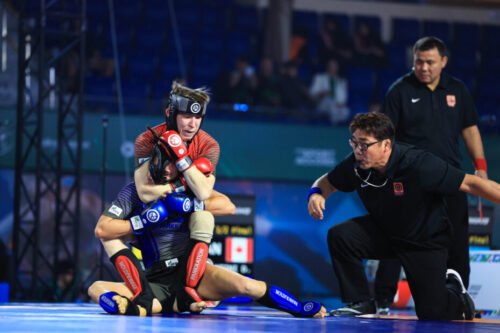
Modern pankration, in the form of Pankration Athlima, operates within a regulated competitive framework designed for consistency and safety. Competitions are structured around weight divisions, timed rounds, referees, and judging systems. High-risk techniques are restricted, and matches are governed by rules that allow for repeatable, organised competition.

These changes reshape the discipline at a fundamental level. Time limits introduce pacing. Fighters can manage energy, structure their approach around rounds, and adjust strategy based on scoring. Weight divisions reduce physical disparity, allowing for more specialised preparation. Rules and judging criteria influence technique selection, favouring actions that score or are permitted within the system.

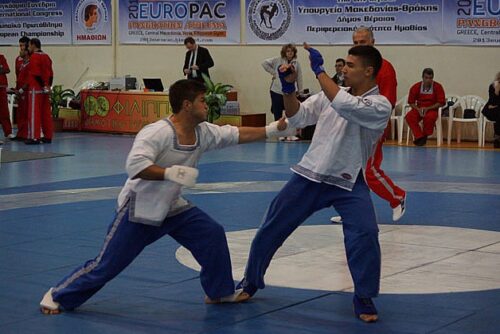
Best martial arts. Jim Arvanitis. Pankration. Greek culture. Greek history. IOC. International Olympic Committee. Martial arts for sports. Combat sports.

Pankration Athlima—too far removed from its ancient form, or an adaptation shaped by the demands of a more structured age?

In this environment, success is not defined solely by ending the contest, but by performing effectively within the framework of the rules. The system remains integrated—striking and grappling are still present—but is shaped by constraints that prioritise safety, structure, and competitive viability.

🥊 Where Modern MMA Fits

Modern Mixed Martial Arts (MMA) occupies a position that is functionally similar, but historically separate.

At a practical level, the overlap is clear. MMA integrates striking and grappling, allows transitions between phases, and rewards effectiveness across multiple domains of combat. In application, it often resembles what many imagine pankration to have been.

However, this similarity is not the result of direct lineage. MMA developed through cross-style competition, vale tudo, and the evolution of modern combat sports. It was not constructed as a reconstruction of pankration, nor does it rely on historical reference to define its structure.

It is best understood as a parallel evolution—arriving at a similar outcome through entirely different processes.

MMA. Mixed Martial Arts. UFC.

Modern MMA reflects a similar functional model—integrating striking and grappling—but developed independently through competition, not as a continuation of pankration.

⚖️ Have They Become Different Arts?

In practical terms, they have.

Ancient pankration was a combat system defined by minimal restriction and decisive outcomes. Pankration Athlima is a structured sport governed by rules, safety considerations, and competitive format. Neo-Pankration was a conceptual training approach focused on integration and adaptability, but did not establish itself as a sustained system.

They share terminology and a historical reference point, but they do not operate under the same conditions or serve the same purpose.

The distinction is essential. Without it, the term pankration becomes imprecise—suggesting continuity where none exists. With it, each version can be understood on its own terms, within the context that defines it.

⚖️ Strengths and Limitations — Pankration Athlima

As the only sustained modern form of pankration, Pankration Athlima operates within a structured competitive system. That structure provides clear advantages—but also introduces constraints that shape how the discipline functions in practice.

Pankration Athlima

✔️ Strengths

  • Defined Competitive Framework: Provides consistent rules, officiating, and organisation across events.
  • Measurable Progression: Allows fighters to develop and assess performance over time.
  • Integrated Skillset: Combines striking and grappling within a single competitive format.
  • Pressure Testing: Athletes apply techniques against resisting opponents in live conditions.
  • Accessibility: Scalable across age groups, experience levels, and amateur competition.

Limitations

  • Rule-Constrained Technique: Actions are shaped by what is permitted rather than what is purely effective.
  • Scoring Influence: Strategy is influenced by judging criteria, not solely by decisive outcomes.
  • Controlled Environment: Weight classes, time limits, and refereeing reduce unpredictability.
  • Restricted Technique Set: High-risk or damaging techniques are removed for safety.
  • Sport Over Combat: Emphasis shifts towards competition performance rather than open-ended fighting conditions.

🔮 The Future of Pankration

Today, pankration does not exist as a single unified system. It survives in a fragmented form, defined by historical reference rather than continuous practice.

Pankration Athlima remains the only structured version operating as an organised sport, sustained through governing bodies and competitive events. It provides a framework that allows the discipline to exist in a modern context—but within clearly defined constraints.

Modern pankration remains divided—sustained as a regulated sport in Athlima, while MMA continues to define and evolve integrated combat at the highest level.

At the same time, modern MMA has become the dominant platform for integrated combat. It offers a higher level of competition, broader visibility, and a fully developed competitive ecosystem. In practice, it has absorbed the functional role that pankration once represented.

There is no clear path toward convergence. These systems are shaped by different objectives, structures, and environments. One survives as a regulated sport tied to its historical identity; the other continues to evolve as the leading format for modern combat competition.

🧭 Where This Leaves You

Understanding these distinctions only matters if it clarifies what exists in practice.

If you are interested in structured competition, clear rules, and a defined pathway, Pankration Athlima provides a regulated environment built around integrated striking and grappling. It offers consistency, progression, and a system that can be trained and tested over time.

If your interest lies in open-ended combat, adaptability, and operating across all phases without restriction, that space is now occupied by modern MMA. While not derived from pankration, it represents the closest functional equivalent in terms of application and pressure testing.

Ancient pankration remains the reference point—useful for understanding the origins of these ideas, but not something that can be directly practised or reconstructed in full.

Each serves a different role. Only one continues under the name—but the broader concept of integrated combat has moved beyond it.

🧠 Final Note

Pankration is not preserved in a single continuous system. What exists today is a reconstruction—shaped by modern priorities, competitive structures, and the limits of historical evidence.

Pankration Athlima sustains the name within a regulated sporting framework. Modern MMA fulfils the functional role of integrated combat at a higher level of development. The ancient discipline remains a reference point, not a living practice.

What endures is the underlying problem pankration attempted to solve: how to operate effectively across all phases of combat.

The form has changed. The question has not.

Leave a Reply

Your email address will not be published. Required fields are marked *

This site uses Akismet to reduce spam. Learn how your comment data is processed.

error: Content is protected !!

Join the Super Soldier Project Mailing List Today!!