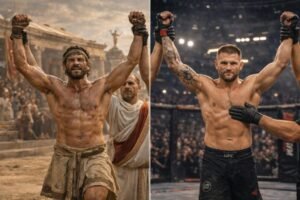
Best martial arts. Jim Arvanitis. Pankration. Greek culture. Greek history. IOC. International Olympic Committee. Martial arts for sports. Combat sports. Best martial arts for self defence. Best martial arts for street fighting.

Pankration Athlima — The Modern Sport

Pankration did not return as it once existed—it was rebuilt as a sport. Pankration Athlima provides the structure that earlier attempts lacked. It is the only form of pankration that continues to exist in practice.

Table of Contents

📖 Introduction

Pankration Athlima emerged as part of the modern effort to re-establish pankration within a structured, competitive environment. Rather than attempting to recreate the conditions of the ancient sport, it was built around rules, governance, and repeatable competition.

This approach prioritised organisation, safety, and consistency—creating a framework in which integrated striking and grappling could be trained, tested, and developed over time.

🏛️ Aris Makris and the Sporting Revival

While early efforts explored pankration as a combat system, a separate movement developed with a different objective: to establish it as a modern sport.

Aris Makris played a central role in this direction during the 1980s, working to formalise pankration within a structured competitive framework. Rather than attempting to recreate the conditions of ancient contests, this approach introduced rules, safety measures, and organised formats that allowed the discipline to function within modern sporting environments.

Aris Makris. Pankration. Greek culture. Greek history. Best martial arts. Combat sports. Best martial arts for self defence. Best martial arts for street fighting.

Through Aris Makris, pankration was reintroduced as a modern sport—structured, regulated, and built for competition.

This led to the development of Pankration Athlima.

Unlike reconstruction-based approaches, Athlima was built around competition from the outset. Its structure allowed techniques to be standardised, events to be organised, and athletes to compete under consistent conditions—providing a foundation for long-term development.

🌍 Institutional Development and Competition

Earlier efforts to reintroduce pankration into the modern Olympic framework had already failed, largely due to the absence of a standardised ruleset and the difficulty of aligning the discipline with modern regulatory structures.

Modern pankration did not return to the Olympic Games, despite renewed attempts in the early 2000s. Concerns around safety, regulation, and overlap with existing combat sports limited its acceptance within that framework.

However, the sport continued to develop through other channels.

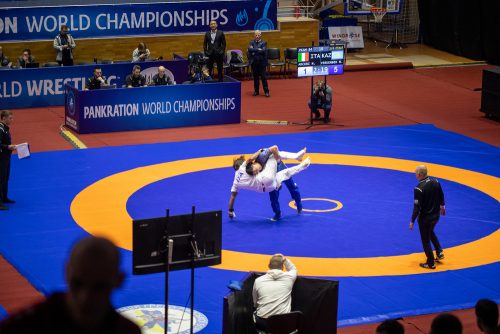
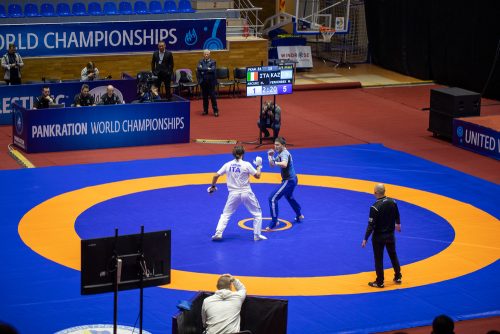
In 2010, pankration was accepted by United World Wrestling (UWW) as an associated discipline. This provided a degree of international structure and recognition, linking the sport to an established governing body.

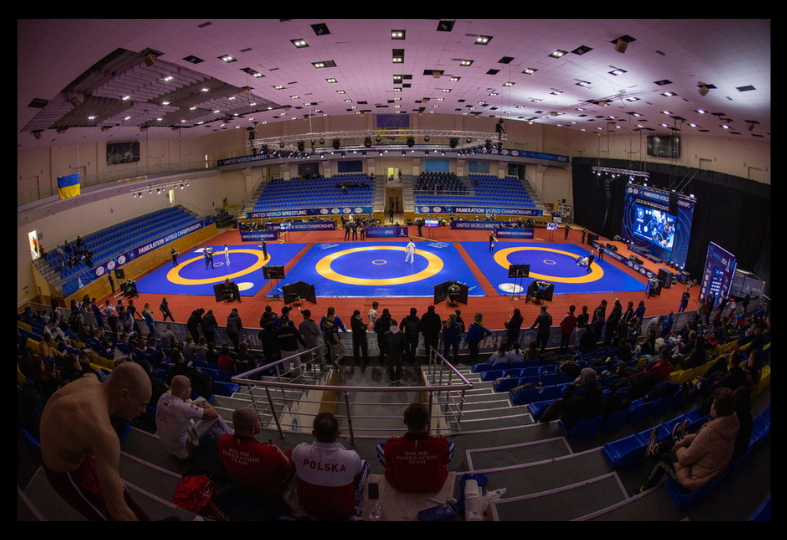
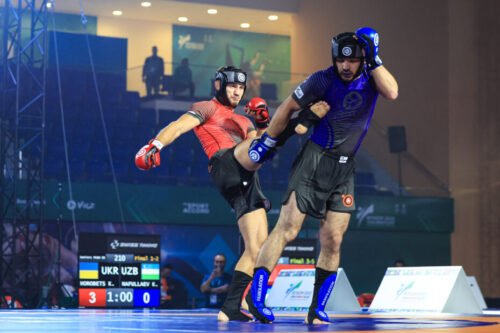
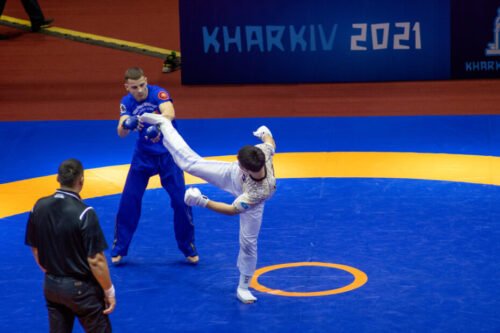
As Pankration Athlima developed, it reached the World Combat Games, marking its place within modern international competition.

Pankration has since been featured in events such as the World Combat Games, and continues to be practised across Europe and other regions through affiliated organisations and competitions.

While not widely visible compared to major combat sports, it exists as a functioning, organised discipline with a defined competitive framework.

⚙️ How Modern Pankration Competitions Work

Modern Pankration Athlima operates as a regulated combat sport combining striking and grappling within a structured competitive framework.

While inspired by the ancient discipline, it is defined by rules designed to ensure safety, consistency, and repeatable competition across events.

Competitions are typically overseen by governing bodies aligned with organisations such as United World Wrestling, contributing to the standardisation of rulesets at both regional and international levels.

⚖️ Competition Categories

Unlike the ancient sport, modern pankration uses weight divisions to create balanced matchups between competitors.

Athletes are further divided by:

  • Age group.
  • Experience level.
  • Gender.

This layered structure allows the sport to operate safely and consistently across amateur and competitive environments.

🥋 Two Main Competition Formats

Modern pankration is divided into two primary rule formats, each designed around a different competitive objective.

🛡️ Traditional Pankration

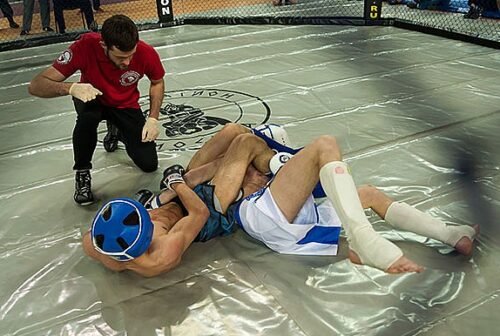
The Traditional format is structured for amateur competition and technical development.

Under this format:

  • Striking is controlled.
  • Direct punches to the head are typically restricted.
  • Protective equipment such as headgear and shin guards is used.

The emphasis is on control, positioning, and technical execution rather than damage or knockout.

This creates a regulated environment where fighters can develop skill without the full consequences of unrestricted contact.

🔥 Elite Pankration

Best martial arts. Jim Arvanitis. Pankration. Greek culture. Greek history. IOC. International Olympic Committee. Martial arts for sports. Combat sports.

The Elite format expands the ruleset and allows a broader range of techniques.

In Elite competition:

While still regulated, the pace increases and the margin for error narrows. Fights are more physically demanding and place greater emphasis on timing, durability, and execution under pressure.

Under this format:

  • Punches and kicks to the head are permitted.
  • Clinch fighting and takedowns are central.
  • Submissions such as chokes and joint locks are allowed.

While still regulated, the pace increases and the margin for error narrows. Fights are more physically demanding and place greater emphasis on timing, durability, and execution under pressure.

📊 Scoring and Victory Conditions

Modern pankration uses a point-based scoring system.

Points are awarded for:

  • Effective striking.
  • Successful takedowns.
  • Positional control.
  • High-impact offensive actions.
Pankration Athlima Best martial arts. Jim Arvanitis. Pankration. Greek culture. Greek history. IOC. International Olympic Committee. Martial arts for sports. Combat sports. History of the Olympics.

Matches can end in several ways:

  • Submission — a fighter taps or verbally concedes.
  • Knockout or stoppage — the referee intervenes.
  • Decision — based on points if time expires.

In some cases, a significant points advantage results in a technical victory.

This scoring structure changes the nature of the contest. Fighters are not only trying to finish—they are also managing time, position, and output within a defined system.

🎽 Equipment and Attire

Competitors wear lightweight equipment suited to both striking and grappling.

In Traditional formats, athletes may use a short jacket-style uniform known as an endyma, similar in function to a simplified martial arts gi.

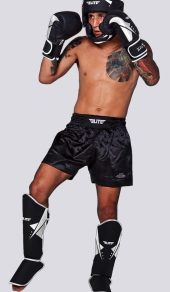
In Elite formats, attire more closely resembles modern hybrid combat sports, with fighters wearing shorts and protective gloves.

Depending on the ruleset and level of competition, additional equipment may include:

  • Shin guards.
  • Mouthguards.
  • Headgear.

This equipment reflects the priorities of the system—protection, regulation, and repeatable competition.

Pankration Traditional Uniform
Pankration. Pro fight gear

Amateur Pankratiasts may opt for the Endyma (left) a type of Gi.  The ‘Elite’ fighters usually opt for the MMA aesthetic with shorts and relevant protective gear.

🏁 Final Position

Pankration Athlima represents the only sustained modern attempt to establish pankration as a structured, competitive discipline. It does not recreate the ancient system in its original form. The rules, equipment, and format reflect modern priorities—safety, organisation, and repeatable competition.

Pankration Athlima Best martial arts. Jim Arvanitis. Pankration. Greek culture. Greek history. IOC. International Olympic Committee. Martial arts for sports. Combat sports. History of the Olympics.

Pankration Athlima preserves the core principle of integrated combat within a modern, regulated framework—sustained through structured competition rather than direct historical continuation.

What it preserves is the central idea: the integration of striking and grappling within a single contest. Unlike earlier reconstruction efforts, Athlima survives because it provides a framework that can be taught, tested, and developed over time.

It is not the ancient art reborn—it is the only version that continues to exist in practice.

➡️ Transition Forward

The final article Worlds Apart, compares ancient pankration with its modern forms—breaking down the structural differences that separate them and what those differences mean in practice.

Leave a Reply

Your email address will not be published. Required fields are marked *

This site uses Akismet to reduce spam. Learn how your comment data is processed.

error: Content is protected !!

Join the Super Soldier Project Mailing List Today!!