Neo-Pankration Best martial arts. Jim Arvanitis. Pankration. Greek culture. Greek history. Best martial arts for self defence. Best martial arts for street fighting. Neo-Pankration. Mu Tau Pankration.

Neo-Pankration — Reconstructing a Lost System

Neo-Pankration was an early attempt to reconstruct integrated combat in a modern context. It was not a preserved system, but an interpretation built from incomplete evidence. Its ideas endured—but the system itself did not.

Table of Contents

📖 Introduction

Neo-Pankration emerged as part of the broader twentieth-century attempt to reinterpret ancient combat systems in a modern context. It did not develop as a formal discipline, but as an approach—built around the integration of striking and grappling at a time when most martial arts remained separated by style.

Rather than preserving a historical system, it sought to apply an idea. What followed was an early attempt to construct a unified method of fighting from incomplete sources and cross-disciplinary experience.

🇺🇸 Jim Arvanitis — The Modern Revival Attempt

In the late 1960s, Jim Arvanitis, a Greek-American combat athlete, began exploring the idea of reviving pankration as a functional fighting system.

Working outside traditional martial arts structures, he studied a range of disciplines, including boxing, wrestling, judo, savate, and Muay Thai. Rather than committing to a single style, he focused on identifying what worked across them—particularly where striking and grappling could be combined.

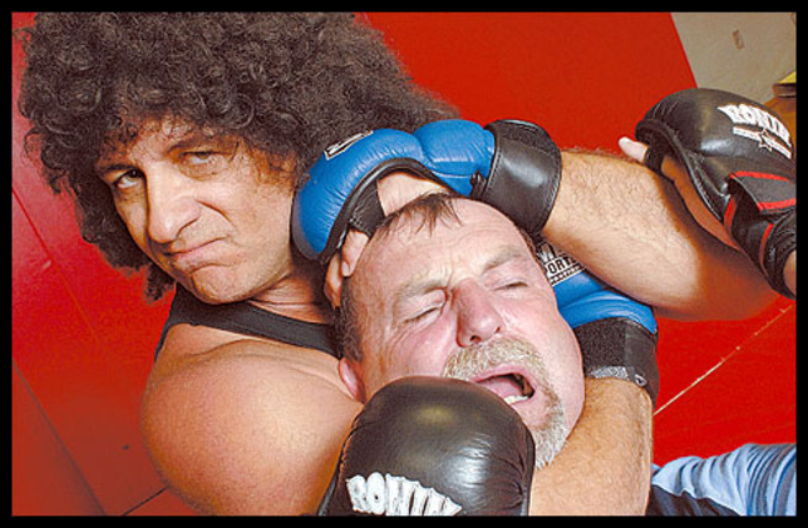
Neo-Pankration Best martial arts. Jim Arvanitis. Pankration. Greek culture. Greek history. Best martial arts for self defence. Best martial arts for street fighting. Neo-Pankration. Mu Tau Pankration.

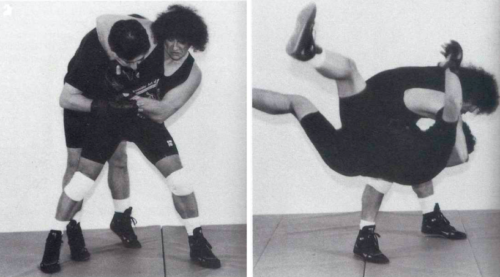
Jim Arvanitis developed Neo-Pankration by integrating striking and grappling, drawing from multiple disciplines to form a unified combat system.

At the time, this was not common practice. Most systems remained specialised, with clear divisions between stand-up striking and ground-based grappling. Arvanitis moved in the opposite direction, attempting to bring these elements together into a single, cohesive approach.

His work eventually became known as Modern Pankration or Neo-Pankration—not as a direct recreation of the ancient system, but as an interpretation shaped by limited historical sources and contemporary combat knowledge.

⚔️ A System Without Structure

Neo-Pankration does not exist today as a widely practised or standardised combat system. It has no unified structure, no competitive platform, and no clear lineage comparable to modern combat sports. It never developed the infrastructure required to sustain itself or evolve beyond its initial form.

That absence is not a failure of the underlying idea. The central premise—integrating striking and grappling into a single, fluid system—was correct. It addressed a real limitation in mid-20th century martial arts, where most systems remained divided along stylistic lines. Arvanitis recognised that separation as a weakness and moved towards a more complete model of fighting.

🧠 The Problem Was Structural

Neo-Pankration existed without a competitive engine. There was no ruleset forcing refinement, no consistent pool of practitioners testing the system under pressure, and no broader organisational framework to carry it forward. It remained an approach rather than a discipline.

A competitive structure does more than showcase fighters. It creates a continuous selection process. Techniques are tested against resistance, inefficient methods are exposed, and effective approaches are reinforced through repetition. Over time, this produces convergence—different practitioners arriving at similar solutions because ineffective options are removed.

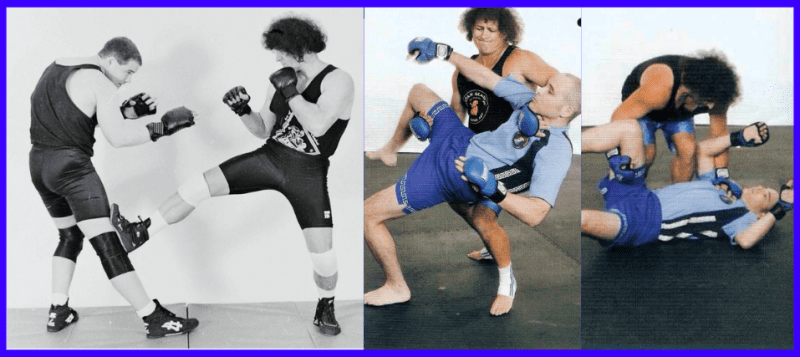
Neo-Pankration Best martial arts. Jim Arvanitis. Pankration. Greek culture. Greek history. Best martial arts for self defence. Best martial arts for street fighting. Neo-Pankration. Mu Tau Pankration.

Without a competitive framework, Neo-Pankration lacked pressure testing at scale—limiting refinement, filtering, and consistent technical development.

Without pressure testing at scale, there was no mechanism to filter what worked from what did not. What existed stayed largely static, dependent on individual interpretation rather than collective evolution. Without that process, development becomes fragmented. What works is determined locally, often based on limited experience or controlled environments. The result is variation without validation—multiple interpretations, none of which are consistently tested.

🥊 Overtaken by Modern MMA

By the time combat sports began to move in the same direction, they did so with far greater force and clarity. The emergence of modern MMA in the early 1990s provided exactly what Neo-Pankration lacked: a proving ground, a structure, and a feedback loop.

MMA imposed consequences. A fighter who could not wrestle was taken down. A fighter who could not defend submissions was finished. A striker without grappling awareness was neutralised. Integration was no longer theoretical—it was enforced.

MMA Defense. Mixed Martial Arts.

Modern MMA provided what Neo-Pankration lacked—a competitive framework where integration was enforced, tested, and refined under real resistance.

Fighters were no longer theorising about integration—they were applying it against resisting opponents in real time. The question Neo-Pankration attempted to answer was now being solved publicly, repeatedly, and under far greater scrutiny.

Just as importantly, this process was visible. Fights were recorded, analysed, and studied. Successful strategies spread quickly, creating a shared understanding of what effective fighting looked like. Neo-Pankration had no equivalent mechanism.

At that point, the distinction disappeared.

🧩 Absorbed, Not Rejected

What Neo-Pankration explored in isolation became standard practice within a system that could sustain and refine it. The ideas were not discarded—they were absorbed, tested, and developed at scale.

Gyms began to structure training around this integration. Fighters trained across disciplines by default, not as an experiment but as a requirement. Over time, the distinction between striker and grappler diminished, particularly at higher levels.

Striking, grappling, transitions, and positional control were no longer conceptual goals. They became baseline requirements. What had once been considered advanced or unconventional became expected.

🧭 A Transitional Role

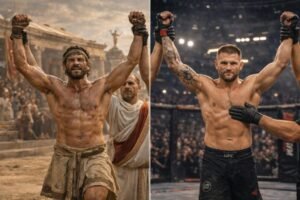
Neo-Pankration occupies a transitional position in the evolution of combat training. It represents an early attempt to return to the concept of total fighting seen in ancient pankration, but without the means to fully realise or preserve it in a modern context.

Ancient pankration operated with minimal separation between phases of combat. Neo-Pankration attempted to return to that condition through reconstruction. Modern MMA achieved it through competition.

What followed was not its continuation, but its replacement.

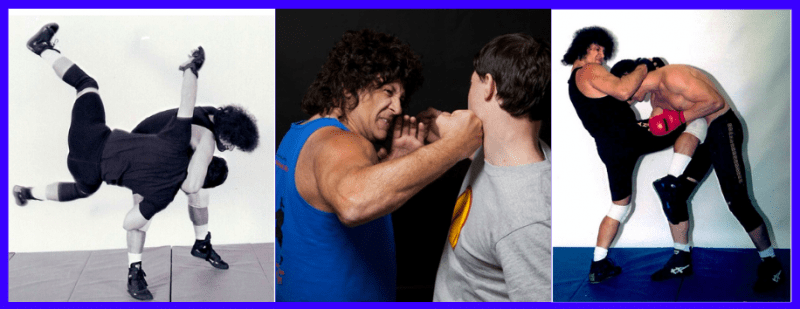
Best martial arts. Jim Arvanitis. Pankration. Greek culture. Greek history. Best martial arts for self defence. Best martial arts for street fighting. Neo-Pankration. Mu Tau Pankration.

Neo-Pankration marked a transitional stage—reintroducing integrated combat in concept, but ultimately superseded by modern MMA, where it was realised through competition.

🏁 Final Position

Neo-Pankration remains relevant as a marker in that progression. Not as a system to be followed, but as an indication of where combat training was heading before the structure existed to support it.

It was not wrong. It identified the direction of travel—but lacked the structure to carry it forward. It now shares the same fate as the original—no longer a living system, but a concept preserved in history.

➡️ Transition Forward

The next article focuses on Pankration Athlima, exploring its rules, competition structure, and role as a modern combat sport.

Leave a Reply

Your email address will not be published. Required fields are marked *

This site uses Akismet to reduce spam. Learn how your comment data is processed.

error: Content is protected !!

Join the Super Soldier Project Mailing List Today!!