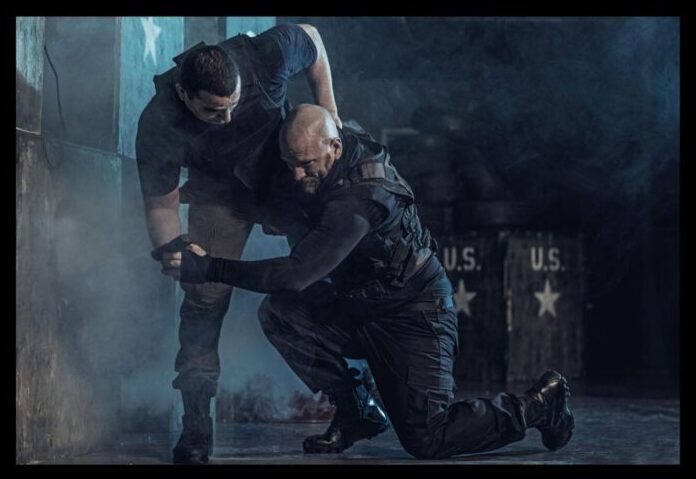
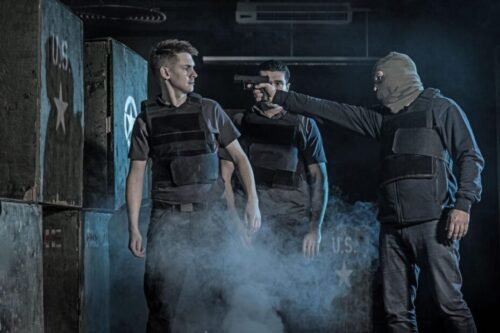
Krav Maga is not defined by technique alone. It changes with context, civilian, law enforcement, or military — where the objective, legal limits, and consequences shape how the system is applied.
Table of Contents
🔥 Introduction
Krav Maga is best understood as a framework shaped by environment, not a fixed martial art. Its structure is defined by constraints such as objective, legality, and operating conditions, not tradition or technical depth.
That is why it splits across three applications. Civilian self-defence, law enforcement use, and military use. The principles remain the same, but they are applied toward different ends, under different rules, and with different consequences.
⚖️ The Three Outcomes
At its core, the system divides cleanly.
Civilian: Escape the situation.
Law Enforcement: Control the situation.
Military or Special Forces: End the situation.
Same principles. Different rules. Different consequences.
🧍 Civilian
The “Stun and Run” Reality
The civilian version of Krav Maga is built for the courts, not the battlefield.
The objective is breaking contact. Survival means creating space, disrupting the threat, and getting out before the situation escalates. Winning is leaving, not dominating.
In a civilian context, the objective is not to control or dominate the situation, but to create an opportunity to disengage before violence escalates further.
Force must be justifiable, and that shapes everything. Training focuses on simple, direct actions that create a window to escape, rather than controlling or finishing the encounter.
This is the escape model in action. The longer you stay engaged, the worse your position becomes. Prolonged engagement increases legal risk as well as physical risk.
🚓 Law Enforcement
The Continuum of Control
Law enforcement sits in the middle ground, where the system becomes more complex.
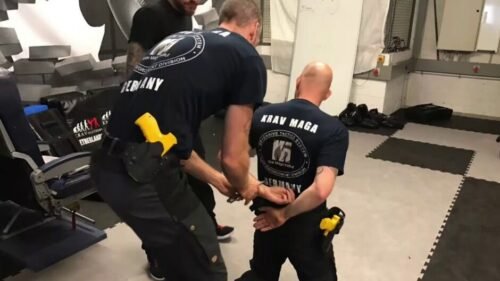
The objective is control and compliance. Officers cannot disengage. They must stay in the situation, manage resistance, and bring it to a controlled outcome.
This is where the control model becomes difficult.
Force operates on a continuum. That judgement is made in real time, often under incomplete information. It can escalate when needed, but it must also de-escalate. Every action must be justified, often under scrutiny.
Law enforcement application focuses on restraint, control, and managing resistance while remaining accountable for every level of force used.
The fight does not end when resistance stops. It ends when the handcuffs click. Until that moment, the situation is still live.
Weapon retention is constant. Every encounter involves at least one firearm, and preventing access to it becomes a priority throughout.
Training shifts toward close-quarters control. Clinch work, positional dominance, and restraint take priority. Striking is used when necessary, but it serves control, not damage.
Aggression here is controlled. It must be switched on instantly and switched off just as quickly once control is established.
🪖 Military and Special Forces
The Mission-First Reality
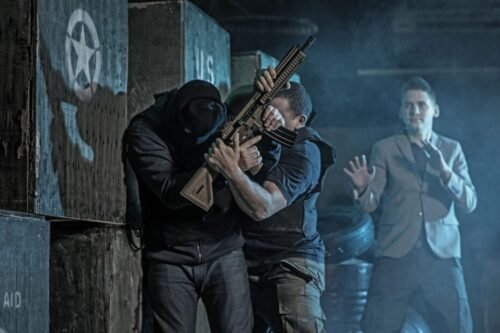
Military application removes those constraints entirely. In a special forces context, Krav Maga sits inside Close Quarters Battle. If empty hands are being used, something has already gone wrong.
This is the end-state model, stripped to its limit.
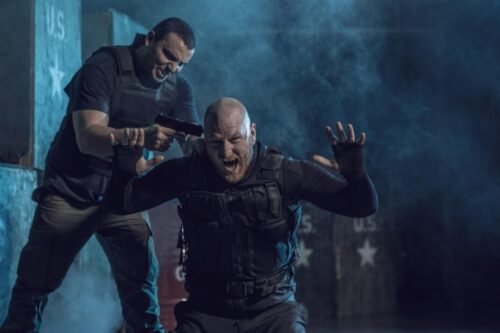
The objective is total neutralisation. There is no disengagement and no requirement to control. The task is to remove the threat immediately and continue the mission.
Violence is applied directly and without hesitation. Techniques focus on high-percentage targets because they work under pressure. The aim is not to fight, but to end the problem quickly and move on.
In military contexts, Krav Maga is integrated into close-quarters combat training, where unarmed actions are used to regain control, create space, or return to weapons quickly.
Weapons are always part of the system. Even unarmed actions exist to create space, regain control, or return to the primary weapon.
Training reflects that reality. It is pressure-driven, often chaotic, and reduced to what works when fatigue and stress take over. If something fails under pressure, it is removed.
At this level, the system becomes more restricted, not more complex. Fewer options. Faster execution. No margin for hesitation.
🌐 Beyond the Technique
The Professional Reality
What happens after the fight is often more important than the fight itself.
The environment becomes part of the system. Military application turns it into a weapon. Law enforcement uses it to control movement and reduce risk.
What happens next defines the context.
A civilian disengages, creates distance, and calls for help.
An officer moves immediately into control, search, and scene management.
A soldier scans the environment, reloads, and continues the mission.
The fight is only one phase of a larger process.
🧠 Decision-Making Under Pressure
The biggest difference is not technical, it is cognitive.
A civilian always has the option to disengage. Decision-making includes avoidance, timing, and exit.
Law enforcement removes that option. The individual must stay in the situation, assess continuously, and adjust force without losing control.
Military application compresses this further. Once a threat is recognised, action is immediate. Hesitation becomes a failure point. Same movement. Different decision trigger.
⚠️ The Legal Reality
Some organisations claim to teach “military Krav Maga” to civilians. The terminology is not the issue. The application is.
Military methods are built for environments where the objective is to eliminate a threat quickly and continue operating. Civilian self-defence exists under a completely different standard. In the eyes of the law, force must be reasonable, proportionate, and justifiable based on the threat at the time. That creates a problem.
High-pressure situations may require immediate action, but civilian self-defence is still judged afterwards on necessity, proportionality, and whether the response can be legally justified.
Techniques designed for rapid neutralisation often assume a level of force that may not stand up in court. Even in high-threat situations, such as facing a weapon, the response is judged on necessity, not intensity. What felt justified in the moment can be questioned after the fact, when the situation is broken down step by step, often without the pressure and urgency present in the moment. This is where context matters most.
Training methods that ignore legal boundaries do not make you more effective. They increase the risk of crossing a line you cannot justify later. In a civilian setting, the encounter does not end when the threat stops. It continues into statements, reports, and potentially a courtroom.
Understanding what you are allowed to do is just as important as knowing what you can do.
🎯 Final Position
Krav Maga is not defined by its techniques. It is defined by its context.
Military and law enforcement applications show how far the system can be pushed under pressure. Civilian training exists under a different constraint entirely. The techniques may overlap, but the responsibility does not.
Understanding context is central to Krav Maga. The techniques may overlap, but the objectives, consequences, and responsibilities do not.
In one environment, the objective is to end the problem immediately. In another, the response must be justified after the fact. That difference shapes not just how you act, but what you can defend later.
Seen clearly, the system becomes simple. Same principles. Different realities. Train for the reality you operate in, and the consequences that come with it.