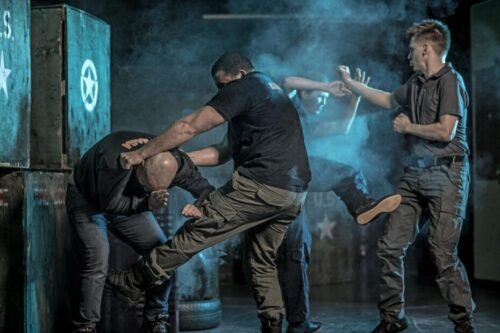
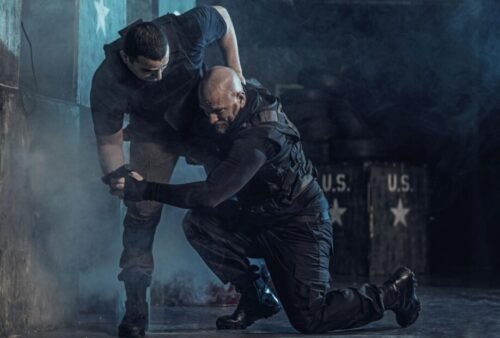
Krav Maga doesn’t offer transformation through theory. The benefits come from exposure to pressure, repetition, and decision making in training, not assumptions about how it will transfer outside it.
Table of Contents
🔥 Introduction
Krav Maga is built around a simple idea: deal with pressure quickly and effectively. In this context, pressure means time constraints, physical fatigue, unpredictability, and resistance.
In the previous sections, we looked at where the system came from, how it works, and what shaped it. Those conditions, limited time, constant uncertainty, and no margin for hesitation, defined how the system operates.
This section focuses on what that means in practice: how training affects awareness, decision-making, and the ability to function under pressure.
🧭 Awareness and Behaviour
One of the most consistent changes from training is not physical, it is behavioural.
Krav Maga builds a habit of paying attention. You begin to notice positioning, movement, exits, and intent in a way most people don’t. That does not make you paranoid, it makes you less likely to be caught off guard.
Krav Maga develops situational awareness through repetition and exposure, encouraging observation and early recognition rather than constant fear or paranoia.
Over time, this feeds into decision-making. Recognition becomes quicker, and acting on it becomes easier, whether that means disengaging, repositioning, or preparing to respond.
That alone removes a large proportion of avoidable situations.
🎯 Confidence — Without the Delusion
Krav Maga can improve confidence, but not in the way it’s usually sold.
It doesn’t make you “fearless.” If anything, it gives you a clearer understanding of how unpredictable and messy violence actually is. That tends to reduce ego rather than inflate it. You become more aware of what you can and cannot control.
Krav Maga training does not remove fear or uncertainty. It aims to improve how people respond when pressure and adrenaline take over.
The confidence that develops is more practical. It shows up as a willingness to act, not a belief that nothing can go wrong. It comes from exposure, dealing with pressure in training, being put in uncomfortable situations, and having to act while tired or overwhelmed.
Over time, that experience builds composure. Not certainty, just less hesitation.
🏋️ Physical Development
Training is physically demanding, but it isn’t structured like a strength programme or a sport-specific system.
Instead, it develops a broad base: general conditioning, muscular endurance, basic power, and the ability to keep moving under fatigue. This usually involves repeated bursts of effort with limited recovery rather than steady or controlled output. Sessions combine striking drills, pad work, movement, and scenario-based training, improving overall work capacity rather than peak performance in any one area. The aim is not to maximise output, but to maintain function under fatigue.
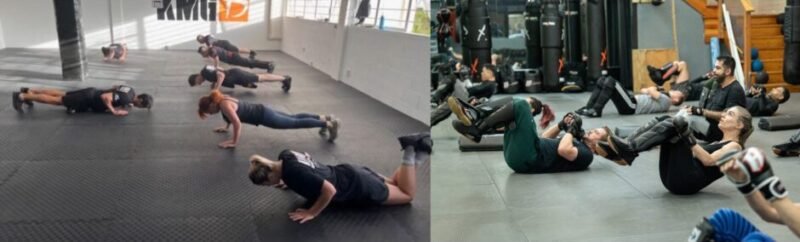
Conditioning sessions often combine pad work, bodyweight exercises, and pressure-based drills to improve endurance, resilience, and overall work capacity.
As a result, it’s effective for building baseline fitness, supporting weight loss, and increasing tolerance to fatigue. The physical demand comes from the context of training rather than structured progression.
However, it’s not a replacement for dedicated strength or conditioning work if those are your primary goals.
🥊 Practical Self-Defence
Krav Maga does give you usable tools, but within limits.
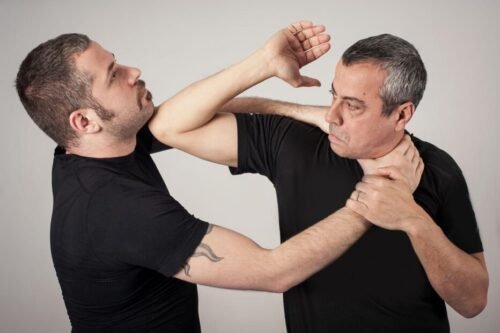
You learn how to respond to common threats such as grabs, strikes, and close-range confrontations, using simple movements that can be applied under pressure. This includes breaking contact, creating space, and making decisions quickly in confined or chaotic situations.
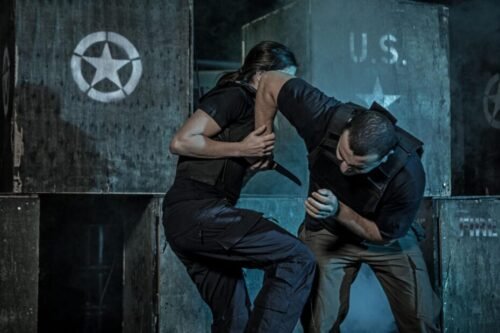
Knife defence training highlights one of Krav Maga’s core ideas: respond quickly, create space, and avoid prolonged engagement whenever possible.
The emphasis is on recall under stress, when time is limited and reactions are less precise. Techniques are kept simple so they do not collapse when adrenaline is high.
That said, effectiveness depends heavily on how the training is run. Without pressure, repetition, and resistance, techniques become familiar but may not hold up when it matters.
⚡ Reaction and Decision Speed
One of the more subtle benefits is reduced hesitation.
Training conditions you to act rather than pause when something happens. That doesn’t mean acting recklessly, it means shortening the gap between recognising a problem and responding to it. Repeated exposure to similar situations reduces the need to think through each response from scratch. The aim is not perfect decisions, but reducing delay.
This shows up in small ways:
Faster reactions to movement.
Less freezing under pressure.
More willingness to commit to a decision.
Less second-guessing once a decision is made.
It’s not about being faster in a technical sense. It’s about recognising and committing to a response more quickly.
The goal is not perfect reactions, but reducing delay and improving the ability to act decisively when pressure limits time for thought.
🪖 Stress Tolerance
Krav Maga training often introduces fatigue, pressure, and discomfort deliberately.
You get used to:
Working while tired.
Making decisions under time pressure.
Continuing after mistakes.
Regaining focus after disruption.
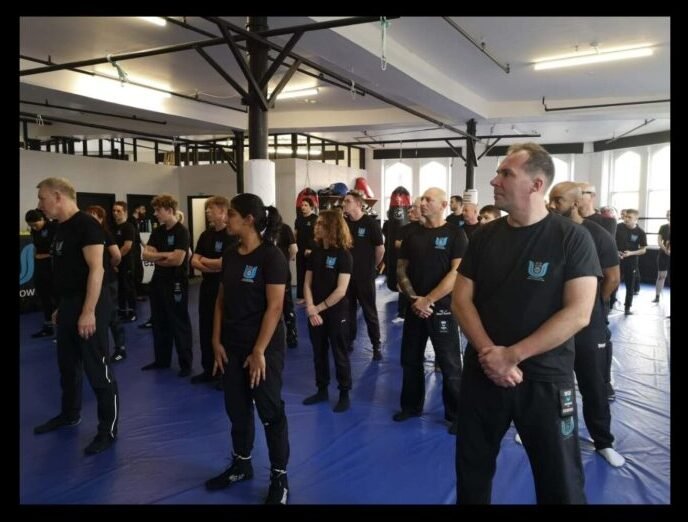
Controlled sparring and pressure drills expose students to fatigue, impact, and uncertainty in a structured environment designed to improve response under stress.
Repeated exposure reduces the shock of these conditions, so they become expected rather than disruptive. That builds tolerance. Not toughness in a dramatic sense, but familiarity with discomfort. The discomfort is still there, but it is no longer unfamiliar.
Over time, situations that would normally overwhelm you become more manageable because you have already experienced similar pressure in training. You are less likely to shut down or lose direction as pressure increases.
🧠 Emotional Control
There’s a contradiction here that’s worth understanding. Krav Maga teaches aggressive responses, but it also reinforces control. This improves with exposure.
You’re exposed to intensity within a structured environment. Drills are repeated under pressure, but within clear boundaries, forcing you to act without losing control. Over time, this improves your ability to regulate your response rather than react impulsively. The aim is not to suppress aggression, but to direct it.
Krav Maga training aims to develop controlled aggression, improving the ability to stay composed and make decisions under pressure rather than reacting emotionally.
In practical terms:
You’re less likely to panic.
Less likely to escalate unnecessarily.
More likely to act deliberately when needed.
That’s where the idea of controlled aggression comes from. It isn’t constant intensity, but something applied when required.
🧩 Problem Solving Under Pressure
Krav Maga is essentially applied problem-solving. The difference is not just speed, but how decisions are made under pressure.
You’re constantly forced to assess:
What’s happening.
What your options are.
What gives you the quickest way out.
Pressure-based training encourages faster recognition and decision-making, helping students respond more directly when situations become chaotic or unpredictable.
That process becomes faster with repetition. You don’t have time to think things through in detail, so you learn to recognise patterns and respond. Fewer options are considered in the moment, which makes decisions quicker and more direct.
This carries over beyond training. Not perfectly, but enough to influence how you respond under pressure. Not in a dramatic way, but in how you make decisions and adapt when things change quickly.
⚖️ The Trade-Off
Krav Maga offers broad, practical benefits, but it also comes with limitations.
It is not:
A deep technical system.
A sport with consistent, live resistance.
A replacement for specialised training in striking or grappling.
Because the system relies on simple responses under pressure, how it is trained determines how well it holds up.
Progress depends heavily on:
The quality of instruction.
The intensity of training.
Whether techniques are tested under pressure.
Without those, the benefits remain theoretical rather than usable.
📌 Final Reflection
Krav Maga doesn’t promise mastery, and it doesn’t try to. What it offers, when trained properly, is a shift in how you perceive and respond to pressure. You become more aware of your surroundings, quicker to recognise when something is off, and more decisive when action is required.
That change comes from exposure. Training places you under fatigue, discomfort, and time pressure, reducing hesitation over time. The confidence that develops is grounded in that experience. Not certainty, but a greater willingness to act.
Repetition under stress helps turn deliberate actions into faster, more instinctive responses when time and certainty are limited.
The physical side supports this, but the real value lies in how decisions are made under pressure. Recognising a problem, committing to a response, and creating an opportunity to disengage.
At the same time, those outcomes depend on how the system is trained. Without pressure and resistance, the same techniques lose their reliability.
Krav Maga isn’t a complete technical system. It’s a practical one. Not built for perfect execution, but for acting quickly enough to create space, make a decision, and get out safely when it counts.