Spartan Workout. 300 workouts. Strength and endurance workouts. Functional workouts.

Dine in Hades – Spartan 300 Workout

Welcome to the Spartan ‘300’ Workouts, a series of functional-based circuits aimed at developing power, explosive movement, speed, balance, coordination and strength building.

Click below to skip the introduction

Table of Contents

🛡️ This is Sparta!!!

Welcome to the Spartan 300 Workout — a brutal, high-volume test of strength, grit, and raw endurance inspired by the warriors of ancient Laconia. These sessions are designed to hit your whole body with relentless reps, minimal rest, and the kind of mental pressure that forces you to dig deep and refuse to break. A 300-style workout isn’t about finesse — it’s about surviving the grind, embracing discomfort, and proving you can keep moving long after your muscles tell you to stop.

Spartan Workout

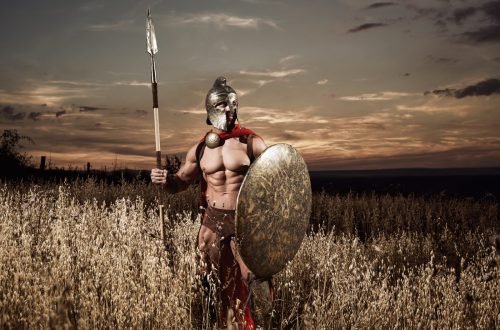
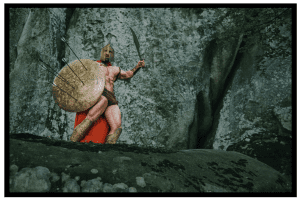
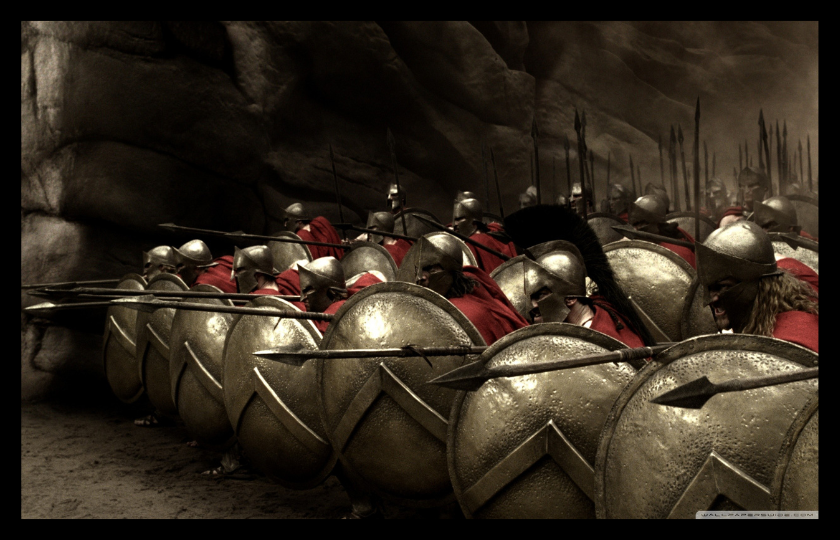
The crimson colour of their robes was symbolic of the pride they had in the women of their community. It was also meant to cause terror in their enemies.

🔥 Warrior State

Sparta itself was built on that same unforgiving ethos. Inspired by the reforms of Lycurgus, the Spartans forged a society where discipline, hardship, and unity shaped every citizen from boyhood. Through the agoge, Spartan youths were pushed to fight, endure hunger, steal to survive, and suffer punishment if caught — all to harden them into fearless hoplite warriors. Their constant drilling, iron discipline, and unshakeable mentality created one of the most formidable fighting forces in the ancient world. This harsh world later fuelled the legend that inspired modern depictions like 300, celebrating the resolve of men who stood their ground against overwhelming odds.

“Μολὼν Λαβέ — Come and take them.”

Leonidas to Xerxes, Thermopylae

The Agoge Circuits

Sparta Workout TITLE

⚔️ About the 300 Workouts

The Spartan “300” workouts combine bodyweight, resistance, and functional training to deliver fast, intense full-body conditioning. Each workout uses different equipment depending on the circuit. If you’re missing a specific tool, simply swap in a similar movement from another 300 workout — the goal is effort, not perfection.

⚔️ Format

Each workout follows the classic “300” format — a fixed total number of reps spread across multiple exercises.
You’re free to complete the movements in any order and break the reps however you want.

Example:
If the plan calls for 50 squats + 50 burpees, you can do:

  • 25 squats → 25 burpees → 25 squats → 25 burpees, or

  • all 50 squats, then all 50 burpees.

The structure is yours to shape — what matters is finishing every rep with minimal rest.

This style develops strength, power, endurance, and aerobic fitness — the same qualities a Spartan needed to hold a phalanx and strike with force.

Have fun — and earn your place in the ranks.

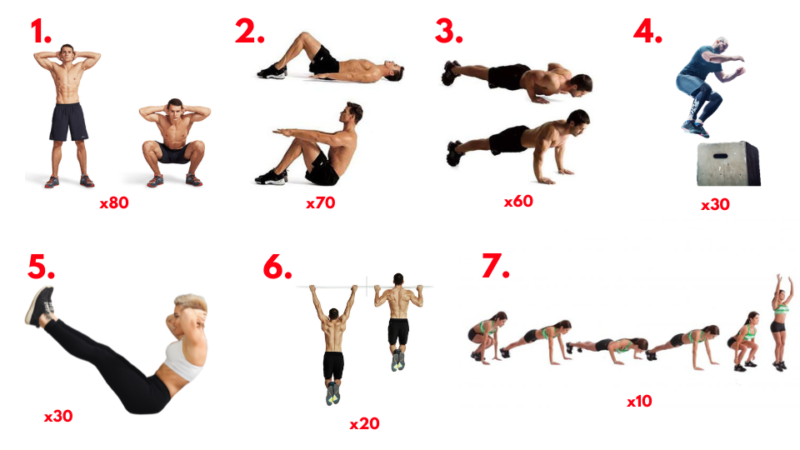
Bodyweight 300

  1. Bodyweight squats – 80 x reps.
  2. Crunches – 70 x reps.
  3. Push-ups – 60 x reps.
  4. Box jumps – 30 x reps.
  5. V-sit ups – x 30 reps.
  6. Pull-ups –  x 20 reps. 
  7. Burpees – x 10 reps. 
Prisoner squats. Crunches. Abs exercises. Push ups. Box jumps. V-ups. Pull ups. Burpees. Bodyweight exercises. Callisthenics. Spartan workout. 300 workouts.

Original 300

  1. Barbell deadlift – x 50 reps.
  2. Pushups (any variation) – x 50 reps.
  3. Box jumps – x 50 reps.
  4. Abdominal floor cleaners – x 50 reps.
  5. Single-arm clean and press (kettlebell or dumbbell) – x 50 reps.
  6. Alternate lunges with rotation – x 25 reps each leg.
Deadlifts. Triceps pushups. Triceps exercises. Exercises for legs. Back exercises. Best abs exercises. Core workout. Box jumps. HIIT cardio. HIIT workout. Kettlebell snatch. Kettlebell workouts. Sandbag exercises. Sandbag lunges.

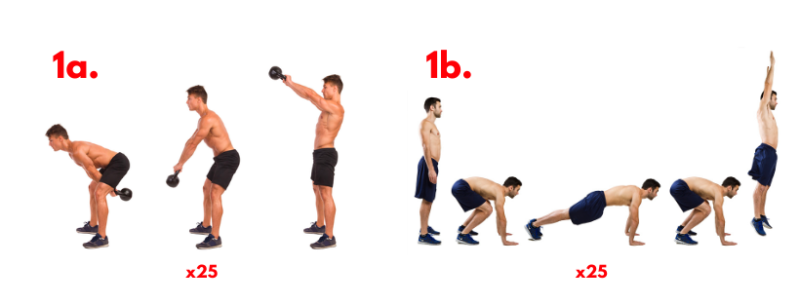
Kettlebell 300

  1. Kettlebell swings and burpees – x 25 reps.
  2. Single kettlebell deadlift – x 50 reps.
  3. Kettlebell pushup and row – x 50 reps (25 each side).
  4. Double kettlebell overhead squats – x 50 reps.
  5. Kettlebell plank drag through’s – x 50 reps.
  6. Cossack squats – x 10 reps – x 5 each side.
  7. Turkish Get Ups – x 10 reps (x5 each side).
  8. Double kettlebell push press – x 50 reps.
  9. Kettlebell swings and burpees – x 5 reps.
Spartan Workout. Functional Training. Kettlebell swings. Burpees. HIIT Circuit.
Spartan Workout. Functional Training. HIIT Circuit. Kettlebell exercises. Deadlifts. Renegade rows. Overhead squats. Kettlebell drag throughs. Kettlebell abs exercises. Core workouts. Cossack squats. Turkish get ups. TGUs. Kettlebell push press. Whole body workouts.
Spartan Workout. Functional Training. Kettlebell swings. Burpees. HIIT Circuit.
Spartan Workout

"Come back with your shield… or on it"

— Plutarch, Sayings of Spartan Women

Punchbag 300

  1. Superman punches – x 50 reps (25 each side).
  2. Bosu Ball ‘Shield’ Push-up – x 50 reps.
  3. Teep ‘Sparta’ kicks – x 50 reps (25 each side).
  4. Plate ‘Shield’ press and lunge – x 50 reps (25 each side).
  5. Knee thrusts – x 50 reps (25 each side).
  6. Ground and Pound Floor bag – x 50 reps (25 each side).
Spartan Workout. Functional Training. MMA Workouts. Punchbag workouts. Martial arts exercises. HIIT workout.

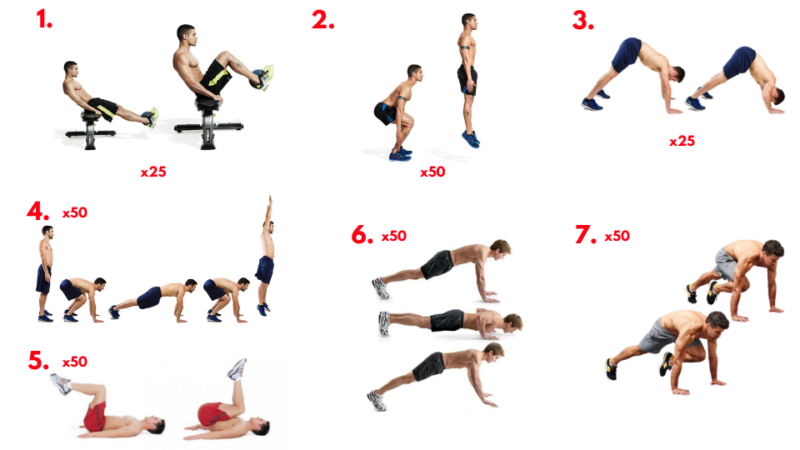
Dynamic Bodyweight 300

  1. Abdominals – In and outs – x 25 reps.
  2. Jump squats – x 50 reps.
  3. Pike push-ups – x 25 reps.
  4. Burpees – x 50 reps.
  5. Reverse crunches – x 50 reps.
  6. Plyometric push-ups – x 50 reps.
  7. Mountain climbers – x 50 reps.
300 WORKOUTS. Spartan workout. Muscular endurance. HIIT cardio.

The Agoge regimen combined both education and military training into one rigorous package.

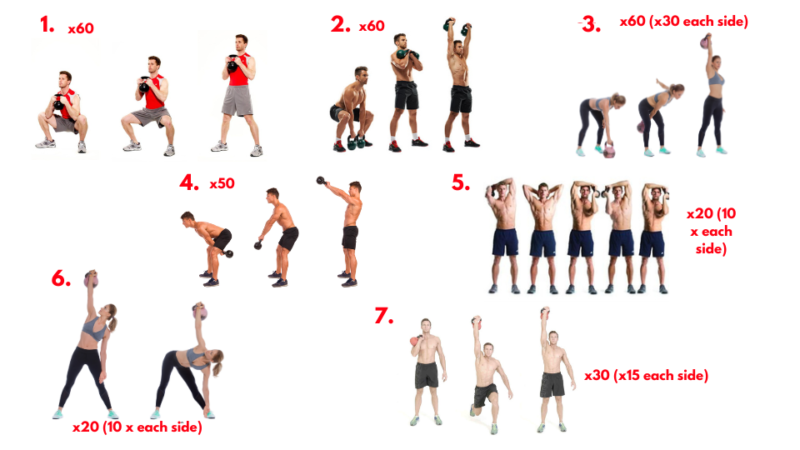
Kettlebell/Dumbbell 300

  1. Kettlebell Goblet squats – x 60 reps.
  2. Double kettlebell clean and press – x 60 reps.
  3. Kettlebell snatch – x 60 reps (x 30 each side).
  4. KB/DB swings – x 50 reps.
  5. Kettlebell halos – x 20 reps (x 10 each side).
  6. KB/DB windmills – x 20 reps (x 10 each side).
  7. KB/DB overhead lunges – x 30 reps (x 15 each side).

Barbell 300

  1. Deadlifts – x 50 reps.
  2. Back squats – x 50 reps.
  3. Military presses – x 25 reps.
  4. Triceps dips – x 25 reps.
  5. Hollow rocks – x 50 reps.
  6. Barbell chest press – x 50 reps.
  7. Dumbbell jump squats. – x 50 reps.
Spartan Workout. Functional Training. Resistance Workout. Barbell Circuit. Deadlifts. Back squats. Military press. Triceps dips. Bench Press. Weighted jump squats. Abs exercises. Whole body workout.
Spartan Workout

Spartan soldiers who lost their shields would be severely punished. This was because shields weren’t there to protect just the individual, but also to protect the entire army.

Next Level 300

  1. One-arm kettlebell swings – x 40 reps (x 20 swings each side).
  2. KB clean and press – x 40 reps (x 20 each side).
  3. Pull-ups – x 10 reps.
  4. T-Press ups – x 10 reps.
  5. Tire flips – x 20 reps.
  6. Weighted side lunges – x 30 reps (x 15 each side).
  7. Mountain climbers – (Both sides = 1 rep) x 50 reps.
  8. KB/DB windmills – x 40 reps (x 20 each side).
  9. Medicine ball slams – x 40 reps.
  10. One-legged burpee – x 20 reps (x 10 each side).

Whichever workout you undertake Remember to cool down and drink water!

Workout Complete!!

this is sparta! Workout Complete! Strength and Endurance Workout. 300 Exercises. Super Soldier Project.

🛡️ Appendix: Spartan History & Culture

For those who want to look deeper, this appendix offers a concise overview of the key forces that shaped Sparta and its warrior ethos. These entries expand on the history, customs, and conflicts that forged the society behind the legend.

Click the links below for more on Sparta society.

The foundations of Sparta’s militaristic society were attributed to Lycurgus, the semi-mythic lawgiver who shaped the state into a disciplined, collectivist war machine. His Great Rhetra laid out a strict system of laws emphasising loyalty to the state, austerity, physical toughness, and absolute obedience. Whether Lycurgus was a single historical figure or a composite of early reforms, the system credited to him forged the culture that defined Laconia for centuries.

Central to his vision was the belief that walls made men weak. Sparta would be defended not by stone fortifications, but by citizens forged through discipline and hardship — the famous “wall of men” that became synonymous with Spartan strength.

The agoge was Sparta’s state-sponsored education and warrior-conditioning system, beginning at age seven and continuing into adulthood. It was designed to create citizens who embodied endurance, discipline, and military excellence.

Training involved:

  • constant physical conditioning

  • barefoot living to toughen the feet

  • intentional underfeeding to harden the body

  • stealing for survival, punished only if caught

  • organised fighting among boys

  • ritualised humiliation to test composure

  • learning to endure pain without complaint

The agoge emphasised conflict as instruction. Older instructors and elders would deliberately provoke fights, believing the only path to a warrior mindset was through adversity and controlled cruelty.

Cowardice was socially fatal in Sparta. A man branded a coward (a tresantes) faced:

  • loss of political rights

  • public shame and exclusion

  • difficulty finding a wife

  • being forced to give up his seat for others

This harsh system ensured that fear of disgrace was often stronger than fear of death — a defining feature of Spartan psychology.

Sparta’s military supremacy was built on the labour of the Helots, an enslaved population primarily from Messenia. They worked the land so Spartan citizens could devote themselves entirely to war.

Helots lived under:

  • constant surveillance
  • routine intimidation
  • annual declarations of war by the ephors
  • the infamous krypteia, where selected Spartan youths hunted and murdered Helots to instil fear

This system kept the Spartan state stable but morally compromised — a reminder that behind the warrior myth lay an economy of exploitation.

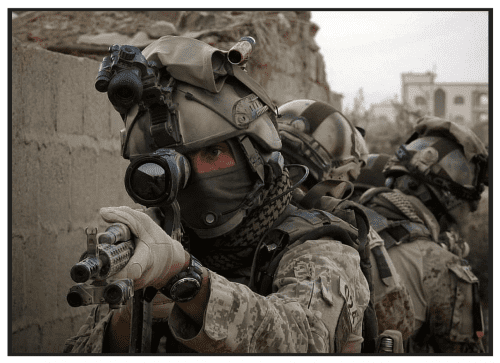
Spartan armies did not revolutionise battlefield tactics. Their strength came from:

  • Unmatched hoplite discipline.
  • Years of formation training.
  • Psychological endurance.
  • Collective cohesion.

The phalanx was only as strong as the weakest link, and Sparta’s lifelong training ensured its links rarely broke. This allowed them to dominate rival Hellenic states for generations.

Sparta was deeply religious, consulting the Oracle at Delphi for major decisions and observing strict rituals before battle. Yet this piety existed alongside ruthless pragmatism — infanticide of unfit infants through the exposure system, rigid class hierarchy, and unwavering commitment to military supremacy.

Sparta was a paradox: deeply devout, yet brutally functional; obsessed with order, yet capable of sanctioned violence at home and abroad.

Before war with Persia, the Greek world was a loose collection of independent city-states often feuding with one another. The Persian Empire had already attempted to subjugate Greece during the Ionian Revolt and the Battle of Marathon (490 BC), and Xerxes’ new invasion threatened to bring the entire Hellenic world under Persian rule. (mention how Persia was the superpower of its day here..)

Sparta entered the conflict not out of conquest but out of duty to Greece’s collective defence. As the strongest military power in the Peloponnese, it accepted leadership of the allied forces. Thermopylae was chosen as the first line of resistance — a narrow choke point where Sparta’s discipline could blunt Persia’s numbers and buy time for the Greek states to prepare.

The stand at Thermopylae (480 BC) became the defining symbol of Spartan courage. Led by King Leonidas I, the 300 Spartiates and their allies held the narrow pass against the massive Persian army, using discipline, cohesion, and terrain to neutralise overwhelming numbers. Their resistance delayed the Persian advance long enough for the Greek city-states to organise further defence.

Though ultimately overrun after being outflanked, the stand at Thermopylae entered legend as a testament to resolve in the face of impossible odds — a story preserved by Herodotus and immortalised in countless retellings. It remains one of history’s clearest examples of warriors choosing duty and honour over survival.

The Peloponnesian War (431–404 BC) was a brutal struggle between Sparta and Athens, the dominant powers of the Greek world. Athens led a powerful maritime empire through the Delian League, while Sparta commanded a land-based coalition through the Peloponnesian League. Rising tensions over influence, trade, and Athenian expansion eventually ignited a conflict that consumed Greece for nearly thirty years.

Sparta’s disciplined hoplites fought Athens’ superior navy in a prolonged war of sieges, shifting alliances, plagues, and political upheaval. Sparta eventually prevailed with Persian financial support, defeating Athens at sea and bringing an end to its empire. But the victory was hollow: Greece emerged weakened and divided, and Sparta’s attempt to dominate the aftermath overstretched its power. The war that cemented Sparta’s supremacy also sowed the seeds of its decline, leaving the once-mighty warrior state vulnerable to future rivals.


The Spartan legacy has captured the modern world’s imagination — from Thermopylae to the stylised retellings in 300. While the film exaggerates, its celebration of discipline, unity, and defiance reflects real aspects of Spartan ethos.

The truth?
Sparta was not a fantasy of perfect warriors — it was a complex, often brutal society that survived through discipline, fear, and collective purpose. But the idea of Sparta — a people hardened by training, united by courage, and willing to stand against impossible odds — remains one of history’s most enduring symbols of resilience.

If you have enjoyed this post please share or feel free to comment below 🙂

Related Posts

Our Other Posts


4 thoughts on “Dine in Hades – Spartan 300 Workout

  1. What a post! This is so chock full of useful information I can’t wait
    to dig deep and get started using the resources you have given me.

    King regards,
    Abildgaard Raahauge

    1. Hello Abildgaard, I am glad you enjoyed it. If you would like to see any aspect of exercise covered let me know. Hope your training is going according to plan.

  2. I’m (F54), 5’0 and 228 lbs; my son (M35) 5’11 285 lbs have been going to the gym together and our workouts have been not so productive, but more of me getting used to being there.

    We were looking at another really good website when I stumbled onto this one. I’m really grateful for the layout of your page. Even I understand it. You’ve made it look not as intimidating as the other sites.

    I have recurring knee problem on my right knee -not bone issues but poor muscles from lack of movement, and bad diet. Do you have any advice as I work my way through the list? I’m so sick of being sick and tired- literally I could sleep 20 hours a day and I have no other health issues- surprisingly.

    I’m ready to do this

Leave a Reply

Your email address will not be published. Required fields are marked *

This site uses Akismet to reduce spam. Learn how your comment data is processed.

error: Content is protected !!

Join the Super Soldier Project Mailing List Today!!