








Christmas indulgence isn’t the problem — delay is. This post lays out a controlled, realistic roadmap for returning to training after Christmas, rebuilding structure, and restoring momentum without injury, burnout, or extreme resets.
Table of Contents
🎯 Introduction
The Problem And The Promise
Christmas indulgence is normal. Overeating, increased alcohol intake, disrupted sleep, and missed training sessions are part of the season. The issue is not the festivities themselves, but what follows after they end.
For many, the post-Christmas period creates a convergence of excess calories, reduced physical activity, and broken routines. When left unaddressed, a brief period of indulgence quietly extends into weeks of inactivity and gradual weight gain — not because the damage was significant, but because inertia was allowed to take hold.
Overdoing it at Christmas… most of us have been there.
This post is not about guilt, punishment, or extreme resets. It is about regaining momentum with a simple plan you can actually stick to.
The objective is straightforward:
Restart training without injury or burnout.
Rebalance lifestyle habits without drastic measures.
Re-establish discipline before delay becomes habit.
If you are returning to training after Christmas — whether you slipped slightly or completely fell off track — this guide provides a clear and practical roadmap back to consistency. No hype. No January fantasy. Just a controlled return to work.
🧠 Post-Christmas Reality Check
After Christmas, things often feel worse than they really are. It’s not just physical — a lot of that heaviness is psychological. Getting a handle on that makes it easier to let go of guilt and focus on what actually matters.
😐 Overindulgence Happens
Christmas revolves around food, drink, and social downtime. Rich meals, sugary snacks, and alcohol intake rise sharply, while daily movement often drops. For most people, this results in a short-term calorie surplus, not long-term damage.
A few days of excess does not undo months of training. What causes problems is allowing that excess to spill into January through inaction and avoidance. The body is resilient; it responds quickly once structure returns.
🏋️ Training Disruption Is Normal
Training routines are easily disrupted during the holiday period. Gym closures, travel, family commitments, and late nights all contribute to missed sessions. When training resumes, workouts often feel harder, strength feels slightly reduced, and conditioning appears to have dipped.
This is expected. Perceived fitness loss is often greater than actual fitness loss. The body hangs on to more conditioning than you might think, especially when training starts again.
Ground zero. Here we go again, aim to smash the New Year hard.
⚠️ The Real Enemy: Inertia
The true danger of the post-Christmas period is not weight gain or reduced fitness — it is delay. The longer training is postponed, the heavier the psychological barrier becomes. Motivation isn’t lost; it’s usually edged out by hesitation.
Acting early prevents small setbacks from becoming entrenched habits. Momentum is rebuilt through action, not overthinking. The sooner routine returns, the easier the reset becomes.
🔄 Phase 1 – Getting Moving Again (Weeks 1–2)
The first phase after Christmas is not about performance or punishment. It is about restarting movement, restoring rhythm, and lowering resistance to training. This phase exists to rebuild momentum without creating unnecessary fatigue or injury risk.
Getting back into it after a heavy Christmas is never easy.
🚶 Ease Back In — Do Not Punish Yourself
After a short layoff, the body needs time to readjust. Jumping straight back into maximal efforts increases the risk of injury, excessive soreness, and early burnout — all of which delay progress rather than accelerate it.
The priority here is simple: re-establish the habit of training while leaving enough in reserve to return again.
⚖️ Restrain The Urge To Overdo It
For most returning trainees, the mistake is not doing too little — it is doing too much, too soon. Early sessions should feel controlled and deliberately restrained.
As a general rule, this phase involves:
Reduced training volume.
Lower overall intensity.
Shorter session duration.
Training should end with the sense that more was possible, not with relief that it is over.
🏋️ Strength First, Ego Last
Strength sessions should use lighter loads than pre-Christmas levels, allowing clean execution and controlled tempo. Numbers are irrelevant at this stage. What matters is restoring rhythm, movement quality, and confidence under the bar.
Strength returns quickly once consistency is re-established. There is no need to chase it.
❤️ Cardio As Support, Not A Crutch
Cardiovascular work plays a supporting role in this phase. Walking, cycling, swimming, and light running help restore energy expenditure and training rhythm without overstressing the system.
Cardio should complement the return to strength training, not replace it. Balance remains the objective.
Swimming is a low-impact, full-body workout that efficiently burns calories and strengthens muscles, making it an ideal way to bounce back into fitness after the holiday season’s indulgences.
⚡ Controlled Intensity (Optional)
If you already have a solid training base, you can bring in small amounts of controlled intensity if it feels appropriate. This is not the time for long endurance sessions or maximal intervals.
Brief bursts of effort, paired with generous recovery, help work capacity return without overwhelming the body. Kept simple and limited, this approach bridges the gap between inactivity and structured training.
Once regular movement has resumed, the emphasis shifts from simply being active to re-establishing structure. This phase is where training begins to take shape again. Discipline comes back, movement improves, and the body is set up for steady progress instead of quick fixes.
🏋️ Strength Training Returns
Resistance training now moves back to the centre of the programme. Full-body sessions performed two to four times per week provide enough stimulus for progress without overwhelming recovery.
At this stage, the focus is not on chasing numbers but on rebuilding rhythm. Loads should remain moderate, well below maximal effort, allowing clean execution and controlled tempo. Progression should be gradual and deliberate, resisting the urge to force intensity prematurely. When consistency is present, strength returns faster than expected.
🧠 Functional Movement Focus
This phase benefits from an emphasis on functional movement patterns — the foundational actions that carry over into daily life and long-term training. Rather than chasing novelty or complexity, the aim here is to rebuild competence in the movements that matter most.
Priority should be given to:
Squats and lunges for lower-body strength and joint resilience.
Hinges to re-establish posterior-chain engagement.
Push and pull movements for upper-body balance and shoulder health.
Carries and core work to reinforce stability, posture, and real-world strength.
Focusing on these patterns rebuilds usable strength while reducing injury risk. The objective is not to do more exercises, but to move well, consistently, before increasing load or intensity.
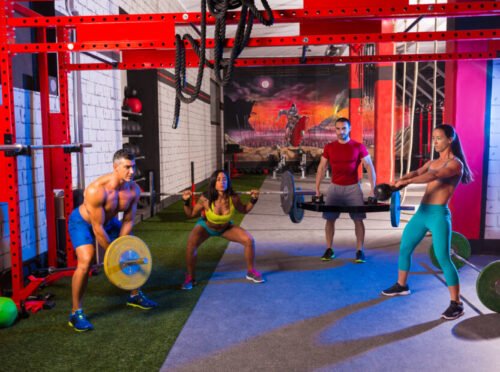
Aim to hit all areas in the gym, strength, cardio, endurance, core strength and of course flexibility and mobility.
🧘 Mobility And Recovery
As training volume increases, recovery becomes non-negotiable. Periods of inactivity often leave jointsstiff and movement restricted, making daily mobility work essential.
Simple post-session stretching, targeted joint mobility, and prioritising adequate sleep support adaptation and reduce setbacks. Skipping recovery at this stage can slow progress and make it harder to stay consistent.
🍽️ Lifestyle Reset (Without Extremes)
Training alone won’t undo Christmas indulgence. A bit of lifestyle rebalancing helps recovery, evens out energy levels, and supports fat loss without doing anything extreme.
🥗 Nutrition Rebalance
After Christmas, the priority is re-alignment, not restriction. Aggressive calorie cuts and sudden dietary overhauls often backfire, increasing fatigue, reducing training quality, and making consistency harder to maintain. At this stage, nutrition should support the return to training rather than compete with it. In practice, that means simplifying choices and getting some basic structure back, instead of chasing perfection or new ideas.
The most effective priorities are straightforward:
Protein intake to support muscle repair, recovery, and satiety.
Whole foods as the foundation of meals, reducing reliance on convenience eating.
Reduced ultra-processed foods, without attempting total elimination.
As training rhythm and daily structure come back, appetite and portion control usually settle on their own. Nutrition tends to improve as a result of consistency, not by forcing it.
Nutrition doesn’t need extremes — a bit of structure and simple food prep goes a long way.
💧 Hydration And Bloat Control
Hydration is often neglected during the festive period, yet it plays a quiet but significant role in restoring energy levels, improving digestion, and reducing post-Christmas bloating. Re-establishing consistent fluid intake is one of the fastest ways to feel better without changing much else.
The focus here is not optimisation, but normalisation. Simple adjustments are usually enough:
Consistent daily water intake, aiming for roughly 2–2.5 litres.
Reduced reliance on sugary drinks, which often displace proper hydration.
Occasional herbal teas if appetite or digestion feels unsettled.
These small corrections often produce noticeable improvements within days. Hydration supports training, recovery, and appetite regulation, without overcomplicating things.
🧠 Mindful Eating, Not Restriction
Mindful eating restores balance without turning food into a source of stress. Slowing meals down allows the body time to register satiety, improving portion control without calorie counting. Eating with fewer distractions, stopping when satisfied rather than stuffed, and reducing habitual snacking by default all help re-establish healthier patterns without needing rigid rules.
📆 Phase 3 – Locking In Consistency
With training and lifestyle habits stabilised, the focus now shifts to making consistencyautomatic. This phase determines whether the post-Christmas reset becomes a lasting routine or fades away once initial motivation wears off.
⏱️ Establish A Training Rhythm
Consistency is built through predictability, not motivation. When training decisions are made in advance, sessions are far more likely to happen — especially during low-energy or low-motivation periods. Establishing a rhythm means you’re no longer deciding each day whether to train — it’s already built into your schedule, with no negotiation.
The non-negotiables:
Fixed training days each week, chosen realistically.
Consistent training times where possible, reducing friction.
Sessions planned in advance, rather than decided on the day.
When these elements are in place, training stops being a question of if and becomes part of the expected routine. Momentum follows predictability.
Getting back into training isn’t about going hard — it’s about showing up consistently.
🎯 Simple, Measurable Goals
Early goals should prioritise behaviour over outcomes. Chasing weight loss, aesthetics, or performance metrics too early often leads to frustration, especially when the body is still re-adapting after a break. At this stage, goals work best when they reinforce consistency rather than reward intensity.
Goals should be easy to track, difficult to misinterpret, and directly linked to action:
Training sessions completed per week, regardless of load or performance.
Daily movement targets, such as steps or active time.
Adherence to planned sessions, rather than how hard they felt.
These types of goals create momentum by reinforcing the habit of showing up. Once consistency is established, outcome-based goals can follow naturally.
🔁 Progression, Not Perfection
Missed sessions and imperfect weeks are inevitable. The difference between progress and stagnation lies not in avoiding disruption, but in how quickly training resumes when it occurs.
Responding immediately after a break prevents small lapses from becoming extended absences. There is no need for compensatory or “punishment” sessions, which often create fatigue and increase the risk of injury. What matters is returning to the plan and continuing forward.
Consistency is not built through flawless weeks, but through long-term adherence. Progress is measured in months, not days, and training rewards those who resume calmly and deliberately rather than those who overcorrect emotionally.
🧠 Mindset – Discipline Over Motivation
Long-term progress is not driven by motivation. Motivation fluctuates. Discipline endures. The post-Christmas period exposes this difference clearly, as enthusiasm fades but habits either hold or collapse.
🪓 Drop The New Year Fantasy
The idea of a perfect reset in January often delays action rather than enabling it. Waiting for the “right” time creates unnecessary friction, prolongs inactivity, and quietly reinforces avoidance. There is no clean slate, no ideal start date, and no moment where conditions suddenly become perfect. Progress begins the moment training resumes, not when motivation peaks or circumstances align. Letting go of the New Year fantasy removes delay and restores urgency, replacing hesitation with immediate action.
🧭 Adopt A Long-Term Perspective
Meaningful physical change occurs over months, not weeks. January is about setting direction, not chasing immediate results. Expecting rapid transformation early in the year often leads to frustration and unnecessary course correction.
Sustainable progress comes from building training volume gradually, establishing reliable habits, and allowing physiological adaptations to accumulate naturally over time. Stick with it patiently and consistently, and the results tend to hold.
Motivation can be unreliable after Christmas. Often, one small decision is all it takes to break the inertia.
🧍 Ownership And Responsibility
Taking responsibility removes a lot of unnecessary mental clutter. You can drop the guilt, the justifications, and the overthinking, and focus on doing the work. With that shift, decisions usually feel more straightforward.
Training becomes non-negotiable, missed sessions are corrected immediately rather than rationalised, and results are understood to follow compliance, not excuses. Seen this way, things feel simpler — there’s less hesitation, less friction, and progress keeps ticking along without the emotional drag.
🧰 Optional Support And Guidance
While many people can re-establish consistency independently, additional support can reduce friction and accelerate progress when used appropriately. Guidance isn’t a weakness; when used well, it simply helps things move faster and more smoothly.
🧑🏫 Coaching And Structure
For those lacking structure or accountability, professional guidance can be highly effective. A qualified coach or personal trainer provides clear programming, manages progression, and ensures sound technique, removing uncertainty from the process. Group classes can also play a valuable role, offering built-in accountability and consistency, particularly for those who struggle to train alone or maintain momentum without external structure.
A personal trainer provides structure, accountability, and sensible progression when returning to training.
📊 Tracking (Minimal And Useful)
Tracking is a tool for awareness, not control. Used correctly, it helps identify patterns and reinforce consistency. Used excessively, it creates friction, stress, and unnecessary self-judgement. At this stage, tracking should remain deliberately simple. The aim is to confirm that work is being done — not to analyse it to death:
Training sessions completed, week to week.
Basic performance markers, such as loads used, reps completed, or distances covered.
Weekly consistency checks, rather than daily fluctuations.
This level of tracking provides enough feedback to guide decisions without becoming a distraction. If tracking starts to dictate behaviour rather than support it, it has already gone too far.
🏁 Conclusion – Start Now, Not Perfectly
Christmas indulgence does not undo progress. What undermines results is hesitation, not excess. The post-Christmas period is less about recovery and more about re-engagement.
A controlled return to training, supported by simple lifestyle adjustments and a disciplined mindset, restores momentum quickly. There is no need for extreme diets, punishing workouts, or unrealistic timelines. Consistent action, applied early, resolves most of the damage on its own.
After Christmas, there’s no need for big declarations or dramatic restarts. Getting back into training and setting a clear direction is more than enough to build a strong year.
The priority now is not optimisation — it is movement. One session leads to another. One proper meal restores balance. One decision to act breaks inertia.
Start today. Not aggressively. Not perfectly. Deliberately. Consistency will take care of the rest.
Wishing you all a Happy and Successful New Year!! Aim High!!
If you have enjoyed this post please share or feel free to comment below 🙂