Not everything from gladiator training belongs in the modern world. In this post, we break down what still applies — from progression and structure to endurance and mental discipline — and where modern training has moved beyond it.
Table of Contents
🔥 Introduction
Gladiator training was built for a specific purpose—preparing individuals for controlled combat under extreme conditions. That environment no longer exists, but the system behind it remains relevant.
This section does not attempt to recreate gladiator training. Instead, it examines which elements translate into modern practice, which do not, and where contemporary training has moved beyond them.
🧠 Progressive Development
One of the clearest carryovers into modern training is the idea of gradual progression.
Gladiators were not simply exposed to maximum effort from the outset. Training tools such as heavier practice weapons and repeated drilling suggest that physical capacity was built over time. Strength, endurance, and technical skill were developed progressively rather than all at once.
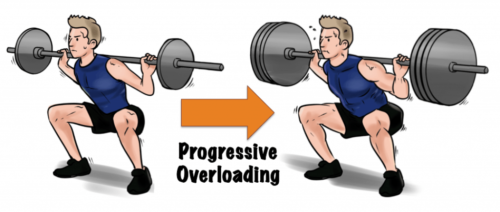
(Left) Milo and his bull. (Right) Modern day progressive overload training. The basics remain the same, centuries later.
Modern training formalises this approach through structured progression. The principle remains the same: adaptation occurs when the body is challenged incrementally and given time to respond.
The practical takeaway is simple: progression must be managed. Increasing load, volume, or intensity too quickly leads to breakdown. Progressing too slowly leads to stagnation. Effective training sits between the two—applied consistently, adjusted over time, and measured against performance.
⚙️ Structure and Variation
Training within the ludus was not constant in intensity. Effort was varied, and different elements of performance were developed across separate sessions.
This aligns with modern approaches that emphasise variation in training focus—balancing strength, endurance, and skill without overloading a single system.
Where ancient systems relied on observation and experience, modern training benefits from a clearer understanding of fatigue, recovery, and adaptation. The structure follows the same logic: sustained progress requires variation.
This is where many modern programmes fail. Too much intensity leads to fatigue and regression. Too little structure leads to inconsistency. Effective training requires both—planned variation, applied with intent, rather than random changes or constant maximal effort.
🪨 Practical Strength
Gladiator training prioritised usable strength.
Rather than isolating muscle groups, training involved lifting, carrying, and controlling weight in ways that reflected the demands of combat. Irregular objects, weighted equipment, and full-body effort were common features.
Modern equivalents exist in training that emphasises movement under load rather than fixed patterns. The appeal of such methods lies in their ability to develop coordination, grip strength, and overall physical control.
Resistance training in the ancient and modern worlds.
The principle is not the equipment—it is the outcome: strength applied under unpredictable conditions.
This distinction matters. Strength developed in isolation does not always transfer. Strength developed through movement, control, and instability tends to carry over more effectively into real-world performance.
Strongman training is a great way to build strength, muscle mass, and overall fitness, while also developing mental toughness and improving body composition.
⚡ Power and Movement
Speed and explosive movement were essential in the arena.
Gladiators needed to react quickly, close distance, and capitalise on openings. Training methods that combined force with speed were therefore critical.
Modern training isolates and develops these qualities more precisely, but the objective remains unchanged: the ability to produce force quickly and efficiently.
Power is not just strength—it is timing. The ability to apply force at the right moment often determines effectiveness more than raw output. Training that develops speed, coordination, and intent alongside strength produces more usable results.
Plyometric training can be a valuable addition to any fitness routine, as it can improve power, speed, agility, and bone health while also burning calories and improving athletic performance.
🏃 Endurance Under Fatigue
Gladiators were required to sustain performance over time.
Their training included repeated effort under fatigue—whether through drilling, movement, or simulated combat conditions. The goal was not simply endurance in isolation, but the ability to continue functioning while tired.
This distinction remains important in modern training. Endurance is not just about duration, but about maintaining output when fatigue begins to affect performance.
This is where conditioning becomes specific. General fitness has value, but performance under fatigue must be trained directly. Whether in combat, sport, or functional training, the ability to execute when tired separates preparation from performance.
Endurance training is a great way to improve your physical and mental health and increase your energy and stamina. This type of training gives you energy to go the extra mile.
🧱 Function Over Form
Gladiators were not trained for appearance.
Their preparation focused on efficiency—how well they could move, react, and apply force. Physical development was a byproduct of training, not the objective.
This contrasts with modern aesthetic-driven training approaches. However, performance-based training continues to follow the same principle: develop the body in relation to its demands.
Calisthenics are a great way to target areas of the muscles that some resistance can’t. They are also a great way to get the ‘extra squeeze’ out of fatigued muscles towards the end of training.
🧠 Skill and Repetition
A defining feature of gladiator training was repetition.
Movements were drilled repeatedly until they could be performed reliably under pressure. The aim was not variation, but consistency—refining technique to the point where it required minimal conscious effort.
This approach remains central to skill-based training today. Whether in sport or combat, repetition builds efficiency, timing, and control.
There is a trade-off here. Variation develops adaptability. Repetition develops reliability. Both are necessary—but without repetition, skill never stabilises. Under pressure, the body defaults to what it has repeated most.
Functional exercises such as the tire flip provide a full-body workout, targeting multiple muscle groups at once. They also build strength and endurance, improves cardiovascular health, develops power and explosiveness.
♨️ Recovery and Management
Gladiator training was physically demanding, and recovery played a necessary role in sustaining it.
Rest, lower-intensity activity, and bathing practices were used to manage fatigue and maintain physical condition. While the scientific understanding was limited, the importance of recovery was recognised.
Modern training expands on this with a deeper understanding of physiology, sleep, and recovery methods. The underlying idea, however, remains unchanged: progress depends on how well the body is managed between sessions.
Recovery is not passive—it is part of the system. Poor recovery limits progress regardless of training quality. Effective programmes manage load and recovery together, rather than treating recovery as an afterthought.
The Finnish tradition: sauna for relaxation and recovery, ice for inflammation and circulation. Together, they reset the body and sharpen recovery.
🍲 Diet and Fuelling
The gladiator diet was shaped by practicality.
Archaeological and written evidence suggests a reliance on carbohydrates such as barley and legumes, providing a consistent, affordable energy source. This differs from modern high-protein expectations but reflects the demands and constraints of the time.
Modern nutrition offers greater precision, allowing intake to be aligned with specific goals. What remains consistent is the principle: training performance depends on adequate energy and recovery support.
The key point is not the exact diet—but its function. Nutrition supports output, recovery, and consistency. Without sufficient fuel, training quality declines, regardless of programme design.
🧠 Mental Approach
Gladiators operated under constant pressure.
Their training environment required focus, discipline, and the ability to perform without hesitation. While the stakes are no longer comparable, the mental component of training remains relevant.
The ability to stay composed under fatigue, maintain discipline, and execute under pressure remains a defining factor in effective performance.
Mental training is not separate from physical training. It is developed through it—through repetition, fatigue, and controlled exposure to difficulty. The environment shapes the response.
Marcus Aurelius, an endless supply of Stoic wisdom. His ‘Meditations’ continue to be studied and admired by readers today for its wisdom, insight, and practical advice on how to live a good life.
⚖️ Limitations of the System
Not all aspects of gladiator training translate to modern practice.
Their methods were shaped by necessity, limited knowledge, and the constraints of their environment. Injury risk was high, and long-term health was not always a priority. Fighters were developed for immediate performance, not longevity.
Modern training benefits from advances in science, equipment, and safety. Load can be managed more precisely, recovery better understood, and injury risk reduced through improved methods and oversight.
This creates a clear divide. Gladiator training was effective within its context, but it was not optimised in the way modern systems are. Some practices were efficient. Others were simply the best available at the time.
Understanding gladiator training is valuable—but it should be viewed in context, not treated as a system to replicate.
🏛️ Conclusion
Gladiator training was not primitive. It was purposeful.
It combined structure, repetition, and physical demand to produce fighters capable of performing under pressure. While the methods were shaped by their time, many of the underlying ideas remain relevant.
What endures is not the spectacle, but the framework behind it. Progression, structure, repetition, and the ability to perform under fatigue remain central to effective training.
Modern systems have refined these ideas—making them safer, more efficient, and more adaptable. But the foundation remains recognisable.