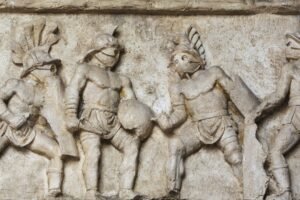
Gladiators were not thrown into the arena unprepared. In this post, we examine the world behind the spectacle — the training, structure, and systems that produced fighters capable of performing under extreme conditions.
Table of Contents
🔥 Introduction
This article examines the world of the Roman gladiators—how they lived, how they were trained, and what life inside the ludus actually looked like beyond the spectacle of the arena.
What survives of their world comes from scattered sources: medical writings, historical accounts, and archaeological remains. Taken together, they reveal something often overlooked—gladiators were not simply thrown into combat. They were trained, managed, and prepared within a structured system designed to produce fighters capable of performing under extreme conditions.
The Colosseum in Rome. Sight of many gladiator battles to the death. Still standing after all these years.
⚔️ Origins
In the Roman world, gladiatorial games served multiple purposes. For emperors and wealthy patrons, they were a display of power and status. Staging games required significant resources—arena construction, animal procurement, and the maintenance of trained fighters. Publicly, these events reinforced authority and projected control.
They also formed part of civic life. Games marked military victories, honoured the dead, and accompanied public celebrations. At the same time, they functioned as mass entertainment, drawing large crowds into controlled environments where violence was ritualised and expected.
The phrase “bread and circuses” reflects another layer. Providing food and spectacle helped maintain public order, diverting attention from political and economic strain. The arena, in this sense, was not chaos—it was a managed system of distraction.
Across the empire, amphitheatres hosted a range of spectacles: animal hunts, executions, and staged combats. Among these, gladiatorial bouts stood out—not simply for their violence, but for the level of preparation behind the fighters themselves.
🏛️ Gladiator Schools (Ludus)
Gladiators were trained within specialised schools known as ludi (singular: ludus), which operated throughout the Roman Empire. Some were small and provincial, while others—particularly those in Rome—were large, well-organised institutions capable of housing and training significant numbers of fighters.
Within these schools, gladiators were grouped into troupes known as familia gladiatoria, all under the authority of a lanista. The lanista acted as manager, organiser, and owner—responsible for recruitment, training arrangements, and contracts for fights. His role was both logistical and financial, ensuring that fighters were prepared and profitable.
Training within the ludus was structured and controlled. Although detailed records are limited, it is clear that there was no single universal method. Training varied depending on location, period, and the wealth of the school. Well-funded institutions could afford experienced trainers, better facilities, and medical care, while smaller or more remote schools operated with fewer resources.
Despite these differences, the underlying structure remained consistent. Gladiators were housed, trained, and managed within a system that prioritised discipline, repetition, and control. They were not left to improvise or fight unprepared—everything took place within a framework designed to produce reliable performers for the arena.
🧠 Trainers and Assessment
When a new recruit entered a ludus, he did not immediately begin full combat training. He was first assessed. The lanista, along with trainers and a physician, would evaluate his physical condition, build, and potential. Not every man was suited to every style, and early decisions were made about how he would be trained and what role he might fill in the arena.
Training itself was overseen by instructors known as doctores. These were often experienced or retired gladiators who specialised in particular fighting styles. A doctore retiarii, for example, would train fighters using the net and trident, while a doctore secutorum focused on those equipped with heavy armour and shield. This specialisation meant that instruction was not general—it was tailored, technical, and role-specific.
Under this system, gladiators were developed according to their strengths and assigned style. Training was not about turning every fighter into the same kind of combatant, but about refining specific attributes—speed, endurance, control, or power—depending on the demands of their role.
☠️ Learning How To Die
Gladiator training was not limited to physical preparation. It also addressed behaviour under pressure, including how a fighter conducted himself in defeat. The arena was as much a performance as it was a contest, and expectations extended beyond victory.
A defeated gladiator was expected to show composure. Panic, hesitation, or attempts to flee broke the code of the arena. Instead, fighters were trained to maintain control—even in the moment of loss. In some cases, this meant acknowledging defeat and awaiting the decision of the crowd or presiding authority.
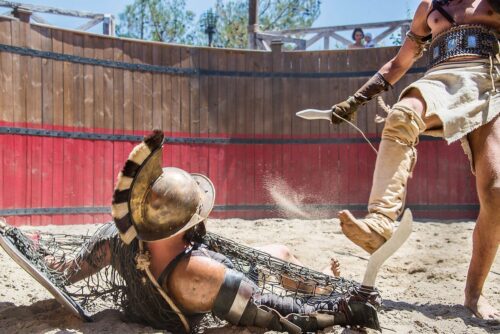
In defeat a Gladiator was expected to die gracefully, accepting their death. The Roman crowd’s did not like a coward.
Gladiator training was not limited to physical preparation. It also addressed behaviour under pressure, including how a fighter conducted himself in defeat. The arena was as much a performance as it was a contest, and expectations extended beyond victory.
A defeated gladiator was expected to show composure. Panic, hesitation, or attempts to flee broke the code of the arena. Instead, fighters were trained to maintain control—even in the moment of loss. In some cases, this meant acknowledging defeat and awaiting the decision of the crowd or presiding authority.
⚔️ Initial Training
Training began with control rather than intensity. New recruits—referred to as novicius—were not immediately exposed to full combat conditions. Instead, the early phase focused on building a foundation of movement, balance, and basic technique.
Wooden training weapons were used from the outset. The most common was the rudus, a wooden sword designed to allow repeated drilling without the risk associated with live steel. This reduced injury risk and ensured that fighters developed proper technique before being exposed to real combat conditions.
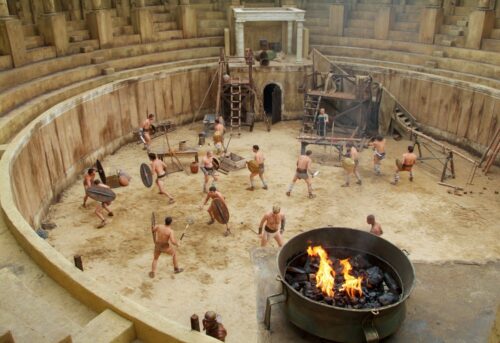
Gladiator training involved (naturally) a lot of sparring with weapons in preparation for the real thing. Practice makes perfect.
Early training emphasised repetition. Movements were drilled repeatedly until they became automatic—strikes, footwork, positioning, and defensive actions. The aim was not to overwhelm the recruit, but to establish control and consistency. Only once these fundamentals were in place would intensity increase.
As recruits progressed, they were no longer considered novices. They became tirones gladiatores—fighters in training who were approaching readiness for the arena. Advancement was based not just on physical condition, but on demonstrated control, discipline, and the ability to execute under pressure.
🛡️ Fighting Styles, Armour and Roles
Gladiator combat was not random. Fighters were trained and equipped according to specific styles, each with its own weapons, armour, and tactical approach. These roles were carefully matched to create contrast in the arena—pairing speed against protection, agility against strength.
Heavily armoured types, such as the murmillo or secutor, carried large shields and short swords. Their training emphasised endurance, defence, and controlled pressure. In contrast, lighter types like the retiarius fought with minimal armour, relying on speed, reach, and positioning, using tools such as the net and trident to control distance and create openings.
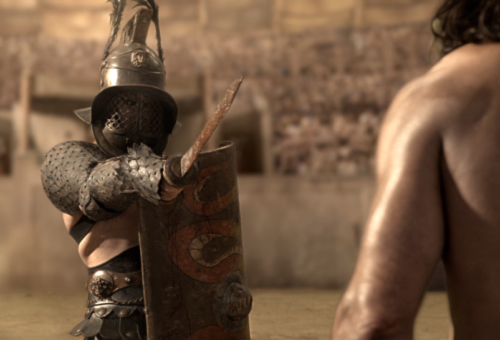
Some of the types of Gladiator that could be found in arenas throughout the Roman world.
These differences shaped how each gladiator trained. A heavily armoured fighter needed to operate efficiently under load, conserving energy while maintaining defensive structure. A lightly equipped fighter, by contrast, depended on mobility, timing, and precision. Training was therefore not general—it was adapted to the demands of each role.
Matchmaking in the arena reflected this system. Pairings were designed to create balance and tension, ensuring that neither fighter held an overwhelming advantage from the outset. As a result, gladiator training was built around preparation for a specific type of opponent, rather than broad, unfocused combat ability.
⚖️ The Reality Of The Arena
Gladiatorial combat was not an uncontrolled fight to the death. While the risk was real, outcomes were often managed. Training a gladiator required time, resources, and investment, and organisers were not inclined to waste fighters unnecessarily.
When a bout turned decisively, the defeated gladiator could signal submission—typically by raising a finger. At that point, the outcome was no longer determined solely by the fighters. The presiding authority, often influenced by the crowd, would decide whether the defeated man lived or died.
Popular perception often reduces this moment to a simple gesture, but the reality was less clear-cut. Signals varied, and decisions were influenced by multiple factors, including the performance of the fighters, the expectations of the audience, and the interests of those staging the event.
Execution did occur, but it was not automatic. Skilled or popular fighters were often spared, particularly if they had performed well. From a practical standpoint, preserving trained fighters made sense.
Even in victory, actions were controlled. The final blow, when required, followed established practice—delivered quickly and decisively. The aim was not prolonged brutality, but a conclusion that aligned with the expectations of the arena.
🏆 Status, Reputation and Survival
Not all gladiators were treated equally. While many lived under strict conditions, successful fighters could rise in status within the system. Performance in the arena mattered—not just in terms of victory, but in how a fight was conducted.
Gladiators who demonstrated skill, composure, and consistency became valuable assets. Their survival rates improved not by chance, but because they were worth preserving. A proven fighter could draw crowds, enhance the reputation of a ludus, and generate profit. As a result, these individuals often received better treatment—improved living conditions, medical care, and closer attention from trainers.
Being popular with the crowd came with bonuses, money, fame, women.. it also meant the crowd might be on your side if you were defeated and the choice whether you live or die was up to them.
Reputation extended beyond the training ground. The crowd played a role in shaping a gladiator’s fate. A fighter who performed well, showed resilience, or maintained composure under pressure could gain favour. In moments where a decision was required, this favour could influence whether a defeated gladiator was spared.
This introduced another layer to training. Gladiators were not only prepared to fight effectively, but to perform within the expectations of the arena. Control, presence, and the ability to hold the attention of the crowd became part of survival.
For most, this level of status was out of reach. Many gladiators lived and died without recognition. But within the system, the path existed—performance, discipline, and consistency could elevate a fighter beyond basic survival.
🏚️ Living Conditions and Daily Life
Life inside the ludus was controlled and structured. Gladiators were housed in barracks or small cells, often with limited personal possessions. Movement was regulated, and daily routines revolved around training, rest, and preparation for upcoming bouts.
Conditions varied depending on the wealth and status of the school. Well-funded institutions could provide better accommodation, medical care, and food, while smaller or provincial schools operated with fewer resources. Despite these differences, the overall environment remained disciplined and restrictive.
Gladiator diets were simple and functional, centred on barley and legumes to provide sustained energy at scale. Mineral-rich ash drinks were also used to support recovery and bone strength.
Physically, gladiators were not necessarily lean in the modern sense. A layer of body fat may have been maintained, offering a degree of protection against superficial wounds. The objective was not appearance, but durability—ensuring that fighters could train consistently and withstand the demands of combat.
Regardless of background—slave, prisoner, or volunteer—gladiators existed within a system that prioritised discipline and control. Individual circumstances varied, but the structure of daily life remained largely the same.
⚰️ Death and Theatre
The conclusion of a bout, when it resulted in death, followed established practices. The arena operated within a framework of ritual as well as combat, and even the confirmation of death was handled in a controlled manner.
Ancient sources describe attendants entering the arena after a decisive outcome. Some were dressed in the guise of mythological figures associated with death and the afterlife, such as Charon or Mercury. Their role was practical—to confirm that the defeated fighter was no longer alive.
No Mercy
If a gladiator was seriously wounded or threw down his weapon in defeat, his fate was left in the hands of the spectators. The losing gladiator often appealed for mercy by dropping his weapon and shield and raising a finger. His opponent could then decide to show mercy, or not.
Since there was the possibility of meeting again in the arena, it was the smart play to simply kill an opponent. However, local rulers and fight organisers would often let the people make the decision. If the emperor were present then he would decide, although the crowd would certainly try to influence his judgement by waving cloths or gesturing with their thumbs.
Contrary to popular belief that the ’thumbs down’ gesture was a signal to finish off a fallen gladiator, some historians think the sign for death may have actually been the thumbs up. Whereas a thumbs down might have actually signalled for mercy. Whatever gesture was used, it was typically accompanied by cries of either shouts of “Mitte!” (let him go) or “Iugula!” (execute him). The victorious gladiator would then finish off their fallen opponent by stabbing his opponent between the shoulder blades or downwards through the supraclavicular fossa (the dip between your neck and shoulder) and into the heart.
One method involved the use of a heated object to test for any sign of response. If movement was detected, the fallen gladiator could be dispatched quickly to bring the contest to a close. The intention was not prolonged spectacle, but certainty. Once confirmed, the body would be removed from the arena, allowing proceedings to continue.
This process reflects the structured nature of the games. Even in death, there was a defined procedure—ensuring that the outcome of each contest was clear and final.
⛪ The End of Gladitorial Combat
Gladiatorial games did not end abruptly, but declined over time as conditions within the Roman Empire changed. Economic strain, political instability, and the increasing cost of staging large-scale events made them harder to sustain.
Cultural and religious shifts also played a role. As Christianity spread throughout the empire, attitudes toward public violence began to change. What had once been accepted as spectacle came under greater scrutiny.
Christianity was not popular in the early Roman world. Many were martyred to wild animals and gladiators to the delight of the bloodthirsty crowds. Ironically it would be Christianity that would sound the death knell for Gladiator Combat.
By the early 5th century, official support for the games had weakened significantly. The reign of Emperor Honorius is often associated with their formal suppression, although smaller-scale events may have continued for a time in some regions.
Over time, gladiatorial combat faded from public life, replaced by other forms of entertainment such as chariot racing and theatrical performance. The arenas remained, but the role of the gladiator gradually disappeared.
🏛️ Legacy
Gladiators occupied a distinct place in Roman society. Though controlled and often expendable, they represented qualities that were widely recognised—discipline, resilience, and the ability to perform under pressure. These traits were reflected in art, literature, and public memory long after individual fighters were forgotten.
What endures is not the spectacle alone, but the system behind it. Gladiators were trained within structured environments, developed through repetition and specialisation, and prepared to operate under conditions where hesitation carried consequences. Their world was shaped by control, not chaos.
Modern training no longer carries the same stakes, but the underlying principles remain familiar. Structured preparation, technical development, and the ability to perform under fatigue are still central to physical training today. The context has changed, but the principles remain.
When the Emperor was present for Gladiator battles they could change a fighters fortunes for better or worse with the wave of a hand. Bestowing great fortune or freedom on those that entertained him or signalling the death of defeated fighters he felt unworthy.
⚔️ Final Note
What took place in the arena was only the visible end of a much larger process. Behind it stood routine, discipline, and preparation—repeated daily, refined over time, and shaped by necessity.
Understanding that process gives context to the spectacle—and reveals that the gladiator was not simply a fighter, but the outcome of a system built to produce one.
🔗 Continue the Series
This article forms part of the Gladiator Training Series, a supplementary breakdown designed to support the main programme.
If you want to see how these principles are applied in a structured system: 👉 Strength and Honour — The Gladiator Workouts